

Spinning the death penalty in Iran into a good news story
According the New York Times one life saved in Iran is a trend. A spike in executions is just a statistic....
Iran is facing a water shortage potentially so serious that officials are making contingency plans for rationing in the greater Tehran area, home to 22 million, and other major cities around the country. President Hassan Rouhani has identified water as a national security issue, and in public speeches in areas struck hardest by the shortage he is promising to “bring the water back.”
Experts cite climate change, wasteful irrigation practices and the depletion of groundwater supplies as leading factors in the growing water shortage. In the case of Lake Urmia, they add the completion of a series of dams that choked off a major supply of fresh water flowing from the mountains that tower on either side of the lake.
According to a recent op-ed in the New York Times, Iran didn't always have a water problem.
That cooperation began in 1962, after a severe earthquake in the Qazvin region of Iran killed more than 12,000 people. The earthquake collapsed a chain of wells that engineers had drilled in a qanat, or tunnel, style. Hundreds of thousands were at risk from lack of drinking water. Israel flew in teams of drillers. New water supplies were identified, and a series of artesian wells were drilled. The drilling was such a success that Israel’s water engineering company, today a private enterprise, was hired to identify and gain access to underground resources elsewhere in Iran.
Beginning in 1968, a desalination company owned by the Israeli government built dozens of plants in Iran. These are now aging, while Israel continues to innovate: On its Mediterranean coast, it recently opened an immense, energy-efficient desalination plant. More than half of Israel’s drinking water — purer, cleaner and less salty than natural sources — now comes from seawater.
Moreover, when viewed in the light of the core values of the Left—and, indeed, much of the contemporary Right—Israel actually comes off remarkably well; often much better than its most violent critics. These values are summed up by the great slogan of the French Revolution: “liberté, egalité, fraternité,” “liberty, equality, fraternity.” Israel’s record with respect to these core values ranks among the best in the world, while that of its principal enemies, the Arab nations, is dismal. Indeed, Israel’s record is in some cases better even than its European and other Western critics. Because this record is often obscured in the angry polemics against Israeli policies toward the Palestinians, it is worth examining it in depth.One thing Muravchik mentions is the record of Israel's Arab enemies. It's indeed something worth looking into. However there's also the record of Iran, Israel's major non-Arab enemy that's worth examining. The liberal (or leftist) world has made a cause of reaching out to Iran. In doing so the Left ignores the way Iran violates many of its cherished values. I'd like to look at a few of these issues.
35 years ago was the Iranian revolution. The Rushdie fatwa was 25 years ago....
As American officials tout success of nuclear negotiations, Iran's Supreme Leader says the negotiations are failing....
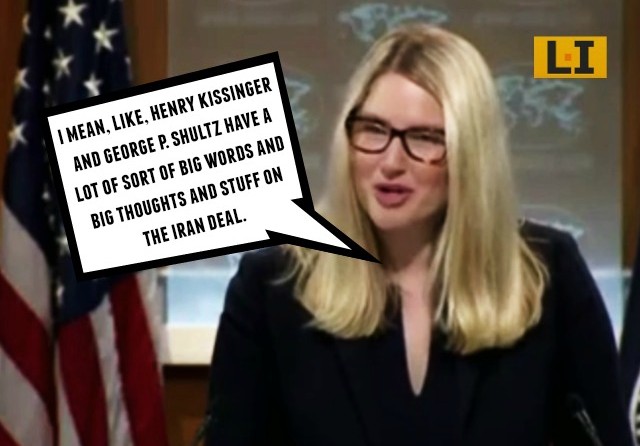
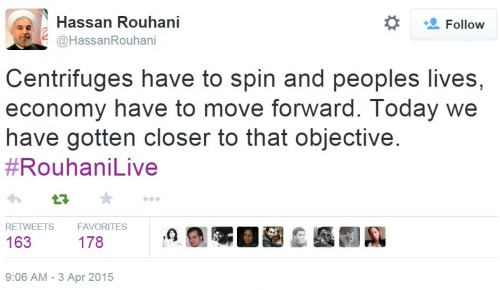
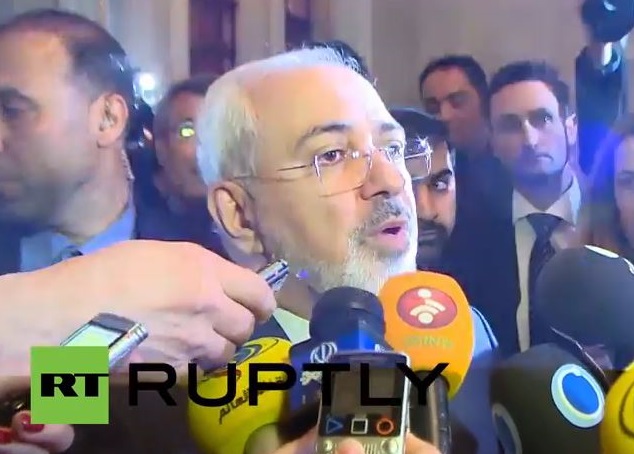
Key elements of a new nuclear agreement between Iran and six world powers are contained in an informal, 30-page text not yet publicly acknowledged by Western officials, Iran’s chief negotiator said Monday.... A State Department spokeswoman, Marie Harf, denied later Monday that there was any secret agreement. "Any documentation associated with implementation tracks completely with what we've described," she said. "These are technical plans submitted to the International Atomic Energy Agency," the United Nations' nuclear watchdog agency. "We will make information available to Congress and the public as it becomes available," Harf said.Remember last fall when the Obama administration insisted it had not consented to Iran's right to enrich uranium, even though Rouhani was claiming we had consented? Q&A: Is there a 'right' to enrich uranium? Iran says yes, U.S. no How's that looking now? Again from the L.A. Times article:
When I was almost fifty four, it was a very good year It was a very good year for kindly faced clerics Whose Justice Minister was an executioner And Defense Minister waged an anti-American war When I was almost fifty four.Nearly two years ago Jeffrey Goldberg interviewed President Obama about how he would deal with the threat from Iran. Given Goldberg's support for Israel, the interview was part of an administration campaign to tell Israel and Israel's supporters in the United States that "we've got Israel's back." It's unsettling now, that Goldberg has declared that For Iran, 2013 Was a Very Good Year.
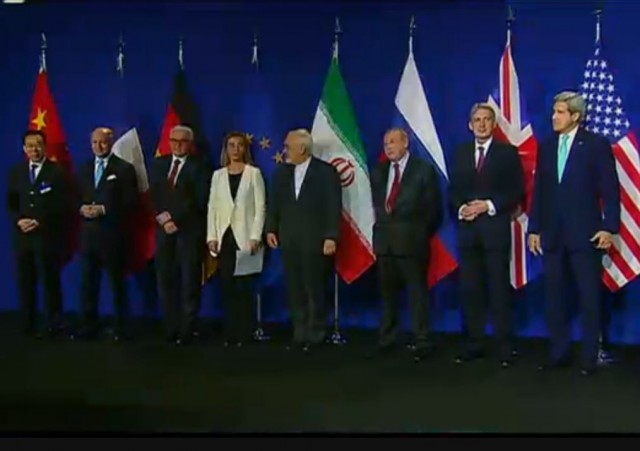
Remember that interim Iranian nuclear agreement forged in Geneva on Nov. 24, the one accompanied by blaring trumpets and soaring doves? Would it surprise you to know that the agreement -- a deal that doesn’t, by the way, neutralize the threat posed by Iran’s nuclear program, just freezes the program, more or less, in place -- has not yet been implemented? Would it surprise you to learn that this deal might not be implemented for another month, or more? Or that in this long period of non-implementation, Iran is free to do with its nuclear program whatever it wishes? And that one of the things it is doing is building and testing new generations of centrifuges? Ali Akbar Salehi, the head of Iran’s Atomic Energy Agency, recently said , “We have two types of second-generation centrifuges. We also have future generations which are going through their tests.” Happy New Year, everyone.
President Obama says that we need to "test" Iran. Iran's actions in recent weeks suggest that test is already failing....
Mideast Media Sampler 12/20/2103 - Iran continues enriching...
In the coming months when Iran and the West have a dispute over the meaning of terms of the Geneva deal or the discovery of something suspicious in Iran, Iran knows that it can bluff its way out of suffering any consequences for its bad faith.Last week the Treasury Department designated a number of companies and individuals for their illegal trade with Iran.
“The Joint Plan of Action reached in Geneva does not, and will not, interfere with our continued efforts to expose and disrupt those supporting Iran’s nuclear program or seeking to evade our sanctions. These sanctions have isolated Iran from the international financial system, imposed enormous pressure on the Iranian economy, and motivated the Iranian leadership to make the first meaningful concessions on its nuclear program in over a decade,” said Under Secretary for Terrorism and Financial Intelligence David S. Cohen. “Today’s actions should be a stark reminder to businesses, banks, and brokers everywhere that we will continue relentlessly to enforce our sanctions, even as we explore the possibility of a long-term, comprehensive resolution of our concerns with Iran’s nuclear program.”The Iranian reaction was predictable.
Iranian negotiators in Vienna halted nuclear talks with major powers to return to Tehran for consultations Thursday after Washington blacklisted a dozen companies and individuals for evading US sanctions, Islamic Republic state media reported.Iran's deputy nuclear negotiator Abbas Araqchi added:
But those polls dealt in generalities. It's easy to support negotiations in principle; it's much harder to support a specific deal, which would necessarily require U.S. concessions as well as placing a degree of trust in the Iranian government, which is not exactly popular here in the United States. The reason this latest poll merits special attention is that it asked Americans whether they would support the deal currently under discussion between Iran and the major world powers at Geneva.But in subsequent weeks, a funny thing has happened, support the deal has eroded as Shmuel Rosner shows in a recent column tracking polls on the topic.
While the first polls following the the recent interim agreement with Iran all showed that the deal was met with a generally positive reaction by the American public, the latest Pew survey puts this view in question (according to Pew, there are more Americans who disapprove of the deal than Americans who support it). Is this a result of some of the public criticism the deal has received- or is it a matter of phrasing the question and of methodology?Even a Reuters poll from the end of November that shows support for the deal by a ratio of two to one (44 percent to 22 percent) found 34 percent had no opinion on the deal. (Rosner supplied the "no opinion" number.)
CBS NEWS’S JOHN DICKERSON: Senator Corker, is it a red line for you? You talked about the standards of any ultimate deal. Is enrichment of any kind by Iran, is that something everybody should stay focused on? That any deal that includes that is a non-starter for you, because, of course, the Iranians say that they expect to be able to keep enriching? SEN. BOB CORKER (R-Tenn.): Yes, so to me that’s a baseline that the U.N. Security Council has agreed to, I think, six times, certainly this administration negotiated that in 2010. So they negotiated that in 2010. So as long as they can enrich, it seems to me that we are violating the very standards that we set in place in the first place. – exchange on CBS’s “Face the Nation,” Dec. 1, 2013Kessler didn't hand out any Pinnochios to the senators but still found fault with their responses:
With their comments, Menendez and Corker might have left viewers with the impression that the U.N. resolutions already require a suspension of enrichment in any final agreement. That’s not the case — though it can certainly be an ongoing demand. The administration, for its part, appears to have set that goal aside in an effort to keep the diplomacy moving. The lawmakers are certainly within their rights to call attention to this decision, but they should be more precise in their language about what the U.N. resolutions actually require. Given that they were speaking on live television and this is a complex issue, their comments, at this point, do not yet rise to the level of a Pinocchio.Perhaps the senators were a bit sloppy, but I think the question asked of them was misleading. The question shouldn't have been whether Iran would be allowed to enrich uranium as part of any final agreement, but whether Iran would prove that its nuclear program was strictly civilian. In introducing his analysis, Kessler wrote:
The Iran nuclear deal has significant repercussions. The region’s peoples are the biggest winners from this deal because regional and international forces have been pushing for war with Iran which would have had dangerous repercussions in the region. The deal pushed off the [potential Israeli and US] war [against Iran]. Israel cannot possibly bomb nuclear facilities without the US’ green light. Monopoly of power is no longer present. All American wars have failed. John Kerry made it clear that the US does not want more wars. The US and Europe have failed in the region. It is unlikely that normalization will take place. Iranians wanted to reassure the Gulf countries, especially Saudi Arabia. [interview in progress, check link for more]More translation at Naharnet:
Nine years ago the New York Times argued that Iran must "abandon its nuclear fuel enrichment efforts," but now supports a deal which enables such enrichment....
Along the way, Ms. Sherman was the State Department’s chief strategist in dealing with the North Korean nuclear program. It was a searing experience, in both its temporary successes and long-term failure, that prepared her for the complexity of the Iranian negotiations, and has made her a target for those on Capitol Hill who argue that history is about to repeat itself.What were the temporary successes? It was coming to agreements with the rogue regime. The long term failure stemmed from trusting those successes to deter North Korea. So if and when Iran develops a nuclear weapon, will we read about the temporary success of Geneva? For a history of Wendy Sherman that doesn't pull punches see Axis of Fantasy vs. Axis of Reality by Bret Stephens:
The killing of at least 70 people around the central town of Homs in the past five days, according to activists, brought to an estimated 1,100 the total toll in Mr. Assad's months-long crackdown and sparked tougher condemnation from the Obama administration. Secretary of State Hillary Clinton urged other Arab states, Russia and China to join in protesting the violence. ... Mrs. Clinton's ambiguity highlights the frustrating U.S. courtship of Bashar al-Assad. For more than two years, Mr. Obama's foreign-policy team has tried to woo Mr. Assad away from America's regional nemesis, Iran, and persuade him to resume peace talks with America's regional friend, Israel. For more than two years, Mr. Assad has frustrated the U.S. with the promise of reform and the practice of repression.One detail in particular about the Obama administration's first term outreach to Syria sticks out, "Mr. Kerry, meanwhile, became Mr. Assad's champion in the U.S., urging lawmakers and policymakers to embrace the Syrian leader as a partner in stabilizing the Mideast." When it came to Syria John Kerry was out in front.
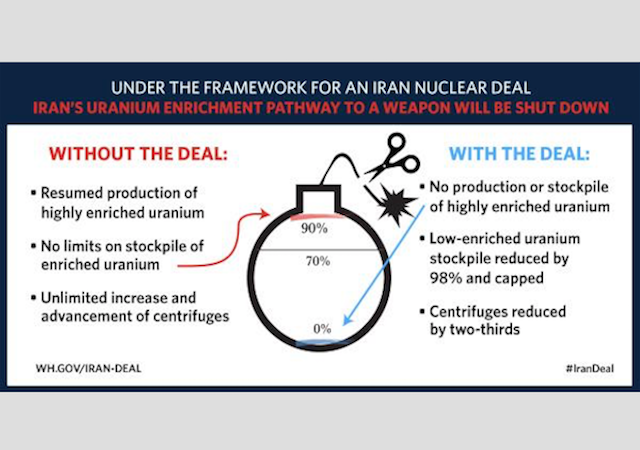
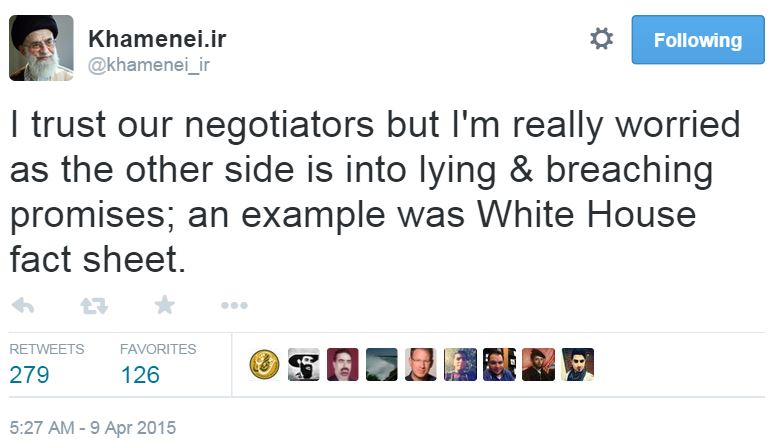
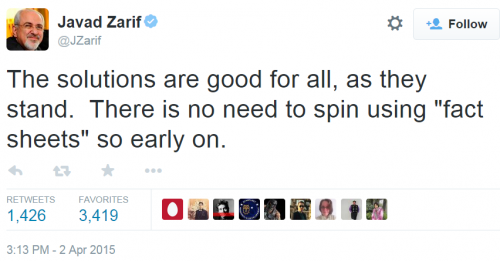
THE FACT sheet distributed by the Obama administration about the nuclear agreement with Iran is notable for its omissions. The 2,000-word document, like President Obama’s televised statement Saturday night about the deal, stresses Iran’s pledge to cap its enrichment of uranium, delay the completion of a plutonium-producing reactor and accept additional inspections — measures that will guard against an attempt to produce a bomb while negotiations continue.
Donations tax deductible
to the full extent allowed by law.
Founder
Sr. Contrib Editor
Contrib Editor
Higher Ed
Author
Author
Author
Author
Weekend Editor
Author
Editor Emerita