

Image 01 Image 03

Iran Tag

In a look at the history of the tensions between President Barack Obama and Israeli Prime Minister Benjamin Netanyahu, The New York Times several days ago started with an interesting anecdote.
For President Obama, it was a day of celebration. He had just signed the most important domestic measure of his presidency, his health care program. So when Prime Minister Benjamin Netanyahu of Israel arrived at the White House for a hastily arranged visit, it was likely not the main thing on his mind. To White House officials, it was a show of respect to make time for Mr. Netanyahu on that day back in March 2010. But Mr. Netanyahu did not see it that way. He felt squeezed in, not accorded the rituals of such a visit. No photographers were invited to record the moment. "That wasn't a good way to treat me," he complained to an American afterward. The tortured relationship between Barack and Bibi, as they call each other, has been a story of crossed signals, misunderstandings, slights perceived and real. Burdened by mistrust, divided by ideology, the leaders of the United States and Israel talked past each other for years until the rupture over Mr. Obama's push for a nuclear agreement with Iran led to the spectacle of Mr. Netanyahu denouncing the president's efforts before a joint meeting of Congress.
It's interesting because this is not at all how I remembered it. I remember that the lack of attention to the meeting was perceived as an intentional slight of Netanyahu. A quick check of the contemporaneous reporting confirmed this.

Today Israeli Prime Minister Benjamin Netanyahu met with President Obama at the White House to discuss ISIS, tensions between Israelis and Palestinians, and the continuing scandal that is the Iran nuclear deal. It was the first time the two men have met face to face in over a year, and the first time they have spoken since the passage of the Iran deal. During a private session with the press, Obama emphasized that both leaders are looking for "common ground," and condemned the latest wave of Palestinian violence perpetuated against Israelis; he backed the right of Israelis to defend themselves, but pushed Netanyahu for ideas on how to relieve the tension. Netanyahu continued his public support for a two-state solution, but insisted that a solution would only come when the Palestinians relent and recognize Israel as a Jewish state---which the Palestinians continue to reject. You can see the press briefing here:

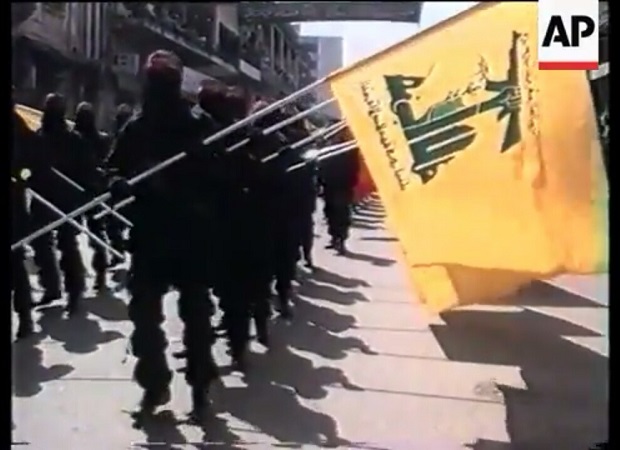
On September 30, Russia broke from existing frameworks when it began its own airstrikes against rebels in Syria. As the airstrikes continued, it became clear that Vladimir Putin's sympathies toward the brutal Assad regime were become manifest in the bombs Russian aircraft dropped not on Assad's strongholds, but on anti-regime rebels backed by the United States and other western coalition forces. Now both Syrian activists and Iranian officials are reporting that over the past few days, Iran has sent over 1,500 fighters into Syria via Damascus; Hezbollah fighters have also made the journey. Officials claim that these fighters are prepping to launch an assault on militants in Aleppo in northern Syria, and that this move has been bolstered by Russian airstrikes. Via Fox News:
"Sending more troops from Hezbollah, and Iran only increases the shelf life of the Syrian regime, which is destined to end," Maj. Jamil Saleh, the leader of Tajammu Alezzah, a CIA-backed Free Syrian Army faction, told the AP. "It will only add more destruction and displacement."

The Wapo announces that a verdict appears to have been rendered in the case of one of its journalists who has been imprisoned in Iran:
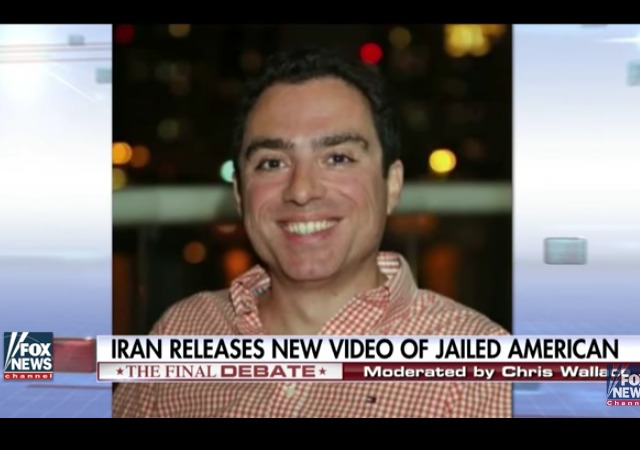
Washington Post correspondent Jason Rezaian, imprisoned in Tehran for more than 14 months, has been convicted in an espionage trial that ended in August, Iranian state television reported. News of a verdict in Tehran's Revolutionary Court initially came early Sunday, but court spokesman Gholam Hossein Mohseni-Ejei did not specify the judgment. In a state TV report late Sunday, Mohseni-Ejei said definitively that Rezaian, The Post’s correspondent in Tehran since 2012, was found guilty. But many details remained unknown. Rezaian faced four charges — the most serious of which was espionage — and it was not immediately clear whether he was convicted of all charges. Rezaian and The Post have strongly denied the accusations, and his case has drawn wide-ranging denunciations including statements from the White House and media freedom groups.
Statements from the White House. That'll do the trick.

John Kerry lost big this week as the Nobel Committee announced it was awarding the Nobel Peace Prize not to John Kerry, Secretary of State and erstwhile hero of the Iran nuclear deal negotiations, but to the Tunisian National Dialogue Quartet. The Quartet formed in 2013 in the wake of the Jasmine Revolution. Tunisians were attempting a democracy, but the process was being stifled by political assassinations and social unrest. The Quartet turned the focus back onto individual rights, redirected the political process, and facilitated the creation of a constitutional system. Sounds a lot better than "facilitated a deadly deal with a belligerent nation," doesn't it?

The United States will discontinue its efforts to create a new, moderate rebel fighting force in Syria as part of the effort to "degrade and defeat" the Islamic State, the Pentagon said Friday. Most analysts believe that this reflects a failure of the US's current strategy in the region. That strategy---which focused on training new fighters---drew widespread criticism, particularly from Congress. In a statement to the media, Defense Secretary Ash Carter defended the change in policy by emphasizing the Administration's continued commitment to relying on local forces to get the job done, saying, "I remain convinced that a lasting defeat of ISIL in Syria will depend in part on the success of local, motivated, and capable ground forces. I believe the changes we are instituting today will, over time, increase the combat power of counter-ISIL forces in Syria and ultimately help our campaign achieve a lasting defeat of ISIL." During a brief press conference, Carter cited the work that US forces have done with rebels in northern Syria as an example of what they would like to pursue with other groups in other parts of Syria going forward:

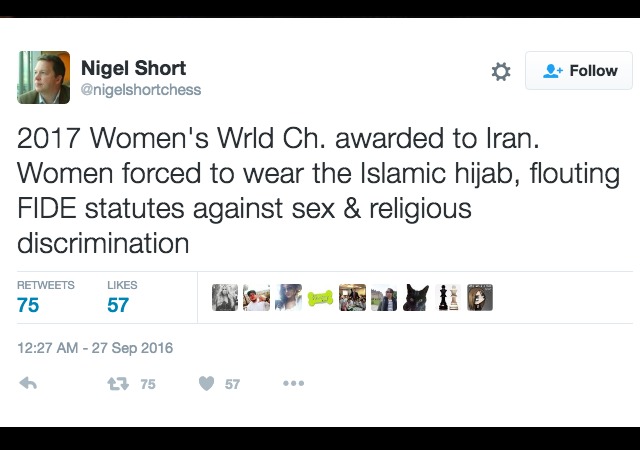
What?! You mean to tell me Iran may have lied about stuff?! It's a good thing we didn't strike a nuclear deal with them or anything, oh wait... Monday, Saudi Arabian news outlet Al Arabiya reported eight members of the Iranian Women's Soccer Team were not actually women.

Today before the United Nations General Assembly, Barack Obama and Vladimir Putin sparred publicly over how their respective nations have approached a solution to crises in Ukraine and Syria. For both leaders, these speeches were an opportunity to regain control of a spiraling military, security, and human rights narrative that is now being influenced not only by the spread of Islamic terrorism, but the effects of mass migration out of the Middle East and Africa and into Europe. President Obama lashed out at Putin over Russia's aggression toward Ukraine and criticized Putin's leadership (or, lack thereof) on the Syrian crisis. Oddly enough, though, Obama somehow managed leave himself space to justify a partnership with Russia as a way of addressing conflict in Syria. From the New York Times:
Mr. Obama made a forceful defense of diplomacy but also castigated Russia by name multiple times in his speech for its defense of the Syrian government, its takeover of Crimea and its actions supporting Ukrainian rebels. “Dangerous currents risk pulling us back into a darker, more disordered world,” Mr. Obama said. Those currents include major powers that want to ignore international rules and impose order through force of military power, he said.

Iranian President Hassan Rouhani confirmed what we all, ahem, knew, that when hundreds of thousands of Iranians led by the Iranian leadership chant "Death to America," they don't really mean it. He didn't say "I’d really like to visit Disneyland," but he did downplay the significance. What they mean is, well, here's the explanation, on 60 Minutes:
Steve Kroft: I'm sure you realize that it is difficult for many Americans to get past the fact that President Obama has signed an agreement with a country that says, "Death to America, Death to Israel." How do you explain this? What are they to make of it? Are they to take it literally? Is this for domestic, internal Iranian political consumption? What are Americans to make of it, the language? President Rouhani: This slogan that is chanted is not a slogan against the American people. Our people respect the American people. The Iranian people are not looking for war with any country. But at the same time the policies of the United States have been against the national interests of Iranian people. It's understandable that people will demonstrate sensitivity to this issue. When the people rose up against the shah, the United States aggressively supported the shah until the last moments. In the eight-year war with Iraq, the Americans supported Saddam. People will not forget these things. We cannot forget the past, but at the same time our gaze must be towards the future.

On Tuesday I wrote about National Review contributing editor Andrew C. McCarthy and Representative Mike Pompeo's clearly accurate assertions that President Obama has failed to comply with the requirements of the Iran Nuclear Agreement Review Act of 2015. Both McCarthy and Pompeo further asserted that this non-compliance meant that the Congressional review period for the proposed nuclear deal with Iran had not started, and therefore that the time within which Congress must vote on it had not yet started. I also wrote that that McCarthy and Pompeo disagreed about the consequences of this non-compliance, with Pompeo claiming that “the president remains unable lawfully to waive or lift statutory Iran-related sanctions” and McCarthy arguing that Obama still had "authority to waive the existing sanctions — although not to lift them permanently." By Wednesday, however, McCarthy had basically -- and quite happily, it seems -- admitted that his interpretation was wrong. Senator Ted Cruz, he says, explained that,
Under Corker [i.e., the Iran Nuclear Agreement Review Act of 2015] section (b)(3), "prior to and during the period for transmission of an agreement … and during the period for congressional review … the President may not waive, suspend, reduce, provide relief from, or otherwise limit the application of statutory sanctions with respect to Iran[.]" Further, under other provisions of the Corker law, the prohibition against Obama’s taking actions to lift sanctions is extended to ten days after the date that he vetoes a “resolution of disapproval” (assuming one is passed by both houses of Congress). Get it? From the time Obama reached the deal with Iran, through the time for congressional review, and for up to ten more days after Obama’s veto of a disapproval resolution, the sanctions against Iran’s nuclear program must remain in place.

Just in case you were wondering, no, this is not from The Onion. I know it's hard to tell these days, but this is an actual thing that happened. According to Adam Kredo at the Washington Free Beacon, the New York Times has provided a nifty new tool, a Congressional 'Jew Tracker.'
The New York Times has come under fire from Jewish organizations for launching a website aimed at tracking how Jewish lawmakers are voting on the Iran nuclear agreement. The online chart, which tracks whether lawmakers who opposes the accord are Jewish, is being criticized as anti-Semitic in nature and an attempt to publicly count where Jews fall on the issue, which some have sought to turn into a debate about dual loyalty to Israel. The feature, titled “Lawmakers Against the Iran Nuclear Deal,” includes a list of legislators currently opposing the deal.
On the outset, the NYT article seems harmless enough, "Lawmakers Against the Iran Nuclear Deal," it's called. But then there are the charts...

Today I attended the much-anticipated Cruz-Trump Iran deal protest on Capitol Hill. It was a scorcher---97 degrees when I finally surrendered to an air conditioned cab---but the rally boasted an impressive turnout. The crowd, for the most part, was focused on protesting not only the specific Iranian nuclear deal, but the path down which Obama's foreign policy has taken us. 100% of the attendees I talked to see the deal as one more foolish, stupid, naive move by the Obama Administration. For most, opposition was apolitical; I spoke to many people who were grateful for the protest votes of Chuck Schumer and other Democrats, even if those announcements came too little and too late to give the White House pause. These signs were floating around everywhere, and for the most part sum up the mood in the crowd: death to america iran rally sign

Wednesday afternoon, Senator Cruz joined the Tea Party Patriots rally to Stop the Iran Deal. Cruz's fiery speech outlined the consequences of the passage of the Iran Nuclear Deal. The Obama administration would be, "quite literally the world's biggest financier of Islamic terrorism," said Cruz. His full speech from the rally is here:

Two recent news analysis pieces highlight President Obama's lawlessness in the case of his proposed nuclear deal with Iran. Recall that about one week after the administration’s announcement that it had reached an agreement with Iran, Congressman Mike Pompeo revealed that the IAEA had told him and Senator Tom Cotton that:
Two side deals made between the Islamic Republic of Iran and the IAEA as part of the Joint Comprehensive Plan of Action (JCPOA) will remain secret and will not be shared with other nations, with Congress, or with the public. One agreement covers the inspection of the Parchin military complex, and the second details how the IAEA and Iran will resolve outstanding issues on possible military dimensions of Iran’s nuclear program.
A draft that was said to the same as the final text of one of these side deals was leaked to, and published by, the Associated Press. The second of the two still remains secret. Asking Congress to approve an agreement, the complete terms of which it has not even seen, is of course absurd on its face. Even more absurd is that a sufficient number of Senators to sustain a Presidential veto of Congressional disapproval have agreed to do so.

The United States Ambassador to the United Nations, Samantha Power recently wrote a piece for Politico arguing the Congress not reject the nuclear deal with Iran. In short she argued that rejecting the deal would leave the United States, not Iran isolated and the ability of the United States would be greatly compromised in its ability to influence outcomes globally. Towards the end she summed up her argument:
The Iran nuclear deal has been championed by the president of the United States, every one of America’s European friends and countless other countries around the world. If Congress rejects the deal, we will project globally an America that is internally divided, unreliable and dismissive of the views of those with whom we built Iran’s sanctions architecture in the first place. Although it is hard to measure the precise impact of these perceptions, I and other American diplomats around the world draw every day on our nation’s soft power, which greatly enhances our ability to mobilize other countries to our side. While that soft power is built in many ways, two of its most important sources are the belief among other countries’ leaders and publics that we share similar values, and that America delivers on its commitments. Of course, there is no substitute for the essential deterrent and coercive effects rooted in the hard power of America’s unmatched military arsenal. But we should not underestimate the political capital we will lose—political capital that we draw upon for influence—if we walk away from this deal.
What makes Power's plea so inexplicable is her record. As Claudia Rosett explained back in July:

The Iran nuclear deal, which is so bad in so many ways explained here so many times, is a done deal. Democrats now have enough votes in the Senate to prevent an override of an Obama veto of a resolution of disapproval, if it even gets to a vote given Democrats are close to the votes needed to filibuster. Partial blame belongs to Republicans in the Senate for agreeing to a procedure that required passage of a resolution of disapproval by a supermajority, rather than approval by a supermajority, or even a majority. But at least Republicans opposed the deal, which means that majorities in each house of Congress are against it. Whatever procedural mistakes Republicans made are dwarfed by the substantive embrace of the deal by most Democrats in Congress. That despite the fact that the deal is hugely unpopular overall, and is at best a split decision even among Democrats not in Congress. It is not an exaggeration to say that loyalty to Obama was the overriding factor. Democrats in Congress were the main targets of Obama's demagoguery -- be with Obama or be for war; be with Obama or be for the monied lobbyists. The message was clear: Be with Obama or be a traitor. So the deal will not fail. To say that it "passes" is inaccurate. There will be calls once the votes are taken to heal. To make Israel, once again, a matter of bipartisan consensus.

Today Democratic Senator Barbara Mikulski committed her vote in support of the controversial Iran nuclear deal, bringing the total number of Senators backing the deal to 34---the magic number needed to ensure Democrats can sustain President Obama's veto should Senators opposed to the deal bring forward a resolution of disapproval. More from the AP:
Democratic Sen. Barbara Mikulski of Maryland became the crucial 34th vote in favor of the agreement. "No deal is perfect, especially one negotiated with the Iranian regime," Mikulski said in a statement. She called the accord "the best option available to block Iran from having a nuclear bomb. For these reasons, I will vote in favor of this deal." The backing from Mikulski, who is retiring next year, gives supporters the margin they need to uphold an Obama veto of a congressional resolution of disapproval if Republicans pass such a measure later this month. And it spells failure for opponents of the international agreement who sought to foil it by turning Congress against it. Leading that effort were Israel and its allies in the U.S., who failed to get traction after spending millions of dollars trying.
Reaction on both sides, of course, exploded: