

Image 01 Image 03

Author: William A. Jacobson

Profile photo

William A. Jacobson

William A. Jacobson is a Clinical Professor of Law and Director of the Securities Law Clinic at Cornell Law School.

He is a 1981 graduate of Hamilton College and a 1984 graduate of Harvard Law School. At Harvard he was Senior Editor of the Harvard International Law Journal and Director of Litigation for the Harvard Prison Legal Assistance Project.

Prior to joining the Cornell law faculty in 2007, Professor Jacobson had a highly successful civil litigation and arbitration practice in Providence, Rhode Island, concentrating in investment, employment, and business disputes in the securities industry, including many high profile cases reported in leading newspapers and magazines.

Professor Jacobson has argued cases in numerous federal and state courts, including the Courts of Appeal for the First, Fifth and Sixth Circuits, and the Rhode Island Supreme Court.

Professor Jacobson has a national reputation as a leading practitioner in securities arbitration. He was Treasurer, and is a former member of the Executive Committee and Board of Directors of the Public Investors Arbitration Bar Association, a professional organization of attorneys dedicated to protecting public investors. He frequently is quoted in national media on issues related to investment fraud and investor protection, and in the past has served as one of a small number of private practice attorneys who trained new arbitrators for the Financial Industry Regulatory Authority.

Professor Jacobson is co-author of the Securities Arbitration Desk Reference (Thomson-Reuters), updated annually.

Professor Jacobson is frequently quoted in the media on political and legal topics, has authored many Op-Eds in major publications, and appears on television and radio to discuss politics and the law.

A more complete listing of Professor Jacobson's professional background is available at the Cornell Law School website. The views expressed here are his own and not those of any employer or organization,

The best way to reach Prof. Jacobson is by e-mail here.

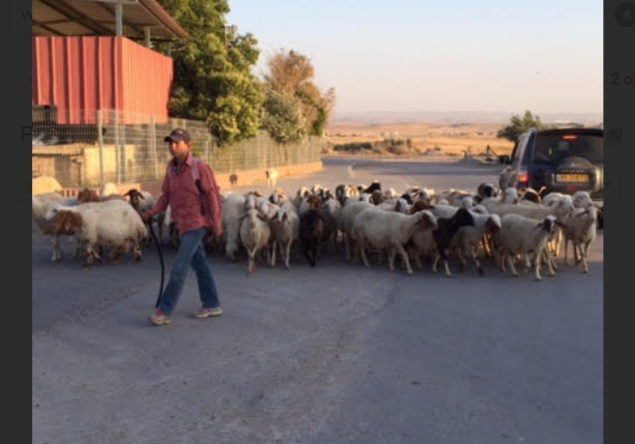
Problems between the Bedouins in the Negev desert area in the south of Israel and the government over redevelopment plans have received a lot of media attention, including at Legal Insurrection: As with every problem in Israel, there are dozens of Israeli and international "human rights" groups seeking to exploit the issue for a greater purpose unrelated to actually helping the Bedouin. So the media narrative is spun as the bad Jews trying to steal land. The Israeli side of the story rarely is told in the media. In part that reflects media bias, in part that Israel is not very good at getting its story out. So during our trip to the south of the country, we met with and toured the area with a local official from the Israeli government ministry which is handling Bedouin redevelopment issues. The official spoke Arabic fluently and was intimately familiar with the Bedouin tribes and culture. (We also were accompanied by our Negev guide, Danny Kella, who also guided us along the Gaza border.) Negev Bedouin Rahat Regional Satellite Map The official was frank in his assessments.  He acknowledged that there are real problems and that the situation has not been handled as well as it should have been. But he also felt that a lot of the problems had causes on each side of the equation and was misrepresented in the media.

On Sunday, May 31, 2015, I reported from Sderot, Israel, on the history of rocket and mortar fire from Gaza, and the extensive preparation of bomb shelters and emergency protocols: Israelis shelter in place near Gaza. This week Israel is in a nationwide drill, testing sirens that will warn of incoming missiles and rockets. The drills have been implemented on the assumption that Hezbollah, Syria, and Hamas will be able to fire thousands per day. Today two sirens were sounded. I was in the Jewish Quarter of the Old City when the 7:05 p.m. (local) siren sounded: Speaking of the Jewish Quarter, the historical truth of the illegal conquest by Jordan and subsequent ethic cleansing of Jews is long down the memory hole. But there is a sign to remind people:

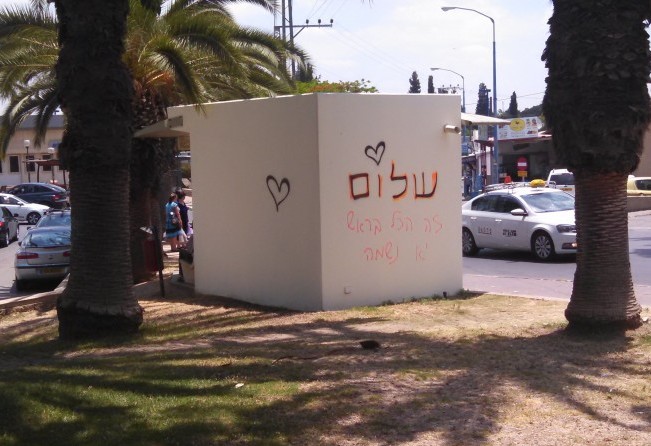
Our journey off the usual tourist trail through Israel continued today with a visit to border areas near Gaza. Sderot is famous for being the closest Israeli town to Gaza, and the first and most frequent target. The Sderot Media Center has a wealth of information. Sderot Satellite Map North Gaza Because Sderot is so close, the town has only 15 seconds warning once a launch is detected. This video is from 2008: There are bomb shelters everywhere, including on the street (see Featured Image - "Shalom" painted on a bomb shelter) and in the playground, where the bomb shelter is in the form of a large caterpillar so as to make it more welcoming to children.

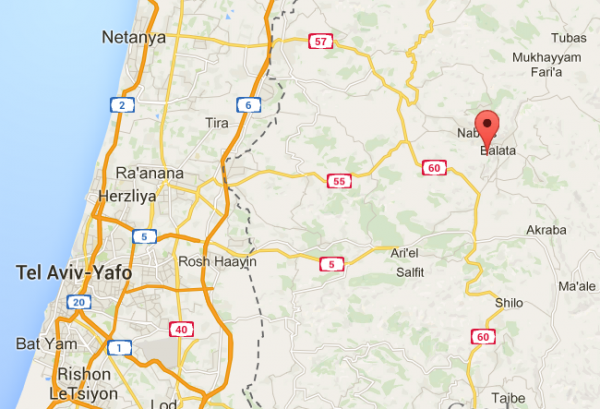
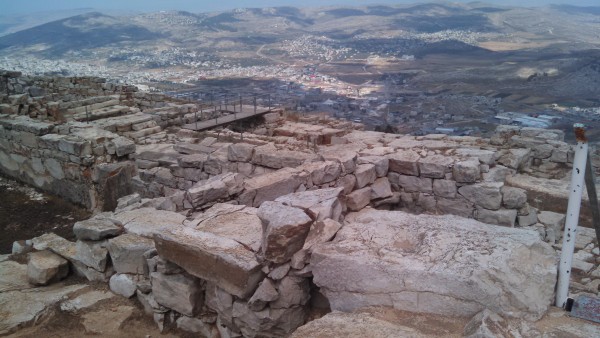
In 2013, I traveled extensively in Samaria. You can find photos and description of that travel here, To Samaria and back. On Friday, May 29, 2015, I traveled to Mount Gerizim and the Samaritan community, on a high peak in Samaria. Mount Gerizim Map Road Mount Gerizim overlooks the city of Nablus and the Balata refugee camp, and contains ancient ruins of the original Samaritans (the Islamic style dome is not part of the original ruins): [caption id="attachment_129103" align="alignnone" width="600"][Mount Gerizim Samaritan Ruins - Dome Not Original] [Mount Gerizim Samaritan Ruins - Dome Not Original][/caption]Mount Gerizim - Samaritan Ruins overlooking Nablus and Balata Refugee Camp Amid conflict, Samaritans keep unique identity (CNN 2002):

Hi, Prof. J: Here's a contribution from the Land of Lincoln. The car sported the red "Impeach Obama" sticker on the passenger door as well. Not everyone in this state is a liberal moron, but unfortunately we conservatives seem to be outnumbered, and most likely our...

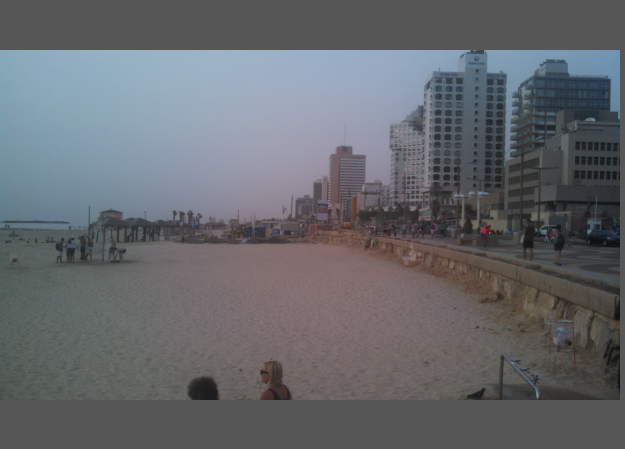
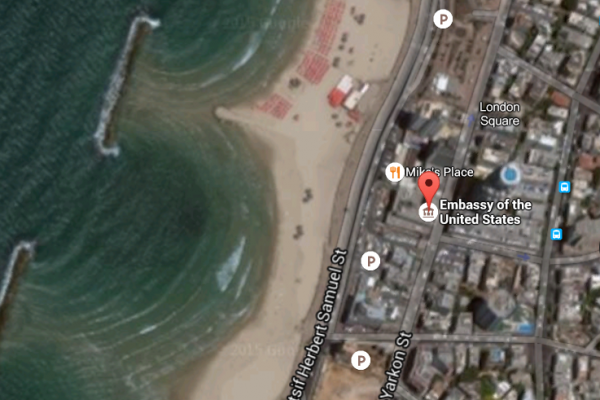
Ah, the beach in Tel Aviv. The Featured Image shows the view north from in front of my hotel. There is a huge amount of construction going on up and down the beach -- luxury hotels and residence buildings. The building on the far right in the Featured Image is the U.S. Embassy. That's right, the U.S. Embassy in Tel Aviv is beachfront on the most prized section in Tel Aviv. U.S. Embassy Tel Aviv Beach Satellite

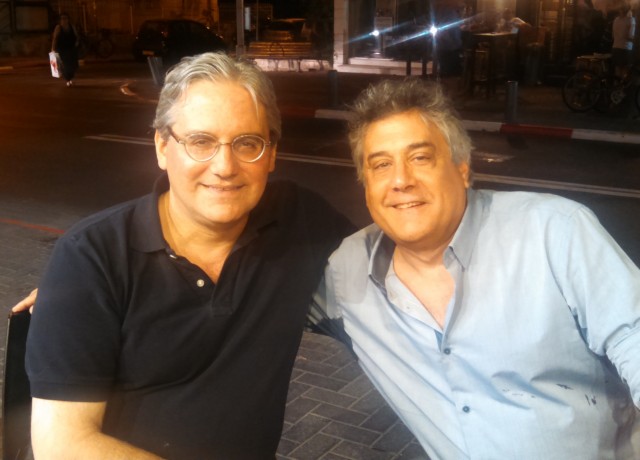
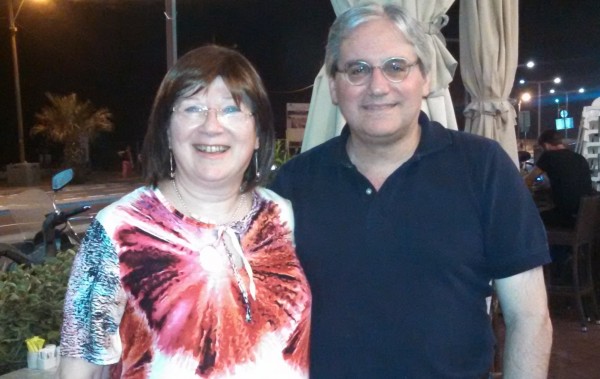
That's Legal Insurrection reader Joel E. who lives in a town near Tel Aviv, and reached out to me when he read I was heading for Israel. The featured image is us at a really good falafel place near the beach. I also saw Legal Insurrection favorite and sometimes contributor "Anne in Petah Tikva" and her husband.  Except that night, she was "Anne in Tel Aviv." William Jacobson and Anne in Petah Tikva It's a tough life, but someone has to live it.

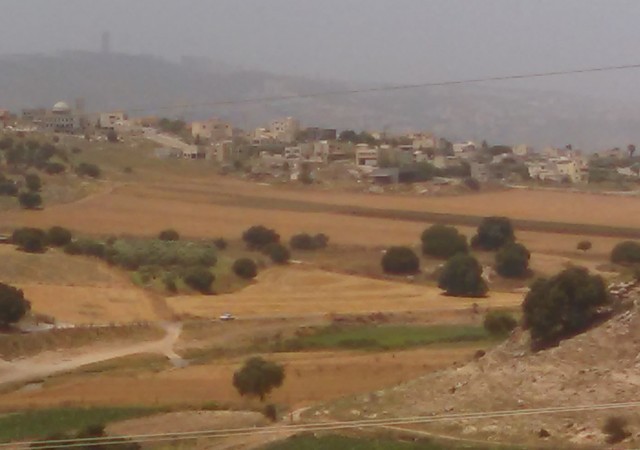
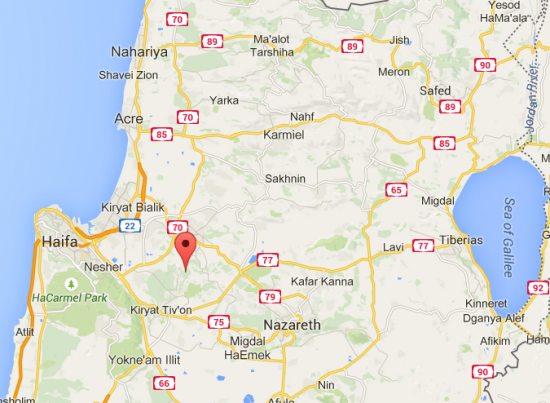
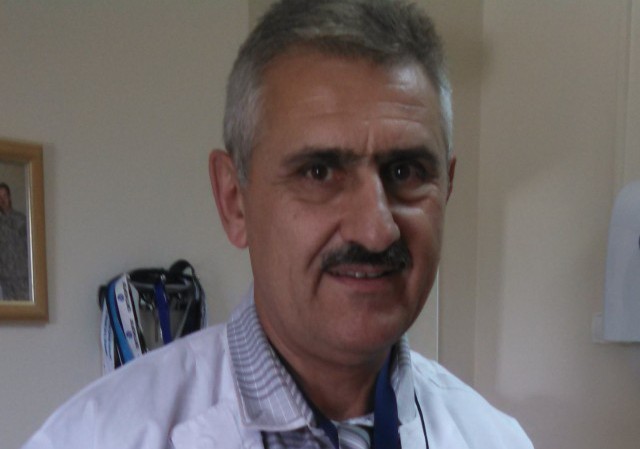
Continuing on my tour in northern Israel, on May 27, 2015, I visited the Bedouin village of Khawaled led by our guide Hassan Khawaled. Hassan Khawaled Most of the people in the village have the village name as a last name, or a variant, such as the first Israeli Bedouin diplomat Ishmael Khaldi, who is from the village. Khawaled is east of Haifa, in the Galilee region. Khawaled Village Northern Israel Map The Bedouin are Arab Muslims with a unique culture. Most Israeli Bedouins live in the south of the country in the Negev region, but there is a sizable presence in the Galilee. The Israeli Bedouin are not obligated to serve in the Israeli Defense Forces, but many volunteer to do so. Bedouin have achieved great success in the IDF, and are particularly known as trackers at the borders.

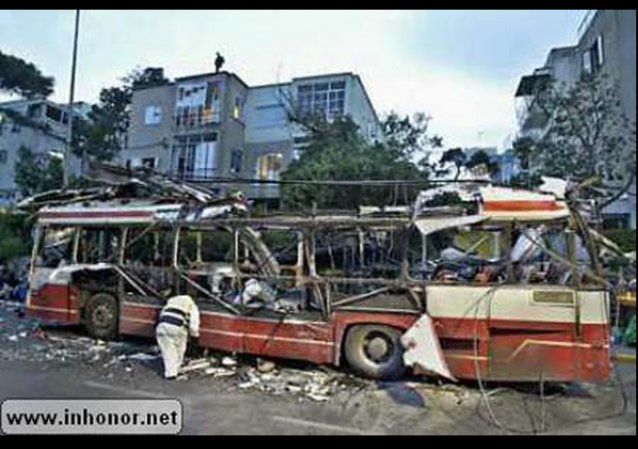
On Tuesday, May 25, 2015, we continued our tour of northern Israel along the Lebanese border, stopping at Moshav Avivim. While our discovery of a memorial to the victims of the Haifa Bus 37 suicide bombing and our visit to Ziv Hospital in Safed, and its Syrian patients, were unexpected, our visit to the Moshav was even more emotional and full of surprises - Revenge and Reunion. We met with Shimon Biton, the Secretary of the Moshav.  (Our excellent guide, Udi Guberman, provided translation, as Shimon does not speak English.) [caption id="attachment_128643" align="alignnone" width="550"][Shimon Biton, Moshav Avivim, Israel] [Shimon Biton, Moshav Avivim, Israel][/caption]A Moshav is a type of collective farming community where homes are owned individually and owners are allotted separate plots of land, but the community shares in certain expenses and resources. (Unlike a classic kibbutz, where all the property is communal.) There currently are 120 families in the Moshav, 480 people. There are plans to expand to add at least another 50 families, and the demand outpaces available spots. Moshav Avivim sits along the Lebanese border, just south of Bint Jbeil and Maroun Al-Ras.

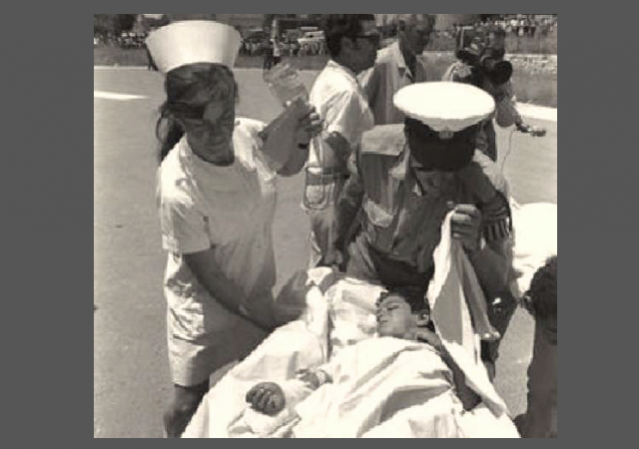
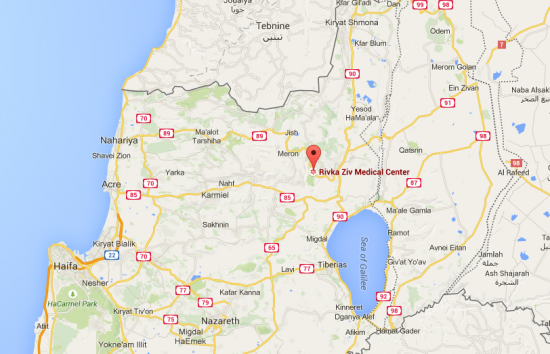
Yesterday I reported on the Haifa Bus 37 suicide bombing in 2003, and how I stumbled on the Memorial during my first full day in Haifa. Today was a travel day that took us even further north, to the Lebanese border. I'll have a report in the next couple of days on the extraordinary story of a child survivor of another bus bombing, and the unexpected recent twist in his life some 45 years later. Now I report on a different aspect of terror, and the extraordinary Israeli humanitarian effort. I traveled to the Ziv Medical Center in Safed (Zefat), Israel. Ziv is the major trauma center serving the northestern part of the country from the Upper Gallile to the Golan Heights. Safed Rivka Ziv Medical Center Regional Map Because Ziv is only 11 kilometers from Lebanon, Ziv was targeted by Hezbollah rockets during the 2006 Lebanon War. It has undergone, and still is undergoing, a process of creating reinforced operating room theaters and patient facilities to protect against future rocket attacks.

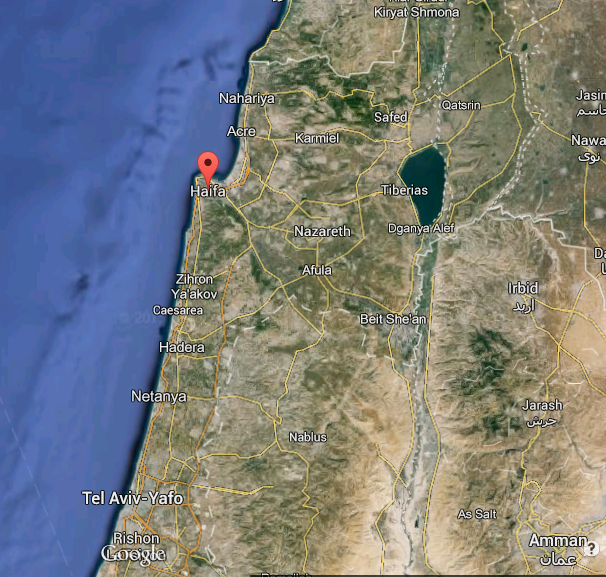
In Israel, you are never far away from terror or the memory of terror. I learned that by chance tonight. We arrived in Israel late afternoon yesterday, May 23, 2015.  Today was planned as a rest day to try to adjust to the 7-hour time difference. From the airport we headed directly for Haifa, the northernmost big city in Israel, with a population just under 300,000.  It is a very mixed city, both ethnically and religiously. Haifa Country Satellite Map We started the day with the classic Israeli Shakshuka breakfast at the Villa Carmel, where we are staying:

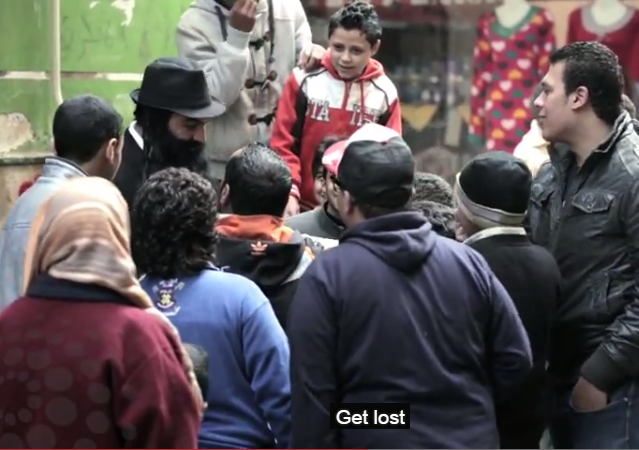
Is this officially a series now? We've done Paris, Britain, Copenhagen and Malmö, where people walking the street dressed in attire indicating they are religious Jews face street harassment, mostly by Muslim young men. We also did Montevideo, where the reaction was positive. Here's Cairo, as the Jerusalem Post reports:
An Egyptian journalist conducted an experiment in which he dressed up as a Jew and asked passersby on the streets of Cairo for directions to a nearby synagogue - with nearly serious consequences for his physical safety. The Cairo-based Internet news site DOTMSR sent the journalist to the streets of Cairo dressed in overtly Hassidic garb - sidecurls, skullcap, beard, and a hat. The “Jewish” journalist was then subjected to threats of violence, epithets, slurs, and shoving from hostile locals.... DOTMSR is an Arab-language Internet news site “that broadcasts high-quality news items in Arabic.” It describes itself as a news outlet that “believes in openness, innovation, and an obligation to accepting those who are different.”

The Clinton Foundation is in the process preemptively coming clean on problems before it gets caught. Will even mainstream media reporters smelling scandals in the murky world of payments to the Clintons and influence peddling, Hillary's handlers are not waiting for the skeletons to be found. At least not the one buried near the surface. The latest Clinton Foundation scandal, as reported by The Washington Post, is that the Clinton Foundation reveals up to $26 million in additional payments:
The Clinton Foundation reported Thursday that it has received as much as $26.4 million in previously undisclosed payments from major corporations, universities, foreign sources and other groups. The disclosure came as the foundation faced questions over whether it fully complied with a 2008 ethics agreement to reveal its donors and whether any of its funding sources present conflicts of interest for Hillary Rodham Clinton as she begins her presidential campaign.

We recently reported on legislation in Illinois barring state pension funds from investing in companies that boycott Israel. The legislation passed both chambers unanimously, a stunning bi-partison rejection of the Boycott, Divestment and Sanctions movement. Gov. Bruce Rauner has promised to sign the legislation. The BDS movement is screaming about the legislation because while boycotting Israelis is cool with them, bocotting the boycotters is the worst violation of human rights ever. That's not much of an exaggeration as to their response -- it is full blown hissy-fit which mischaracterizes the legislation as suppressing speech. The reaction from BDS not only has been a hissy fit, it has been bizarre and revealing. Jewish Voice for Peace, one of the most aggressive BDS organizations, is demanding the State Department change its long-standing definition of anti-Semitism. I've long argued that the anti-Israel boycotters, particularly in academia, were forfeiting their standing to complain when the boycotts boomeranged and were turned on them. I'd rather that BDS never started this fight, but it did and now BDS supporters are realizing they are swimming in the ocean of a pro-Israel American population. The campus and faculty lounge anti-Israel bubbles are exceptions, not the rule. And that strong and increasing public support of Israel is being expressed through elected representatives. The Illinois legislation came at a time of two pending federal bills targeting the international boycott of Israel. But states may be where the action will be, as NY legislators plan to introduced a bill similar to the one passed in Illinois:

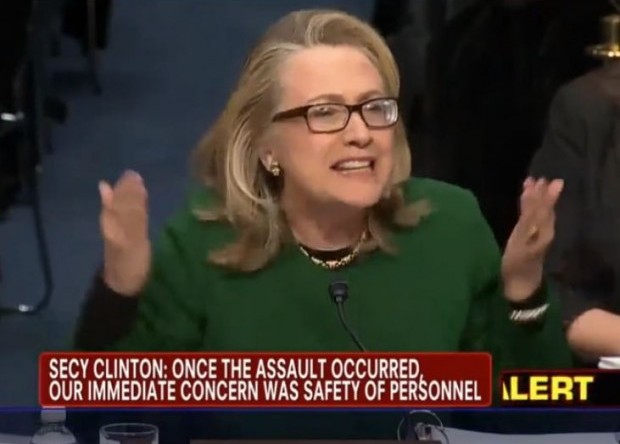
The New York Times has extensive reporting on the first partial batch of Hillary emails released to the public regarding Libya. This is only the first batch, and of course, we don't know what was deleted from her private server. The bottom line is that the relationship with Sidney Blumenthal is as suspicious as suspected, Hillary knew the video story was a crock, and most of all, the entirety so far demonstrates why Hillary sought to hide her activities for so long. First Batch of Hillary Clinton Emails Captures Concerns Over Libya:
The Times obtained about a third of the 850 pages of emails. They appear to back up Mrs. Clinton’s previous assertions that she did not receive classified information at her private email address. But some of the emails contain what the government calls “sensitive” information or “SBU’’ — sensitive but unclassified. This includes details of the whereabouts of State Department officials in Libya when security there was deteriorating during the 2011 revolution. One email from a year and a half before the attacks that was marked sensitive but unclassified contained the whereabouts of Mr. Stevens as he considered leaving Benghazi during the uprising against the Qaddafi regime because of the deteriorating security.
That's of great interest, because foreign hacking of the home server has been a huge concern, and not just from foreign governments. How did al Quada affiliates know where Ambassador Chris Stevens would be? At least on the date of the above email they could have obtained the information from Hillary's emails. Gizmodo, part of the Gawker Media group, has a caustic take on Hillary's security lapses:

In 2011, ABC News launched a major rebranding effort focused on the slogan "See the Whole Picture," featuring key news personalities including George Stephanopoulos:
Today ABC News launched a major re-branding initiative. The last time that ABC News spoke directly with its audience about what defines ABC News was over a decade ago with "More Americans Get Their News from ABC News than Any Other Source" - a statement that is still true today. ABC News President Ben Sherwood laid out the foundation of the new campaign to ABC News staff in an email on Monday morning: Starting today and over the course of 2012, you're going to see new on-air promos that feature images of an unprecedented gathering of ABC News anchors and correspondents and a call to action: When viewers turn to ABC News, they will "See the Whole Picture." Believe it or not, it's been more than a decade since ABC News consistently put forward a message or slogan. This new promise - "See the Whole Picture" - will help unify ABC News and differentiate our efforts from the competition.