Image 01 Image 03

Health Care Tag

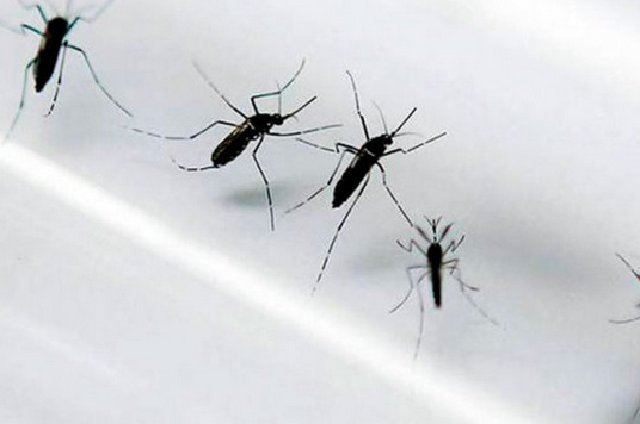
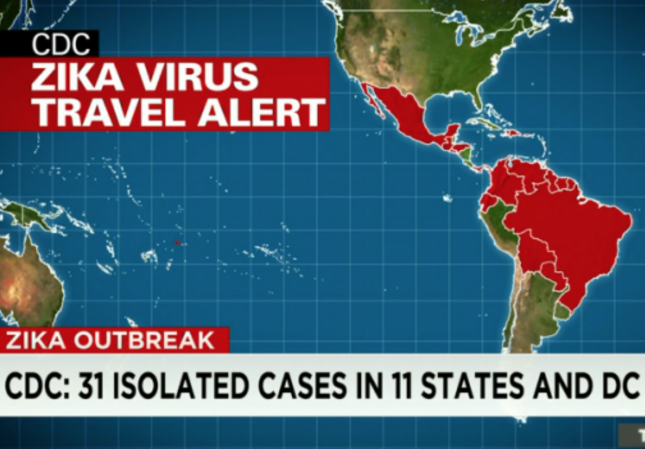
Just as President Obama declared victory in the combat against the Ebola virus, fears about another one are spreading. Zika virus, which is a mosquito-borne virus that can cause birth defects when women become infected during pregnancy, has hit South America hard and health professionals around the world are now responding to the new infectious disease crisis.
Officials in four Latin American and Caribbean nations have warned women to avoid pregnancy amid concerns over an illness causing severe birth defects. Colombia, Ecuador, El Salvador and Jamaica recommended to delay pregnancies until more was known about the mosquito-borne Zika virus. This followed an outbreak in Brazil. Brazil said the number of babies born with suspected microcephaly - or abnormally small heads - had reached nearly 4,000 since October.

Bernie Sanders' "Democrat socialist" policies sound good and have a lot of popular support among certain demographics, but when pressed on how he would pay for all the free stuff he's promising, he's a bit nonplussed.  Pesky details like that just don't interest him; it's all about the utopian ideal in his dreamy little head, not about reality. For example, although he pledged to release his plan for paying for his health care plan before the Iowa caucuses, he's now decided that might be a mistake and is considering breaking that particular pledge. CNN reports:

Bernie Sanders could break his pledge to release details on how he would pay for his health care plan before the Iowa caucuses, according to a top aide.

Professor David E. Bernstein has written a great last-minute Christmas present or belated Hanukkah gift. Lawless: The Obama Administration's Unprecedented Assault on the Constitution and the Rule of Law is sure to ruin the holiday for whoever reads it - Republicans because it confirms President Obama has run roughshod over Congress and the Constitution, and Democrats because it confirms what they have so long denied.  Which is why everybody should read it, digest it, debate it and institute changes to prevent future presidents of any party from doing such damage again. Bernstein teaches Constitutional Law, among other things, at George Mason University School of law, and his easy facility with technical, legalistic topics makes Lawless accessible and understandable without eliding over details. The picture Bernstein paints so adroitly is of an unprecedented and unlawful consolidation of power in the executive, and a president unrestrained by his own promises, by custom, by standards of legal ethics, by statute or by the Constitution.

Back in September, the New York Times reported that Turing Pharmaceuticals had increased the price of its HIV drug, Daraprim, from $13.70 per tablet to $750 per tablet.

Specialists in infectious disease are protesting a gigantic overnight increase in the price of a 62-year-old drug that is the standard of care for treating a life-threatening parasitic infection.

The drug, called Daraprim, was acquired in August by Turing Pharmaceuticals, a start-up run by a former hedge fund manager. Turing immediately raised the price to $750 a tablet from $13.50, bringing the annual cost of treatment for some patients to hundreds of thousands of dollars.

Watch Turing CEO Martin Shkreli explain his decision on Fox Business:

Substance abuse and addiction have always been an issue in America but these problems have never figured as largely in a Republican primary as they do now. According to a recent poll in New Hampshire, drug addiction was the number one concern of respondents, topping even jobs and the economy. Heather Haddon reports at the Wall Street Journal:
Drug Deaths Becoming a 2016 Presidential Election Issue New Hampshire poll participants put it above jobs and economy as something candidates should address Buddy Phaneuf, owner of New Hampshire’s largest funeral home network, has overseen burials and cremations in more than 50 heroin-related deaths this year. The average age of the decedent: 32. Christopher Stawasz, manager of an ambulance service in Nashua, said the city set a record of 28 overdoses in September, then topped it with 37 in October. “It’s surreal,” he said. “It’s just day after day.”

I have followed the progress of California's "assisted suicide" legislation since it began to wind its way through the legislature. Yesterday, the bill landed on Governor Jerry Brown's desk, and he signed the controversial measure with the type of pontificating we have come to expect from our state's chief executive:
Caught between conflicting moral arguments, Gov. Jerry Brown, a former Jesuit seminary student, on Monday signed a measure allowing physicians to prescribe lethal doses of drugs to terminally ill patients who want to hasten their deaths. Approving the bill, whose opponents included the Catholic Church, appeared to be a gut-wrenching decision for the 77-year-old governor, who as a young man studied to enter the priesthood. “In the end, I was left to reflect on what I would want in the face of my own death,” Brown added. “I do not know what I would do if I were dying in prolonged and excruciating pain. I am certain, however, that it would be a comfort to be able to consider the options afforded by this bill. And I wouldn’t deny that right to others."

The financial benefits and savings touted by Obama and his allies on the road to Obamacare's passage are still failing to live up to their promise. In fact, the largest non-profit co-op created under the law is about to fold. Anna Wilde Mathews of the Wall Street Journal:
Regulators to Shut Down Health Republic Insurance of New York Regulators will shut down Health Republic Insurance of New York, the largest of the nonprofit cooperatives created under the Affordable Care Act, in the latest sign of the financial pressures facing many insurers that participated in the law’s new marketplaces. The insurer lost about $52.7 million in the first six months of this year, on top of a $77.5 million loss in 2014, according to regulatory filings. The move to wind down its operations was made jointly by officials from the federal Centers for Medicare & Medicaid Services; New York’s state insurance exchange, known as New York State of Health; and the New York State Department of Financial Services. In a statement, Health Republic said it was “deeply disappointed” by the outcome, and pointed to “challenges placed on us by the structure of the CO-OP program.”

People are always willing to tell you how and when to eat but the rules seem to change all the time. The newest target for criticism is eating throughout the day or "grazing" as some call it. Melissa Healy of the Los Angeles Times:
Longer fasts might help with weight loss but Americans eat all day long It's official: Americans' 24/7 culture of work, entertainment and digital connectivity now also extends to our dietary consumption patterns, new research finds. Americans' erratic, round-the-clock eating patterns, suggests the new study, have probably contributed to an epidemic of obesity and Type 2 diabetes. But they can be changed, and the restoration of a longer nighttime "fast" shows promise as a means to lower weight and better health, researchers add. In a study that detailed the consumption patterns of just over 150 nondieting, non-shift-working people in and around San Diego for three weeks, researchers at the Salk Institute in La Jolla found that a majority of people eat for stretches of 15 hours or longer most days -- and fast for fewer than nine hours a night.

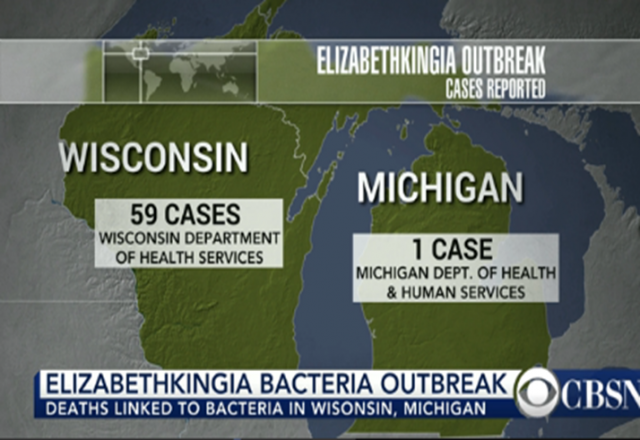
California is now seeing a significant outbreak of potentially deadly Legionnaire's Disease:
The number of inmates being observed for possible infection with Legionnaires' disease at San Quentin State Prison near San Francisco has jumped from 71 to 85, but the number of confirmed diagnoses held steady at six, authorities said Tuesday. Prison authorities said they have begun restoring some freedom of movement, as well as access to the law library and hot meals to inmates at the California prison who were put on lockdown to avoid infection when the outbreak began last week. The disease, a sometimes deadly form of pneumonia caused by a bacterium found in water systems, is transmitted when people breathe it in via steam, mist and moisture in the air. For that reason, prison officials initially shut down the plumbing in the prison, which houses 3,700 inmates and has 1,800 employees.
While an outbreak of such an illness in a prison wouldn't necessarily be newsworthy, the state now joins Illinois and New York in reporting significant numbers of new cases of this disease. New York City has reported 100 cases in recent months with 12 dead, but Mayor Bill DeBlasio indicates the rate of infection seems to be decreasing.

According to a document leaked to the Huffington Post, over 200,000 veterans waiting for healthcare have already died:
Leaked Document: Nearly One-Third Of 847,000 Veterans In Backlog For VA Health Care Already Died WASHINGTON -- More than 238,000 of the 847,000 veterans in the pending backlog for health care through the Department of Veterans Affairs have already died, according to an internal VA document provided to The Huffington Post. Scott Davis, a program specialist at the VA's Health Eligibility Center in Atlanta and a past whistleblower on the VA's failings, provided HuffPost with an April 2015 report titled "Analysis of Death Services," which reviews the accuracy of the VA's veteran death records. The report was conducted by staffers in the VA Health Eligibility Center and the VA Office of Analytics. Flip to page 13 and you'll see some stark numbers. As of April, there were 847,822 veterans listed as pending for enrollment in VA health care. Of those, 238,657 are now deceased, meaning they died after they applied for, but never got, health care.
You can read the entire document here, but as the Huffington Post mentioned, be sure to see page 13. (A screen cap of that page is featured at the top of this post.)

With transgender issues in the spotlight following the recent revelation by Caitlyn (formerly Bruce) Jenner, it's unsurprising to learn that a state like Oregon would support state-subsidized sex change operations. What is surprising to many, including to Oregon voters who did not get a chance to vote on this measure, is that these subsidized sex change operations are now available to 15-year-olds . . . without parental knowledge or consent. From Fox News:
The list of things 15-year-olds are not legally allowed to do in Oregon is long: Drive, smoke, donate blood, get a tattoo -- even go to a tanning bed. But, under a first-in-the-nation policy quietly enacted in January that many parents are only now finding out about, 15-year-olds are now allowed to get a sex-change operation. Many residents are stunned to learn they can do it without parental notification -- and the state will even pay for it through its Medicaid program, the Oregon Health Plan.

The federal government is regulating the American meal, again. This time, the target is trans-fat!
The Obama administration is ordering food companies to phase out the artery-clogging trans fats that can lead to heart disease, the country's leading cause of death. The Food and Drug Administration announced Tuesday that it would require food makers to stop using trans fats — found in processed foods like pie crusts, frostings and microwave popcorn — over the next three years.
It turns out California has banned trans fats since 2008, when our "conservative" Governor Arnold Schwarzenegger signed a bill outlawing them. When I was at the local doughnut shop yesterday, with my husband (who requested the fat-laden extravaganza for his Father's Day Breakfast), I asked the proprietor about living with the trans fat ban. She explained that while she readily complied with the rules, at added expense passed onto the customer, some other shops continued using the banned ingredients. She noted that several were closed temporarily, until legal items arrived. These facilities were then regularly reinspected for compliance. Imagine this on a large scale. It is anticipated that the conversion will cost food manufacturers billions .

Electronic medical records were supposed to save doctors' time and improve results by putting your entire medical history in one place. Two major problems. First, it doesn't work. What takes a physician a couple of minutes to write on your chart now can become a burdensome scroll through computer screens:
Government regulators are backing down from many of their toughest requirements for doctors' and hospitals' use of digital medical records, just as Congress is stepping up its oversight of issues with the costly technology. Under the Affordable Care Act, doctors and hospitals are being pushed to switch from paper to electronic records.... The federal government has spent about $28 billion in incentives to help doctors install and use EHRs, also called EMRs. But these digitized records remain the bane of many doctor and patient relationships in the Louisville area and across the nation, as physicians stare at computer screens during consultations.... Electronic health records "have made our lives harder" without improving safety, said Jean Ross, co-president of National Nurses United. Last year, the nurse union called on the FDA "to enact much tougher oversight and public protections" on electronic health records use.

American officials are scrambling to contact people exposed to an Indian woman who has been diagnosed with an extremely difficult-to-treat strain of tuberculosis.
A female patient with an extremely hard-to-treat form of tuberculosis is being treated at the National Institutes of Health [NIH] outside Washington, D.C., and federal and state officials are now tracking down hundreds of people who may have been in contact with her. The woman traveled to at least three states before she sought treatment from a U.S. doctor. While TB is not easily caught by casual contact, extensively drug resistant (XDR) TB is so dangerous that health officials will have to make a concerted effort to warn anyone who may be at risk. ... The patient, who isn't being identified in any way, may face months or even years of treatment. Ordinary TB is hard to treat and requires, at a minimum, weeks of antibiotics. XDR-TB resists the effects of almost all the known TB drugs. Sometimes patients have to have pockets of infection surgically removed. Only about a third to half of cases can even be cured.
This quest could prove extremely challenging. The NIH's latest patient traveled through one of the country's busiest airport hubs then onto three separate states.

When I reported that the Disneyland measles outbreak had officially ended, I also noted that a bill mandating vaccinations for children attending public or private schools was stalled in committee. Due to California's recent infectious disease challenges, which also includes a substantial increase in whooping cough infections, our legislators have cleared Senate Bill 277 repealing the state's current personal and faith-based exemptions, and allowing only vaccinated children to attend public and private schools.
Legislation aimed at reversing the state's liberal vaccine exemption law took a major step forward Wednesday in the state Senate, only a week after support for the bill seemed to be on shaky ground. The dramatic 7-2 vote by the Senate Education Committee surprised some Capitol observers, as one East Bay Democrat, Loni Hancock, of Berkeley, switched sides and voted yes. If the bill becomes law, California would become the third state after Mississippi and West Virginia to slam the door on any exemptions to vaccinations except those issued for medical reasons.
Children with problems like allergies or immune suppression would remain exempt under this new proposed law.

We reported that an unexpected strain of the flu was hitting Americans hard this season. But our pets are becoming ill at alarmingly high rates with a new strain of a flu that impacts them.
An outbreak of canine influenza is reaching epidemic proportions, CBS Chicago reports. Veterinarians say the illness has sickened hundreds of dogs in the Chicago area, and the infection can be deadly. Veterinarian Natalie Marks of Blum Animal Hospital says in the last week alone, more than 70 dogs have been diagnosed with canine influenza, a much more serious illness than the common "kennel cough." And it's not just a Chicago problem. "It's everywhere," Marks says. "There have been a few fatalities."
More information about the illness is available in this eHow video:

In the wake of the Ebola Czar stepping down and a presidential commission laying part of the blame for the spread of Ebola on this country, news comes that nearly a dozen Americans are heading home after potential exposure to the deadly virus.
At least 10 US citizens possibly exposed to the deadly Ebola virus were being flown to the US from Africa for observation, the US Centers for Disease Control and Prevention (CDC) said on Saturday. The individuals were set to be transported by non-commercial air transport, on their way to be housed near the University of Nebraska Medical Center, the National Institutes of Health in Maryland, or Emory University Hospital in Atlanta, the CDC said. It said none of the individuals had been identified as having Ebola. A US healthcare worker who tested positive for Ebola while in Sierra Leone arrived at the NIH on Friday and was in serious condition, the NIH said. CDC spokesman Thomas Skinner said 10 people who may have been exposed to the unidentified Ebola patient or who had a similar exposure to the virus as the patient were being flown to the US. But he said the investigation was continuing and there could be more Americans evacuated from Africa. A CDC statement said the individuals would follow the center’s recommended monitoring and movement guidelines during a 21-day incubation period.
One intrepid American headed to Honduras after a stay in an Ebola-striken area, and now that country is hosting a 21-day quarantine period:

Arguments in the case of King v. Burwell helped serve to shine light on just how big of a mess implementing, changing, scuttling, or rebuilding the ACA will be. From Bloomberg:
It wasn’t immediately clear where the court leaned, as Chief Justice John Roberts -- who voted in 2012 to uphold the law as constitutional -- asked few questions during the hearing Wednesday. A ruling is expected by late June. Alito’s suggestion that the court might set an end-of-the-year termination date for subsidies in healthcare.gov states was greeted somewhat favorably by solicitor general Donald Verilli, who represented the Obama administration. “That would reduce the disruption,” he told Alito. Still, he said it was “completely unrealistic” to expect that states that lack their own exchange could build one by the end of the year. Under current regulations, for example, states must win approval from the health department by May for an exchange that would open for business in October. Justice Antonin Scalia, another Republican appointee, said that Congress could act to solve the problem. Republicans in both the Senate and House have said that they would respond to a court ruling against the government with legislation to preserve insurance coverage, but they don’t agree on a solution. “Well, this Congress, your honor?” Verilli said, to laughter. “Theoretically, they could.”
One does not joke before the Supreme Court unless one is absolutely positive that the bench will join in the fun. Everyone laughed.