

Image 01 Image 03

Israel Tag

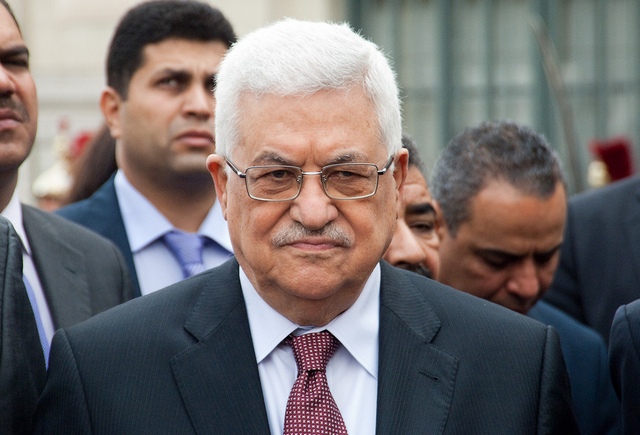
Why is it so hard to achieve peace between Israel and the Palestinians? Look at the final scorecard of the latest round of Middle East peace talks. Israel allowed three groups of prisoners - a total of 78 - to go free in exchange for talks. These prisoners were murderers. When they went to their homes their actions were celebrated. Put aside why Israel didn't release the final group of prisoners. Put aside the spectacle of a society that honors killers and what that implies for peaceful coexistence. Israel paid a price for negotiations that led nowhere. This isn't the first time either. In 2010, the administration pressured Israel to agree to a "settlement" freeze in order to coax Palestinian Authority President Mahmoud Abbas to negotiate. Abbas dragged his heels and in the last few weeks of the freeze. When the Palestinians finally started to negotiate the freeze was set to expire. The United States tried to encourage Israel to extend the freeze but Israel refused and the Palestinians walked away from the negotiations at the end of the freeze. Earlier too, Israel paid a price just to get the Palestinians to negotiate. A commenter on an earlier post of mine made a great point:
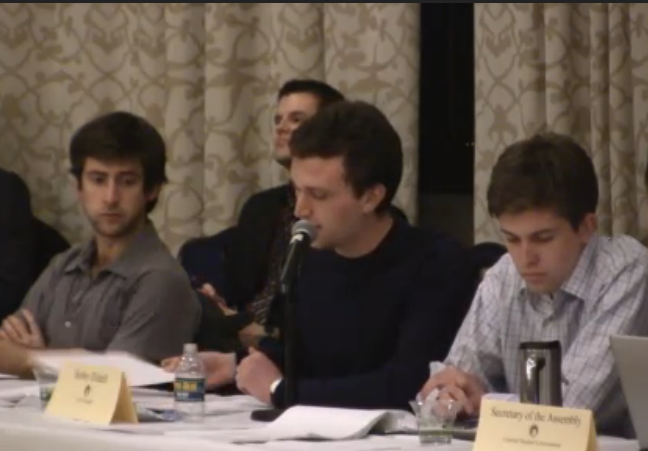
Soon after the defeat of anti-Israel divestment resolutions at U. Michigan and UCLA, I began to see anti-Israel advocates single out pro-Israel students who had gone on trips to Israel sponsored by pro-Israel groups, or had received advocacy training from pro-Israel groups. These trips and advocacy training are critical because some campuses have become openly hostile to pro-Israel students as a result of "direct action" and other intimidation by relatively small but highly coordinated anti-Israel groups like Students for Justice in Palestine. Professors actively participate in demonizing pro-Israel students.     So I was not completely surprised when I learned from reader emails over the past several days that there is an attempt at UCLA to disqualify any student who received pro-Israel training or trips from being on the Student Council. Because of my trip to Vassar and follow up, I didn't have time to write it up. So I'm glad that two others have done so. Jonathan Tobin at Commentary writes, The Next Step in the Campus War on Jews:

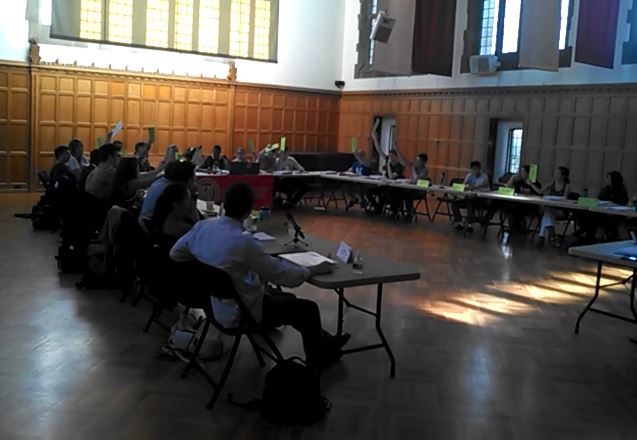
It wasn't planned this way. It's just a coincidence. Really. By the time you read this, I'll probably be in the car driving to Poughkeepsie, NY, where I will appear tonight at 7 p.m. to give a speech in support of Israel and academic freedom. And against the Open Letter signed by 39 Vassar faculty members -- none of whom took up my debate challenge -- who support the American Studies Association boycott of Israel. Maybe I'll play this recording of David Ben-Gurion reading the Israeli Declaration of Independence: Things have been tense lately at Vassar when it comes to Israel. While I'm not expecting "trouble," I thought you might like to see what trouble for pro-Israel speakers on campuses looks like, in the video below taken at UC Davis in February 2012:

It is hard to believe that it has been three months since Barry Rubin passed away. With all going on in the world, and especially in the Middle East, Barry's absence is pronounced as there are few who saw things as clearly as he did. Barry's essays and columns are not disposable, like those of some other columnists and analysts. He wasn't looking for some pithy phrase to describe a complex problem or looking for new evidence to support his ideology. He looked at events and facts and drew his conclusions. Consequently something Barry wrote could still be relevant or true, months or years later. Two recent stories illustrate this point. Barry had been a critic of the Obama administration's handling of Syria's civil war. The Times of Israel last week featured an interview with a Syrian dissident Kamal Al-Labwani, Israel is our last hope, indicates Syrian dissident. The point referred to in the headline is Labwani's belief that Israel could win over the moderate rebels in Syria and much of the population if it helped protect civilians.
“If you only helped us intercept low-flying [regime] helicopters by providing a limited amount of antiaircraft weapons, with American approval, it would have a huge effect, morally and militarily,” Labwani said. “There are a million ways such weapons can be given to recognized people [in the opposition]. These weapons have ‘fingerprints’ and deactivation modes.” Alternatively, he said, Israel could declare a no-fly zone in southern Syria, as NATO did in Libya in its bid to topple Muammar Gaddafi. Such a move would immediately cause a large segment of Syrian society to support peace and normalization with Israel.
But there's more to the interview. Labwani is not currently among the Western backed rebels. He explained why:

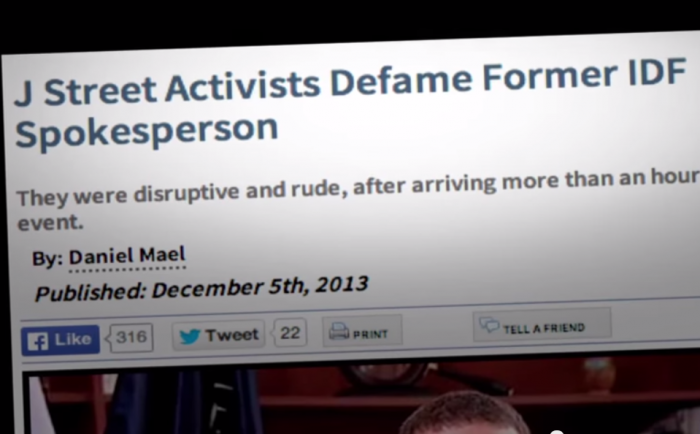
We have addressed J Street multiple times before. J Street is the progressive lobbying and political action group created as an alternative to AIPAC and other mainstream pro-Israel groups. J Street was co-founded by Jeremy Ben-Ami, with major early funding from George Soros and a mysterious Hong Kong financier.  J Street initially denied the Soros funding, but that was exposed, as we wrote in 2010, Yup, Soros Is Behind J-Street. J Street has grown rapidly, and is on the verge of being accepted into the Conference of Presidents of Major Jewish Organizations. J Street's critics argue that J Street is nothing more than a Trojan horse, meant to weaken American support for Israel. The J Street Challenge, a movie being screened now, presents the case against J Street. Under the guise of supporting Israel's right to exist, J Street allegedly relentlessly criticizes Israel, and plays into the anti-Israel narrative behind the BDS and other movements, even if it doesn't support such movements openly. Gullible liberals, particularly liberal students, it is argued, fall for the J Street line, and thereby legitimize the demonization and delegitimization of Israel.  J Street calls many of the accusations Myths. Part of the drama between AIPAC and more traditional pro-Israel groups, on the one hand, and J Street, on the other hand, plays out on college campuses, where J Street U -- the very active college division of J Street -- routinely hosts anti-Israel speakers and fails to push back against anti-Israel agitation. Brandeis University is one place where that tension has been sharp the past academic year, as Daniel Mael, a religious Jew who writes for pro-Israel websites like TruthRevolt.com, has exposed and criticized J Street. Mael has been a relentless critic of J Street and its college chapters, authoring at least the following articles (these were pulled from Mael's Twitter feed, where he has been tweeting the links):

The video below is causing quite a stir, as reported by The Times of Israel:
The video, titled “Christy a Palestinian Christian’s plea to Dr. Saeb Erekat,” was posted to YouTube on Saturday, featuring clips from separate events. In the first, Christy Anastas directs questions at Erekat, a senior Palestinian negotiator, and the second, longer segment, shows Anastas giving a presentation in which she talks about life as a Christian in Bethlehem. “I believe God has given this land to the Jews as an everlasting covenant,” Anastas said. Anastas said that Palestinian children are encouraged to violently confront Israel Defense Forces soldiers in order to die as martyrs, and that incentives included payoffs by former Iraqi dictator Saddam Hussein and the Palestinian Authority, given to the families of Palestinians that were killed. “How many Muslim countries do we have in the world?” she said. “Why can’t the Jews have one country?”
After that last quoted statement about Jews having one country, she details how a family member threatened to put a bullet in her head (at 22:35). She also has been threatened in England. (at 25:25) Pay special attention to the video starting at 3:25 when she details how children were used as fighters during the Second Intifada, and how the wall built by the Israelis separating Bethlehem from Israel has stopped "my people from killing themselves, blowing themselves up." (at 13:45) Not surprisingly, her family is abandoning her, as further reported by The Times of Israel:

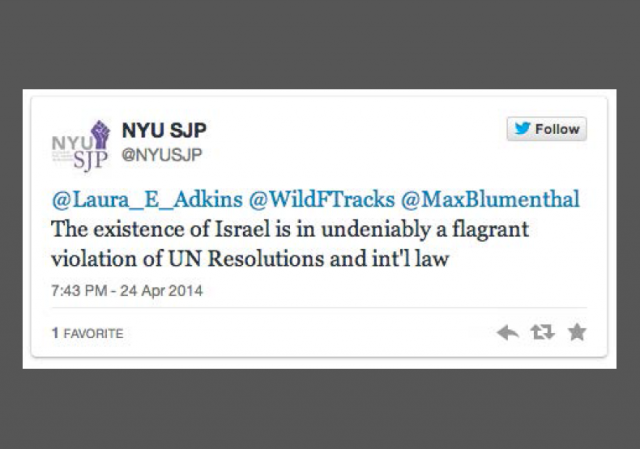
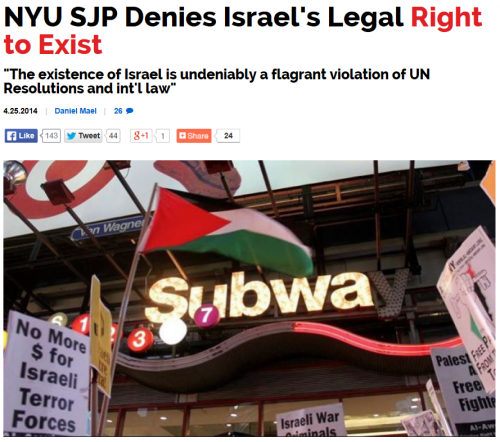
One of the beauties -- and sometimes nightmares -- of Twitter is that sometimes people tell you how they really feel without filters. Such as the NYU Dorm Stormers at Students for Justice in Palestine, who sent out the tweet in the featured image above. That tweet puts the lie to the claims of SJP and similar anti-Israel groups on campus that they do not seek the destruction of Israel, and merely want to have Israel leave Judea and Samaria (aka the West Bank). http://youtu.be/TQxzojmhWW0?t=53s There are naïve followers of these groups who actually believe that spin, but that's not what the groups are about. When they say "Justice in Palestine," what they really mean is that Israel has no right even to exist. NYU SJP was called out on the tweet at Truth Revolt: Truth Revolt NYU SJP denies Israel's right to exist A funny thing then happened. The tweet was deleted, rendering this image at the Truth Revolt post:

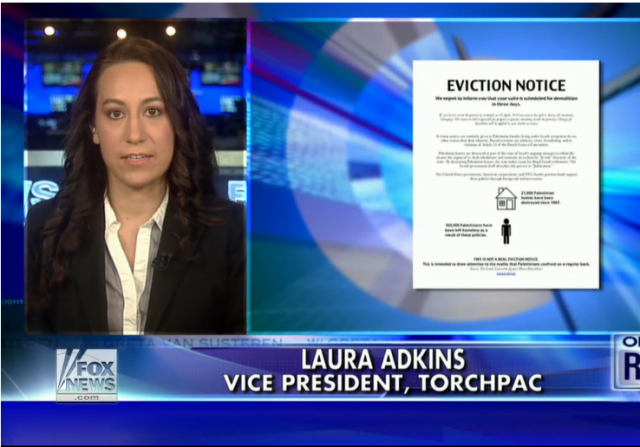
We covered the NYU "Dorm Storming" by Students for Justice for Palestine. It's now received national attention through Greta Van Susteren, who I think did a good job in this interview with Laura Adkins at focusing on the provocative nature of the act. That's something we've focused on. Of course it's part of a greater BDS movement to demonize Israel, but it's also an attempt to intimidate students in their bedrooms. Local ABC News reports (if video doesn't load, click on link): It violated NYU rules, which protect the privacy of students. If NYU takes no action, which is what I expect, then it has rendered students captives in their own dorm rooms. Rowan v. U.S. Post Office Dept., 397 U.S. 728, 738 (1970)
“We therefore categorically reject the argument that a vendor has a right under the Constitution or otherwise to send unwanted material into the home of another…. That we are often ‘captives’ outside the sanctuary of the home and subject to objectionable speech and other sound does not mean we must be captives everywhere.”
So what is NYU going to do?

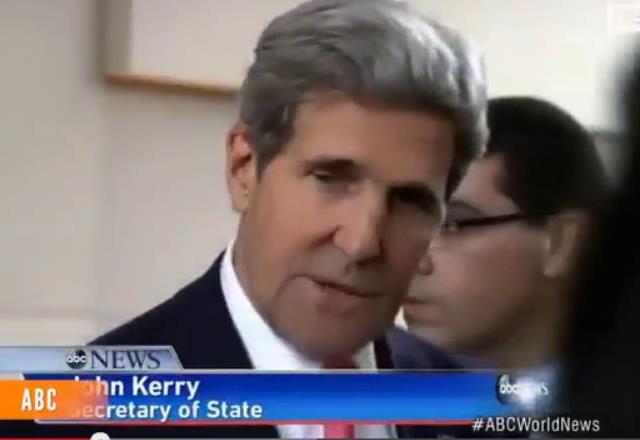
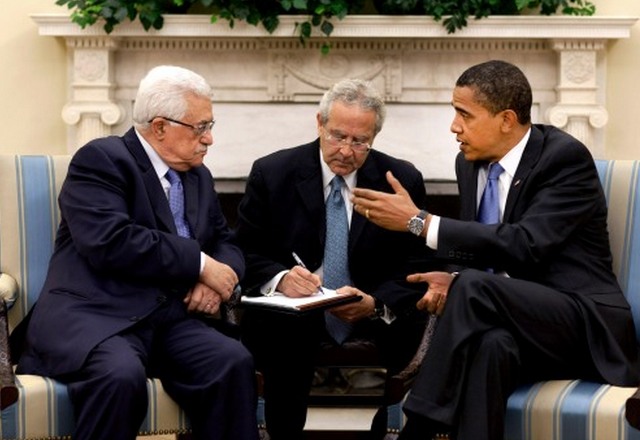
In the wake of Fatah's embrace of Hamas earlier this week there has been a very interesting reaction. Actually, the reaction has been interesting because it's been mostly non-existent. Though the New York Times and Washington Post have reported on Fatah's betrayal of the American sponsored peace process, neither has published an angry editorial denouncing Palestinian President Mahmoud Abbas for endangering or destroying the peace process. Few news events shatter perceptions more clearly than when a supposed moderate embraces extremism. And even given the fraught history of past Fatah-Hamas agreements the symbolism here is unmistakable. A week before Secretary of State John Kerry hoped to have a framework agreement, the Palestinian Authority came to an agreement with the terrorist Hamas organization and not with Israel. Let's do a few comparisons. Exhibit A: New York Times  In March 2010, when Vice President Joe Biden was visiting Israel, Israel's Interior Ministry announced plans to build houses in Ramat Shlomo. Even though Ramat Shlomo is part of Jerusalem and a part of Israel's capital that everyone expects will be part of Israel in any final agreement with the Palestinians, the announcement precipitated a diplomatic crisis between Israel and the United States. An editorial in the New York Times two days later stated about the announcement, "And it is hard to see the timing as anything but a slap in the face to Washington." In 2010, the Israeli announcement didn't and wouldn't change anything about the Middle East materially and yet the New York Times criticized the Israeli action. That Fatah-Hamas agreement, on the other hand is a game-changer. Israel dropped its objections to the PLO when the PLO renounced terror. Of course, under Arafat that declaration was meaningless as he encouraged terror against Israel even after Oslo. Abbas was supposed to be the peaceful one. But now he's embraced a terrorist organization.

Excellent analysis in the left-wing Haaretz newspaper by journalist Ari Shavit, Waiting for the Palestinian Godot:
There are some moments a journalist will never forget. In early 1997, Yossi Beilin decided to trust me, and show me the document that proved that peace was within reach. The then-prominent and creative politician from the Labor movement opened up a safe, took out a stack of printed pages, and laid them down on the table like a player with a winning poker hand. Rumors were rife about the Beilin-Abu Mazen agreement, but only a few had the opportunity to see the document with their own eyes or hold it in their hands. I was one of those few. With mouth agape I read the comprehensive outline for peace that had been formulated 18 months earlier by two brilliant champions of peace -- one, Israeli, and one, Palestinian. The document left nothing to chance: Mahmoud Abbas is ready to sign a permanent agreement. The refugee from Safed had overcome the ghosts of the past and the ideas of the past, and was willing to build a joint Israeli-Palestinian future, based on coexistence. If we could only get out from under the Likud’s thumb, and get Benjamin Netanyahu out of office, he will join us, hand in hand, walking toward the two-state solution. Abbas is a serious partner for true peace, the one with whom we can make a historic breakthrough toward reconciliation. We understood. We did what was necessary. In 1999, we ousted Likud and Netanyahu. In 2000, we went to the peace summit at Camp David. Whoops, surprise: Abbas didn’t bring the Beilin-Abu Mazen plan to Camp David, or any other draft of a peace proposal. The opposite was true: He was one of the staunchest objectors, and his demand for the right of return prevented any progress.

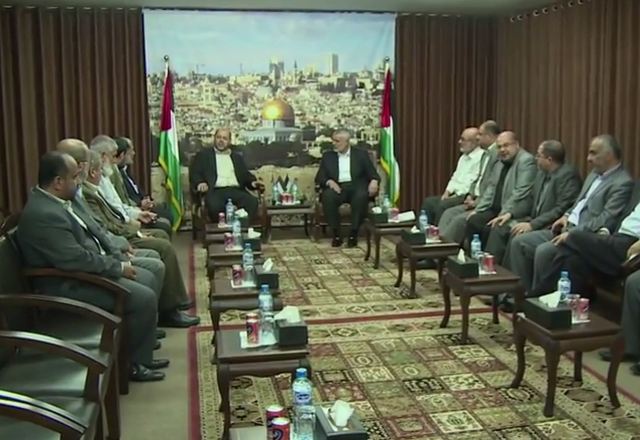
Fatah and Hamas have reached an agreement to put their differences behind them and form a unity government. The New York Times reports:
The two groups — the Palestine Liberation Organization, which runs the Palestinian Authority in the West Bank, and Hamas, the militant Islamist group that dominates the Gaza Strip — have reached similar accords before that were never carried out. But the latest deal comes as the fragile American-brokered peace efforts between the Palestinians and Israel are approaching an April 29 deadline without a resolution in sight. People familiar with the discussions have said the Israeli and Palestinian sides were far apart even on how to extend the talks past the deadline.
The Times article ends in typical understatement.
Analysts remained skeptical about whether the Palestinian reconciliation efforts would lead to a tangible change on the ground, because neither of the factions has shown interest in genuine power-sharing in the past, and they have deep differences over how to deal with Israel, which Hamas does not recognize. Even so, some experts said that the latest effort at reconciliation appeared more serious than past attempts, because both factions are under growing pressure. Gaza under Hamas has been severely weakened by an Egyptian crackdown on the smuggling tunnels along the Gaza-Egypt border and an Israeli blockade. And Mr. Abbas, for his part, has faced growing criticism from West Bank residents about the negotiations with Israel and his own legitimacy, with Palestinian elections long overdue. He has threatened to dissolve the Palestinian Authority, which exercises limited self-rule in the West Bank, if the talks with Israel end in failure.
No Hamas does not recognize Israel. It is also a genocidal terrorist organization devoted to destroying Israel. Note terror is not mentioned.

Is there anything that the U.N. does right? I noticed a story earlier this week, Apology for UN refusal to stop Rwanda genocide. The context for the apology is the twentieth anniversary of the Rwandan genocide.
Former New Zealand ambassador Colin Keating issued the rare apology during a council meeting to commemorate the 20th anniversary of the genocide and examine what has been done since to prevent new genocides. The open session elicited praise for the U.N.'s stepped-up commitment to put human rights at the center of its work but widespread criticism of its failure to prevent ongoing atrocities in Syria, Central African Republic and South Sudan.
Keating was the President of the Security Council twenty years ago. Of course, another U.N. official was in charge of peacekeeping operations at the time one million Rwandan's were killed. His name is Kofi Annan. Despite his failure to prevent the genocide he was promoted to Secretary General of the United Nations. (There is even a Kofi Annan Peacekeeping Training Centre in his native Ghama. It's as if he actually succeeded at his job. The job he's good at is funding vanity projects.) To be sure Annan apologized for his failure ten years ago. Two months ago, U.N. diplomat, Lakhdar Brahimi also apologized:

Max Blumenthal is experiencing what goes around coming around. Having blamed various critics of radical Islam as well as international Zionism for the 2011 mass murder in Norway, unfairly, Blumenthal now is in focus because the Overland Park shooter was a big fan of Blumenthal's Jewish money and Israel Lobby conspiracy theories.  The shooter was a Neo-Nazi and KKK leader for whom Jewish control of the media and international money was a core belief motivating hatred of Jews.  That's a shared space for anti-Zionists of multiple political ideologies and religions. Specifically, the shooter focused on Blumenthal's theory that Jewish campaign donors were trying to buy the 2012 U.S. presidential election for Bibi Netanyahu, as expressed by Blumenthal in a lengthy article and a Russia Today television interview, to which the shooter linked.  It's ugly stuff, but the type of ugly stuff for which Blumenthal has become known. I've been less harsh on Blumenthal than others, The Overland Park murders, anti-Zionist conspiracy theories, and the blame game:
Assuming Cross [aka Glenn Miller] linked to Blumenthal’s conspiracy theories about the 2012 election, would that mean Blumenthal is responsible for the Overland Park shooting? Absolutely not. Is the intersection between neo-Nazi and anti-Zionist conspiracy theories worthy of examination? Absolutely. We have seen in Europe in particular how anti-Semitism and anti-Zionism go hand-in-hand, often based on conspiracy theories about Jewish and Israeli influence. [image omitted] Those types of consipiracy theories regarding the alleged manipulations of Jewish money and interests are as old as hate itself. That is a fair subject of discussion. I wonder if the mainstream media will go there, as it did in the Norway shooting.
Others are more direct in drawing the connection between the shooter's adoration of Blumenthal's anti-Zionist conspiracy theories and the shooting, in part perhaps because Blumenthal tried to lay blame on some of  them for the Norway shooting (Pipes, Geller):