The Megyn Kelly Moment Kelly, who is now 44, grew up in Ailes’s America, in a middle-class suburb of Albany called Delmar. She was the youngest of three children, worked as a fitness instructor and went to Mass most Sundays. Her father was an education professor at the State University of New York at Albany, and her mother ran the behavioral-health department at a Veterans Administration hospital. As a teenager in the late 1980s, she lived in a mall rat’s bubble of tall hair, leg warmers and Bon Jovi; one of the popular kids, she was the type who also had friends among the other groups at Bethlehem Central High School, with names like the Dirties (hackeysack-playing stoners) and the Creamies (choir geeks). Reality intruded early. Ten days before Christmas, when Kelly was 15, her father died of a heart attack. He had canceled some of his life-insurance coverage just two months earlier. Money had been tight, and Kelly’s mother had to worry about the mortgage and other expenses. In her senior yearbook, Megyn listed her future hopes in three words: “College, government, wealth.” Kelly took a high-school aptitude test that, in a perhaps rare moment of accuracy for such tests, suggested that her ideal career was news. She applied to Syracuse in hopes of attending its well-regarded communications program; she was accepted to the school but rejected from the program, so she majored in political science instead.It's a very long piece but worth reading in full. Of course, not everyone on the left is happy about Kelly's success.
But Iran’s supreme leader, Ayatollah Ali Khamenei, who will have the last word on any agreement, voiced new doubts on Wednesday about whether “the enemy” — America — could be trusted to really lift sanctions. His skepticism is not unfounded. President Obama has the authority to temporarily ease sanctions on Iran, and he has done that to a limited extent by allowing Iran to receive about $700 million per month in assets frozen abroad under the terms of an interim nuclear agreement that has been in place since November 2013. Even so, the power to permanently lift most sanctions lies with Congress, where many members deeply mistrust Tehran, and Republican leaders have said that new and stronger sanctions are near the top of their todo list in the new Congress. Such a move might be justified down the road if negotiations collapse, or if Iran cheats on its commitments. But at this stage it could easily undermine the talks, split the major powers and propel Iran to speed its nuclear development.The Times acknowledges that Khamenei, despite Obama's (overly generous) outreach, still considers the United States his "enemy." This, of course, is not a one-time remark by Khamenei, who regularly rants against "global arrogance" (read: the United States).
Since 2000, there have been three serious negotiations that culminated in offers to resolve the Israeli-Palestinian conflict: Bill Clinton's parameters in 2000, former Israeli Prime Minister Ehud Olmert's offer in 2008, and Secretary of State John Kerry's efforts last year. In each case, a proposal on all the core issues was made to Palestinian leaders and the answer was either "no" or no response. They determined that the cost of saying "yes," or even of making a counteroffer that required concessions, was too high. Palestinian political culture is rooted in a narrative of injustice; its anticolonialist bent and its deep sense of grievance treats concessions to Israel as illegitimate. Compromise is portrayed as betrayal, and negotiations -- which are by definition about mutual concessions -- will inevitably force any Palestinian leader to challenge his people by making a politically costly decision. But going to the United Nations does no such thing. It puts pressure on Israel and requires nothing of the Palestinians. Resolutions are typically about what Israel must do and what Palestinians should get. If saying yes is costly and doing nothing isn't, why should we expect the Palestinians to change course?Abbas, as Ross noted, torpedoed the American-sponsored peace process last year (just as former Israeli negotiator Tzipi Livni recently recounted) only to see political pressure brought to bear on Israel. Ross ends by asking, "But isn't it time to demand the equivalent from the Palestinians on two states for two peoples, and on Israeli security? Isn't it time to ask the Palestinians to respond to proposals and accept resolutions that address Israeli needs and not just their own?"
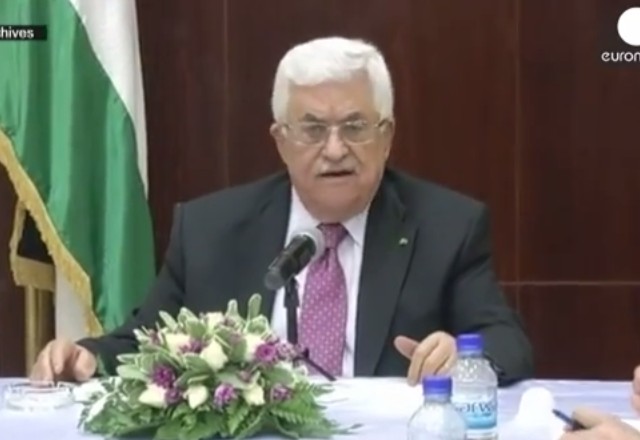
Mr. Abbas began this week by insisting that the Security Council approve a resolution to set a deadline for establishing a Palestinian state, including the phased withdrawal of Israeli forces from the West Bank by the end of 2017. After heavy lobbying by the United States and Israel, the resolution received only eight of the nine votes needed to pass in the 15-member council. The fact is, the United States, which voted against the measure, supports a Palestinian state. And France, which broke with the Americans and voted in favor, acknowledged reservations about some of the details. Following this defeat, Mr. Abbas moved swiftly on Wednesday to take an even more provocative step in joining the International Criminal Court, through which the Palestinians could bring charges against Israeli officials for cases against their settlement activities and military operations. While he was under strong pressure from his constituents to do this, he knew well the cost might be great. “There is aggression practiced against our land and our country, and the Security Council has let us down — where shall we go?” Mr. Abbas said at his headquarters in the West Bank city of Ramallah.Note that the Times describes these moves not as wrong, but as counterproductive.
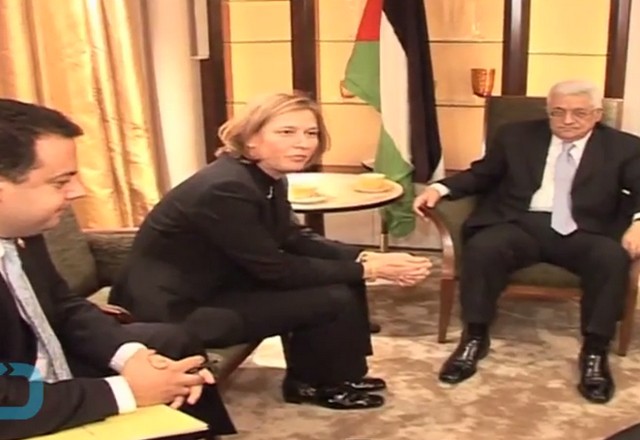
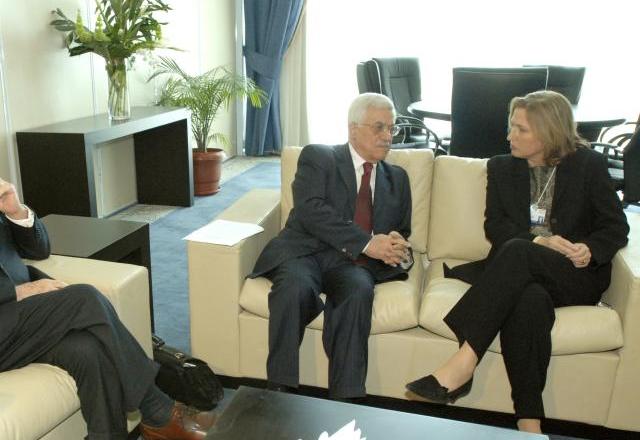
But if this is indeed to be the thrust of the center-left’s campaign in the elections, success is likely to continue to elude it. Israelis are deeply aware both of the threats that surround them, and of the cold attitude of the current U.S. administration toward their country. A campaign which seeks to blur or obscure these or to claim that they are largely of Israel’s own making is likely to win its proponents a further term in the opposition.We only have to go back to last week, when Roger Cohen of the The New York Times published an interview with former Israeli peace negotiator Tzipi Livni, to see how true Spyer's assessment is. Livni, in the column, identifies Palestinian Authority President Mahmoud Abbas as the one who torpedoed the American-sponsored peace process by failing to accept an American framework agreement, attempting to bolster a unilateral bid for statehood by signing international treaties and finally by agreeing to a unity government with Hamas. Yet even as Livni recounted Abbas refusal to negotiate in the middle of the op-ed, at the beginning and end of the article she asserts that only she and those aligned with her are moderates seeking peace. The problem is the disconnect between her accounting of Abbas' intransigence and her insistence that Likud is what's preventing peace is rather obvious. She can't convincingly claim that Prime Minister Benjamin Netanyahu is the major obstacle to peace when she herself has documented how Abbas scuttled the American peace efforts.
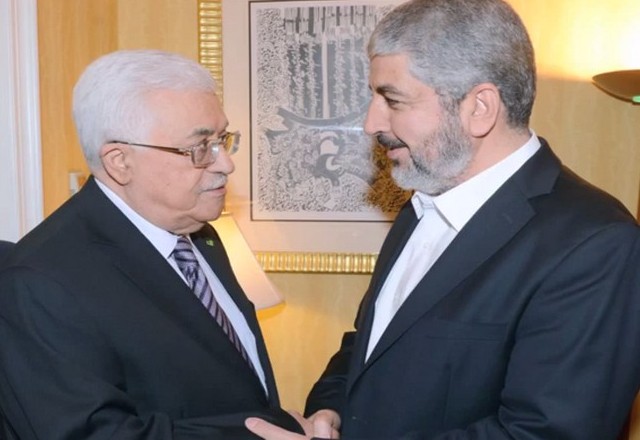
Seven years of Hamas control over Gaza would be gradually replaced by the Fatah-dominated PA, billions of dollars in donor aid would flow in, and the Gazan people would be liberated from the continued rule of an internationally-designated terrorist organization (and the continued need for an Israeli and Egyptian blockade around the territory). Or at least that was the idea. But all these plans are on hold as Hamas and the PA engage in a game of political chicken, staring each other down , a reality confirmed to me over the past month in conversations with nearly two dozen Israeli and Palestinian officials (from both Fatah and Hamas), international diplomats and non-governmental sources based in Israel and the West Bank, some of whom requested to remain anonymous so as to speak more freely.
Livni considered it a fair framework, and Netanyahu had indicated willingness to proceed on the basis of it while saying he had reservations. But Abbas declined to give an answer in what his senior negotiator, Saeb Erekat, later described as a “difficult” meeting with Obama. Abbas remained evasive on the framework, which was never made public.One part of the framework was to accept the 1967 lines (really the 1948 armistice lines) as the basis of negotiations. In other words, Netanyahu made a major concession here and Abbas still refused to play ball. Still at the behest of the administration talks continued and a few weeks later, the Palestinians were at it again.
Then, Livni said, she looked up at a television as she awaited a cabinet meeting and saw Abbas signing letters as part of a process to join 15 international agencies — something he had said he would not do before the deadline.Abbas offered the excuse that Israel was stalling. Still, this was a unilateral action outside the framework of negotiations and a broken promise. Finally, there was this:
The administration’s decision to restore full diplomatic relations, take steps to remove Cuba from the State Department list of countries that sponsor terrorism and roll back restrictions on travel and trade is a change in direction that has been strongly supported by this page. The Obama administration is ushering in a transformational era for millions of Cubans who have suffered as a result of more than 50 years of hostility between the two nations.
Mr. Obama could have taken modest, gradual steps toward a thaw. Instead, he has courageously gone as far as he can, within the constraints of an outmoded 1996 law that imposes stiff sanctions on Cuba in the pursuit of regime change.
The False Equivalence in The New York Times Coverage of P5+1 Nuclear Talks with Iran...
The consequences of failure to reach an accord would be serious, including the weakening of President Hassan Rouhani of Iran and his foreign minister, Mohammad Javad Zarif, who count as moderates in Iran, and who, like President Obama, have taken a political risk to try to make an agreement happen.That would be terrible. Rouhani and Zarif would be weakened! Or would it? How much political power does Rouhini have anyway? And if they have any real political power, how moderate are they anyway? As far as the first question, well, they don't call Ayatollah Ali Khamenei the Supreme Leader for nothing. In an investigative report last year, Reuters showed that Khamenei using the organizations under his control has amassed a huge fortune by property seizures. David Daoud recently wrote:
More importantly, the Rahbar [the Supreme Leader] effectively decides who will or will not be the public face of his rule—that is, who will or will not be the president of Iran. Khamenei selects the 12 members of the Shura-ye Neghahban (“Guardian Council”), which is tasked with vetting and approving presidential candidates based on their allegiance to the ideals of the Vilayat-e Faqih. The Western media often calls Iranian leaders like ex-president Mohammad Khatami and current president Hassan Rouhani “moderates” or “reformers,” but the Guardian Council’s policies render such a characterization absurd. No genuine moderate or reformist candidate can get through the Council’s dragnet. In effect, then, the vetting process and the Rahbar’s ultimate authority negate any possibility of material change in Iran’s foreign or domestic policies.In other words not only is Rouhani not the ultimate power in Iran, he wouldn't have achieved even his limited authority unless he was a true believer in the system. Rouhani is only a "moderate" in that he's willing to talk to the West to achieve his goals, but his goals and views are identical to those of Khamenei.
The Obama administration has sweetened its offer to Iran in ongoing nuclear negotiations, saying it might accept Tehran operating 4,000 centrifuges, up from the previous 1,300, according to a semiofficial Iranian news agency. The Mehr news agency also said Monday that Iran and the six world powers seeking to negotiate a nuclear deal remained divided over how much uranium-enrichment capacity the Middle East nation should be allowed to maintain, and how to lift punitive sanctions from its economy.Ray Tayekh, a critic of the current negotiations, observed that "the U.S. sweetener may encourage Iran to drag out negotiations to see what better offer it might receive after a few more months of talks."
There's no mention at all in the Times promotional language about the tour of Iran's status as a state supporter of terrorism, of its pursuit of nuclear weapons, or of its human rights abuses. For information about those abuses, anyone considering plunking down nearly $7,000 for the pleasure of accompanying a Times journalist on a "relaxing evening and dinner" after antique shopping in Iran may want to consider, first, browsing the State Department's latest human rights report on Iran. It reports that under Iranian law, "a woman who appears in public without an appropriate headscarf (hijab) may be sentenced to lashings and fined." It also says that "The law criminalizes consensual same-sex sexual activity, which may be punishable by death or flogging."
"...[Our article] gave an incorrect comparison between efforts by the president to seek allies' support for this plans and President George W. Bush's efforts on such backing for the Iraq War. The approach Mr. Obama is taking is similar to the one Mr. Bush took; it is not the case that "Unlike Mr. Bush in the Iraq war, Mr. Obama has sought to surround the United States with partners."Hot Air points out that the Times is hardly alone in its egregious error (or was it a purposeful falsehood, otherwise known as a lie?) What's more, what took the Times ten days to figure it out, when the Times own contemporaneous coverage of the Iraq War easily refuted it? It's the old "fool or knave" question again. You might ask why we should care anymore, and I have to admit I care a lot less than I once did, because I have grown accustomed to the MSM's tendency toward stupidity/ignorance, reckless disregard for the truth, propensity to lie, blatant bias, and intense and shameless arrogance. But the process by which the Times and the rest of the MSM forms the opinions of the public (and it still is highly influential in doing so) remains a huge problem.
The next few weeks will be critical for capitalizing on a new sense of promise created by a recent flurry of remarkable gestures: Iran’s leadership has sent Rosh Hashana greetings to Jews worldwide via Twitter, released political prisoners, exchanged letters through the Swiss with President Obama, praised “flexibility” in negotiations and transferred responsibility for nuclear negotiations from conservatives in the military to the Foreign Ministry. Mr. Obama eased restraints on humanitarian and good-will activities, including athletic exchanges between the two countries. ... Mr. Rouhani has a sophisticated, Western-savvy team. His foreign minister, Mohammad Javad Zarif, received degrees from American universities and spent most of his adult life in the United States. Together they have raised expectations in a world eager to see Iran play a more constructive role, and the charm offensive is in full swing. Policy experts, journalists and business people are jockeying to attend a number of invitation-only breakfasts, dinners and meetings scheduled by Mr. Rouhani and Mr. Zarif while they are in New York. There’s a lot riding on their visit this week.But the "remarkable gestures" that The New York Times cited were remarkable hollow.
The seventh soldier is Sgt. Oron Shaul, 21, from Poria. We are still working to identify his body.
— IDF (@IDFSpokesperson) July 22, 2014
https://twitter.com/CiFWatch/status/491539100491866113
Hamas claims it captured IDF solider, but much more likely they have part of body, according to IDF officer I spoke to.
— Sheera Frenkel (@sheeraf) July 22, 2014
Of the 27 Israeli soldiers killed so far in Operation Protective Edge, 6 of them have been killed inside of Israel, not Gaza. In separate incidents soldiers were killed by terrorists emerging from terror tunnels:
The call came to the cellphone of his brother’s wife, Salah Kaware said on Tuesday. Mr. Kaware lives in Khan Younis, in southeast Gaza, and the caller said that everyone in the house must leave in five minutes, because it was going to be bombed. A further warning came as they were leaving, he said in a telephone interview, when an Israeli drone apparently fired a flare at the roof of the three-story home. “Our neighbors came in to form a human shield,” he said, with some even going to the roof to try to prevent a bombing. Others were in the stairway when the house was bombed not long afterward.Israel warned the residents and people went into the building. The casualties here occurred because Gaza residents because people intentionally put themselves in danger. The New York Times then informs us:
The Israeli military said that targeted houses belonged to Hamas members involved in launching rockets or other military activity, and that they had been used as operations rooms.As the Washington Post also reported the story we have an indication that in this case, the Israeli military was 100% correct. After describing the warning call, the "knock on the roof," and the entry of neighbors into the building, the Post reports:
Ahmed Kawarea said he ran home when he heard about the first rocket. The second missile hit when he was in the stairwell on his way to the roof.
The two events exposed the extent to which parts of each side have dehumanized the other. After the kidnapping of the three Israeli teenagers last month, messages posted on social networks by Palestinians celebrated the capture of “three Shalits,” in reference to Gilad Shalit, the Israeli soldier held captive by Hamas militants in Gaza, who was eventually released in exchange for 1,027 prisoners. A 17-year-old created the Facebook group calling for revenge for the kidnapping of the three Israelis, and an Israeli blogger, Ami Kaufman, pointed to a photograph submitted to the Facebook group by two smiling girls who held a sign reading, “Hating Arabs is not racism, it’s values!”This was a sentiment repeated in an editorial in today's New York Times, Four Horrific Killings:
Donations tax deductible
to the full extent allowed by law.
Founder
Sr. Contrib Editor
Contrib Editor
Higher Ed
Author
Author
Author
Author
Weekend Editor
Author
Editor Emerita