NY Times condemns anti-academic boycott legislation, but not academic boycott
NY Times has not a bad word to say about a boycott condemned by almost all of academia....
The New York Times is pretty clearly expending a lot of resources on the various Chris Christie scandals. So far they haven't produced any smoking guns, but they're sure digging up some stuff that doesn't look good for Team Christie. First up is a look at the Christie political team, which was apparently obsessed with winning votes in Democratic-leaning towns. This wasn't because the votes themselves were all that critical to Christie's 2012 reelection campaign, but because winning in these places "would validate the governor’s argument that he would be the most broadly appealing Republican choice for president in 2016" ....After describing a couple of Times pieces that show no direct evidence of wrongdoing, just a tough politician, Drum concludes:
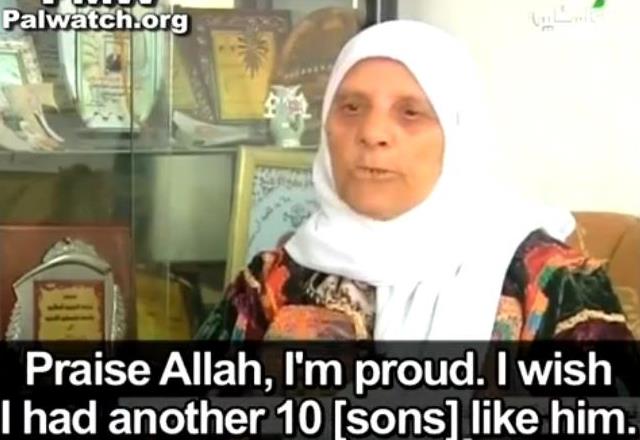
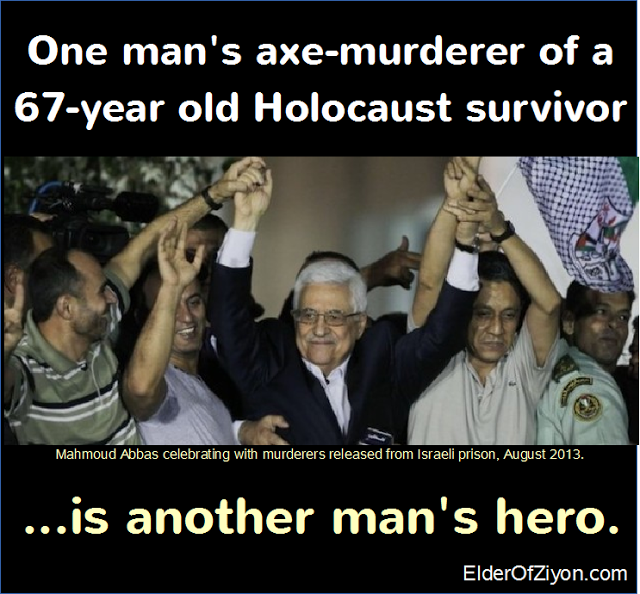
Until his release, Issa Abd Rabbo was serving two life sentences for killing two Israeli university students, Ron Levi and Revital Seri, who were hiking south of Jerusalem on Oct. 22, 1984. At gun point he tied them up, put bags over their heads and then shot and murdered both. Abbas' "hero" has now given an interview to the independent Palestinian news agency Ma'an on its weekly TV program Lovers' Tales, which interviews released prisoners. There he calmly describes how he initiated the killing, spotted the two hiking university students and waited until they sat down to rest under a tree. He then recounts how he tied them up and murdered them in cold blood.Here's the clip. Note how he betrays absolutely no remorse.
Bully Boy of Bayonne...
Israeli Prime Minister Benjamin Netanyahu would likely have to recognize Israel's pre-1967 war frontier as the starting point for border talks with the Palestinians, an ideological reversal that would put him on a collision course with his hardline base. Palestinian President Mahmoud Abbas fears he'll be pressured to recognize Israel as the homeland of the Jewish people, a step he believes would abrogate the rights of Palestinian refugees and their descendants.The parallelism here is bogus. In the first place the idea that having the "pre-1967 war frontier" (more correctly they should be called "the 1949 armistice lines") as a basis for any peace deal is a departure from the original intent of Resolution 242. After the 1967, Six Day War, there was an international consensus that an Israeli return to its pre-war borders was a "prescription for renewed hostilities."
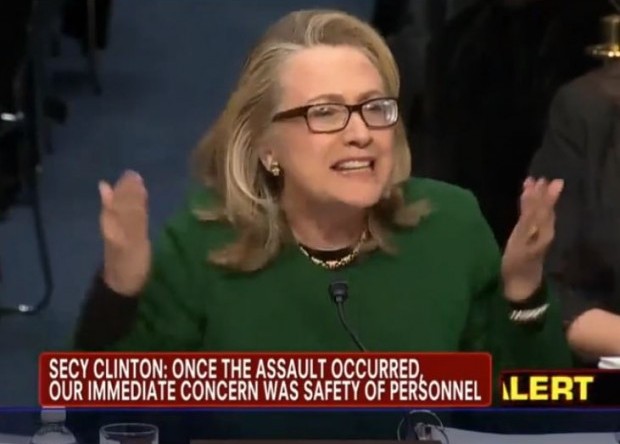
Fifteen months after the Sept. 11 attack in Benghazi which killed Ambassador Chris Stevens and three other Americans, the narrative of the attack continues to be shaped, and reshaped, by politicians and the press. But a New York Times report published over the weekend has angered sources who were on the ground that night. Those sources, who continue to face threats of losing their jobs, sharply challenged the Times’ findings that there was no involvement from Al Qaeda or any other international terror group and that an anti-Islam film played a role in inciting the initial wave of attacks. “It was a coordinated attack. It is completely false to say anything else. … It is completely a lie,” one witness to the attack told Fox News.Since then, The Times has doubled down in support of its investigation and its conclusions with an editorial and an editor's note written by the paper's editorial page editor, Andrew Rosenthal. I'd like to add three more general observations:
In the coming months when Iran and the West have a dispute over the meaning of terms of the Geneva deal or the discovery of something suspicious in Iran, Iran knows that it can bluff its way out of suffering any consequences for its bad faith.Last week the Treasury Department designated a number of companies and individuals for their illegal trade with Iran.
“The Joint Plan of Action reached in Geneva does not, and will not, interfere with our continued efforts to expose and disrupt those supporting Iran’s nuclear program or seeking to evade our sanctions. These sanctions have isolated Iran from the international financial system, imposed enormous pressure on the Iranian economy, and motivated the Iranian leadership to make the first meaningful concessions on its nuclear program in over a decade,” said Under Secretary for Terrorism and Financial Intelligence David S. Cohen. “Today’s actions should be a stark reminder to businesses, banks, and brokers everywhere that we will continue relentlessly to enforce our sanctions, even as we explore the possibility of a long-term, comprehensive resolution of our concerns with Iran’s nuclear program.”The Iranian reaction was predictable.
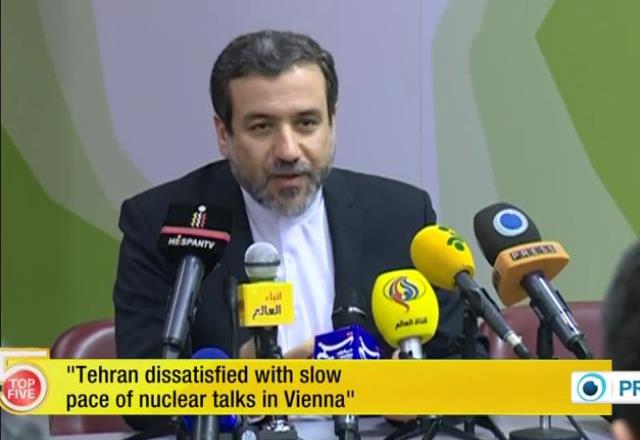
Iranian negotiators in Vienna halted nuclear talks with major powers to return to Tehran for consultations Thursday after Washington blacklisted a dozen companies and individuals for evading US sanctions, Islamic Republic state media reported.Iran's deputy nuclear negotiator Abbas Araqchi added:
When does 30,000 equal 70,000? When you report for the New York Times and you're reporting about Israel....
Nine years ago the New York Times argued that Iran must "abandon its nuclear fuel enrichment efforts," but now supports a deal which enables such enrichment....
Along the way, Ms. Sherman was the State Department’s chief strategist in dealing with the North Korean nuclear program. It was a searing experience, in both its temporary successes and long-term failure, that prepared her for the complexity of the Iranian negotiations, and has made her a target for those on Capitol Hill who argue that history is about to repeat itself.What were the temporary successes? It was coming to agreements with the rogue regime. The long term failure stemmed from trusting those successes to deter North Korea. So if and when Iran develops a nuclear weapon, will we read about the temporary success of Geneva? For a history of Wendy Sherman that doesn't pull punches see Axis of Fantasy vs. Axis of Reality by Bret Stephens:
The majority of the medical equipment taken to Japan by the IDF, including x-ray machinery and lab equipment, will remain in Japan in order to benefit the physicians and local authorities providing care to the community of Minamisanriku and its vicinity. ...
Mideast Media Sampler 11/18/2013 - Thomas Friedman: The Incredible Shrinking Columnist...
Mideast Media Sampler 11/12/2013 - John Kerry's MSM Cheerleaders...
The proposal under consideration in Geneva was to have been the first stage of a multipart agreement. It called for Iran to freeze its nuclear program for up to six months to allow negotiations on a long-term agreement without the worry that Iran was racing ahead to build a bomb. In exchange, the West was to have provided some easing of the international sanctions that have battered Iran’s economy. After years of off-again, on-again talks, the deal would have been the first to brake Iran’s nuclear program.Despite the diplomats’ insistence on progress, the failure to clinch an agreement raised questions about the future of the nuclear talks, given the fierce criticism that the mere prospect of a deal whipped up in Israel and among Republicans and some Democrats in Congress.Unfortunately, this frames the scuttling of the talks in terms of those looking for a compromise versus pro-Israel ideologues. Subsequent reporting in the article is more specific about some, but not all, of the real issues involved.
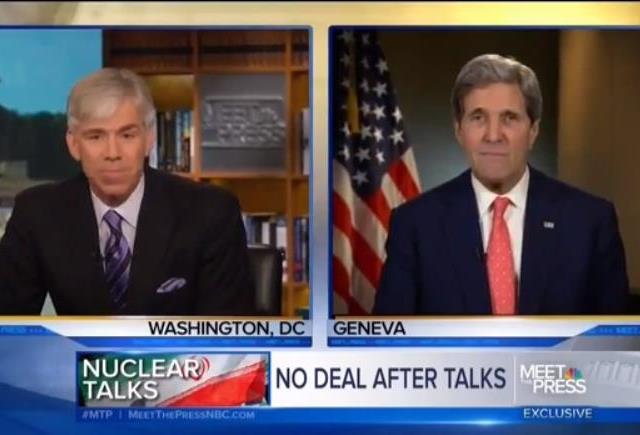
With talks over Iran’s nuclear program set to resume in Geneva this week, both sides engaged in a bit of public diplomacy Sunday: Iran’s supreme leader moved to quiet hard-liners in his country by expressing support for his negotiating team, while the chief American negotiator reiterated in an Israeli television interview that “no deal is better than a bad deal.” The supreme leader, Ayatollah Ali Khamenei, who holds Iran’s final word on the nuclear talks, told a group of students here that he was not optimistic the negotiations would succeed, but he also sent a negative message to the conservative clerics and military commanders who in recent weeks have attacked the diplomatic initiative.
The Committee for Accuracy in Middle East Reporting in America (CAMERA) is a valuable resource on which we frequently rely for news tips and information regarding the Middle East. I'm not sure how I ended up on CAMERA's email update list, and I'm not even sure...
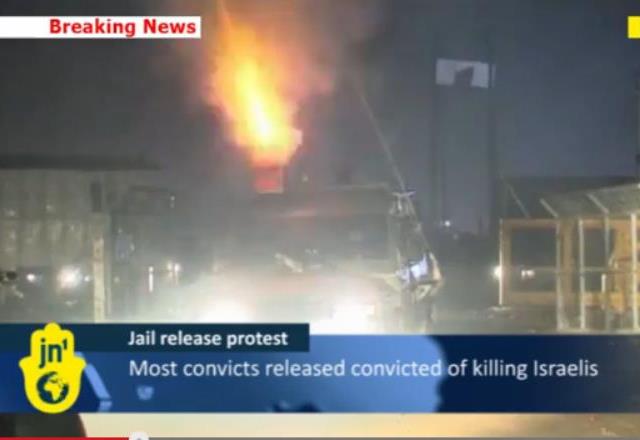
One group of people was happy as murderers went free while others wept. But the gulf here is more than emotional or merely, as the Times seemed to describe it, a difficult process that is part of the price Israel must pay for the chance of peace. In fact, the “emotional gulf” is indicative of a vast cultural divide between these two peoples that explains more about the absence of peace than any lecture about history, borders, or refugees. Simply put, so long as the Palestinians honor murderers, there is no reason to believe they are willing to end the conflict.Consider the way the New York Times in the article cited by Tobin portrayed the Israeli reaction to the prisoner release:
In Israel, where the returnees are widely viewed as terrorists, the release on Tuesday, like the one in August, has stirred protests and anguish. Many said it was too heavy a price to pay for entering negotiations with no guarantee of a peace accord."[W]idely viewed?!?!" This statement is incredible. It's not only in Israel that they are "viewed as terrorists," but by definition. Only in the crazy New York Times worldview is the definition of terrorists subjective.

Donations tax deductible
to the full extent allowed by law.
Founder
Sr. Contrib Editor
Contrib Editor
Higher Ed
Author
Author
Author
Author
Weekend Editor
Author
Editor Emerita