

Image 01 Image 03

Iran Tag

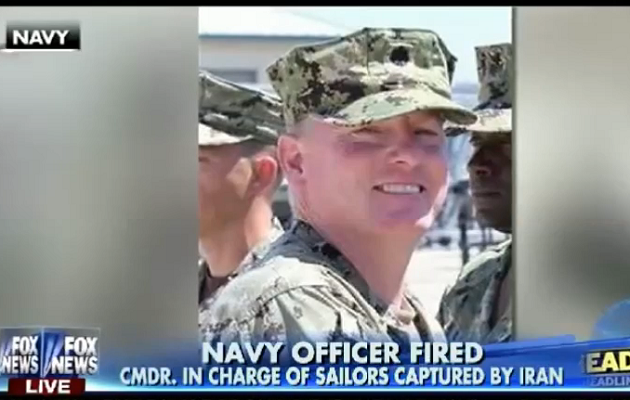
Every confrontation with Iran has a phase which is much more important to the Iranians than the physical outcome. It's the humiliation phase, in which the Iranians get to exploit photos and video showing their opponents as weak and the Iranians as strong. We saw it throughout the U.S. Embassy hostage drama in 1979-1980, in which the hostages were paraded in front of the cameras and crowds. Iran Hostage Crisis The 10 U.S. sailors were released earlier today after Iran seized two small U.S. Navy boats yesterday. Iran demanded an apology and is claiming it got one, though the U.S. denies that. There is no doubt, however, that the pathetic and delusional John Kerry openly thanked the Iranians:
U.S. Secretary of State John Kerry on Wednesday thanked Iran for its cooperation in the release of 10 sailors who had mistakenly entered Iran's territorial waters, an incident that stoked international tension.

Tuesday, the U.S. experienced yet another provocation from Iran who seized two U.S. Navy boats carrying ten U.S. sailors. Iran promised to return everyone and everything shortly. So, yay?

At a time when tensions in the Middle East are rising, it is perhaps a time to once again review President Barack Obama's qualifications for office. To be sure his qualifications were fabricated, or at least oversold. This wasn't just the doing of the Obama campaign. Campaigns are supposed to do present their candidates in the best possible light. The problem  was that America's supposedly independent media boosted the first terms senator's prospects with little or no skepticism. This was certainly the case in reporting where most reporters bought into the historical aspect of Obama's candidacy as well was the rebuke to Republicans for the failings of the Bush presidency. (If not the failings, then the aspects that the liberal media disagreed with.) For the purpose of this exercise let's look at parts of The Washington Post's 2008 endorsement of Obama. I am using the Post as an example of what we saw so frequetly because even though the Post is a liberal paper, its editorial position regarding foreign policy is generally responsible. However in the Post's enthusiasm for Obama, all caution was disregarded and they promoted a man who did not really exist.

The fallout from the execution of prominent Shiite cleric Nimr al-Nimr in Saudi Arabia on Saturday will roil the Middle East region for some time to come. Below, I review the recent developments since our last posts (see here and here) and discuss some of the lessons to be learned from this latest episode in the unraveling of the Muslim Middle East.

Saudi Arabia Cuts Ties with Iran

As we reported, Saudi Arabia has broken diplomatic ties with Iran. On Sunday afternoon, the Saudi Foreign Minister, Adel al-Jubeir announced at a press conference that Iranian diplomats had 48 hours to leave the kingdom.

CAMERA - the Committee for Accuracy in Middle-East Reporting in America - has released its Top Ten MidEast Media Mangles for 2015. There are some doozies, from all the usual sources: The New York Times, BBC, Washington Post, MSNBC, AP, The Guardian and Ha'aretz.  There's also the perennial phenomenon of media silence regarding Palestinian incitement that is the bedrock of the Israeli/Arab conflict.  In a first, Elle made the list as well (apparently terrorist chic is in style). CAMERA's full exposition is here, but in brief the top ten are:

1. Ignoring, absolving and questioning the spate of Palestinian knife terror attacks.

This is one of those incidents which both cannot be understood in isolation and has the real possibility of escalating. Saudi Arabia executed 47 people, including a prominent Shia cleric:
The Middle East braced for sectarian violence Saturday after Saudi Arabia said it had executed 47 prisoners, including a prominent Shiite cleric responsible for anti-government protests. There were warnings of a backlash against the ruling Al Saud family after Sheikh Nimr al-Nimr was named on list of prisoners carried by the state-run Saudi Press Agency. Al-Nimr was a central figure in protests that erupted in 2011 as part of the Arab Spring, and his execution may spark new unrest among the oil powerhouse's Shiite minority.
This was not just typical Saudi brutality, it also was a reaction to Iran's relentless use of local Shia communities throughout the Gulf States and indeed throughout the Middle East to foment trouble for local Sunnis. So the executions don't stand in isolation. The Iranian reaction was, typically, to set the mobs loose in Tehran:

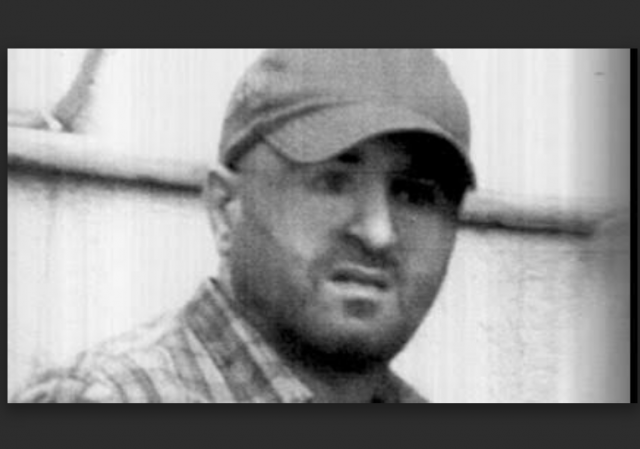
Iran and its allies have taken a beating in Syria according to recent reports. Perhaps the most spectacular was the airstrike overnight that killed the notorious child killer, Samir Kuntar and eight other terrorists in a Damascus suburb. Prof. Jacobson rightly called Kuntar "among the most notorious and vicious terrorists," for shooting Danny Haran to death in front of his four year old daughter, Einat, and then killed her by smashing her head against a rock with his rifle butt. Needless to say Kuntar was treated as a hero by Hezbollah, who traded the bodies of IDF soldiers, Eldad Regev and Ehud Goldwasser, to free Kuntar in 2008. He also received the Syrian Order of Merit from Syria's dictator Bashar al-Assad shortly after his release. But Kuntar's killing is just a symptom of the recently reported problems plaguing Iran and its allies who are backing Assad.

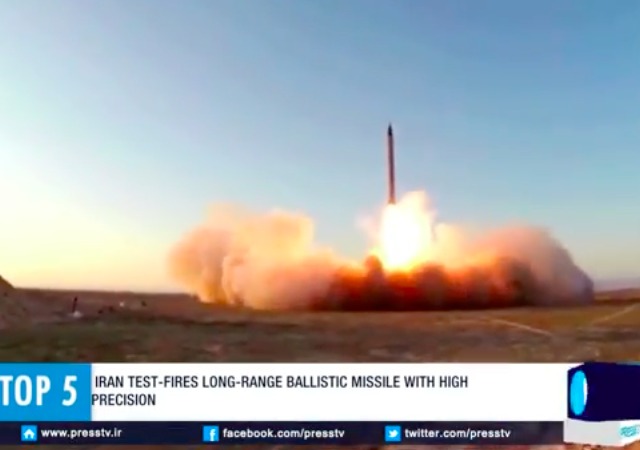
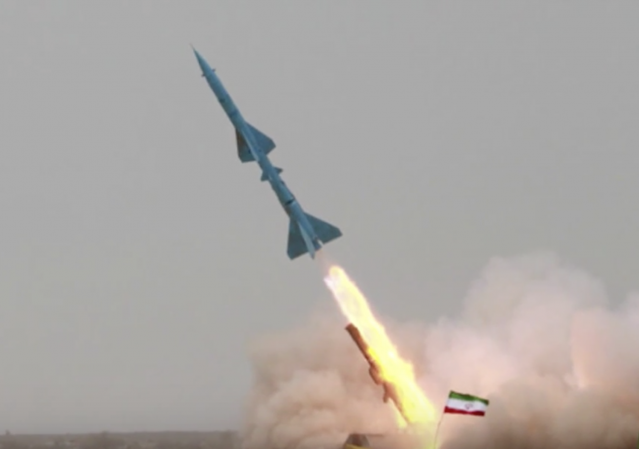
President Obama's willful blindness toward Iran's continued development of illicit weaponry is putting Americans and our allies in ever greater danger.  Obama's superficial detente with Iran ignores its deceits, dissimulations, and resolve to obtain a nuclear capability. In the latest instance, Obama is downplaying Iran's November ballistic missile testU.N. Security Council Resolution 1929 provides, "Iran shall not undertake any activity related to ballistic missiles capable of delivering nuclear weapons, including launches using ballistic missile technology."  The November launch tested the long-range, nuclear-capable Ghadr-110 missile and was a clear violation of Resolution 1929. Nevertheless, US Ambassador to the UN Samantha Power merely called for “conducting a serious review of the reported incident.” This is only the latest instance of Obama withholding, distorting or ignoring information that might threaten his Iran policy.  Previously, Obama abandoned his promise that the Joint Comprehensive Plan of Action ("JCPOA") would have "anytime, anywhere" inspections, agreeing instead to a drawn-out and inadequate system of notices and appeals. Caving on inspections exacerbated Obama's earlier failure to require Iran to completely disclose its preexisting nuclear program to the International Atomic Energy Agency ("IAEA").

Armin Rosen of Business Insider had a bombshell report on Monday about the Obama administration's diplomatic malpractice with Iran in the context of the nuclear deal announced earlier this summer. Citing a recently obtained State Department document, Rosen reported that the administration has no intention of ensuring that Iran provide the International Atomic Energy Agency (IAEA) with all the details of its past nuclear research. Though "extensive evidence" exists that Iran had a nuclear weapons program until at least 2003, the United States has so watered down Iran's requirements for answering questions about its past nuclear work, that the IAEA  will not have a complete picture of the extent of Iran's military nuclear program. As IAEA Director General Yukiya Amano made clear earlier this week, Iran is still stonewalling. The problem is that the United States is okay with that. Rosen reported:

Rep. Mike Pompeo (R - Kan.) and Sen. Tom Cotton (R - Ark.) have a lot in common. Both are army veterans and both are graduates of Harvard Law School. And both have been doing a great job of exposing aspects of the nuclear deal with Iran that the administration would rather keep quiet. This week it was reported that an inquiry from Pompeo got the State Department to admit that the nuclear deal was never signed and is not "legally binding." Julia Frifield, the Assistant Secretary of State for Legislative Affairs, wrote in response to Pompeo's inquiry if he could see the signed agreement, in a letter reproduced at the congressman's website, that the nuclear deal was not binding and that it was not signed by any party. The key parts of the letter read:
The Joint Comprehensive Plan of Action (JCPOA) is not a treaty or an executive agreement, and is not a signed document ...

In a look at the history of the tensions between President Barack Obama and Israeli Prime Minister Benjamin Netanyahu, The New York Times several days ago started with an interesting anecdote.
For President Obama, it was a day of celebration. He had just signed the most important domestic measure of his presidency, his health care program. So when Prime Minister Benjamin Netanyahu of Israel arrived at the White House for a hastily arranged visit, it was likely not the main thing on his mind. To White House officials, it was a show of respect to make time for Mr. Netanyahu on that day back in March 2010. But Mr. Netanyahu did not see it that way. He felt squeezed in, not accorded the rituals of such a visit. No photographers were invited to record the moment. "That wasn't a good way to treat me," he complained to an American afterward. The tortured relationship between Barack and Bibi, as they call each other, has been a story of crossed signals, misunderstandings, slights perceived and real. Burdened by mistrust, divided by ideology, the leaders of the United States and Israel talked past each other for years until the rupture over Mr. Obama's push for a nuclear agreement with Iran led to the spectacle of Mr. Netanyahu denouncing the president's efforts before a joint meeting of Congress.
It's interesting because this is not at all how I remembered it. I remember that the lack of attention to the meeting was perceived as an intentional slight of Netanyahu. A quick check of the contemporaneous reporting confirmed this.

Today Israeli Prime Minister Benjamin Netanyahu met with President Obama at the White House to discuss ISIS, tensions between Israelis and Palestinians, and the continuing scandal that is the Iran nuclear deal. It was the first time the two men have met face to face in over a year, and the first time they have spoken since the passage of the Iran deal. During a private session with the press, Obama emphasized that both leaders are looking for "common ground," and condemned the latest wave of Palestinian violence perpetuated against Israelis; he backed the right of Israelis to defend themselves, but pushed Netanyahu for ideas on how to relieve the tension. Netanyahu continued his public support for a two-state solution, but insisted that a solution would only come when the Palestinians relent and recognize Israel as a Jewish state---which the Palestinians continue to reject. You can see the press briefing here:

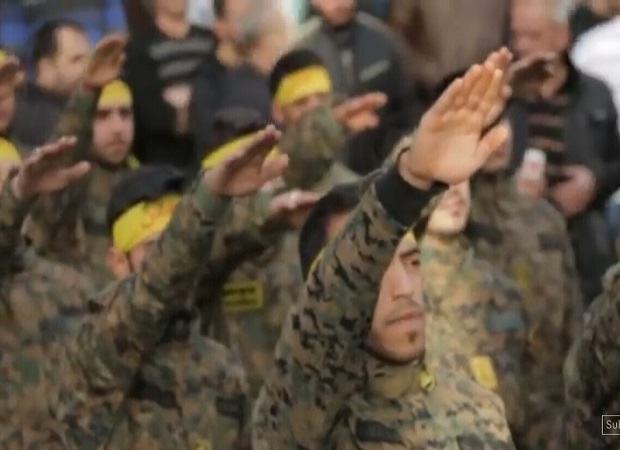
On September 30, Russia broke from existing frameworks when it began its own airstrikes against rebels in Syria. As the airstrikes continued, it became clear that Vladimir Putin's sympathies toward the brutal Assad regime were become manifest in the bombs Russian aircraft dropped not on Assad's strongholds, but on anti-regime rebels backed by the United States and other western coalition forces. Now both Syrian activists and Iranian officials are reporting that over the past few days, Iran has sent over 1,500 fighters into Syria via Damascus; Hezbollah fighters have also made the journey. Officials claim that these fighters are prepping to launch an assault on militants in Aleppo in northern Syria, and that this move has been bolstered by Russian airstrikes. Via Fox News:
"Sending more troops from Hezbollah, and Iran only increases the shelf life of the Syrian regime, which is destined to end," Maj. Jamil Saleh, the leader of Tajammu Alezzah, a CIA-backed Free Syrian Army faction, told the AP. "It will only add more destruction and displacement."

The Wapo announces that a verdict appears to have been rendered in the case of one of its journalists who has been imprisoned in Iran:
Washington Post correspondent Jason Rezaian, imprisoned in Tehran for more than 14 months, has been convicted in an espionage trial that ended in August, Iranian state television reported. News of a verdict in Tehran's Revolutionary Court initially came early Sunday, but court spokesman Gholam Hossein Mohseni-Ejei did not specify the judgment. In a state TV report late Sunday, Mohseni-Ejei said definitively that Rezaian, The Post’s correspondent in Tehran since 2012, was found guilty. But many details remained unknown. Rezaian faced four charges — the most serious of which was espionage — and it was not immediately clear whether he was convicted of all charges. Rezaian and The Post have strongly denied the accusations, and his case has drawn wide-ranging denunciations including statements from the White House and media freedom groups.
Statements from the White House. That'll do the trick.

John Kerry lost big this week as the Nobel Committee announced it was awarding the Nobel Peace Prize not to John Kerry, Secretary of State and erstwhile hero of the Iran nuclear deal negotiations, but to the Tunisian National Dialogue Quartet. The Quartet formed in 2013 in the wake of the Jasmine Revolution. Tunisians were attempting a democracy, but the process was being stifled by political assassinations and social unrest. The Quartet turned the focus back onto individual rights, redirected the political process, and facilitated the creation of a constitutional system. Sounds a lot better than "facilitated a deadly deal with a belligerent nation," doesn't it?