

Image 01 Image 03

Author: David Gerstman

Profile photo

David Gerstman

David Gerstman blogged as Soccer Dad from 2003 to 2010. Formerly a computer programmer, he is now a blogger for The Israel Project's The Tower blog.

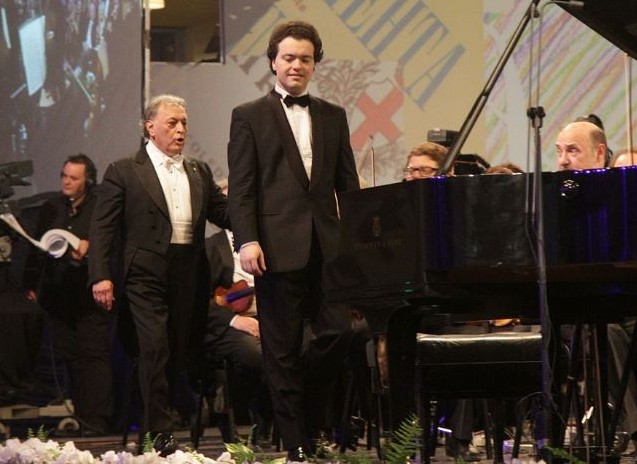
One of the tactics of the anti-Israel Boycott, Divest and Sanction (BDS) movement is to disrupt appearances not only by Israeli speakers, but also dancers, artists and musicians. In 2010, for example, the Jerusalem Quartet had to stop its performance in London after a BDS protester would not stop shouting. In September 2011, a concert by the Israel Philharmonic Orchestra in London also was disrupted. I had not been aware of the history of the Israel Philharmonic until recently. The orchestra was founded as the Palestine Orchestra by a Polish Jewish violinist, Bronisław Huberman. Huberman anticipated the rise of the Nazis, and set about creating the orchestra to save Jewish musicians in Europe. In all - including the musicians and their families - he is credited with saving nearly 1000 people. Throughout its history the Israel Philharmonic has featured some of the greatest contemporary musical talent. One of the guest artists who performs with the orchestra, is two-time Grammy winning Russian pianist Evgeny Kissin.
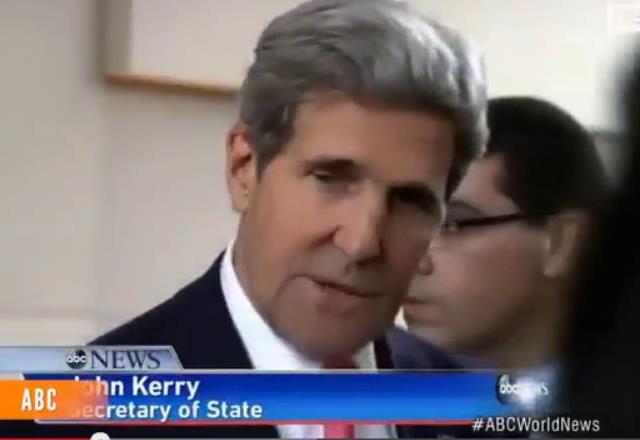
A few months ago, Secretary of State John Kerry allowed as to how he was worried about Israel's future if it did not reach a peace deal with the Palestinians. Israel's Prime Minister has played along sending his emissaries to negotiate with Palestinian partners who don't want to make a deal. So this week, out of his deep seated concern for the Jewish State, the New York Times reported Wednesday that U.S., Stepping Up Role, Will Present West Bank Security Proposal to Israel:
The presentation is to be made to Mr. Netanyahu on Thursday by John R. Allen, the former American commander in Afghanistan and a retired Marine general who serves as an adviser to Secretary of State John Kerry on the Middle East peace talks. ... “It will include many details and specifics,” said a State Department official who asked not to be identified under diplomatic protocol established by the agency. “He will be presenting a piece of what will be a larger whole.” ... State Department officials described the security briefing as an “ongoing process” and not a finished product on which the United States was demanding a yes-or-no vote from the Israeli side.
The Optimistic Conservative reacts skeptically to this last quote:

The Washington Post's fact checker, Glenn Kessler asks, "Did the United Nations demand Iran suspend uranium enrichment as part of a final deal?" At issue are statements made by Senators Robert Menendez and Bob Corker about Iran's right to enrich on the Sunday morning talks shows. Kessler, for example, took exception to Corker's response here:
CBS NEWS’S JOHN DICKERSON: Senator Corker, is it a red line for you? You talked about the standards of any ultimate deal. Is enrichment of any kind by Iran, is that something everybody should stay focused on? That any deal that includes that is a non-starter for you, because, of course, the Iranians say that they expect to be able to keep enriching? SEN. BOB CORKER (R-Tenn.): Yes, so to me that’s a baseline that the U.N. Security Council has agreed to, I think, six times, certainly this administration negotiated that in 2010. So they negotiated that in 2010. So as long as they can enrich, it seems to me that we are violating the very standards that we set in place in the first place. – exchange on CBS’s “Face the Nation,” Dec. 1, 2013
Kessler didn't hand out any Pinnochios to the senators but still found fault with their responses:
With their comments, Menendez and Corker might have left viewers with the impression that the U.N. resolutions already require a suspension of enrichment in any final agreement. That’s not the case — though it can certainly be an ongoing demand. The administration, for its part, appears to have set that goal aside in an effort to keep the diplomacy moving. The lawmakers are certainly within their rights to call attention to this decision, but they should be more precise in their language about what the U.N. resolutions actually require. Given that they were speaking on live television and this is a complex issue, their comments, at this point, do not yet rise to the level of a Pinocchio.
Perhaps the senators were a bit sloppy, but I think the question asked of them was misleading. The question shouldn't have been whether Iran would be allowed to enrich uranium as part of any final agreement, but whether Iran would prove that its nuclear program was strictly civilian. In introducing his analysis, Kessler wrote:

In an article about Wendy Sherman, the administration's chief nuclear negotiator, Politics and a Ruptured Tendon Don’t Faze Lead Iran Negotiator, the NY Times reports sympathetically, even while indicting her.
Along the way, Ms. Sherman was the State Department’s chief strategist in dealing with the North Korean nuclear program. It was a searing experience, in both its temporary successes and long-term failure, that prepared her for the complexity of the Iranian negotiations, and has made her a target for those on Capitol Hill who argue that history is about to repeat itself.
What were the temporary successes? It was coming to agreements with the rogue regime. The long term failure stemmed from trusting those successes to deter North Korea. So if and when Iran develops a nuclear weapon, will we read about the temporary success of Geneva? For a history of Wendy Sherman that doesn't pull punches see Axis of Fantasy vs. Axis of Reality by Bret Stephens:

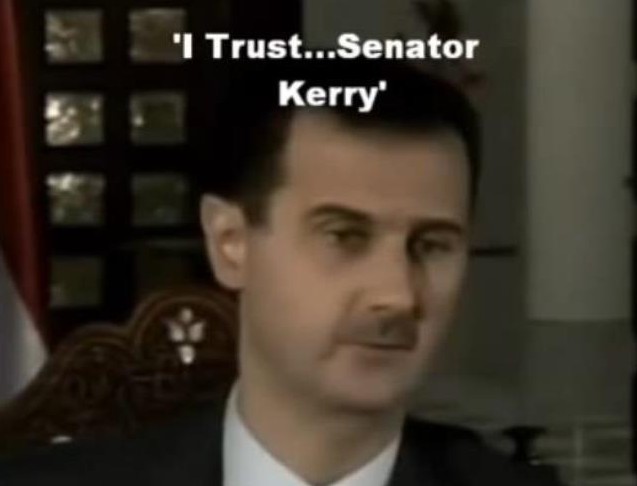
A few months ago a picture of John and Teresa Heinz Kerry having dinner with Bashar and Asma Assad in 2009 resurfaced. The timing was awkward because it came just after the Secretary of State condemned Assad as a "thug," and compared him to Adolph Hitler for his use of chemical weapons. The problem with Kerry's meeting with Assad isn't just that it happened. It was the beginning of a relationship - with the approval of the Obama administration - in which the future secretary of state attempted to cultivate the dictator, apparently with the intent of weaning him away from Iran. Even after Assad's brutality towards protesters became undeniable, the Wall Street Journal reported that the administration wasn't ready to give up on him:
The killing of at least 70 people around the central town of Homs in the past five days, according to activists, brought to an estimated 1,100 the total toll in Mr. Assad's months-long crackdown and sparked tougher condemnation from the Obama administration. Secretary of State Hillary Clinton urged other Arab states, Russia and China to join in protesting the violence. ... Mrs. Clinton's ambiguity highlights the frustrating U.S. courtship of Bashar al-Assad. For more than two years, Mr. Obama's foreign-policy team has tried to woo Mr. Assad away from America's regional nemesis, Iran, and persuade him to resume peace talks with America's regional friend, Israel. For more than two years, Mr. Assad has frustrated the U.S. with the promise of reform and the practice of repression.
One detail in particular about the Obama administration's first term outreach to Syria sticks out, "Mr. Kerry, meanwhile, became Mr. Assad's champion in the U.S., urging lawmakers and policymakers to embrace the Syrian leader as a partner in stabilizing the Mideast." When it came to Syria John Kerry was out in front.

The Israeli delegation has just returned from the Philippines after nearly two weeks of providing emergency care to the island nation's survivors of Typhoon Haiyan. According to the Jerusalem Post the first baby delivered by the Israeli medical teams was named "Israel." In fact Israel - the IDF particularly - has been one of the world's great first responders in recent years, helping countries across the globe deal with the results of man made and natural disasters. The IDF has a map on its blog, with links to many of its notable accomplishments. View #IDFWithoutBorders in a larger map Japan, 2011, Earthquake/Tsunami According to the IDF:
The majority of the medical equipment taken to Japan by the IDF, including x-ray machinery and lab equipment, will remain in Japan in order to benefit the physicians and local authorities providing care to the community of Minamisanriku and its vicinity. ...

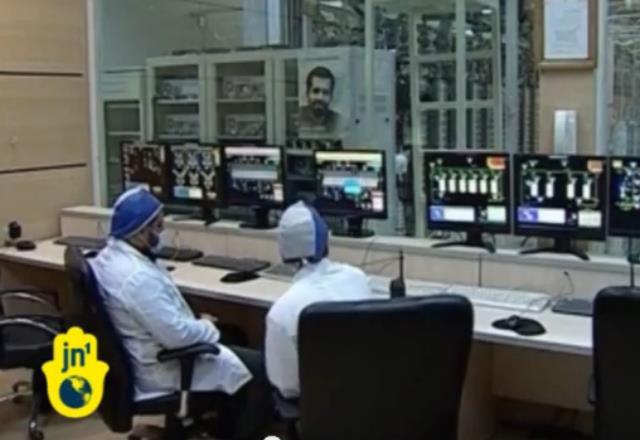
On Wednesday, The Israel Project hosted a conference call with Dr. Emily Landau of Israel's Institute for National Security Studies. Dr. Landau is a non-proliferation expert and spoke about the problems with the agreement apparently being negotiated between the P5+1 (United States, China, France, Great Britain, Russia and Germany) and Iran. Landau focused on four elements of the agreement, as reported that are problematic. She evaluated these terms by the stated standard of an interim by President Obama that "goal of this short term deal is to be absolutely certain that while we’re talking to the Iranians, they’re not busy advancing their program."
  1. According to reports, P5+1 are willing to allow Iran to continue enriching uranium to 3.5%. At this point Dr. Landau said that there is "no plausible civilian explanation" for Iran to need more low enriched uranium, given "its vast stockpile of 3.5% enriched uranium." Given the number of centrifuges Iran has, even at this level, allowing enrichment allows Iran to advance its nuclear program.
  2. A second point that Dr. Landau focused on was Iran's recently installed next generation centrifuges. These centrifuges can enrich uranium at four to five times the speed of Iran's currently operating centrifuges. The agreement will apparently will allow Iran to test these centrifuges. Since this is an interim deal, why allow Iran to get these centrifuges ready to operate? If the P5+1 isn't able to close a permanent deal with Iran in 6 months, then these centrifuges will be ready to enrich then. Again this marks an advancement in Iran's nuclear program.
  3. The third element of the dealt that concerns Landau is that it won't stop the construction at the Arak heavy water reactor. This is the point that French foreign minister objected to. So hopefully this will be addressed.
  4. The final element that is problematic is that apparently an inspections regime has been spelled out for various sites in Iran, but not for Parchin. Parchin is where the IAEA detected a containment chamber that could be used for testing nuclear trigger devices. Although Iran has been detected cleaning the site, it is hoped that inspectors could find some residual evidence of what was going on there.
The third and fourth points are especially important as both of them indicate that Iran's nuclear program is military not civilian. (One does build a reactor of the type at Arak unless one wishes to produce weapons grade plutonium; a trigger is a necessary component of a nuclear bomb.)

Let's review some of the administration's diplomatic activity over the past week. Lee Smith:
Haaretz reports that the administration misled Israel regarding the terms of the proposed interim agreement with Iran over its nuclear weapons program. One senior Israeli official explained that on Wednesday Israel had seen an outline that the Israelis “didn't love but could live with.” Thursday morning French and British officials, and not the White House, told the Israelis that the terms had changed and were much more favorable than what they’d been shown previously. “Suddenly it changed to something much worse that included a much more significant lifting of sanctions,” said the Israeli official. “The feeling was that the Americans are much more eager to reach an agreement than the Iranians.”
Natan B. Sachs lays out some of the particulars.
On substance, the Israelis, like the French, appear very concerned about the provisions of the interim deal that: (a) permitted Tehran to continue some uranium enrichment; (b) allowed Iran to continue building the heavy water reactor in Arak (with only an Iranian commitment not to activate it), which would preserve the Iranian short-cut to nuclear capabilities via a plutonium — rather than uranium — track; and, most notably, (c) provided Tehran with incentives that the Israelis see as the beginning of the dismantling of the sanctions regime. Israel’s concern is that the proposed sanctions relief will not, in practice, be reversible, while the Iranian commitments could be easily reversed (and in the case of Arak will not even be halted).
The French objections to the deal led the P5+1 countries to demand more of Iran, so the Iranian team left without a deal to return for consultations.

Aside from the specific problems with the potential deal between the so-called P5+1 and Iran (and the way it's reported), there's a historical precedent that's troubling. One of the reasons many in the West saw Iranian President Hassan Rouhani's election as a harbinger for rapprochement with Iran was because when Rouhani was Iran's lead nuclear negotiator a decade ago, the West (specifically Britain, France and Germany) and Iran reached a deal. Here's how the Financial Times described what happened: "Western governments will welcome Mr Rohani as a leader they can deal with – it was under his watch as chief nuclear negotiator that Iran had temporarily suspended its uranium enrichment a decade ago." Similar sentiments have been "reported" elsewhere. If that's the reason to be hopeful for an agreement with Iran, it's even more of a reason to suspect Iran's motives now that Rouhani's in charge of the country. In 2006, Rouhani boasted how he had duped the West. It was a boast that he repeated again in an interview before the elections in Iran earlier this year, Rouhani was anxious to show that he was not too moderate to lead the country.

Far from honoring the commitment, in which Iran said “it has decided voluntarily to suspend all uranium enrichment and reprocessing activities,” Rouhani told the interviewer that all Iran did was merely suspend “ten centrifuges” in the Natanz enrichment facility. “And not a total suspension. Just reduced the yield.”

Unimpressed, interviewer Abedini asserted that work had been suspended at the UCF — the Uranium Enrichment Facility at Isfahan. Quite the contrary, Rouhani countered, detailing the completion of various phases of work at Isfahan under his watch in 2004 and 2005. He went on to state proudly that the Iranian heavy water reactor at Arak was also developed under his watch, in 2004. ...

Over the past few days the reporting from Geneva changed from anticipation of an imminent deal to a final "no deal." Or "no deal" for now. The New York Times reported Talks With Iran Fail to Produce a Nuclear Agreement. As almost all reporting on the P5+1 talks with Iran go it gives the credit to (or places the blame on) France for the failure of the two sides to reach an agreement.
The proposal under consideration in Geneva was to have been the first stage of a multipart agreement. It called for Iran to freeze its nuclear program for up to six months to allow negotiations on a long-term agreement without the worry that Iran was racing ahead to build a bomb. In exchange, the West was to have provided some easing of the international sanctions that have battered Iran’s economy. After years of off-again, on-again talks, the deal would have been the first to brake Iran’s nuclear program.Despite the diplomats’ insistence on progress, the failure to clinch an agreement raised questions about the future of the nuclear talks, given the fierce criticism that the mere prospect of a deal whipped up in Israel and among Republicans and some Democrats in Congress.
Unfortunately, this frames the scuttling of the talks in terms of those looking for a compromise versus pro-Israel ideologues. Subsequent reporting in the article is more specific about some, but not all, of the real issues involved.

Mideast Media Sampler 11/08/2013 -- Yasser, that's a conspiracy theory....

There is a campaign in the United States favoring a nuclear deal with Iran. We have seen in it the news pages of the New York Times. It's been noted that Thomas Erdbrink, the Tehran bureau chief of the New York Times is making efforts to portray Iran as a changed country since the election of President Hassan Rouhani, whether the evidence supports it or not. The New York Times in a profile of Lakhdar Brahimi, the UN envoy to Syria, doesn't once mention Iran. When an Iranian general, Qasem Solemeini is described as the effective ruler of Syria if not the most powerful man in the Middle East, the oversight is inexcusable. The only reason to obscure Iran's involvement in Syria is in support of a narrative that Iran is no threat to the world in general. In addition to whatever support the "make an agreement with Iran" movement got in the news section, it has gotten plenty in the opinion section. Last week, Paul Pillar wrote Diplomacy is key to a deal with Iran for the Washington Post. The heart of Pillar's argument was:

We have noted degree to which America's media, including Thomas Erdbrink, the Tehran bureau chief for the New York Times, tells us that the most vicious anti-American statements from Iran are really expressions of admiration. Check out a few of Erdbrink's recent tweets. https://twitter.com/ThomasErdbrink/status/397332815559151616 https://twitter.com/ThomasErdbrink/status/397332340931706880 Erdbrink calls Jalili a hardliner. But in a recent article he reported on Iran's Supreme Leader Ayatollah Khamenei as not being a hardliner:
With talks over Iran’s nuclear program set to resume in Geneva this week, both sides engaged in a bit of public diplomacy Sunday: Iran’s supreme leader moved to quiet hard-liners in his country by expressing support for his negotiating team, while the chief American negotiator reiterated in an Israeli television interview that “no deal is better than a bad deal.” The supreme leader, Ayatollah Ali Khamenei, who holds Iran’s final word on the nuclear talks, told a group of students here that he was not optimistic the negotiations would succeed, but he also sent a negative message to the conservative clerics and military commanders who in recent weeks have attacked the diplomatic initiative.