

Image 01 Image 03

Author: William A. Jacobson

Profile photo

William A. Jacobson

William A. Jacobson is a Clinical Professor of Law and Director of the Securities Law Clinic at Cornell Law School.

He is a 1981 graduate of Hamilton College and a 1984 graduate of Harvard Law School. At Harvard he was Senior Editor of the Harvard International Law Journal and Director of Litigation for the Harvard Prison Legal Assistance Project.

Prior to joining the Cornell law faculty in 2007, Professor Jacobson had a highly successful civil litigation and arbitration practice in Providence, Rhode Island, concentrating in investment, employment, and business disputes in the securities industry, including many high profile cases reported in leading newspapers and magazines.

Professor Jacobson has argued cases in numerous federal and state courts, including the Courts of Appeal for the First, Fifth and Sixth Circuits, and the Rhode Island Supreme Court.

Professor Jacobson has a national reputation as a leading practitioner in securities arbitration. He was Treasurer, and is a former member of the Executive Committee and Board of Directors of the Public Investors Arbitration Bar Association, a professional organization of attorneys dedicated to protecting public investors. He frequently is quoted in national media on issues related to investment fraud and investor protection, and in the past has served as one of a small number of private practice attorneys who trained new arbitrators for the Financial Industry Regulatory Authority.

Professor Jacobson is co-author of the Securities Arbitration Desk Reference (Thomson-Reuters), updated annually.

Professor Jacobson is frequently quoted in the media on political and legal topics, has authored many Op-Eds in major publications, and appears on television and radio to discuss politics and the law.

A more complete listing of Professor Jacobson's professional background is available at the Cornell Law School website. The views expressed here are his own and not those of any employer or organization,

The best way to reach Prof. Jacobson is by e-mail here.

John Kerry has done a great disservice to the peace process by pumping up the anti-Israel boycott movement far beyond its reality, and doing so in a way that was widely and accurately perceived as a bullying threat to Israel.  Such overhyping only serves to entrench those who think Israel can be pressured into giving up key security considerations. At the Munich Security Conference last week, Kerry said :
I believe that – and you see for Israel there’s an increasing de-legitimization campaign that has been building up. People are very sensitive to it. There are talk of boycotts and other kinds of things. Are we all going to be better with all of that? ... ... not to mention that today’s status quo absolutely, to a certainty, I promise you 100 percent, cannot be maintained. It’s not sustainable. It’s illusionary. There’s a momentary prosperity, there’s a momentary peace. Last year, not one Israeli was killed by a Palestinian from the West Bank. This year, unfortunately, there’s been an uptick in some violence. But the fact is the status quo will change if there is failure. So everybody has a stake in trying to find the pathway to success.
The reaction was furious, and in some cases hyperventilated, because this is not the first time Kerry has held a Palestinian protest  sword over Israel's head.  In November, Kerry warned Israel it faced a Third Intifada:
"The alternative to getting back to the talks is the potential of chaos," Kerry said. "Does Israel want a third intifada?"
This all is diplomatic foolishness. Expressing "concerns" in public has a way of creating its own reality that such expressions in private do not.  Abe Foxman of the ADL was correct in this assessment:
In speaking about the price Israel will pay if the peace talks break down and Israel is blamed, you may have thought you were merely describing reality. But as the key player in the process, the impact of your comments was to create a reality of its own. Describing the potential for expanded boycotts of Israel makes it more, not less, likely that the talks will not succeed; makes it more, not less, likely that Israel will be blamed if the talks fail; and more, not less, likely that boycotts will ensue. Your comments, irrespective of your intentions, will inevitably be seen by Palestinians and anti-Israel activists as an incentive not to reach an agreement; as an indicator that if things fall apart, Israel will be blamed; and as legitimizing boycott activity.
David Horovitz, founder of The Times of Israel and someone I've always viewed as a voice of moderation, calls him The petulant Secretary Kerry:
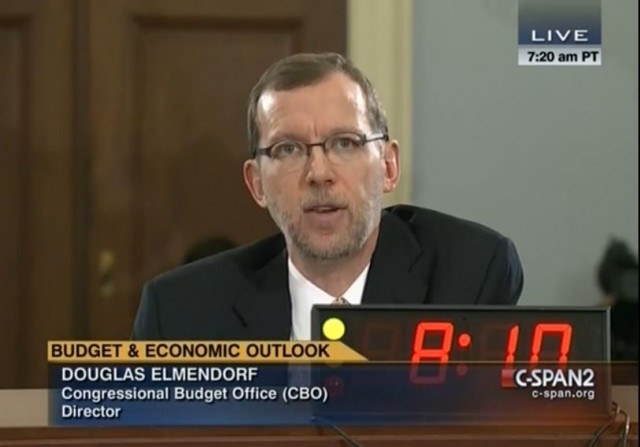
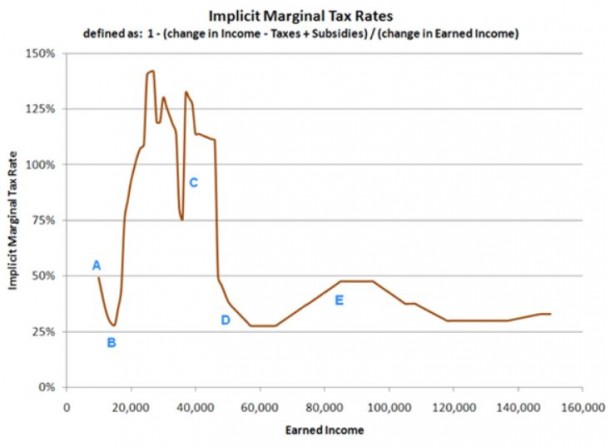
Yesterday we covered the CBO Report on loss of labor provided by workers as a result of Obamacare subsidies,  CBO confirms Obamacare subsidies create disincentive to work harder. It's all about how the implicit marginal tax rate -- taxes plus loss of benefits -- creates a disincentive to work hard because for each dollar you earn, you lose a huge percentage, sometimes more than 100%, of that earned dollar through higher taxes and loss of government benefits. It is economically rational, in this circumstance, not to work harder.  It has nothing to do with laziness, but with government creating an incentive not to work. Here's the testimony today from Doug Elmendorf, head of the Congressional Budget Office, via National Review:
“By providing heavily subsidized health insurance to people with very low income, and then withdrawing those subsidies as income rises, the act creates a disincentive for people to work relative to what would have been the case in the absence of that act,” Douglas Elmendorf told the House Budget Committee on Wednesday. “By providing a subsidy, these people are better off, but they do have less of an incentive to work.”
None of this is new. Here's Elmendorf's testimony from February 2011 regarding the same effect, although at that time the projection was only 800,000 jobs:

Files paperwork to run for Congress...

This all was predicted. Obamacare subsidies decrease the incentive to work harder because as one's income increases, the subsidies vanish. It's what we call the implicit marginal rate which takes into account not only tax marginal rates, but also loss of government benefits. In the key 30-50,000 range, the implicit marginal rate has exceeded 100% even before Obamacare (see Featured Image above) -- meaning that it is economically irrational to earn an extra dollar because you will lose more than one dollar through taxes and loss of benefits. Obamacare makes that problem even worse because of the high cost of Obamacare health insurance which depends on subsidies to render it even somewhat "affordable." Lose those subsidies and the cost of mandatory health insurance becomes onerous. The CBO is predicting a loss of 1-2% of employee hours because workers choose not to lose the subsidies, as reported by Reuters (h/t Bryan Preston)(full report embedded at bottom of post):
A historically high number of people will be locked out of the workforce by 2021, according to a report by the Congressional Budget Office released Tuesday. President Barack Obama's signature health-care law will contribute to this phenomenon, the CBO said, citing new estimates that the Affordable Care Act will cause a larger than-expected reduction in working hours—eliminating the equivalent of about 2.3 million workers in 2021 versus a previous estimate of an 800,000 decline. "CBO estimates that the ACA will reduce the total number of hours worked, on net, by about 1.5 to 2 percent during the period from 2017 to 2024, almost entirely because workers will choose to supply less labor—given the new taxes and other incentives they will face and the financial benefits some will receive," said the report.
The CBO Report states (in Appendix C):

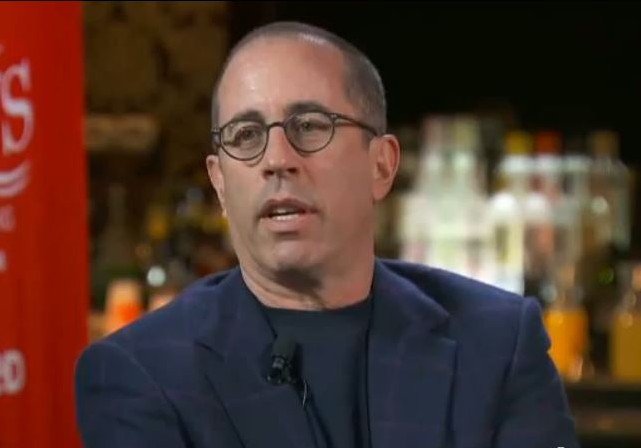
Jerry Seinfeld was interviewed for Buzzfeed Brew, and gave a perfectly sensible answer about "diversity" in comedy, namely that if you're funny, you're funny, and comedy is not a census designed to look like the pie chart of America. It's perfectly sensible, except to Gawker, which is trying to inspire 2-minutes of Seinfeld hate:

Jerry Seinfeld, the most successful comedian in the world and maker of comedy for and about white people, isn't interested in trying to include non-white anything in his work.

When asked why he featured so many white men in his web series Comedians in Cars Getting Coffee during a Buzzfeed interview on CBS This Morning, Seinfeld seemed offended by the very question. "It really pisses me off," he said. "People think [comedy] is the census or something, it's gotta represent the actual pie chart of America. Who cares?"

BuzzFeed Business Editor Peter Lauria seemed hesitant to pursue the frank answer, but the comedian continued on anyway. "Funny is the world that I live in. You're funny, I'm interested. You're not funny, I'm not interested," he said. "I have no interest in gender or race or anything like that." He seems to suggest that any comedian who is not a white male is also not funny, though he's also likely fed up with the amount of bad comedy he's been forced to sit through in his (waning) career.

Which is too bad, because Seinfeld is downplaying the work of everyone from Richard Pryor and Bill Cosby to Aziz Ansari, Mindy Kaling, and Eddie Huang, who are all in various stages of their own sitcoms that just might turn out to be the next Seinfeld....

In conclusion: Yes, comedy should represent the entire pie chart of America, and the glorious, multicolored diversity pie should be thrown directly at Jerry Seinfeld's face.

No, you fool, Seinfeld isn't denigrating anyone.  He's saying that we should judge comedians by the quality of their comedy, not the color of their skin.

Where did I hear something similar to that before?  Definitely not at Gawker.

Someone saw this coming from a mile away:

An interruption to a post-game interview. What was with that? ...

Ross Douthat, a columnist for the NY Times, is not someone people usually refer to as part of the Republican "base." Stephen Colbert describes him as the "conservative columnist at the NY Times, which also qualifies him to be the liberal columnist for the NY Post." But he's with the base when it comes to Republican immigration "principles" released on Friday:
THE debate over immigration reform, rekindled last week by House Republican leaders, bears a superficial resemblance to last fall’s debate over the government shutdown. Again, you have establishment Republicans transparently eager to cut a deal with the White House and a populist wing that doesn’t want to let them do it. Again, you have Republican business groups and donors wringing their hands over the intransigence of the base, while talk-radio hosts and right-wing bloggers warn against an imminent inside-the-Beltway sellout. Again, you have a bill that could pass the House tomorrow — but only if John Boehner was willing to live with having mostly Democrats voting for it. Except there’s one big difference: This time, the populists are right. They’re right about the policy, which remains a mess in every new compromise that’s floated — offering “solutions” that are unlikely to be permanent, enforcement provisions that probably won’t take effect, and favoring special interests, right and left, over the interests of the citizenry at large.
Among the many problems, any form of legalization prior to enforcement is folly. And therein lies the problem. Obama will not sign a meaningful "enforcement first" bill, so either Republicans repeat the mistakes of the past, or the "principles" go nowhere while disrupting Republicans focus for 2014. Greg Sargent of WaPo, reliable conduit of Democratic thinking, notes that Republicans don't trust Obama to enforce the law, so will impose preconditions that will be unacceptable to Obama:

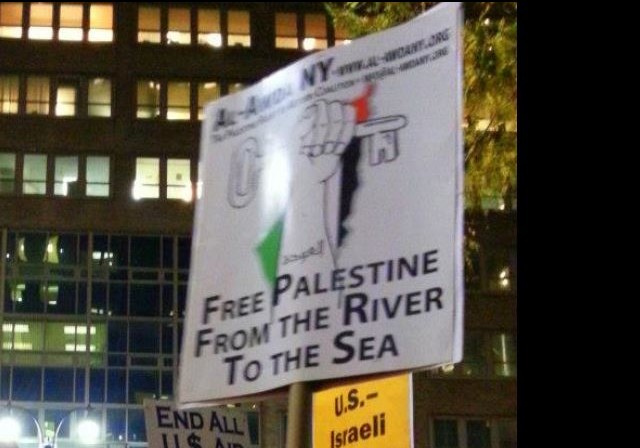
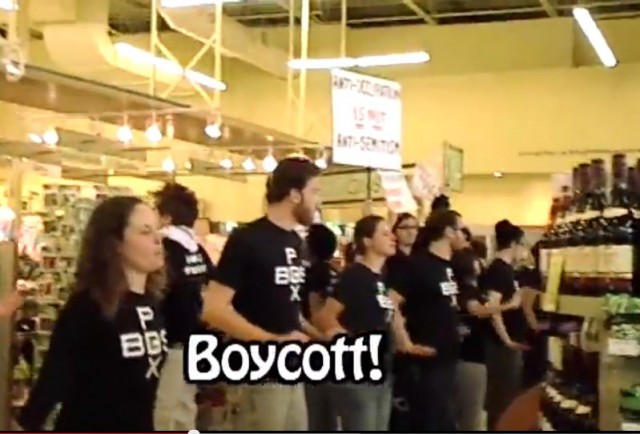
Anyone who has read this blog the past months knows that I take the international boycott threat against Israel very seriously. It is a venomous movement conceived by propagandists that has had some success in Europe, but few victories in the U.S. Israel has lived all of its existence under boycott. The current boycott movement is a shadow of the Arab League boycott that started even before Israel was a nation and grew with great force as Arab oil wealth grew in the 1970s. Yet somehow Israel's economy survived and prospered nonetheless, helped in great part by U.S. anti-boycott legislation that mostly kept the boycott disease from our shores. The Israeli economy is more diverse, high tech, and privatized than it was in the 1970s. Israel also is less dependent on Europe, and a sought-after participant in the global economy, most of which wants no part of the boycott movement.  The leverage of Europeans who capitulate to anti-Israel groups is much less than in the past. The U.S. Congress also could significantly deflate the boycott movement once again by extending current legislation to cover the new form of boycott movement.  Congress should do so now, and in so doing will aid the peace process by letting the Palestinians know that they cannot achieve more through international boycotts than through negotiations. While it seems invincible because largely unchallenged, the boycott movement is susceptible not only to legislation, but the type of pushback academic boycotters in the U.S. are receiving. The boycott movement, while it should be taken seriously and combatted, should not be allowed to dictate Israel's strategic security needs as part of peace negotiations. Doing business with a few extra European banks will be a hollow achievement if the West Bank is turned into another Gaza-style Iranian missile base. Don't let the boycott tail wag the security dog. Yet John Kerry is playing the boycott card to pressure Israel, running around like chicken little screaming that the sky is falling.

We have reported about legislation making its way through both the NY State Assembly and Senate seeking to stop state funds being used by state higher educational institutions to support groups that engage in academic boycotts. The bills, though they have different language, are a reaction to the anti-Israel academic boycott passed by the American Studies Association. As I have stated before, I hope the legislature will review the language of the bills very carefully, since there certainly will be challenges. Not surprisingly, claims are being made that the legislation violates the academic freedom of the boycotters. It's the challenge free societies face, that those who seek to destroy what we hold precious get to invoke our laws to protect their destructive actions. So people who seek to destroy the academic freedom of everyone through academic boycotts based on national origin cry that their own academic freedom is violated when good people try to stop the destruction. Already a threat of a constitutional challenge was made in a January 30, 2014 letter to the legislature from the Center for Constitutional Rights, which has a working group devoted to supporting the anti-Israel BDS movement. The letter is embedded at the bottom of this post. The gist of the letter is that this is an unlawful attempt to silence unpopular speech. The letter also misrepresents that the ASA boycott only targets institutions. That is false, as I described in my IRS challenge. ASA adopted the full scope of the BDS boycott, but issued non-binding guidelines that purport to scale it back. Even so, the boycott is directed at Israelis based on national origin, which already is unlawful under the NY State Human Rights law. Jewish Voice for Peace, a group which uses the title "Jewish" to give credibility to its anti-Israeli views, is a big supporter and organizer of the SodaStream boycott. JVP has issued an urgent call to try to stop the NY legislation: