
Image 01 Image 03

Obamacare Tag

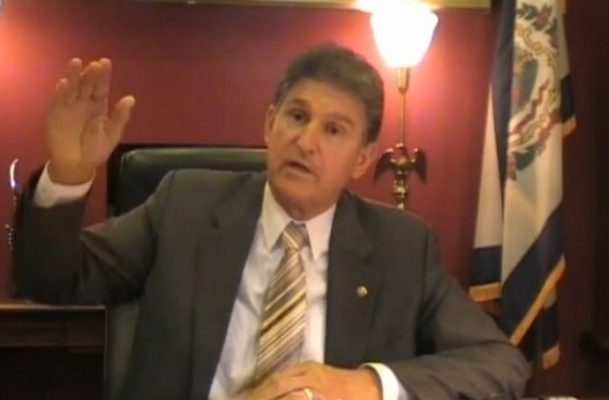
As reported by the Beckley, West Virginia Register-Herald, Joe Manchin said he would vote to repeal Obamacare. That quote (below) has received a lot of attention, but in context it's not at all clear that Manchin was doing anything other than playing both sides of the fence because he also said he supports fixing Obamacare (emphasis added):
Although Sen. Joe Manchin had planned to discuss the Charleston-area chemical spill and his recent piece of legislation the Chemical Safety and Drinking Water Protection Act of 2014, he instead turned his focus on a hodgepodge of topics, including minimum wage, balancing the nation’s budget and health-care issues.... He asked for all the listeners to let him and other lawmakers know their thoughts on the variety of topics, including the Affordable Care Act. “We spend more on health care than any state, but we rank 43rd on wellness and longevity.” Both parties agree on many aspects of the ACA, such as pre-existing conditions not being excluded from coverage and no lifetime caps, but there are still many kinks that need to be fixed, Manchin said. “I will vote tomorrow to repeal (the ACA), but I want to fix the problems in it.” He said the ACA is essentially a product and the government needs to find a way to “sell it” and make their customers want to buy it.
As Ed Morrissey points out, there isn't even a Senate bill coming to vote "tomorrow" (i.e., today), so it's not clear about what Manchin is talking. Manchin has warned before about a "complete meltdown" of Obamacare:
The West Virginia Democratic senator said Sunday that the federal health-care law could be headed for a "complete meltdown" if costs rise too fast and individuals are not happy with their coverage.
From this vague and unclear statement, it appears Manchin is doing nothing more than criticizing Obamacare in order to save it. Here's video from August 2013 in which Manchin argues to save Obamacare through changes:
More evidence that the Obamacare health insurance offerings are a cruel joke on the public. We already have covered how there will be few doctors willing to see the millions more Medicaid patients -- in many cases people who previously had private insurance. We've also covered how insurance companies have no choice but to hike deductibles and narrow in-network provider networks in order to keep premiums artificially low. It's all caused by Obamacare's one-size fits all philosophy, loading up so-called acceptable plans with so many things most people don't want or need that it raises the cost of insurance to unsustainable levels. The reimbursement rates are so low for hospitals that even major research hospitals like Stonybrook Medical Center on Long Island are refusing to participate in any of the state health exchange plans unless reimbursement rates are renegotiated. There is a cruel and heartless bureaucratic pox on the healthcare system, and we're just in the infancy of seeing the symptoms. The latest, from CBS News, in how in Washington State the major children's hospital in Seattle is excluded from all but two of the Obamacare plans (via Marathon Pundit): This is just the start. The first response inevitably will be a system of forced labor where doctors and other providers will be compelled by force of law to offer services through government plans under threat of license revocation or other punitive measures. And then, when the system is so screwed up it is beyond repair, single payer. Obamacare is just the gateway drug to single payer. If you don't believe me, just listen to Martha Robertson, a Democratic Congressional Campaign Jumpstart candidate in NY-23:

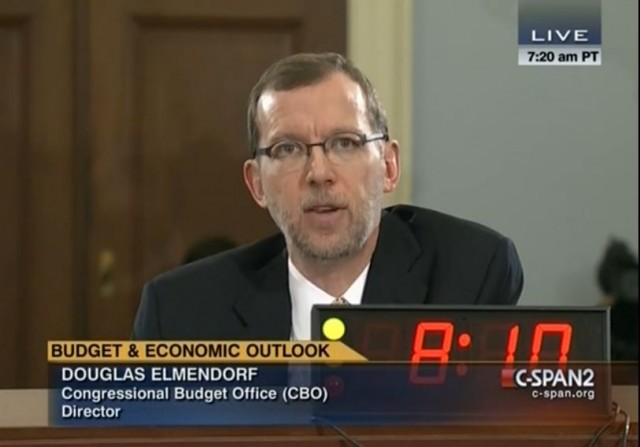
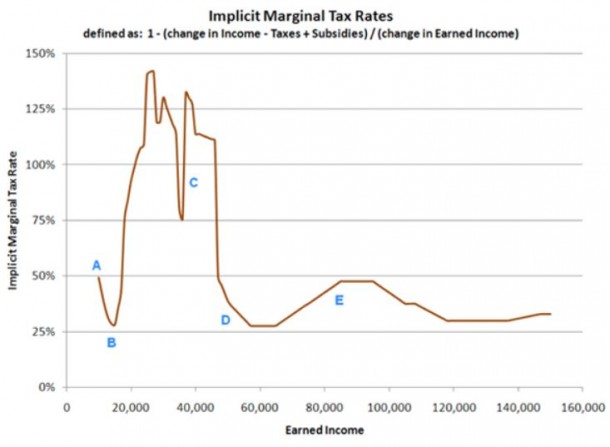
Yesterday we covered the CBO Report on loss of labor provided by workers as a result of Obamacare subsidies,  CBO confirms Obamacare subsidies create disincentive to work harder. It's all about how the implicit marginal tax rate -- taxes plus loss of benefits -- creates a disincentive to work hard because for each dollar you earn, you lose a huge percentage, sometimes more than 100%, of that earned dollar through higher taxes and loss of government benefits. It is economically rational, in this circumstance, not to work harder.  It has nothing to do with laziness, but with government creating an incentive not to work. Here's the testimony today from Doug Elmendorf, head of the Congressional Budget Office, via National Review:
“By providing heavily subsidized health insurance to people with very low income, and then withdrawing those subsidies as income rises, the act creates a disincentive for people to work relative to what would have been the case in the absence of that act,” Douglas Elmendorf told the House Budget Committee on Wednesday. “By providing a subsidy, these people are better off, but they do have less of an incentive to work.”
None of this is new. Here's Elmendorf's testimony from February 2011 regarding the same effect, although at that time the projection was only 800,000 jobs:

Some patients in California are finding out that once they’ve managed to sign up for a health insurance plan through the state exchange, it still may be difficult to determine whether or not a doctor actually accepts their insurance plan. From the LA Times:
After overcoming website glitches and long waits to get Obamacare, some patients are now running into frustrating new roadblocks at the doctor's office. A month into the most sweeping changes to healthcare in half a century, people are having trouble finding doctors at all, getting faulty information on which ones are covered and receiving little help from insurers swamped by new business. Experts have warned for months that the logjam was inevitable. But the extent of the problems is taking by surprise many patients — and even doctors — as frustrations mount. Aliso Viejo resident Danielle Nelson said Anthem Blue Cross promised half a dozen times that her oncologists would be covered under her new policy. She was diagnosed last year with non-Hodgkin's lymphoma and discovered a suspicious lump near her jaw in early January. But when she went to her oncologist's office, she promptly encountered a bright orange sign saying that Covered California plans are not accepted. "I'm a complete fan of the Affordable Care Act, but now I can't sleep at night," Nelson said. "I can't imagine this is how President Obama wanted it to happen."
Nelson received a temporary extension from her new insurer through March 31 after numerous complaints to the company and public officials, but says she will look into other policies before the close of open enrollment, according to the LA Times.

This all was predicted. Obamacare subsidies decrease the incentive to work harder because as one's income increases, the subsidies vanish. It's what we call the implicit marginal rate which takes into account not only tax marginal rates, but also loss of government benefits. In the key 30-50,000 range, the implicit marginal rate has exceeded 100% even before Obamacare (see Featured Image above) -- meaning that it is economically irrational to earn an extra dollar because you will lose more than one dollar through taxes and loss of benefits. Obamacare makes that problem even worse because of the high cost of Obamacare health insurance which depends on subsidies to render it even somewhat "affordable." Lose those subsidies and the cost of mandatory health insurance becomes onerous. The CBO is predicting a loss of 1-2% of employee hours because workers choose not to lose the subsidies, as reported by Reuters (h/t Bryan Preston)(full report embedded at bottom of post):
A historically high number of people will be locked out of the workforce by 2021, according to a report by the Congressional Budget Office released Tuesday. President Barack Obama's signature health-care law will contribute to this phenomenon, the CBO said, citing new estimates that the Affordable Care Act will cause a larger than-expected reduction in working hours—eliminating the equivalent of about 2.3 million workers in 2021 versus a previous estimate of an 800,000 decline. "CBO estimates that the ACA will reduce the total number of hours worked, on net, by about 1.5 to 2 percent during the period from 2017 to 2024, almost entirely because workers will choose to supply less labor—given the new taxes and other incentives they will face and the financial benefits some will receive," said the report.
The CBO Report states (in Appendix C):

Many have addressed the issue of uncertainty created by the implementation of Obamacare and noted the impact that may have on a variety of areas, including for the health insurance industry. On Thursday, Moody's Investors Service downgraded its outlook for health insurers, citing such uncertainty. From Moody’s: Moody's...

A handful of stories from across the web on Obama's NSA reform speech, Hollywood hypocrisy, Obamacare and more. Something the President's NSA speech today didn't address. From the Wall Street Journal: After Obama's NSA Speech, Tech Companies Wait and See After saying he plans to make a movie...

We've finally gotten some data on who has actually signed up for Obamacare on the exchanges. At first glance, it would look bad for the insurance companies. There are way fewer young people (only 24% are between the ages of 18 and 34) than the original stated goal. But it doesn't matter for the first year or two because the government has guaranteed to insurance companies that they'll be protected against loss. So the fact that enrollees may be older than expected---and therefore much more likely to make claims and reduce insurance companies' profit margins---is okay because government will take up the slack. And by "government" we mean, of course, the taxpayer. And by "taxpayer" we mean the wealthy taxpayer, although the middle class taxpayer also will pay more in many circumstances. Here's a list of the taxes that are supposed to fund Obamacare. Will they be adequate to cover the fact that nearly 80% of the exchanges' enrollees are getting subsidies so far? It depends on whether this was approximately the number anticipated, and also on whether the tax revenues actually collected will be as great as had been projected. The Byzantine nature of Obamacare is reflected in the fact that one of the largest items in the list of Obamacare funding tax sources is the following:
$60.1 Billion [projected amount of revenue]: Tax on Health Insurers: Annual tax on the industry imposed relative to health insurance premiums collected that year. Phases in gradually until 2018. Fully-imposed on firms with $50 million in profits.
So Obamacare giveth to the insurance companies and then it taketh away. And then it giveth back again, in a sort of shell game.

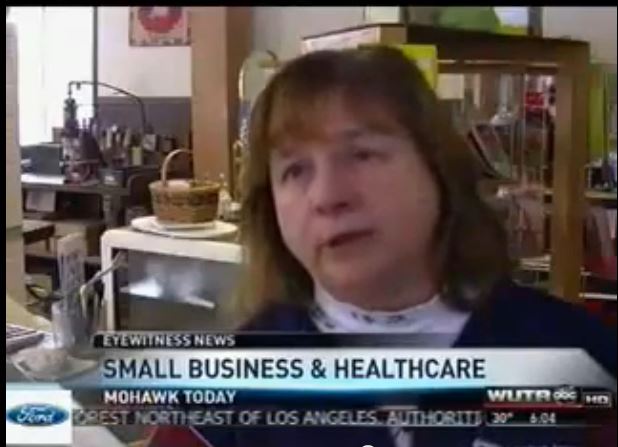
Who really cares about those much-maligned kulak individual health insurance market policy holders? Hell, depending upon how you count them, they could number 15 million, or maybe as low as 6 million. You know who else didn't care about ... oh, never mind. Just because you are not one of the much-maligned, don't think you can run from Obamacare, which stalks each of us like the Grim ... oh, never mind. Second wave of health-insurance disruption affects small businesses (h/t Charles Cooke):
When millions of health-insurance plans were canceled last fall, the Obama administration tried to be reassuring, saying the terminations affected only the small minority of Americans who bought individual policies. But according to industry analysts, insurers and state regulators, the disruption will be far greater, potentially affecting millions of people who receive insurance through small employers by the end of 2014. While some cancellation notices already have gone out, insurers say the bulk of the letters will be sent in October, shortly before the next open-enrollment period begins. The timing — right before the midterm elections — could be difficult for Democrats who are already fending off Republican attacks about the Affordable Care Act and its troubled rollout. Some of the small-business cancellations are occurring because the policies don’t meet the law’s basic coverage requirements. But many are related only indirectly to the law; insurers are trying to move customers to new plans designed to offset the financial and administrative risks associated with the health-care overhaul. As part of that, they are consolidating their plan offerings to maximize profits and streamline how they manage them....

Obamacare affective disorder...

An official from the Centers for Medicare and Medicaid Services who helped oversee the rollout of healthcare.gov is retiring, according to the NY Times.
The No. 2 official at the Centers for Medicare and Medicaid Services, who supervised the troubled rollout of President Obama’s health care law, is retiring, administration officials said Monday. The official, Michelle Snyder, is the agency’s chief operating officer, in charge of day-to-day activities and the allocation of resources, including budget and personnel. Technology experts who built the website for the federal insurance exchange, HealthCare.gov, reported to her. Ms. Snyder is the second administration official to depart since problems with the website frustrated millions of people trying to buy insurance and caused acute political embarrassment to Mr. Obama. The chief information officer at the Medicare agency, Tony Trenkle, stepped down in November to take a job in the private sector. Marilyn B. Tavenner, the administrator of the Medicare agency, said Ms. Snyder was retiring this week “after 41 years of outstanding public service.”
Snyder’s name came up in congressional hearings in October.

https://twitter.com/realmyiq2xu/status/417410251936104448 (Featured image source: YouTube)...