
Image 01 Image 03

Obamacare Tag

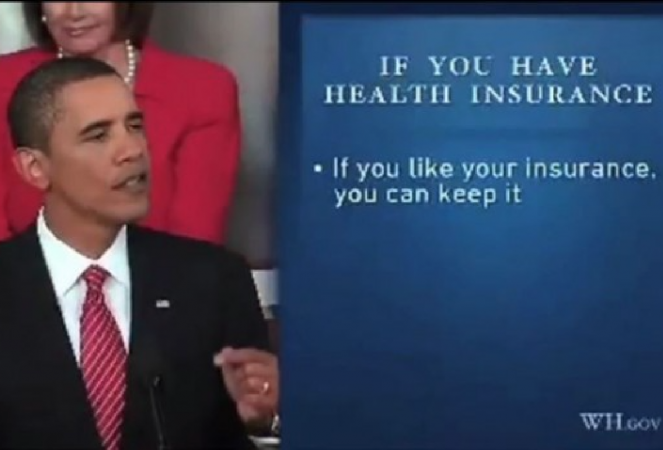
Remember when Obama and all of his allies in politics and media told us that the Affordable Care Act would save money for working families and the country? It turns out that promise was as good as the one about keeping your doctor. The truth is that the cost of Obamacare is going up pretty much everywhere. Daniel Bassali reports at the Washington Free Beacon:
Our National Obamacare Nightmare Despite enjoying a victory in the Supreme Court this summer, the Affordable Care Act, President Barack Obama’s signature domestic law, has suffered through a year of bad news. While the administration has touted that nearly 12 million people have gained access to health care insurance, premiums for most Americans are expected to increase in 2016. Insurance companies are seeking rate increases between 20 and 40 percent.
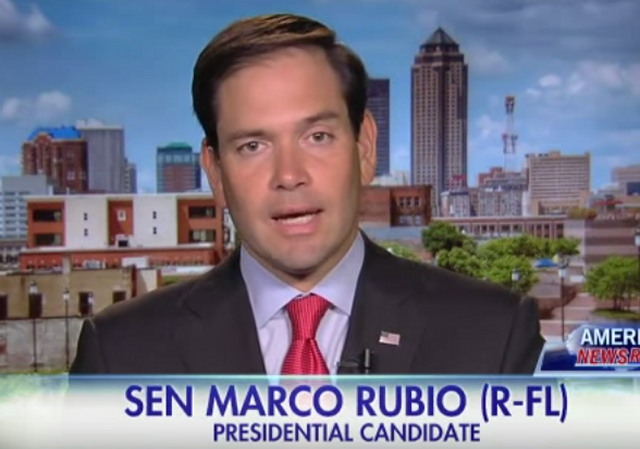

A post by Ed Lasky over at the American Thinker is making its way around the internet. Lasky suggests a little known bill introduced by Senator Rubio may have killed Obamacare. Naturally, we had to dig in. Rubio first introduced similar legislation in 2013. Lumped into the 2014 Omnibus bill, the act passed. Because it was globbed into an appropriations bill, it has an expiration date. The Obamacare Taxpayer Bailout Prevention Act was re-introduced by Rubio in January, the first piece of legislation he introduced in 2015, with companion legislation introduced by Rep. Andy Harris of Maryland. The current version would eliminate tax-payer funded bailouts completely. The Obamacare Taxpayer Bailout Prevention Act's premise is simple -- amend the Patient Protection and Affordable Care Act by striking out section 1342. Sen. Rubio's office explained in January:
The bill would repeal section 1342 of ObamaCare, which establishes a risk corridor program to distribute money from exchange plans that earned profits to exchange plans that suffered losses. However, the risk corridor program was not designed to be budget neutral, and section 1342 of ObamaCare puts the American taxpayer at risk of a taxpayer bailout if insurers systematically lose money on exchange plans. By repealing Section 1342, the legislation would force the administration to come back to Congress to request appropriations to cover any losses in the program. ...“Under December’s omnibus spending bill, taxpayers are protected from bailing out insurance companies until September 30, but now Congress has the opportunity to take the possibility of a bailout off the table for good,” added Rubio. “By passing this bill, Congress will ensure that no bailout will occur, in 2016 or ever.”

In the wake of rising costs for health insurance in the ObamaCare market, consumers are simply opting out, and this is taking its toll on ObamaCare's viability not only for consumers but for health insurers.  So much so that United Health, one of the nation's largest health insurers, acknowledged this week that it is considering leaving the ObamaCare market. Watch: The Obama administration responded by "quietly" promising to bail out health insurers in yet another attempt to save his clearly ineffective and flailing signature law.  The debate centers, once again, on the so-called "risk corridors" built into ObamaCare.

As it turns out, the Affordable Care Act is not exactly affordable after all. With the third Obamacare open enrollment in full swing, consumers nationwide are reeling from health insurance premium sticker shock. Which explains why healthcare costs and access to healthcare remain the single most important issue to Americans. A few weeks ago, we discussedthe issue of some health insurance markets suffering disproportionately under Obamacare. In the fourth largest city in the country, Houstonians will have the option of a grand total of zero independent Preferred Provider Organization (PPO) plans to choose from. Why? Providers say they can no longer offer independent plans for an affordable price. Yet another Texas market faces the downside of Obamacare fallout. According to a new study, Dallas is the recipient of the nation's largest premium rate hikes. Consumers not wanting to pay higher premiums for the same or less coverage are being encouraged to enroll in another health care plan. The Dallas Morning News reported:
Dallas County is the country’s major metropolitan area with the largest potential premium increase next year for people currently enrolled in the most popular health insurance plan on the Affordable Care Act marketplace, a new report shows. Collin County residents who also are enrolled in the popular, lowest-cost silver plan through Healthcare.gov face an identical predicament as their counterparts in Dallas County, according to a Dallas Morning News review of the underlying data in the Kaiser Family Foundation report. In both counties, a 40 year old adult who doesn’t qualify for subsidies and purchased a Blue Cross and Blue Shield “Blue Advantage Silver HMO” policy for 2015 will have to pay $1,116 more next year if he or she doesn’t shop around in the state exchange — and switch.

President Obama's approval ratings may be circling the drain, but a new Gallup poll released today shows that they're slightly less terrible than usual. Small miracles? American approval of Obama's handling of health care and the economy just clocked in at 44%, which represents a three-year high in both categories. The last time Obama did this well in the polls, he had just been elected to his second term; back then, an anemic 44% still represented a significant boost over the President's first term numbers. Gallup explains the trend:
Americans have not been as approving of Obama's performance on the economy since November 2012, just after the president was re-elected to a second term. The 44% he received then was similar to the 45% right before Election Day. Both scores were major improvements from the sub-40% ratings he'd received during much of his first term -- including a record low of 26% in August 2011 after contentious negotiations with Congress to raise the debt limit. Obama's best marks on the economy -- between 55% and 59% -- came during his first few months in office. Over the past three years, Obama's economic approval rating has fluctuated, reaching a low of 33% in 2014.

As ObamaCare co-ops close and people lose ObamaCare subsidies while getting hit with sky-rocketing premiums, the New York Times has noticed that the deductibles associated with ObamaCare make the plans useless to many people. The NYT reports:

Obama administration officials, urging people to sign up for health insurance under the Affordable Care Act, have trumpeted the low premiums available on the law’s new marketplaces.

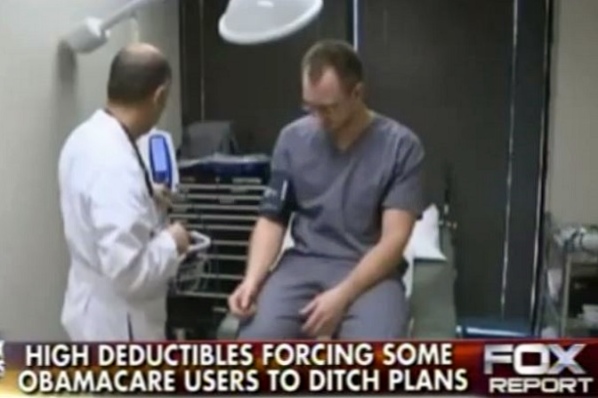
But for many consumers, the sticker shock is coming not on the front end, when they purchase the plans, but on the back end when they get sick: sky-high deductibles that are leaving some newly insured feeling nearly as vulnerable as they were before they had coverage.

“The deductible, $3,000 a year, makes it impossible to actually go to the doctor,” said David R. Reines, 60, of Jefferson Township, N.J., a former hardware salesman with chronic knee pain. “We have insurance, but can’t afford to use it.”

12 of the 23 taxpayer funded non-profit co-ops created under the Affordable Care Act are shutting down, all due to financial trouble. Now, the nation's largest non-profit co-op is under investigation by state authorities. New York’s largest co-op Health Republic, also on the failure closure list, is in far worse shape than originally reported. Other co-ops will continue offering their plans through the end of the year, but Health Republic of New York is in such dire financial shape, they’re closing a month early. The closure will leave more than 200,000 New Yorkers with cancelled health insurance plans. Monday, The Hill reported the New York Department of Financial Services launched an investigation into Health Republic's financial reporting:
“NYDFS investigators are collecting and reviewing evidence relating to Health Republic's substantial underreporting to NYDFS of its financial obligations,” the state said in a statement. “Among other issues, the investigation will examine the causes of the inaccurate representations to NYDFS regarding the company’s financial condition.”

One of the primary obstacles to repealing the failure that is ObamaCare has been the extremely successful framing of the debate by progressives on both sides of the aisle.  The question they posit and that derails any and all attempts to rid the American people of the ObamaCare albatross that is disproportionately strangling the poor and the middle class in myriad ways is:  What will you replace it with? This is a false choice.  No one called for a replacement of the 18th Amendment that made Prohibition not just the law of the land but a part of the U. S. Constitution.  ObamaCare is bad law.  You don't "replace" bad law, you get rid of it. Framing the argument as "repeal and replace" implies "if not ObamaCare then what other behemoth federal monstrosity should take its place?" and as such is a clever maneuver by ObamaCare defenders because it effectively posits that there are only two options:  ObamaCare or something just like it, i.e. another federally-mandated and -controlled health insurance system that does everything that is popular about ObamaCare and nothing that is controversial or unpopular about it.

Citizens of the Centennial State are poised to make a historic vote that could impact the next 100 years:
Colorado voters could be asked to weigh in on a far-reaching, first-in-the-nation plan to scrap ObamaCare and replace it with a single-payer-style health care system. A single-payer system is one where a single agency administers health care fees and costs, while medical care itself is handled by the private sector. Vermont leaders backed off a similar plan a year ago, but activists in Colorado are pushing their own version in the form of a November 2016 ballot question. Supporters appear poised to get that question on the ballot. According to The Denver Post, supporters turned in more than 156,000 signatures for the measure, well over the 98,492 needed. As a last step, the signatures will still need to be verified.
The program would be called "ColoradoCare" and would cost billions to run.

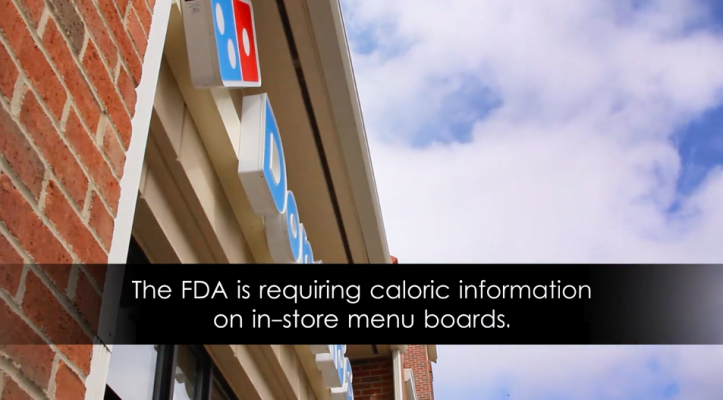
Odious Obamacare is about more than crippling families with massive cost increases and destroying the market for innovation that has created so many lifesaving drugs and treatments. The small-business regulatory compliance costs for restaurants and grocery stores to report calorie counts for each and every menu offering, which would go into effect in December 2016, are threatening to add yet another burden to ma-and-pa outfits across the country. Wednesday, the bipartisan"Common Sense Nutrition Disclosure Act" was approved by voice vote to move to the full House committee and means some relief from the insanity of Big Government may be on the way. The bill seeks to ease the requirements of restaurants and grocery stores to disclose the calorie counts for their foodstuffs, regulations that add up to nearly 400 pages of national disclosure requirements from the FDA. The compliance required is overwhelming enough for some Democrats to part from their Dear Leader and join Republicans seeking to amend the process. But what's more awkward for the Obama nutrition-gestapo is that a study from NYU reported on in the Wall Street Journal this week shows that there is virtually no difference in menu-ordering when consumers are provided with calorie counts.

Last we reported, eight non-profit co-ops created by the Affordable Care Act announced they were closing. Two weeks later, that number is now eleven. State and federal regulators have suspended Arizona's Meritus Health Partners and Meritus Health Mutual Partners. Like the ten non-profit tax-payer funded co-op closures before, regulators cited financial troubles as the reason for the co-op closure. The Washington Examiner reported:
State regulators have suspended the company that operates as Meritus Health Partners and Meritus Health Mutual Partners to ability to sell or renew plans to Obamacare customers for 2016. The federal government kicked the co-op out from offering plans on the Obamacare marketplaces. The Arizona Department of Insurance had issued an order of supervision against the company, requiring that the insurer no longer offer plans after the end of the year.

Consumers living in the country's fourth largest city will no longer be able to purchase an individual PPO. Market changes sparked by implantation of Obamacare are putting the squeeze on the self-employed and those who purchase health insurance outside of a large employer sponsored PPO. The Lone Star State's largest PPO provider, Blue Cross Blue Shield of Texas announced earlier this month that beginning in 2016, the would no longer offer individual PPO plans, though some enrolled in certain plans in 2010 might be grandfathered in. Just yesterday, I received a notification from my health insurance provider that my plan, an HMO, would be cancelled.
Needing a break from the computer screen, I wandered out to the mailbox to find an “OPEN IMMEDIATELY, THE APOCALYPSE IS NIGH” envelope from my health insurance provider, tucked between the junk mail and a cooking magazine. Sure enough, it was a cancellation notice. Now, I too am a victim of Obamacare’s reign of insurance premium of terror. Not to worry though. I can pay 20% more for less coverage and a deductible increase from $500 to $3250. But my story is small potatoes compared to many families who are forced to watch in horror as their health insurance premiums triple and their deductibles multiply faster than rabbits. The Obama administration acknowledged Monday that consumers would see health insurance premium increases across the board in 2016. They claim the average premium increases clocks in at 7.5%, though I have no idea where they’re getting these numbers. Don’t want to pay more? Then go back to the exchanges and shop around. You might pay less, but you’ll also have fewer benefits and higher deductibles.

I started writing this post before I checked the mail today. Needing a break from the computer screen, I wandered out to the mailbox to find an "OPEN IMMEDIATELY, THE APOCALYPSE IS NIGH" envelope from my health insurance provider, tucked between the junk mail and a cooking magazine. Sure enough, it was a cancellation notice. Now, I too am a victim of Obamacare's reign of insurance premium of terror. Not to worry though. I can pay 20% more for less coverage and a deductible increase from $500 to $3250. tumblr_li8gj9l5EW1qzf312.gif~c200 But my story is small potatoes compared to many families who are forced to watch in horror as their health insurance premiums triple and their deductibles multiply faster than rabbits.

We recently reported that Obamacare Co-Ops have been dropping like dead, rotting flies. Now, in the wake of the continued failures of program implementation, a new challenge has been filed with the Supreme Court:
Foes of President Obama's health care law are taking another crack at upending the legislation, filing a new challenge with the Supreme Court after a separate long-shot case was rejected earlier this year. The petition filed Monday by the Pacific Legal Foundation, like the prior challenge, focuses on an obscure aspect of the law. The case contends ObamaCare violates the provision of the Constitution that requires tax-raising bills to originate in the House of Representatives.

Kentucky's nonprofit health insurer cooperative established under Obamacare announced it will be shutting down due to financial troubles. As a result, 51,000 individuals will lose their health insurance plans at the end of the year. It turns out, not everyone enrolled in health insurance plans through state-level co-ops pay their premiums. Gee, it's almost like Republicans predicted this might be an issue. The fifth such co-op to close, the remaining 18 are all on equally unstable footing. 21 of the 23 co-ops were losing money at the end of 2014, and 11 have received warning letters. According to The Hill:
Kentucky Health Cooperative, a nonprofit insurer known as a co-op, explained that it could not stay financially afloat after learning of a low payment from an ObamaCare program called “risk corridors.” That program was intended to protect insurers from heavy losses in the early years of the health law by taking money from better-performing insurers and giving it to worse-performing ones. ...However, the Obama administration announced on Oct. 1 that the program would pay out far less than requested, because the payments coming in were not enough to match what insurers requested to be paid. Therefore, insurers only will receive 12.6 percent of the $2.87 billion they requested. “It is with sadness that we announce this decision," the insurer’s CEO, Glenn Jennings, said in a statement. "This very difficult choice was made after much deliberation. If there were a way to avoid it and simultaneously do right by the members, providers and all others that we serve, we would do so.” The Department of Health and Human Services says that it recognizes that the low payments to insurers could have raised financial concerns for some insurers, and that as start-ups, not all co-ops would succeed. ...Twenty-one of 23 co-ops nationwide were losing money as of Dec. 31, the HHS inspector general report found in July. Furthermore, enrollment was falling below projections for 13 of the 23 plans.
The Kentucky co-op closure announcement comes only a few weeks after the nations largest co-op in New York announced it would be shutting down.

The closure of the largest of the nonprofit Obamacare cooperatives is another sign that the Affordable Care Act is the single best oxymoron ever created by politicians. I should be experiencing some amount of schadenfreude, as the fight against Obamacare was one of the major action items of my local Tea Party group in its original year. That it has been a galactic scale fiscal disaster comes as no surprise to any of us who took the time to review the law and think seriously about its implications. But there is no joy in the Golden State for me. As my husband, Ben, is now enjoying another round of FUNemployment under the "robust" Obama economy, we have been forced to find to new healthcare insurance. Covered California has been hailed as the most successful of the state exchanges. So, with great optimism, Ben completed the online application.

The financial benefits and savings touted by Obama and his allies on the road to Obamacare's passage are still failing to live up to their promise. In fact, the largest non-profit co-op created under the law is about to fold. Anna Wilde Mathews of the Wall Street Journal:
Regulators to Shut Down Health Republic Insurance of New York Regulators will shut down Health Republic Insurance of New York, the largest of the nonprofit cooperatives created under the Affordable Care Act, in the latest sign of the financial pressures facing many insurers that participated in the law’s new marketplaces. The insurer lost about $52.7 million in the first six months of this year, on top of a $77.5 million loss in 2014, according to regulatory filings. The move to wind down its operations was made jointly by officials from the federal Centers for Medicare & Medicaid Services; New York’s state insurance exchange, known as New York State of Health; and the New York State Department of Financial Services. In a statement, Health Republic said it was “deeply disappointed” by the outcome, and pointed to “challenges placed on us by the structure of the CO-OP program.”