

Image 01 Image 03

India Tag

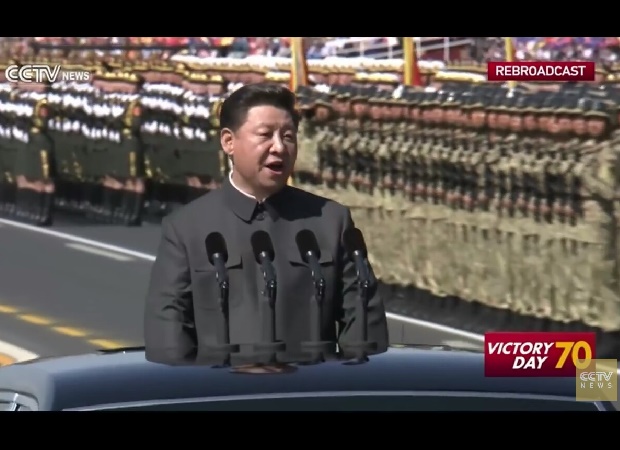
As U.S. Secretary of State John Kerry was in Beijing this week, preaching the virtues of “peaceful resolution” of disputes between the neighbours in the South China Sea, fighter jets belonging to Chinese 'People's Liberation Army' carried out aggressive manoeuvres against a US plane. According to the U.S. Pacific Command, the reconnaissance plane was on a routine mission over the East China Sea when two Chinese J-10 fighters attempted an “unsafe intercept”, making it the second incident of this kind to take place in less than three weeks. Earlier in May, two Chinese fighter jets flew within 15 meters of a US reconnaissance plane flying over the South China Sea. As President Obama set about to reduce the U.S. footprint in the world and divert country’s military preparedness to chase the spectre of Climate Change -- seven years ago, Communist China has been investing in a massive project to build and militarise artificial islands beyond its recognised maritime borders. China now contests 80 percent of the South China Sea, staking its control over one of the busiest maritime route in the world.
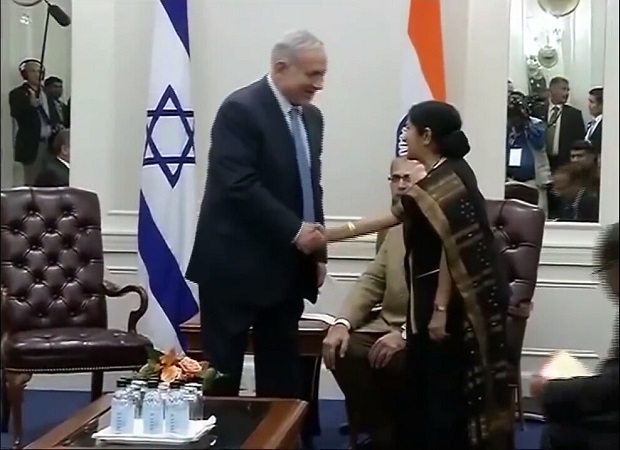
India's Foreign Minister Shushma Swaraj is expected to visit Israel in the second half of January. Indian news channel NDTV reported that the much awaited trip would take place around January 16-19, three months after the historic visit by first ever Indian head of state to Israel, when President Pranab Mukherjee visited to the Jewish State in October 2015. Jerusalem Post reported that some logistical issues need to be worked out before Israel can officially announce the visit, quoting government sources in Jerusalem. The announcement came on the heels of the successfully trial of a missile defense system jointly developed India and Israel. On Wednesday, Long Range Surface to Air Missile 'Barak 8' was test fired in Indian Ocean aboard the Indian naval destroyer INS Kolkata. Foreign Minister Swaraj, a former Supreme Court lawyer, has a long-standing ties to the Jewish State. She considers Israeli stateswomen Golda Meir as her role model. She served as the chairwoman of the Indo-Israeli Parliamentary Friendship Group from 2006-09.

According to a press release issued by Israel Aerospace Industries (IAI), Israeli Navy has successfully tested Barak 8 Air and Missile Defense system developed jointly by Israel and India. The 4.5 meter-long surface-to-air missile can carry a payload of up to 60 kg. The missile is built to counter comprehensive airborne threats including fighter jets, combat helicopters, incoming missiles, and weaponised drones. Jerusalem Post reports:
Israel Aerospace Industries carried out on Thursday the first successful interception test of the next generation Barak 8 missile system, which is designed to protect naval ships and offshore gas rigs from hostile aircraft, missiles and rockets. In the test, the INS Lahav, a Sa’ar 5-class corvette, positioned just south of Haifa, fired a Barak 8 missile and destroyed a fast-moving, jet-powered drone at 7 a.m. It was the first time the missile was launched from a ship, Vice Admiral Eli Sharvit, navy chief-of-staff, told reporters. (...) The project has been in joint Israeli and Indian development in recent years, and is officially due to become operational in both navies within one to two years, he said.
According to London-based newspaper The Guardian, Barak 8 is set to play a key role in securing the Israeli offshore gas fields.

India’s largest corporate house Reliance Industries has announced its plans to make big and long-term investments in Israel. Reliance Industries, a Fortune 500 Company owned by billionaire Mukesh Ambani, is the largest private sector company in India with a market capitalisation of well over $40 billion. Founded in 1966, Reliance Industries made its initial fortune in oil and natural gas sector. Recently, the company has invested billions of dollars in building a telecommunications network across India. The state-of-the-art nationwide cellular network build at the cost of estimated $15 billion opens new possibilities in retail, finance and healthcare. The company is looking for Israeli know-how and talent to fully exploit these possibilities, creating services for 100-200 million potential customers across the Indian sub-continent. Talking to Israeli media, managing partner of the company’s venture capital arm GenNext, Vivek Rai Gupta said that his company was working to build a nationwide customer base and there would be “no limit” on company’s investment in Israel. Israeli financial news website Globes Einglish quoted Gupta saying:
"We want to hook up to the Israeli ecosystem, and to discover more innovative companies that can enhance the value of the cellular network whose deployment we're completing right now," GenNext managing partner Vivek Rai Gupta, currently visiting Israel, said in "Globes" interview. "The network [mobile network reaching 800 cities] we're setting up is only a pipeline, and we're looking for interesting things through which we can provide value for our users in India."
Mobile-based technology carries the promise of improving everyday life for millions of Indians living in rural and remotely accessible regions -- from proving healthcare, vocational education, banking to even coordinating disaster relief.

Rapid industrialisation and population growth of recent years has increasingly put pressure in India’s limited water resources. Earlier this week, China’s announcement to construct a mega-dam on Brahmaputra river, that also runs through the eastern part of India, has revived regional tensions between the two Asian giants -- once again reminding that water could well be the source of future conflicts, just as oil and energy resources today. Securing water demand for a billion-strong population is one of the biggest challenges facing India today. In recent years, Israel has become India’s leading partner in water management and clean technologies. During Indian President Pranab Mukherjee's historic visit to Israel earlier this month, both countries signed series of agreements aimed at expanding this bilateral technological cooperation. Indian news website Boom Live described the extent of water scarcity faced by the country and need for further strengthening the cooperation with Israel in water technology:

As Indian President Pranab Mukherjee's 3-day historic visit to Israel comes to an end, Israel’s foreign policy is being redefined. During the first ever visit by an Indian head of state, both countries signed a series of agreements aimed at improving cooperation in commerce, technology and education. India, traditionally seen as a strong backer of the “Palestinian cause” at the world stage, has sharply changed its diplomatic position since Prime Minister Modi took office 17 months ago. Since his election, India has consistently voted against or abstained from anti-Israel resolutions tabled by Arab countries at UN and other international fora.  India’s recent pro-Israel stance has angered many Palestinians. During Indian President’s brief visit to the Al Quds University in Ramallah angry Palestinian demonstrators occupied the campus to register their protest. India, under Prime Minister Modi’s leadership, wants to further intensify cooperation with Israel, despite continued objections by the Palestinian Authority as well as Muslim and left-wing groups in India. Prime Minister Modi is also expected to visit Israel next year. Indian Prime Minister sees Israel as a key global partner in his drive towards a modern and prosperous India. Addressing the Israeli Knesset on Wednesday, October 14, the Indian President emphasised the need for closer cooperation between both the countries in the field of technology, research and higher education [Jerusalem Post, October 15, 2015]:

India-Israel diplomatic relations will turn a new chapter with the Indian President's historic state visit to Israel. Pranab Mukherjee became the first Indian Head of the State to visit the Jewish State. The state visit is an initiative of Prime Minister Narendra Modi’s 17-month old government that seeks to strengthen commercial and diplomatic ties with Israel. However, right at the onset the Indian President’s visit was marred by a controversy, when media reports surfaced early this week that Mukherjee reportedly quoted Mahatma Gandhi during his stay to Jordan, saying, “Palestine belongs to the Arabs in the same sense that England belongs to the English and France to the French.” Jerusalem Post reports:
Speaking in Amman at the University of Jordan, [President Mukherjee said],“India’s traditional support to the Palestinian cause remains steadfast and unwavering while we pursue strong relations with Israel. Our bilateral relations [with Israel] are independent of our relations with Palestine.”

Recently, refusing to take any Syrian refugees, Fahad Alshalami, a senior official of Kuwait explained to the media that “it is not right for us [Kuwait and other Gulf States] to accept a people that are different from us. We don’t want people that suffer from internal stress and trauma in our country.” Alshalami glossed over the fact that 800,000 migrant Indian workers living in his country too might be suffering from the same “internal stress and trauma.” About 40 percent of Kuwait’s 4 million population comprises of Asian workers. In total about 7 million Indians work in the 6 oil-rich nations of the Gulf Cooperation Council (Saudi Arabia, UAE, Kuwait, Oman, Qatar and Bahrain). They are often at the mercy of their employers and work under dangerous conditions. According to an investigative report published by IndiaSpend, at an average an Indian living in Saudi Arabia, Qatar or Kuwait is “at ten times the risk of death, compared to an Indian living in the US”:
On an average, there are 53.6 deaths per 100,000 [expat Indians] annually. However, this number conceals a sharp discrepancy. The average for the six GCC nations is 69.2 deaths, while the figure for rest of the world is 26.5 deaths, almost 60% lower. Saudi Arabia, UAE, Oman and Kuwait report between 65 and 78 deaths per 100,000 Indian workers.
Indian government that heavily benefits from remittances, worth billions of dollar from Gulf States annually, is reluctant to raise concerns about the safety and wellbeing of its citizens.

With many European campuses and lecture halls serving as training grounds for anti-Israel activism and boycott campaigns, Universities and research institutions in India are queuing up to cooperate with Israel. This week, Tel Aviv University signed cooperation agreements with three leading academic institutions in India. University of Mumbai, Wellingkar Institute of Management and Amity University agreed on series of joint programmes including short-term faculty exchange, holding joint research workshops and exchanging doctoral candidates. This move would strengthen Tel Aviv University's existing extensive cooperation with Indian educational institutions. Engineering students from India already attend summer courses in cyber security and entrepreneurship at Tel Aviv University -- both areas of vital importance to India. India too brings its own set of strengths on the table. Indian educational and research institutions offer a talent pool that is comparable to any major developed country in the world. Recently, Israel's IDC Herzliya also signed wide-ranging agreements with several leading Indian universities and academic institutions. India, once dubbed as the “23rd Arab State” for its unwavering support for the “Palestinian Cause”, has moved closer to Israel in recent years.

Recently, the Indian city of Calcutta witnessed a large demonstration marking the 69th anniversary of an infamous event, noted in the history books as the Great Calcutta Killings, and The Week of Long Knives. The initial riots in Calcutta alone claimed some 10,000 lives. In subsequent weeks and months a million more across British-controlled India would follow -- a long lost saga of mass-graves, rape and ethnic cleansing. Hushed up by subsequent Indian governments and left-wing historians, today this genocide is all but forgotten and relegated to a footnote in the history. In 1946, anticipating a British withdrawal from India, the political bloc representing Muslims of India, Muslim League made its intentions clear that it did not want Muslims to be part of a democratic and multi-cultural India. To make the resolve known Muslim League called for the “Direct Action Day” on August 16, 1946. City of Calcutta was the epicentre of the genocide in East India that killed at least a million people and displacing about 14 million. Since India’s independence in 1947, the subsequent Indian governments stonewalled the memory of Hindu suffering to appease the minority Muslim population. There is not a single national memorial to mark their suffering or even a day of remembrance to recall their plight. In pursuit of Islamist supremacy, Muslim League brought suffering upon millions of Muslims in India as well, who bore the brunt of Hindu and Sikh retaliation. Some 70 years on, young Hindus are trying to reclaim the memory of their ancestors. They are urging the government to mark the “Noakhali Day”, named after a district in West Bengal that witnessed the most brutal atrocities during that time.

If you are following mainstream media in the U.S. or Europe, you will get an impression that a thuggish Indian government is shaking down the helpless environmental activist group Greenpeace. The UK-based Guardian newspaper ran a story recently titled “India’s war on Greenpeace”, detailing a long litany of charges alleging India of investigating against “environmental activists”, freezing their funds and restricting their movement. In that article, a leading Greenpeace staffer describes peril of Greenpeace in India to The Guardian:
The weeks (...) had been the hardest Greenpeace India had ever faced. (…) Greenpeace’s registration was newly imperilled. Morale had plummeted. In all likelihood, the shakedown of Greenpeace, and of other civil society groups, will continue. It is in the character of this government to persecute its adversaries, and the convolutions of the law provide many ways for the state to install difficulties in their paths.
However, in reality it is Greenpeace holding India ransom; threatening dire consequences unless the country reviews its stand on coal.

While Europe has been busy targeting Israeli researchers, artists and filmmakers in recent days, Asian countries like India, China and Japan are taking tangible steps strengthening its ties with Israel. Last week Norwegian Film festival rejected an Israeli film dealing with disability on the grounds that it “did not deal with occupation” or “discrimination of Palestinians.” In Spain, a music festival barred the Jewish-American reggae star Matisyahu for refusing to comply with the demands of the organizers to publically denounce Israel and endorse the “Palestinian cause” -- in keeping with the best traditions of Spanish Inquisition. In Paris "peace activists" threatened and harangued visitors attending a day-long festival celebrating Tel-Aviv’s culture with music and gourmet. Meanwhile in India, thousands gathered to see the opening on yet another Israeli Agriculture Technology Centre in Gujarat State. Israel runs 30 such centres across India, training farmers in latest agriculture technology and farming techniques. https://twitter.com/danielocarmon/status/632903906389966849

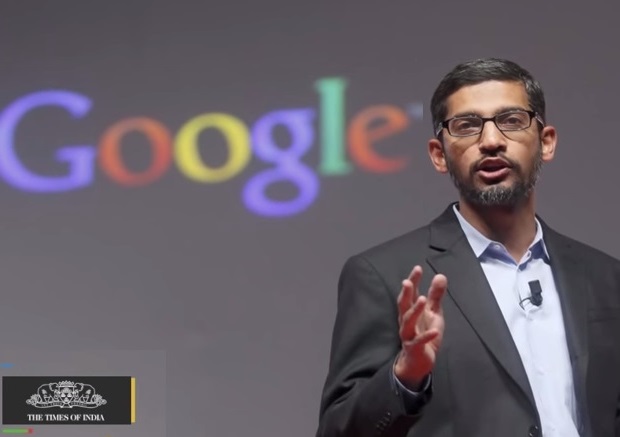
India-born Sundar Pichai has been named CEO of the newly restructured Google. The former Google CEO, Larry Page will now be heading a much larger Google entity. The news of Sundar Pichai's appointment, a former student of prestigious Indian Institute of Technology (IIT), was well received in India, with newspaper headlines using words like “pride”, "joy" and the fulfilment of the proverbial “American Dream” for a fellow countryman. The leading Indian Newspaper The Hindustan Times reported the Indian IT industry’s response to the news:
The Indian IT industry elated that 43-year-old Sundar Pichai is Google's new CEO. Pichai, who will succeed Google co-founder Larry Page as CEO a decade after joining the Silicon Valley behemoth in 2004, symbolises a new India, and represents talent, technological innovation, and managerial acumen, an Indian IT industry executive said.
The new Google CEO Sundar Pichai will not be the lone Indian-origin CEO at the helm of Corporate American. He will be joining corporate heavyweights like Microsoft’s CEO Satya Nadella, PepsiCo’s Chairperson & CEO Indra Nooyi, and Adobe’s CEO Shantanu Narayen -- just to name a few. Indians at home and abroad often highlight their country's success in Information Technology, and rightly so. But a less advertised aspect of India’s success in IT-sector has been the contribution of Indians returning back from the Silicon Valley, California -- bringing not only technical skills but also Silicon Valley’s attitude and values along with them. The truth is, there would be no Indian success story to report today if it was not for the Silicon Valley in the first place. Silicon Valley in turn is a product of entrepreneurship, spirit of enterprise and personal excellence -- values that are quintessentially American.

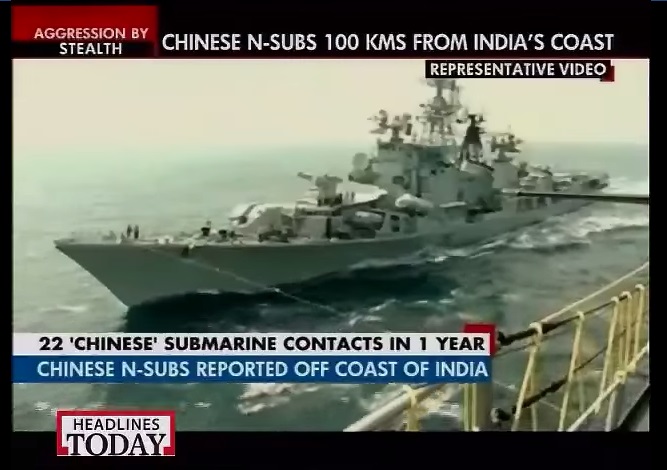
As President Obama is busy waging “quixotic” war on Greenhouse Gases, China is making real geostrategic and territorial gains in Indian Ocean and South China Sea. China is not only reclaiming Islands in its backyard -- furnished with airstrips and Naval bases in the South China Sea, but also building a corridor connecting the western Chinese city of Kashgar to the Arabian Sea. China’s plans are so aggressive and ambitious that it would make even a seasoned foreign policy expert’s head spin -- don't expect that from anyone in the current U.S. administration. While Obama administration spends big on climate change and works to shrink U.S.'s carbon-footprint, the administration is equally committed to shrinking U.S.'s geostrategic footprint in the world. Sensing U.S's disengagement from the Asia-Pacific and Indian Ocean, China is pasturing aggressively in the Indian Ocean to encircle its Asian rival, India. China and India share historic rivalries. After invading Tibet, China attacked India in 1962 -- successfully pushing back Indian defences and occupying roughly 40,000 km of Indian territory. Since 1960s, China has made further territorial claims in India. In September 2014, China docked a nuclear submarine at Sri Lanka's Colombo port [near India’s southern-most coastline], followed by an attack submarine just few weeks later. 

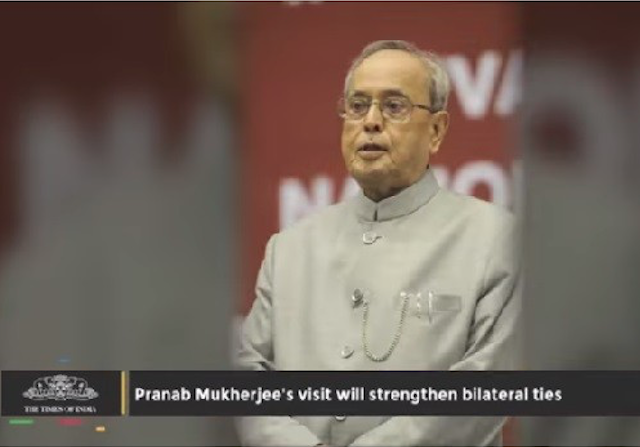
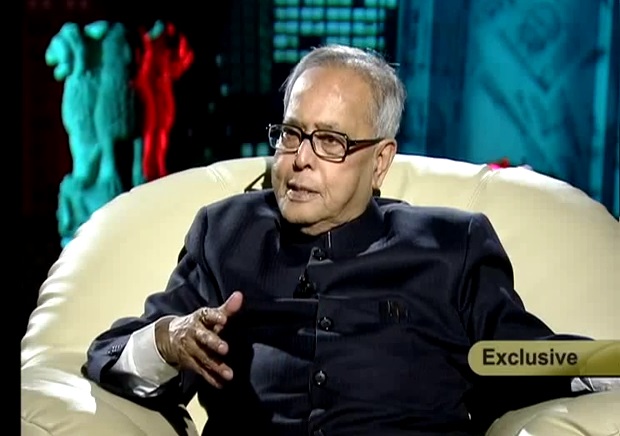
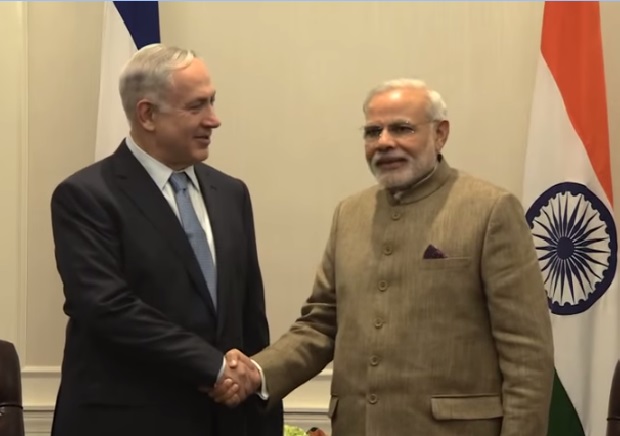
Indian President Pranab Mukherjee is set to become the first head of the state from India to visit Israel. The visit by the Indian head of the state, set for early October, has a great symbolic value -- considering India only established full diplomatic relations with Israel in 1992. Much like Israel, India too is a parliamentary democracy where President acts as a ceremonial head of the state, while executive powers rest with the Prime Minister and the cabinet. The high-level state visit is the result of tenuous diplomacy spanning decades that saw an erstwhile adversarial Asian giant turn into a trusted ally. Since India and Israel established diplomatic relations 24 years ago, Israel has become an important trade and technology partner for India -- not just in defence sector. Bilateral trade between the two countries that was pegged at $200 million in early 1990s has now crossed well over $4 billion. In recent months, Israeli defense companies like Israel Aerospace Industries (IAI), Rafael and Meprolight have entered in partnerships with Indian companies to form defence Joint Ventures – giving boost to Prime Minister Modi’s “Make in India” initiative aimed to develop India’s manufacturing capabilities.

For the second time in a few weeks, India has abstained at the United Nations instead of voting on an Israel-related resolution. On July 3, 2015 India abstained from weighing in on a UN Human Rights Council resolution condemning Israel for 2014 Gaza conflict. The anti-Israel resolution passed with 47 votes in favour, with the US opposing, and India amongst 5 nations abstaining. Then on Monday, Israel unsuccessfully tried to table a resolution to challenge the official recognition of Hamas-linked NGO in the UN’s Economic and Social Council (ECOSOC). It is fair to ask: why abstain? Israel is one of India's leading defense partners, and an emerging trade partner. But considering the fact that until recently India was referred to as the "23rd Arab state" for siding with Arab-block on every anti-Israel resolution at the UN, this is a huge diplomatic shift for the world's largest democracy. Since India normalized diplomatic ties with the Jewish State in 1991, Israel has become India’s partner of choice when it comes modernizing the country’s military capabilities. The government is collaborating with Israel in agriculture, water management, and renewable and clean technologies; and India’s technology-driven IT giants have made significant investments in Israel’s innovation and startup ecosystem.

The threat of ISIS has spread from Syria and Iraq, to Egypt, and even to Europe and the United States. Islamic militants are using both ground operations and digital campaigns to infiltrate new territory, and recent reports show that now India's government is alarmed at the recent inroads made by ISIS, especially in the country's northern regions. India is home to the world's second largest Muslim population. Numbering roughly 180 million, Muslims make up for about 14 percent of the country's population, and ISIS is taking full advantage of the opportunity to seize control of new ground. Not only have young Indian Muslims joined the ranks of ISIS combatants in Syria and Iraq, they are also acting as influential jihadi propagandists online. In December 2014, Britain’s Channel 4 uncovered the identity of a Bangalore-based man allegedly operating ISIS' most influential Twitter account. ISIS’ influence in India is not limited to just talk anymore. Supporters of the terror outfit in Muslim-dominated regions are feeling emboldened to show their support outside the realm of cyberspace---and it shows. Nowhere is the support for ISIS stronger than in the northern Indian State of (Jammu-) Kashmir. In early 1990s, widespread anti-Hindu pogroms in Kashmir drove about half a million people from their ancestral homes. Having cleansed large parts of Kashmir from the native Hindu population, the Islamists are now fighting to carve out a separate, Islamic country.

Indian newspapers generally echoed Western sentiments by welcoming the Iran deal and India's Foreign Office also took a line similar to the one taken by the EU and other Western powers. But behind the scenes, India is  getting ready for the coming nuclear arms race in their Arab neighbourhood. Far from buying President Obama's optimism over the 'peace dividend', Indian defence establishment is building up its nuclear defence capabilities. In recent months, India has invested heavily in ramping up missile defences. With Israeli expertise, India will soon be able to detect and intercept missiles within the range of 5,000 km – double the aerial distance between New Delhi and Tehran. As President Obama was announcing the Iran deal to the world, Indian government was busy clearing new defence deals worth billions. Indian News website Firstpost reports: