Image 01 Image 03

India Tag

It looks likes one of the global flashpoints I mentioned earlier this year is heating up. While Iraq descends rapidly into chaos, tensions may be building in another section of the Asian continent. India is poised to double its forces along the border with China.
The new BJP government is keen to send out a strong signal to Beijing regarding border disputes by nearly doubling the deployment of Indo-Tibetan Border Police (ITBP) personnel on the India-China frontier. Top government sources said the ITBP will very soon have more boots on the ground to effectively guard the border that has witnessed several Chinese incursions in the past few years. The previous UPA government was often criticised for being "soft" on the issue of Chinese incursions. The Home Ministry has approved the construction of 54 new border outposts along the disputed frontier with China. A proposal in this regard was made by the ITBP before the polls but the previous government did not go ahead on it. With the new outposts, the number of troops on the ground too will increase. Currently, there are close to 40 outposts and nearly 15,000 troops guard the sensitive zones. Sources said the number could now go up to 30,000. "There were critical gaps regarding security on the China border that need to be filled up," said a senior Home Ministry official. "The increase in deployment should not be construed as an aggressive approach on our part. We are only securing out territory," a top government official said.
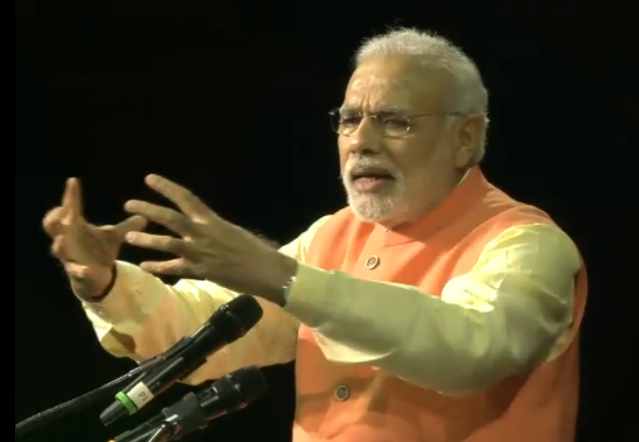
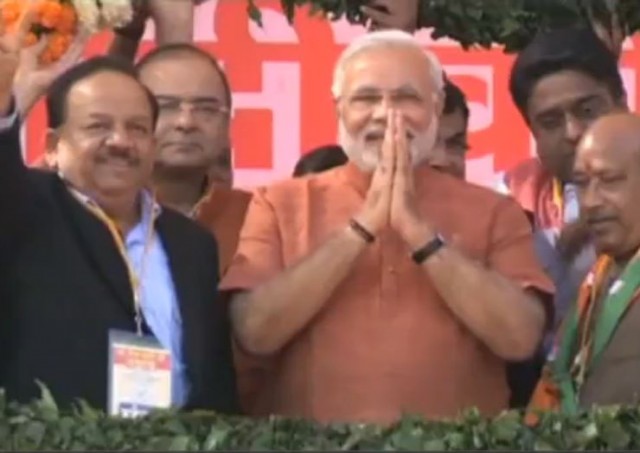
What is most interesting is the new prime minister's inauguration is also sending another message to China -- one I suspect it will not much like:

I don't know much about Indian politics, so I haven't written about the election sweep which threw out the long-dominant Congress Party. I do know that successive Indian governments have had at times contradictory relations with with Israel; not as crazed anti-Israel as many, but not solidly on Israel's side either. Indian-born writer Vijeta Uniyal believes that the election signals a sea change both politically and economically, with India looking to Israel for technology and investment to jump start the moribund Indian economy, India’s PM-elect Narendra Modi: a friend of Israel:
Narendra Modi is the next Prime Minister of India. Modi’s NDA-Alliance won 336 out of 543 seats in the Indian parliament. He has routed the ruling Congress Party led by Rahul Gandhi, the 4th generation member of Nehru-Gandhi dynasty Modi is arguably one of the most capable administrators in India. As Chief Minister of Gujarat State (2002-14) he turned around the economy, created infrastructure and improved public services. With a population of 60 million, Gujarat’s per-capita GDP today is much higher than India’s average. A lot of ink has been spilled in the international press over this relatively unknown man now at the helm in New Delhi. However there is one story readers in Israel need to hear: Modi is a friend of Israel, the like of whom India has not seen before. This fact can be stated without any exaggeration or wishful thinking. All one needs to do is to look at Modi’s track record. Modi is the first Indian leader to have actually visited Israel. He has often expressed admiration for Israel’s achievements in research, technology and innovation; espacially in the field of agriculture and water resources. Every year more than 2000 farmers from Gujarat visit Israel to get trained in advance farming techniques – at their own expense. He welcomed Israeli Companies to enter water management and recycling sector in 50 cities of Gujarat; and invited Israel to be the guest country at Gujarat state’s flagship Agricultural Fair (Vibrant Gujarat Agro Tech Global Fair 2014).

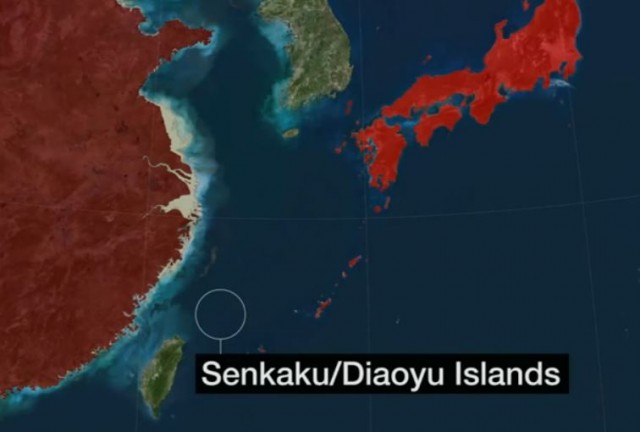
Japan and India don't necessarily have the warmest relationship with their neighbor, China. China hasn't exactly lessened tensions by enforcing a no-fly zone over Japanese islands. And its rapidly expanding military efforts haven't brought comfort to India's government, especially with a long history of border tensions. Since it has become apparent that the Obama Administration is unreliable in handling complex international policy dynamics, what can Japan and India do? Go the tradition route: Form a strategic regional alliance. China downplays Japanese PM Shinzo Abe's visit to India
China on Monday downplayed Japanese Prime Minister Shinzo Abe's visit to India as a bilateral issue, even as the state-media termed the trip as a failure for not succeeding in pinning down Beijing. "The visit you mentioned is an issue between India and Japan," Chinese Foreign Ministry spokesman Qin Gang told a media briefing while responding to a question on Abe's just-concluded visit to India. The visit evoked considerable media attention in view of the China-Japan diplomatic stand off over the disputed islands in East China Sea.