

U. Illinois: Steven Salaita “lacked the professional fitness to serve on the faculty”
on January 29, 2015
22 Comments
Earlier today we reported that controversial former professor Steven Salaita had filed a federal lawsuit over his non-hiring. I identified what I saw as a glaring defect in the Complaint.
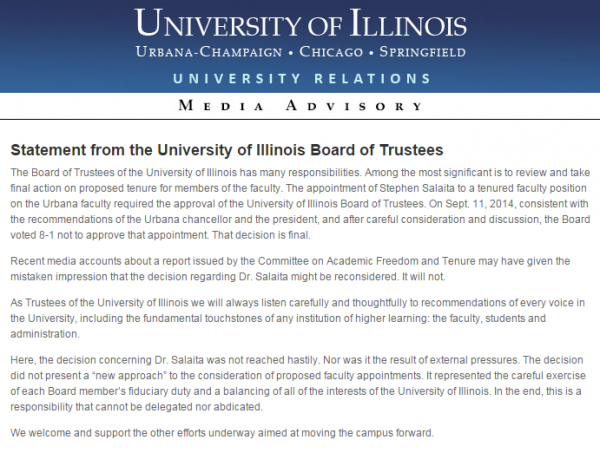
The University of Illinois has responded with a Statement which previews how the case will be defended.
The defense hones in on what I saw as a glaring defect in the Complaint, namely that Salaita never claimed that anyone -- much less anyone with authority -- promised him that Board of Trustees approval was not needed or waived. As such, Salaita will have a more difficult time converting a contingent offer into an enforceable agreement.
Similarly, much like the official faculty committee, the University views the tweets in the context of Salaita's fitness, citing a tweet from June, before the Gaza fighting:
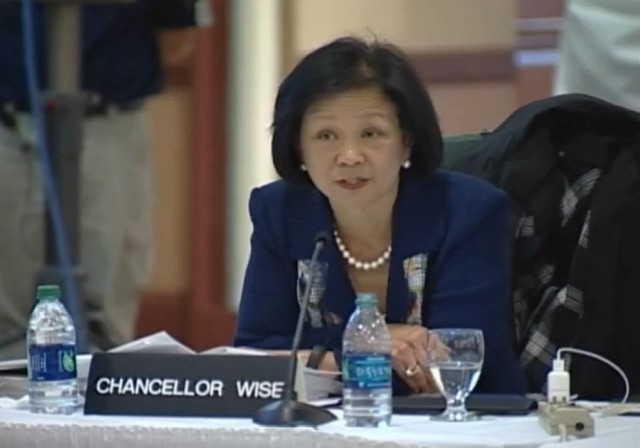
Specifically, Dr. Salaita began making a series of statements via social media on precisely the subject matter that he proposed to teach at our University. For example, on June 19, 2014, after three Israeli teenagers were reported kidnapped and presumed dead, Dr. Salaita posted a statement on Twitter which read: “You may be too refined to say it, but I’m not: I wish all the f**king West Bank settlers would go missing.” Dr. Salaita continued to post this comment even after the three teens were found murdered later that month.... These statements and many more like them demonstrate that Dr. Salaita lacks the judgment, temperament and thoughtfulness to serve as a member of our faculty in any capacity, but particularly to teach courses related to the Middle East.The University denies that donor pressure influenced the decision. Presumably, as Chancellor Wise said in an interview recently, the university constantly gets donor complaints on a variety of issues, including sports. Those among Salaita's BDS supporters -- who have driven the protests -- who thought that Salaita had a strong case may be in for a rude awakening. They want to put the university, the Chancellor and the donors on trial, but Salaita may find himself on trial. As someone who handled employment cases as a large part of my private practice prior to joining academia, almost always for the employee, the Salaita case will be no easy win, no matter how much supportive websites with an anti-Israel agenda and pro-BDS faculty tweet out support and urge Salaita on. When this story first broke on August 6, I asked the following question to readers: