



A southern style legal education and a lesson in diversity
on May 19, 2014
3 Comments
I graduated from the Georgia State University College of Law on Friday and, as tends to happen at occasions like this, I found myself reflecting on the years I spent there.
As I thought about the many specific instances of triumphs and shortcomings I experienced while in law school, I continually circled to a broader theme that I believe will ultimately have a far more profound impact on my legal career: the respect for intellectual diversity. It may seem like a simple concept, but it is one that has been under attack of late in the very place where it ought to be most protected: American higher education.
For example, just in the last few weeks we've highlighted the protest of Condoleezza Rice’s commencement speech at Rutgers University, which ultimately led to her withdrawal, and the anti-Israel Boycott Divest and Sanction (BDS) movement led by the American Studies Association. Invariably, these attacks on intellectual diversity, and others like them, share at least two things in common. They, 1) take place in institutions of higher education and; 2) have the shared goal of shutting down dialogue from what is perceived to be “the opposition.”
Receiving my law degree from Georgia State University ensured that I experienced very few of the mind-crippling effects of this kind of nefarious censorship.
I can’t be certain whether it's a product of the university itself, or something as simple as its geographic location in the heart of downtown Atlanta. Perhaps it's some combination of the two. Regardless, I am certain there existed a very real sense of diversity of thought at the institution.
Like many law schools, the student body population was predominantly left leaning. That said, its southern location meant there were no shortages of conservatives or libertarians on campus, either. This student body make-up was crucial to achieving intellectual diversity, but the ultimate gatekeepers to the concept were the professors. After all, how important is diversity of thought if you can’t make it known in the place where you and your peers are actually doing the learning?
While many professors wore their political and philosophical beliefs on their sleeves, the vast majority of professors also offered a classroom environment that welcomed all points of view. In my opinion, as long as you are sure to incorporate the latter, the former is perfectly acceptable.






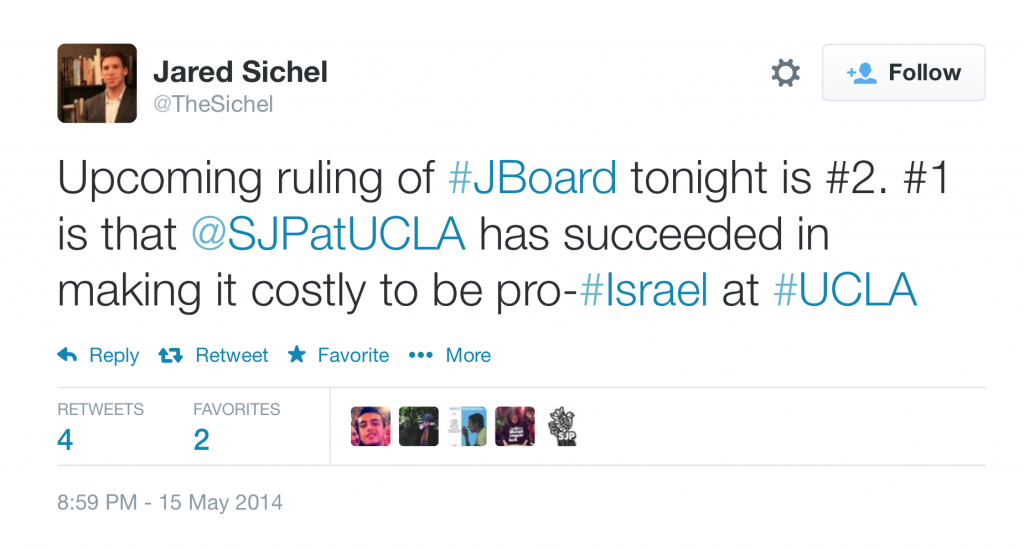 Now, everyone seeking office who goes on a trip to Israel or is associated with a pro-Israel organization may be accused of having a conflict of interest boxing them out of key positions that vote on divestment matters.
SJP is building a chilling effect, showing that those who stand in their way will be subject to long hours of debate, protest, and even "legal" hearings. Some may not agree with SJP, but consider it not worth the trouble to stand in their way.