Image 01 Image 03

October 2014

Vermont ice cream maker Ben and Jerry's drew the ire of the political correctness brigade when they released "Hazed and Confused," a concoction of chocolate and hazelnut deliciousness. Part of their new Core series, "Hazed and Confused" is injected with a chocolate, hazelnut, fudge core. "Hazed and Confused" being a play off the hazelnuts and famed Led Zeppelin song "Dazed and Confused." "Dazed and Confused" was also an early nineties movie that gave us Matthew McConaughey, and is therefore one of the best movies in existence.

When it comes to quantifiably productive debate about politics, Twitter is the abyss. Those who choose to wade into its murky depths accept the fact that they're jumping into the deep end with the hackers, the trolls, and the most enthusiastic dregs of internet society. The government recognizes this, and they're here to help. A new project out of Indiana University, dubbed "Truthy," is fully funded by the federal government and seeks to harvest and analyze your Twitter data. The project's developers claim that they've developed a system that "evaluates thousands of tweets an hour to identify new and emerging bursts of activity around memes of various flavors." Here comes the science, courtesy of Indiana University's Truthy homepage:
We also plan to use Truthy to detect political smears, astroturfing, misinformation, and other social pollution. While the vast majority of memes arise in a perfectly organic manner, driven by the complex mechanisms of life on the Web, some are engineered by the shady machinery of high-profile congressional campaigns. Truthy uses a sophisticated combination of text and data mining, social network analysis, and complex networks models. To train our algorithms, we leverage crowdsourcing: we rely on users like you to flag injections of forged grass-roots activity. Therefore, click on the Truthy button when you see a suspicious meme!
Here's a flow chart, which contains even more science: Truthy Architecture

Yesterday I posted an article detailing what a recent Pew data dump tells us about how voters most likely will behave through early voting and the end of the 2014 election cycle. We already know that hard Democrats' minds won't be changed in time for the midterms, and that instead we should be contacting both independents and likely Republicans to ask for their votes. "Ask" is key, and if (extremely) early returns from key states like Wisconsin and Florida are any indication, Republicans' boots on the ground efforts are working. In Wisconsin, for example, both candidates and pollsters agree that the gubernatorial election between incumbent Republican Scott Walker and Democrat challenger Mary Burke will be decided by which party turns out the most voters.
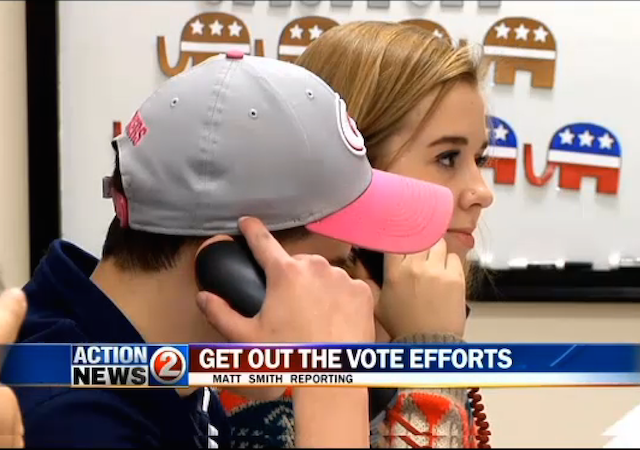
"The Governor's getting 96% of Republican voters; Mary Burke's getting 94% of Democrats. There is just no crossover vote this year," said Charles Franklin, a Marquette University Law School pollster. 60% of registered voters say they've been contacted by a party or candidate since July, according to the new Marquette University Law School poll. 29% say they've been contacted by just Republicans. Half that, 14%, from strictly Democrats. "Democrats have really learned a lot in the last few cycles about technology of voter contact. Republicans have been mounting a very aggressive phone bank campaign, so both parties know that turnout is the key here. The unknown: how will their voters respond? Who will wake up on Tuesday morning and go "I don't feel like going out today?' Or who will go out and say 'my vote counts.' It could make the difference," said Franklin.

Remember all the times Obama golfed, traveled to Hawaii, vacationed in Martha's Vineyard and the liberal media insisted that it was no big deal because an executive can do their job from anywhere? Apparently, that rule doesn't extend to Republican governors and while most Americans might think the government's poor handling of Ebola looks bad for Obama, Katie Glueck of Politico is pretty sure the real loser here is Texas governor Rick Perry:
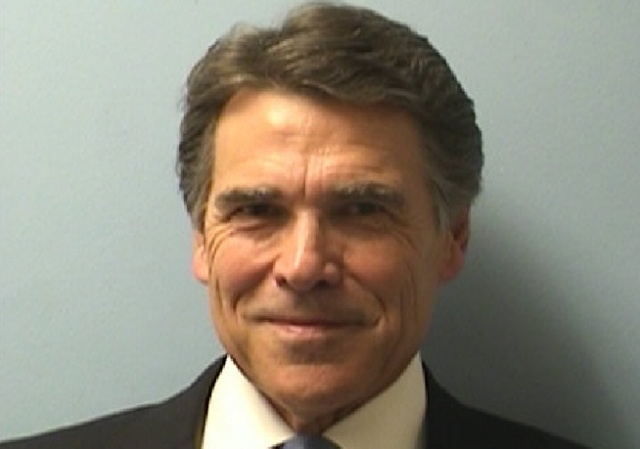
Rick Perry's Ebola test AUSTIN, Texas — Ebola came to Texas. And Rick Perry went to Europe. Now the Republican governor, a likely presidential contender, is back in Austin and scrambling to avoid a damaging perception problem like the “oops” moment that doomed his first shot at the White House. At first, Perry seemed to have everything under control. When a man in Dallas was diagnosed with the deadly virus, Perry held an Oct. 1 news conference, assuring the public that “there are few places in the world better equipped to meet the challenges posed by this case.” When more people were quarantined, he launched a task force and told Texans to “rest assured our system is working as it should.” But then he left Sunday for a long-planned 7-day trip designed to burnish his foreign policy credentials. During his absence, two more cases of Ebola were confirmed, both of them involving Texas nurses who had dealt with the first patient. The governor cut his trip short and rushed home on Thursday, only to encounter criticism for leaving in the first place; Democrats charged that he was more focused on looking presidential overseas than on fixing a big problem at home.
See? It's all Rick Perry's fault, not Obama's.

We have covered the American Studies Association academic boycott of Israel since inception, and compiled the definitive list and accompanying statements of universities and associations rejecting the boycott.  Scroll through the ASA Tag for the full history. The short version is that the boycott targeted all Israeli academic institutions, and importantly, faculty and scholars acting on behalf of the institutions either as representatives, ambassadors or by virtue of administrative status. From the earliest days of the ASA boycott, ASA tried to make a distinction between individuals and institutions, as if boycotting an institution was not also boycotting the people who worked there. That was a critical charade, because the boycotting of individuals was too odious even for many people supporting the academic boycott.  So ASA could have a boycott of individuals while pretending it was not boycotting individuals. That ASA distinction was set forth in a December 4, 2013 statement of the ASA National Council supporting the boycott and advocating for membership approval:
Our resolution understands boycott as limited to a refusal on the part of the Association in its official capacities to enter into formal collaborations with Israeli academic institutions, or with scholars who are expressly serving as representatives or ambassadors of those institutions, or on behalf of the Israeli government ....
That is a distinction ASA made throughout its public statements and position papers -- if you were a representative of an Israeli institution, or if you had an administrative title, you were boycotted. For example, a form letter ASA distributed to members to be given to university administrators made the same distinction:

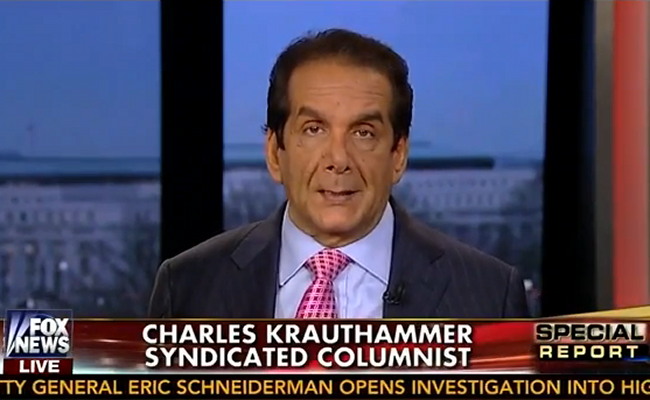
Yesterday's announcement that the Obama administration was appointing partisan bureaucrat Ron Klain as Ebola Czar was met with partisan reactions. Liberals think it's a great idea while conservatives are skeptical. Perhaps no one put the situation in perspective better than Charles Krauthammer who, by being a psychiatrist is also a medical doctor and therefore more qualified for the position than Klain. In an appearance on Special Report with Bret Baier, Krauthammer reduced the Klain appointment to what it actually is, a public relations move. Transcript and video by National Review:
“I don’t think it’s going to make any difference one way or the other. . . . It gives the appearance of motion; this is what Obama specializes in. If you have a VA scandal, an IRS scandal, a Secret Service scandal, you fire the guy at the top so you have the appearance of motion; here you’re putting a guy in who’s supposedly going to coordinate.” On Friday’s Special Report, Krauthammer derided Klain’s own assessment of his duties: “There’s a quote in the New York Times about what Klain would do, and he said his job is ‘messaging.’ So we have a virus on the loose that turns your organs into liquid, and the answer is to appoint a guy to do the messaging. . . .
Here's something you probably haven't heard about Ron Klain.

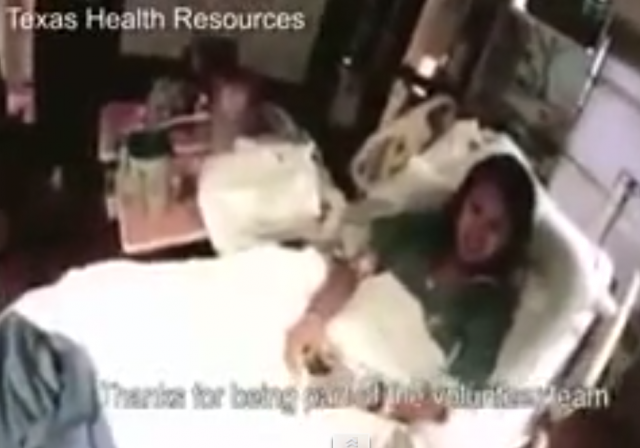
Nina Pham tested positive for Ebola. The 26 year old nurse from Dallas, Texas was among the health care crew taking care of Eric Duncan. Ebola took Duncan's life, October 8. Prior to being transported to Bethesda, Maryland to receive more intensive treatment, Pham seemed to be in good spirits. She teared up saying, "I love you guys. Come to Maryland!" This video was filmed last night before to her departure from Dallas:  

Earlier this year "#BringBackOurGirls" rose, trended, then fizzled on Twitter; but recent negotiations between the Nigerian government and Islamist group Boko Haram might lead to the release of the 200 schoolgirl hostages whose plight inspired the hashtag. Designated a terrorist organization by the U.S. in 2013, Boko Haram began its mission of violence in 2009 with the goal of overthrowing the Nigerian government and creating an Islamic state. Now, after five years and thousands dead, a cease fire has reportedly been reached. Via Bloomberg:
“A cease-fire agreement has been concluded between the Federal Government of Nigeria and the Jamatu Ahlis Sunna Li Daawa Wal Jihad,” Chief of Defence Staff Air Marshal Alex Badeh said yesterday in an e-mailed statement, referring to Boko Haram. “I have accordingly directed the service chiefs to ensure immediate compliance with this development.” ... Boko Haram said “the schoolgirls and other people in their captivity are alive and well,” Nigerian government spokesman Mike Omeri said in a separate statement from Abuja, the capital.
Reuters reports:
Nigeria's armed forces chief Air Chief Marshal Alex Badeh announced the ceasefire on Friday. On Saturday, two senior government sources said it aims to secure the girls' release as early as Monday or Tuesday, although they declined to give further details.

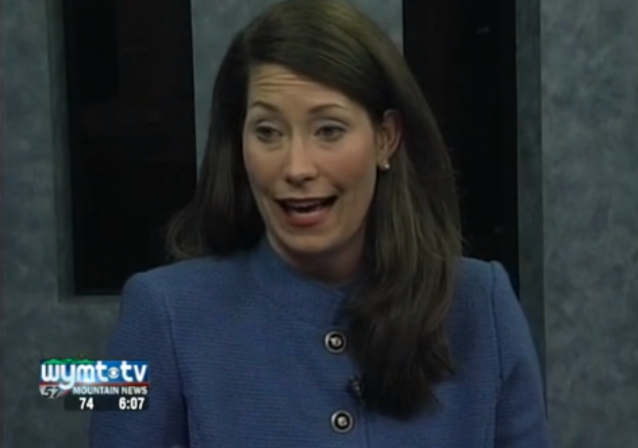
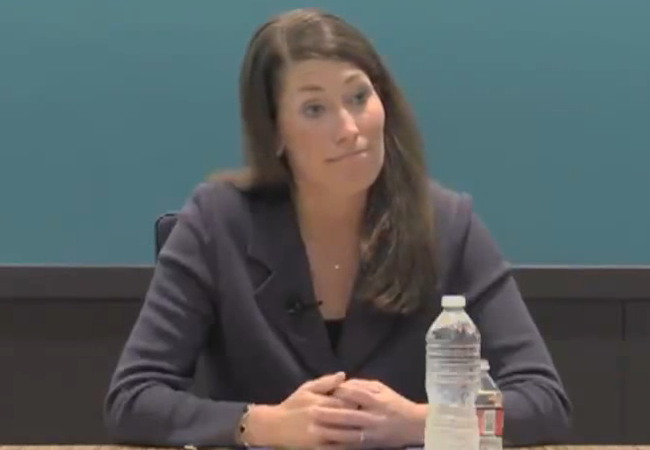
Let's face it, Alison Grimes hasn't been helped by any of her recent missteps regarding whether she voted for Obama. She repeated the refusal to answer the question on local TV again:
U.S. Senate Candidate Alison Lundergan Grimes continues to refuse to say who she voted for in the 2008 and 2012 presidential elections. On Friday, Grimes sat down with WYMT’s Steve Hensley for a taping of an episode of “Issues & Answers: The Mountain Edition.” Here is an excerpt from the interview: Steve Hensley: “You've also said in the past that you voted for Hillary Clinton in the 2008 presidential primary so what's the difference?” Secretary Grimes: “In 2008 I was not Secretary of State and what happened at that convention is all on record so nothing that wasn't already fully disclosed was offered up. It's a matter of principle as I told Bill Goodman, I'm the chief elections official. It is a constitutional right provided in Kentucky's constitution for all Kentuckians to cast their ballot in privacy.” Hensley: “If President Obama offered to campaign for you in Kentucky, would you accept?” Grimes: “Well, I've said I speak for myself, Senator McConnell doesn't understand that. He and his henchmen have spent about 50 million dollars trying to put Barack Obama on the ballot this year. He's not, I am.”

AP reports via HuffPo:
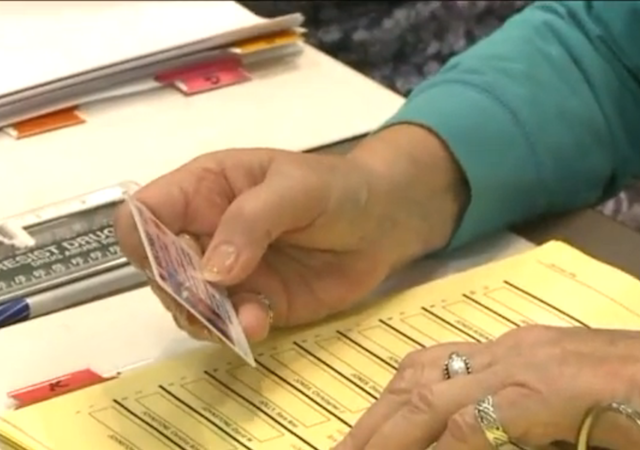
The Supreme Court said Saturday that Texas can use its controversial new voter identification law for the November election. A majority of the justices rejected an emergency request from the Justice Department and civil rights groups to prohibit the state from requiring voters to produce certain forms of photo identification in order to cast ballots. Three justices dissented. The law was struck down by a federal judge last week, but a federal appeals court had put that ruling on hold. The judge found that roughly 600,000 voters, many of them black or Latino, could be turned away at the polls because they lack acceptable identification. Early voting in Texas begins Monday. The Supreme Court's order was unsigned, as it typically is in these situations. Justices Ruth Bader Ginsburg, Sonia Sotomayor and Elena Kagan dissented, saying they would have left the district court decision in place. "The greatest threat to public confidence in elections in this case is the prospect of enforcing a purposefully discriminatory law, one that likely imposes an unconstitutional poll tax and risks denying the right to vote to hundreds of thousands of eligible voters," Ginsburg wrote in dissent. Texas' law sets out seven forms of approved ID — a list that includes concealed handgun licenses but not college student IDs, which are accepted in other states with similar measures.
The Supreme Court Order is here. It denies a request to vacate the stay issued by the 5th Circuit Court of Appeals putting on hold the trial court ruling invalidating the law.

A new data dump from Pew Research suggests that political campaigns might want to abandon any last-ditch efforts to change minds prior to this year's midterm elections. A continuous panel survey of 3,154 adults showed that this years likely voter demographic is more polarized than the average American. This polarization also affects level of involvement in local and national politics: the more ideologically oriented the voter, the more likely they are to be politically active. Only 40% of the population is expected to participate in the November midterms, but those who do plan on voting won't necessarily be checking the box because they believe in the power of democracy. Pew found a strong correlation between ideological polarization, and voting as a way to hit back at the opposing party.
Hostility to the opposing party is a key marker of polarization and is a strong motivator to vote, especially among conservatives and Republicans. Ideology and partisan antipathy are related: Those holding ideologically consistent opinions are far more likely than others to view the opposing party negatively, and even to view it as a threat to the nation’s well-being. Among Republicans and Republican leaners with a very unfavorable view of the Democratic Party in the current survey, 65% are likely voters, compared with only 49% among Democrats with a very unfavorable view of the Republican Party. Those who are less hostile to the opposite party are considerably less likely to vote. Among Republicans, 40% of those with a mostly unfavorable view of Democrats are likely to vote, and only 23% of those with positive views (or who offer no opinion) of the Democratic Party are likely to vote. On the other side, 33% of Democrats with a mostly unfavorable view of the Republican Party are forecasted to turn out, as are 19% of those with positive views of (or no opinion about) the GOP.
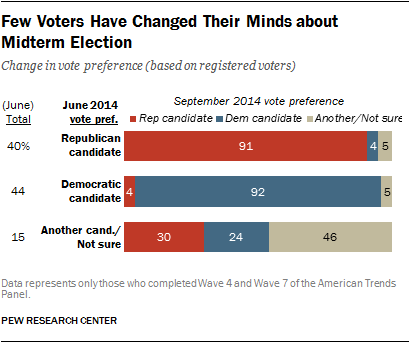
In addition to being polarized, both Republican and Democrat voters remained loyal to their party as the midterm cycle progressed. 91% of Republicans and 92% of Democrats have remained ideologically consistent, and haven't changed their minds regarding which candidate they plan on voting for in November. 10-17-2014-3 Who has had a change of heart? Independents have---and they're trending Republican.

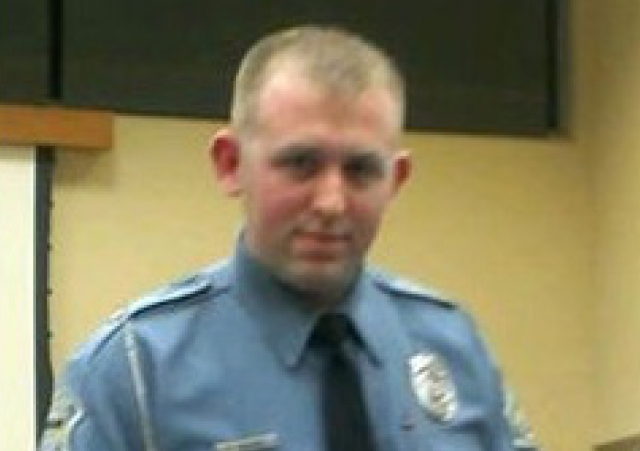
A breaking New York Times report sheds new light on Ferguson police officer Darren Wilson's mortal encounter with local Michael Brown.

The police officer who fatally shot Michael Brown in Ferguson, Mo., two months ago has told investigators that he was pinned in his vehicle and in fear for his life as he struggled over his gun with Mr. Brown, according to government officials briefed on the federal civil rights investigation into the matter. The officer, Darren Wilson, has told the authorities that during the scuffle, Mr. Brown reached for the gun. It was fired twice in the car, according to forensics tests performed by the Federal Bureau of Investigation. The first bullet struck Mr. Brown in the arm; the second bullet missed. The forensics tests showed Mr. Brown’s blood on the gun, as well as on the interior door panel and on Officer Wilson’s uniform. Officer Wilson told the authorities that Mr. Brown had punched and scratched him repeatedly, leaving swelling on his face and cuts on his neck.

According to the New York Times, Wilson told authorities that he fought with Brown for possession of his service pistol, resulting in two rounds fired inside his police vehicle.  One round struck Brown in the arm, and the other was wasted.

Importantly, Brown's blood was found on the gun by forensics analysis, as well as on the inside of the police vehicle, confirming his presence in the vehicle and the weapon.

Wilson said that Brown punched and scratched him numerous times, causing abrasions and swelling to his face and neck.

The officials briefed on the case said the forensic evidence gathered in the car lent credence to Officer Wilson’s version of events. According to his account, he was trying to leave his vehicle when Mr. Brown pushed him back in. Once inside the S.U.V., the two began to fight, Officer Wilson told investigators, and he removed his gun from the holster on his right hip. Chief Jon Belmar of the St. Louis County Police Department has said in interviews that Officer Wilson was “pushed back into the car” by Mr. Brown and “physically assaulted.”

The Times goes on to quote Brown's friend Dorian Johnson as a sort of opposing witness to Officer Wilson.

WAJ: This is a guest post by Robert L. Shibley, Senior Vice President of the Foundation for Individual Rights in Education (FIRE). As "Yes Means Yes" mania sweeps across college campuses, and the lives of innocent men falsely accused are ruined in a witch hunt atmosphere, the FIRE once again is at the forefront of standing up for the individual. ----------------------------------- On Monday, Vox co-founder Ezra Klein penned an op-ed about how he firmly supported the affirmative consent bill recently passed in California despite his candid acknowledgment that the bill was in fact “terrible.” The general tenor of his column, which I discussed in The Daily Caller yesterday, was that you can’t make an omelet without breaking a few eggs—the eggs being people unjustly found guilty of rape. Critics on the left and the right were equally appalled, as well they—or anyone concerned with civil liberties—should have been. Under this barrage of well-deserved criticism, Klein returned with a longer piece yesterday, attempting to justify his candid-yet-horrifying position on California’s law. He fails. In fact, despite his column’s title, “What people get wrong about the Yes Means Yes law,” he fails to even get basic facts about the law right. Klein does the same thing that so many other supporters of the law have done, which is to present the law and the campus environment in inaccurate ways that just happen to make due process abuses seem less grievous. So allow me to present a mini-Fisking of the article, and you can be the judge of who’s right. I won’t address every line of Klein’s long, doomed attempt at self-justification, but I will hit the highlights (or perhaps lowlights). There are plenty of them. Klein opens thusly:

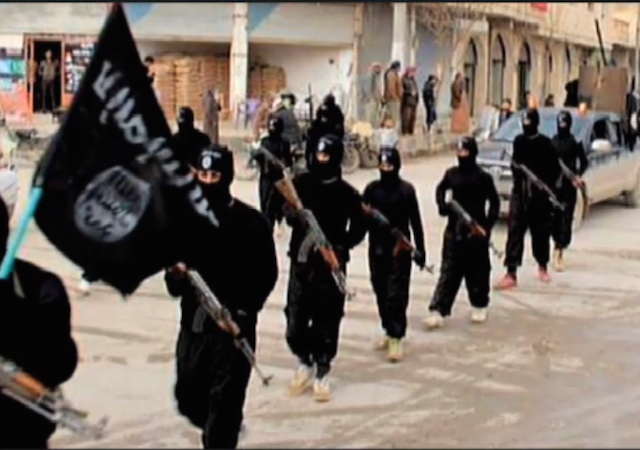
The U.S. Military is on a mission to manage expectations regarding the fight against ISIS in Iraq and Syria. Army Gen. Lloyd Austin, commander of U.S. military operations against Islamic State, gave an update at the Pentagon about the military campaign in Iraq, and emphasized that while U.S. forces have made gains against Islamic State militants, we still have a long way to go. From AP's Big Story:
Army Gen. Lloyd Austin said he believes the Iraqi government will successfully enlist the support of Sunni tribal leaders in Anbar province to turn the tide in that important region, where the militants have made recent gains. And he said he sees no imminent threat to the international airport west of Baghdad, where U.S. Apache helicopters are monitoring IS efforts to make inroads on the capital. "The campaign to destroy ISIL will take time and there will be occasional setbacks along the way," Austin told a Pentagon news conference, using another acronym for the Islamic State group, "and particularly in these early stages of the campaign as we coach and mentor a force that is actively working to regenerate capability after years of neglect and poor leadership."
I recently wrote a rather frustrated article about the actions of the Obama administration in conjunction with our mission in northern Iraq; the optics surrounding this administration are embarrassing on an international level, which is why I believe that it's a smart move for the military to temper expectations while emphasizing plans and progress.

Hey, that'll work:
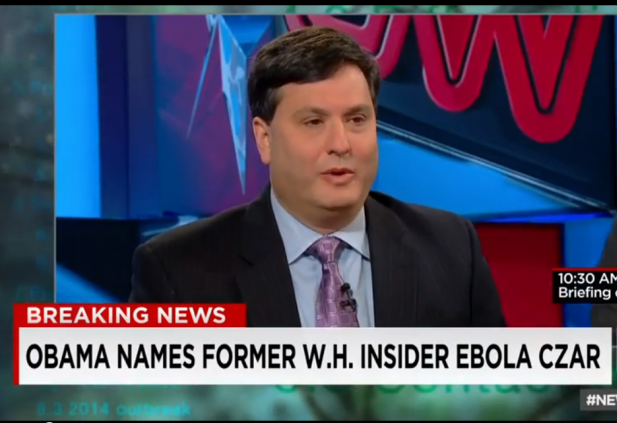
President Obama has asked Ron Klain, who served as chief of staff to both Vice President Biden and former vice president Al Gore, as his Ebola response coordinator, according to a White House official. "He will report directly to the president’s homeland security adviser, Lisa Monaco, and the president's national security adviser, Susan Rice, as he ensures that efforts to protect the American people by detecting, isolating and treating Ebola patients in this country are properly integrated but don’t distract from the aggressive commitment to stopping Ebola at the source in West Africa," a White House official wrote in an e-mail. Klain, a longtime Democratic operative, served as Biden's chief of staff from 2009 to 2011 and as Gore's from 1995 to 1999. He helped oversee the Democratic side in the 2000 presidential election recount as its lead lawyer, a role that Kevin Spacey portrayed in the HBO film "Recount."
Klain has virtually no experience except for the political and the legal. He's another Harvard Law graduate, and briefly clerked for SCOTUS Justice Byron White, but after that there's mostly a long string of Democratic political positions, including a stint as debate prepper. The following [emphasis mine] is really a masterpiece in gracefully laconic understatement by the WaPo. My hat is off to the article's authors: