

Charlie Hebdo Attack Spin: Blaming the Victims and the West
on January 07, 2015
42 Comments
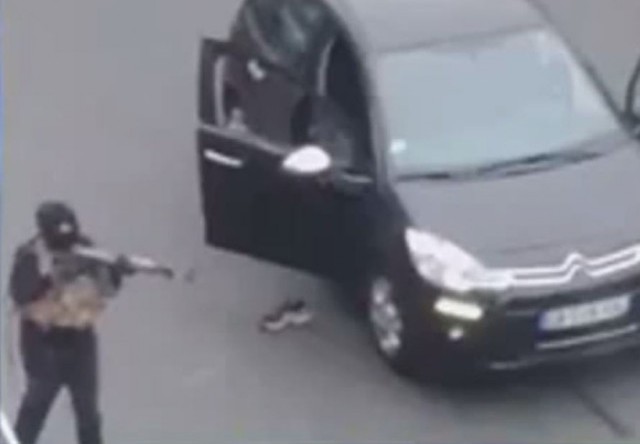
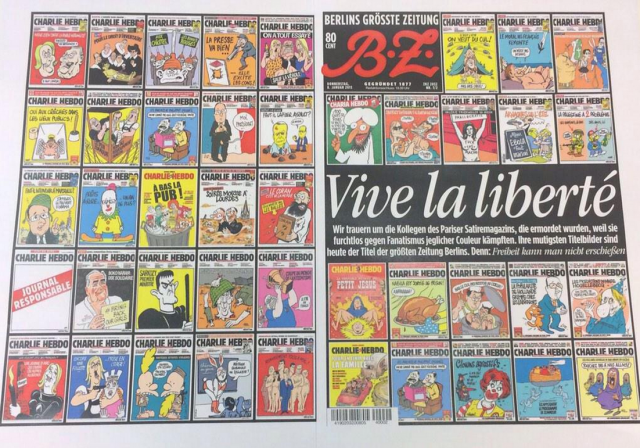
The wake of the attacks on Charlie Hebdo is littered with a confusing mix of blame, counter blame, politically correct waffling, and outrage from every possible race and creed.
Financial Times columnist Tony Barber went down the familiar road of blaming freedom of expression by way of a call for "common sense":
Charlie Hebdo is a bastion of the French tradition of hard-hitting satire. It has a long record of mocking, baiting and needling Muslims. Two years ago the magazine published a 65-page strip cartoon book portraying the Prophet’s life. And this week it gave special coverage to Soumission (“Submission”), a new novel by Michel Houellebecq, the idiosyncratic author, which depicts France in the grip of an Islamic regime led by a Muslim president. This is not in the slightest to condone the murderers, who must be caught and punished, or to suggest that freedom of expression should not extend to satirical portrayals of religion. It is merely to say that some common sense would be useful at publications such as Charlie Hebdo, and Denmark’s Jyllands-Posten, which purport to strike a blow for freedom when they provoke Muslims.But that's just one columnist's opinion, right? (To be fair, the Financial Times editorial board went in a completely different direction.) In an op-ed from today's New York Times one Nick Kristof is ready to string up the attackers, but doesn't want to put a label on what motivated them:
One of things I’ve learned in journalism is to beware of perceiving the world through simple narratives, because then new information is mindlessly plugged into those story lines. In my travels from Mauritania to Saudi Arabia, Pakistan to Indonesia, extremist Muslims have shared with me their own deeply held false narratives of America as an oppressive state controlled by Zionists and determined to crush Islam. That’s an absurd caricature, and we should be wary ourselves of caricaturing a religion as diverse as Islam. So let’s avoid religious profiling. The average Christian had nothing to apologize for when Christian fanatics in the former Yugoslavia engaged in genocide against Muslims. Critics of Islam are not to blame because an anti-Muslim fanatic murdered 77 people in Norway in 2011. ... The great divide is not between faiths. Rather it is between terrorists and moderates, between those who are tolerant and those who “otherize.”Who's really responsible? Maybe the Jews. Or the West. Or people who assume "freedom of expression" means freedom to insult Muhammad without getting blown away. At least that's what's swirling around on Twitter right now: