

Image 01 Image 03

Iran Tag

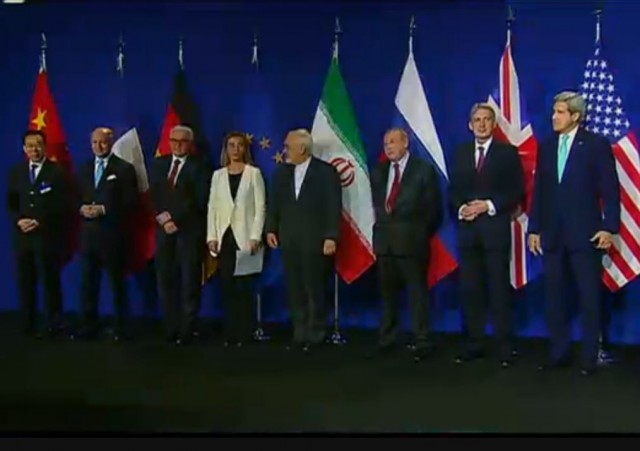
Well that "Framework" negotiation was fun. For the Iranians, who got a great deal at least as far as a Framework goes. As this WaPo editorial points out, the Obama administration gave up on key parameters:
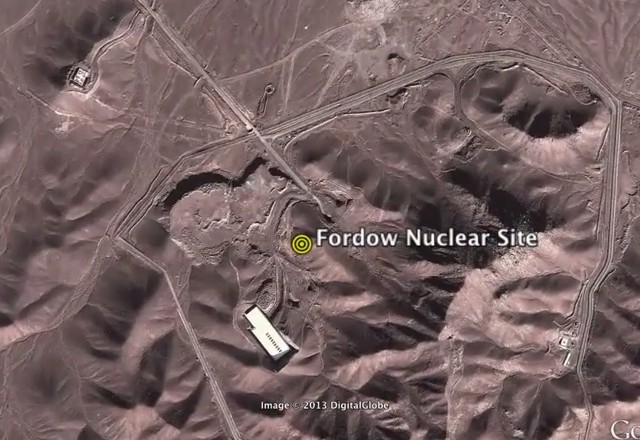
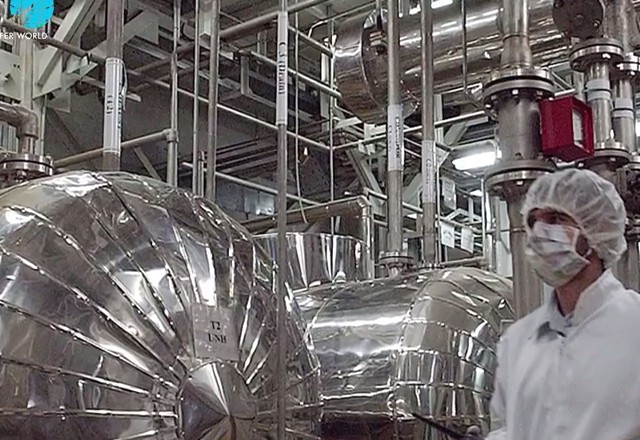
THE “KEY parameters” for an agreement on Iran’s nuclear program released Thursday fall well short of the goals originally set by the Obama administration. None of Iran’s nuclear facilities — including the Fordow center buried under a mountain — will be closed. Not one of the country’s 19,000 centrifuges will be dismantled. Tehran’s existing stockpile of enriched uranium will be “reduced” but not necessarily shipped out of the country. In effect, Iran’s nuclear infrastructure will remain intact, though some of it will be mothballed for 10 years. When the accord lapses, the Islamic republic will instantly become a threshold nuclear state. That’s a long way from the standard set by President Obama in 2012 when he declared that “the deal we’ll accept” with Iran “is that they end their nuclear program” and “abide by the U.N. resolutions that have been in place.” Those resolutions call for Iran to suspend the enrichment of uranium. Instead, under the agreement announced Thursday, enrichment will continue with 5,000 centrifuges for a decade, and all restraints on it will end in 15 years.
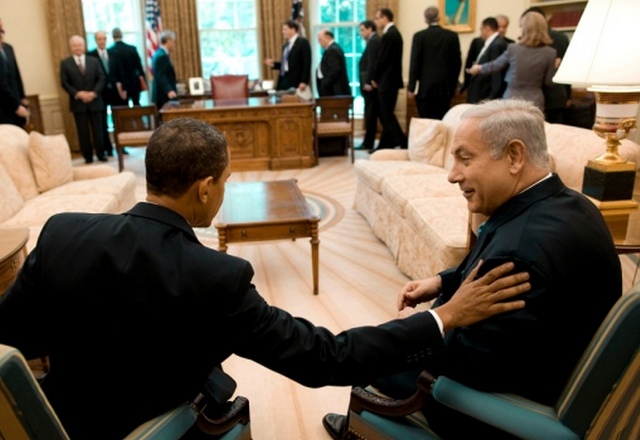
In his speech after the announcement, Obama took care not only to repeat the false rhetorical device of the only choice being between this deal and war, he blamed that choice on Israeli Prime Minister Benjamin Netanyahu. David Horvitz at The Times of Israel writes, Defeatist Obama’s deal with the devil:
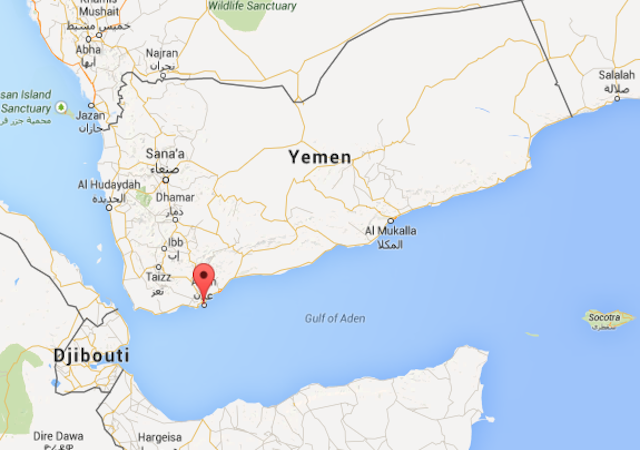
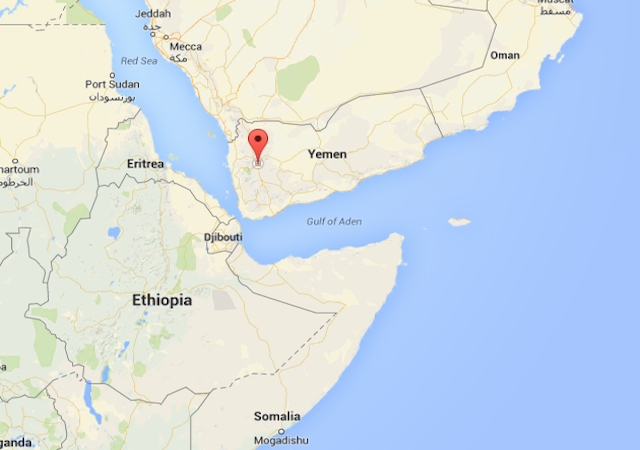
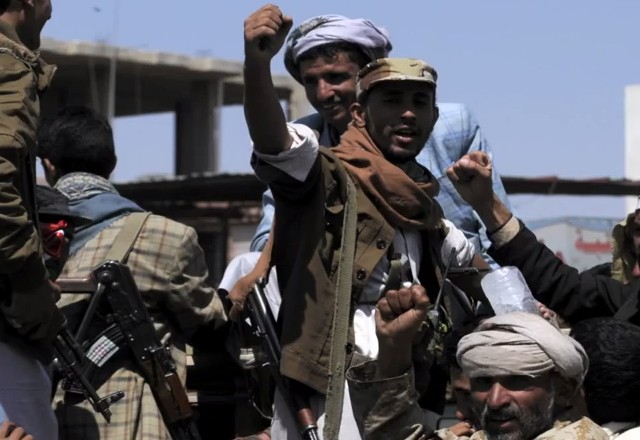
While diplomats postured and preened over their hard-fought "nuclear framework" intended to usher in the era of a nuclear-but-not-nuclear Iran, Yemen continued to burn. Today, Iranian-backed Houthi rebels made major progress in their attempt to seize control of Aden, Yemen's key strategic port city and site of ousted President Hadi's last-stand. (He fled to Saudi Arabia last week.) The Houthi don't yet exercise full control over Aden, but have managed to break through barriers armed by soldiers loyal to Hadi, briefly occupy the Presidential palace, and raise the Yemeni flag before withdrawing for fear of airstrikes. This isn't an insignificant accomplishment; if the Houthi eventually oust Hadi loyalists from Aden, they will have seized control over one of the most strategically important ports in the Middle East, and upped the ante on Saudi coalition forces currently trying to regain ground.

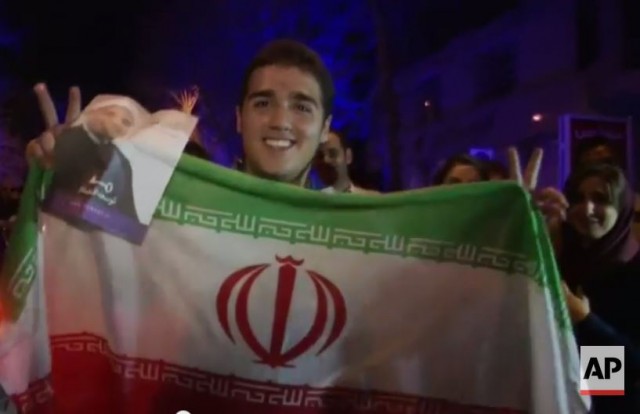
A vague agreement to agree was just announced. The precise details are somewhat vague, as it's just a statement of point, but one thing is clear: Iran is thrilled.

The arbitrary deadline to come to an agreement with Iran is today. But according to the Associated Press, that deadline might be extended to tomorrow, making this the third deadline extension.
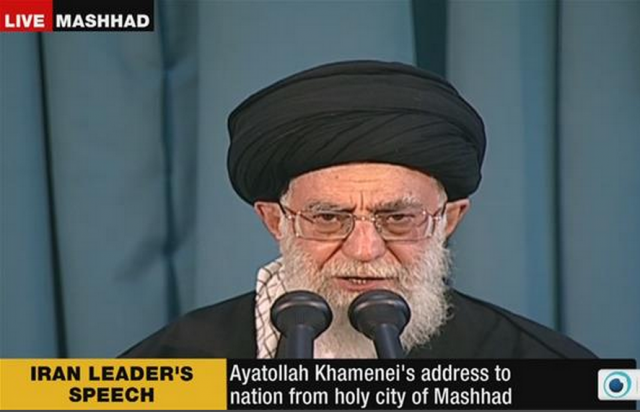
They had set a deadline of Tuesday for a framework agreement, and later softened that wording to a framework understanding, between Iran and the so-called P5+1 nations — the United States, Britain, France, Germany, Russia and China. After intense negotiations, obstacles remained on uranium enrichment, where stockpiles of enriched uranium should be stored, limits on Iran's nuclear research and development and the timing and scope of sanctions relief among other issues. The aim has been a joint statement is to be accompanied by additional documents that outline more detailed understandings, allowing the sides to claim enough progress has been made to merit a new round, officials said. Iran has not yet signed off on the documents, one official said, meaning any understanding remains unclear. ...The softening of the language from a framework "agreement" to a framework "understanding" appeared due in part to opposition to a two-stage agreement from Iran's supreme leader, Ayatollah Ali Khamenei. Earlier this year, he demanded only one deal that nails down specifics and does not permit the other side to "make things difficult" by giving it wiggle room on interpretations.
Any deal reached would only amount to a soft framework, and likely not be particularized in writing as we reported Friday.

Last time we checked in, the White House was wallowing in a state of denial over the devolving situation in Yemen. The UN held a meeting to discuss the fall of the Western-backed Hadi government, and while the diplomats were talking, Iran executed a blatant arms dump on behalf of the Houthi rebels, who have been contributing to chaos in Yemen since late last year. America postured while the Saudis went to war, launching air strikes against Iranian-made missile launchers and destroying Houthi-controlled military barracks and air bases. Now, as coalition air strikes rage on, the Saudis have constructed a blockade as a way of preventing Iran---or anyone else---from rearming the Houthi. Via the AP:
As night fell, intense explosions could be heard throughout the rebel-held capital Sanaa, where warplanes had carried out strikes since the early morning. Military officials from both sides of the conflict said that airstrikes were targeting areas east and south of the third largest city of Taiz, as well as its airport, while naval artillery and airstrikes hit coastal areas east of Aden. "It's like an earthquake," Sanaa resident Ammar Ahmed said by telephone. "Never in my life have I heard such explosions or heard such raids."

A vague, unwritten Iran deal may soon be hammered out as talks continue this weekend in Switzerland.  Reuters reports
Iran and six major powers were exploring possible compromises to break an impasse in nuclear negotiations on Sunday, but officials cautioned they were unable to move on several sticking points. The news came as Israel said the details of a possible agreement emerging from talks in Lausanne, Switzerland were worse than it feared. In a significant development in talks aimed at securing a preliminary nuclear deal, several officials told Reuters Tehran had indicated a willingness to accept fewer than 6,000 nuclear centrifuges and to send most of its enriched uranium stockpiles for storage in Russia. Western powers, on the other hand, were considering the idea of allowing Iran to conduct limited, closely-monitored enrichment-related work for medical purposes at an underground facility called Fordow, the officials added on condition of anonymity. Iran had originally insisted on keeping in operation the nearly 10,000 centrifuges it currently uses, but said in November that Washington indicated it could accept around 6,000. Iranian officials say they had been pushing for 6,500-7,000. The officials said all parts of an emerging nuclear deal were interrelated. "Everything could still fall apart," a Western official told Reuters, adding that the talks could drag on to Tuesday, the self-imposed deadline for a framework agreement.
According to The Telegraph, a pro-Rouhani Iranian journalist covering the P5 + 1 talks has sought asylum in Switzerland following frustration that he "could only write what he is told":

As if things in the Middle East couldn't get any worse, we're now at a point where our allies don't trust us. It's becoming quite clear that the only person who thinks Obama's pursuit of a deal with Iran is a good idea, is Obama. Daniel Bassali of the Washington Free Beacon:
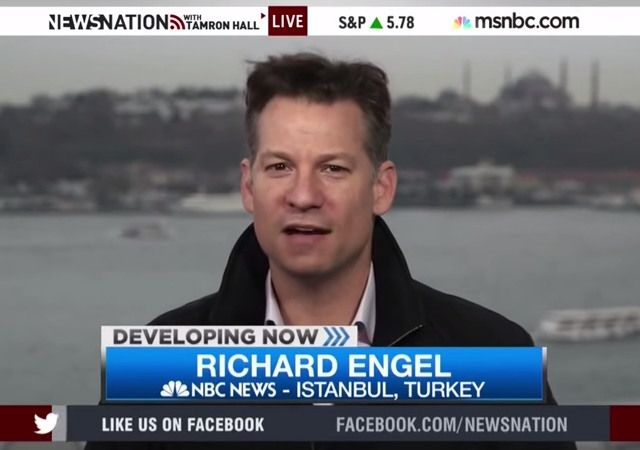
Richard Engel: Military Officials Say Allies No Longer Trust Us, Fear Intel Might Leak to Iran NBC’s Richard Engel reported Friday that U.S. officials were stunned they were not given any notice before Saudi Arabia launched attacks against Houthi rebels. According to Engel, military leaders were finding out about the developments on the Yemen border in real time. Engel said officials from both the military and members of Congress believe they were not given advanced warning because the Arab nations do not trust the Obama administration after they befriended Iran. “Saudi Arabia and other countries simply don’t trust the United States any more, don’t trust this administration, think the administration is working to befriend Iran to try to make a deal in Switzerland, and therefore didn’t feel the intelligence frankly would be secure. And I think that’s a situation that is quite troubling for U.S. foreign policy,” Engel said.
Watch the segment: Ed Morrissey of Hot Air commented:
Engel’s report strongly suggests that it’s not just incompetence that has the Saudis and other US allies rattled, but a suspicion that they’re being purposefully sold out by Obama to get a deal with Iran that will unleash their ambitions to dominate the region.

47 Traitors. White House snubs. A Presidential temper tantrum. Public fights with Netanyahu. Damaging international relationships with Israel. Leaked intel information. And what do we get for all the hassle? you get nothing A vague deal that won't even appear in writing. At least according to British Foreign Secretary Philip Hammond. Edward-Isaac Dovere reports at Politico:
No specifics, nothing written, perhaps not even anything that Iran and the international negotiating partners say as one—that’s the most to expect out of the nuclear talks now running up against the deadline in Switzerland, British Foreign Secretary Philip Hammond said Friday. But even concluding this round of talks with that level of ambiguity, Hammond said, would count as a significant success. And he thinks they’ll get it.
It's safe to say that Secretary Hammond's definition of success is a bit different from the rest of the world.

I could imagine such a conversation some decades in the future, if and when I have grandchildren and they are old enough to comprehend the historical mistakes of prior generations. The deal being discussed does not eliminate Iran's ability to produce nuclear weapons, it enshrines the process by international agreement so long as Iran does not take the last step. Recognizing Iran as a Nuclear Threshold State: Implications for Israel and the Middle East:
With shrewd strategic perspective, the Iranian leadership has weighed the long term implications of an agreement with the major powers that constitutes international recognition of Iran’s “right” to be a “nuclear threshold state,” and gives it the ability to break out to a nuclear bomb when it so chooses. Consequently, it seeks an agreement (even if its validity is limited to 10-15 years) that in addition to leaving it with access to its nuclear technology also rewards it with both removal of the sanctions and international recognition of its special status in the Middle East. The status of a threshold state will leave Iran with the possibility of arming itself with nuclear weapons within a short time span, when it decides that conditions enable (or in its view, require) it to break out to military nuclear capability.
Who will act against it at that time when Iran decides the time is right for the breakout?

The nuclear negotiations between the West and Iran may have reached an impasse over the timing of Iran getting relief from sanctions. This is how The Guardian broke down the differences between the United States and the French on Friday:
Diplomats say the French foreign minister, Laurent Fabius, telephoned the French delegation in Lausanne to ensure it did not make further concessions, and to insist that the bulk of UN sanctions could only be lifted if Iran gave a full explanation of evidence suggesting it may have done development work on nuclear warhead design in the past.  ... The US offer on sanctions is to lift UN sanctions in layers in return each “irreversible” step Iran makes to scale down and limit its nuclear programme. There would be mechanisms in place by which sanctions would “spring back” if Iran violated the agreement, without the need for consensus in the UN security council. It is broadly supported by the UK and Germany, while Russia and China, the other members of the six-nation group, would offer more generous terms. Tehran is reluctant to accept sanctions relief based on milestones, but diplomats say the French position would be a complete deal-breaker. They say the Iranians would be very unlikely to admit past weapons work, which if revealed would demonstrate that the country’s supreme leader, Ali Khamenei, had misled the world. Better, US diplomats argue, to focus on limiting the current Iranian programme and worry about allegations about the past a few years down the road.
Focus on the current issues and leave the allegations for the future? Are they crazy? Let's take a couple of paragraphs from United Nations Security Council Resolution 1696, which was passed in July 2006 and was the first of six resolutions passed against Iran for its violations of the Nuclear Nonproliferation treaty.

As the arbitrary deadline to strike a deal with Iran draws close, Secretary Kerry says "genuine progress" has been made. France is not so sure the negotiations are going well, and neither is Israel. Both nations share concerns that Iran is receiving far too many concessions, saying any rush to relax sanctions is not a deal worth making. While talks proceed, and Kerry attempts to assures America with platitudes, Senator Cotton reminds us who we're negotiating with: Regardless of what Secretary Kerry tells the Associated Press, Ayatollah Seyed Ali Khamenei, Iran's Supreme Leader is not exactly a fan of Obama, America, or any deal that doesn't remove sanctions. And if you need more proof, look no further than than the Ayatollah's Twitter feed.

Today the UN Security Council will hold an emergency meeting to discuss the devolving situation in Yemen. The council will meet in a closed session at 3 p.m. EDT. Earlier this year the UN condemned the Houthi siege on Sana'a and the subsequent attack on the sitting government. Deposed President Abed Rabbo Mansour Hadi called for UN action yesterday:
Hadi sounded a defiant note from his base in the south on Saturday, threatening action against the Houthis’ northern stronghold. “We shall deliver the country to safety and raise Yemen’s flag on Mount Marran in Saadeh instead of the Iranian flag,” he said in a televised speech, his first since reaching Aden. Iran is an ally of the Houthis, who belong to a Shia Muslim sect. The Houthis, in a statement from their Supreme Revolutionary Committee, did not directly respond to the speech but called for a “general mobilisation” of the armed forces against a “dirty war” they said was being waged by militias loyal to Hadi.

Things just keep getting worse for the US military in Yemen. What was remaining of the US military presence in Yemen has been---or is in the process of---evacuating the region after attacks by both Shiite Houthi rebels and al-Qaeda forces caused a breakdown in security.
In their statement, the rebels described their coming offensive against security and military institutions loyal to President Abed Rabbo Mansour Hadi as a battle against extremists. Their appeal came just minutes after Hadi gave a defiant speech challenging the Houthis, his first address broadcast to the public since fleeing Sanaa last month. He described the rebels' rule in Sanaa and elsewhere as "a coup against constitutional legitimacy." The U.S. troops, including Special Forces commandos, were leaving the al-Annad air base near the southern city of al-Houta, Yemeni military and security officials said. Speaking on condition of anonymity as they weren't authorized to discuss troop movements, the officials did not say whether the troops had left the country. Some 100 American troops and Special Forces commandos are believed to be stationed there. U.S. officials declined immediate comment Saturday.
Fox News has more:

Earlier this year, Iranian-backed Houthi rebels evolved from regional threat into formidable occupation force. They moved out of their strongholds in north Yemen to threaten, menace, and finally occupy the capital city of Sana'a. Conditions deteriorated to the point where the U.S. embassy was forced to evacuate; reports quickly surfaced that the evacuation was botched, and questions arose about the status of weapons, vehicles, and other military aid supplies left behind when US forces left the region. Without an available surveillance infrastructure, the Defense Department has been unable to monitor the movement of small arms and other supplies, and now the Pentagon has come forward saying that they're unable to account for $500 million worth of supplies. From the Washington Post:
In recent weeks, members of Congress have held closed-door meetings with U.S. military officials to press for an accounting of the arms and equipment. Pentagon officials have said that they have little information to go on and that there is little they can do at this point to prevent the weapons and gear from falling into the wrong hands. “We have to assume it’s completely compromised and gone,” said a legislative aide on Capitol Hill who spoke on the condition of anonymity because of the sensitivity of the matter. U.S. military officials declined to comment for the record. A defense official, speaking on the condition of anonymity under ground rules set by the Pentagon, said there was no hard evidence that U.S. arms or equipment had been looted or confiscated. But the official acknowledged that the Pentagon had lost track of the items.
Who likely got their hands on it? Either al Qaeda, or the Houthi---and neither prospect offers much hope for their return. WaPo created an infographic displaying military aid the US has sent to Yemen since 2010: