Image 01 Image 03

Iran Nuclear Deal Tag

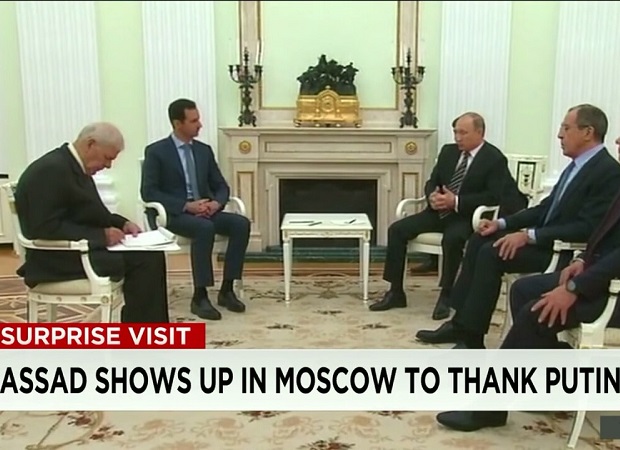
With each passing day, it gets more and more difficult to ignore the monumental disaster that Obama’s foreign policy actually is. Nowhere is its utter failure more glaringly evident than in the Syrian Civil War. But first, let us not underestimate the pathologies of the Middle East that have led to the present disaster in Syria, but Obama administration’s policies have created perils that we would be dealing with, in decades to come. The geopolitical vacuum created by President Obama’s push to shrink America’s footprint in the Middle East has quickly been filled by Comrade Putin’s soviet-style jackboots. And President Obama-backed Nuclear Deal has single-handedly contributed billions of dollars to Islamic Republic of Iran’s war chest geared at funding global terrorism and regional adventures.
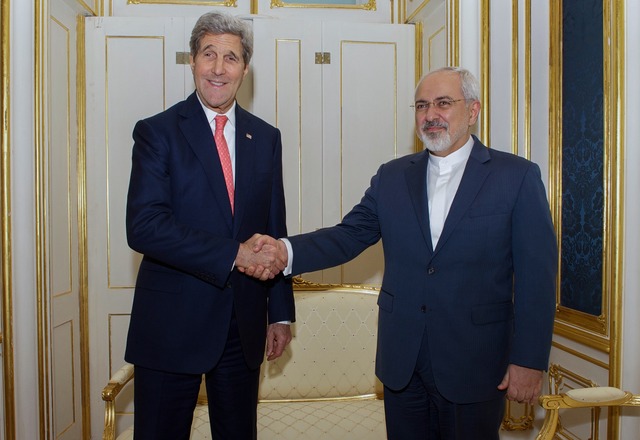
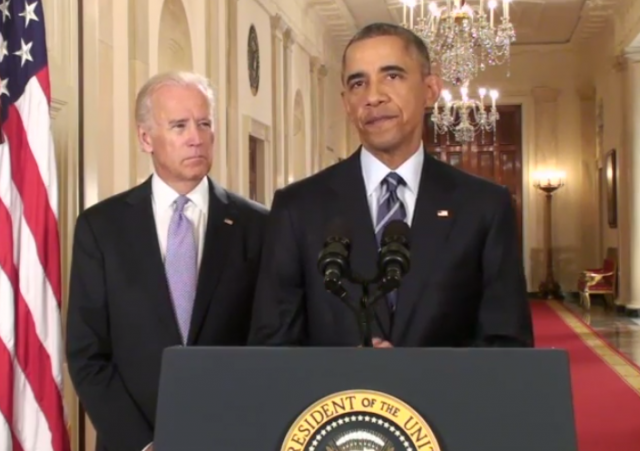
While President Barack Obama and Secretary of State John Kerry have assured us that the nuclear deal with Iran has delayed war, Tony Badran in a devastating critique of the administration's foreign policy last week wrote, "Middle Easterners are not so lucky: They get to fight their wars with Iran right now." Back in 2014, Badran noted, President Obama said of the turmoil in the Middle East, "A lot of it has to do with changes that are taking place in the Middle East in which an old order that had been in place for 50 years, 60 years, 100 years was unsustainable, and was going to break up at some point. And now, what we are seeing is the old order not working, but the new order not being born yet -- and it is a rocky road through that process, and a dangerous time through that process." But a few months earlier, Obama, in an interview with Jeffrey Goldberg, made very clear that his intent was to make Iran an agent of changing the orders. When Goldberg asked him why the Sunni states seem to fear him so much Obama answered, "I think that there are shifts that are taking place in the region that have caught a lot of them off guard. I think change is always scary. I think there was a comfort with a United States that was comfortable with an existing order and the existing alignments, and was an implacable foe of Iran, even if most of that was rhetorical and didn't actually translate into stopping the nuclear program. But the rhetoric was good. What I've been saying to our partners in the region is, 'We've got to respond and adapt to change.'"

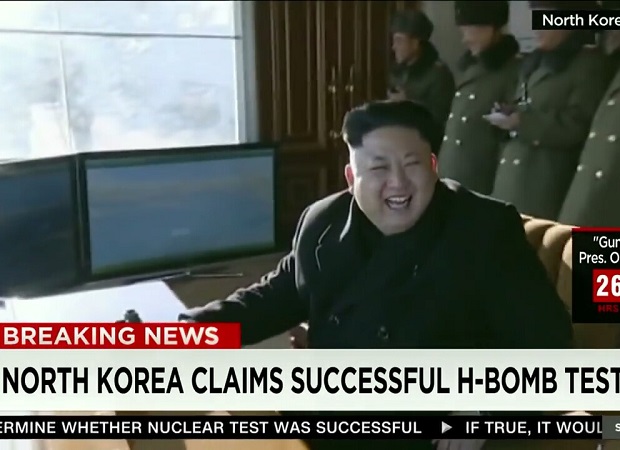
On Saturday, Madeleine Albright introduced Hillary Clinton at an event in New Hampshire, telling the crowd: “There is a special place in hell” for women who do not support Clinton. Madeleine Albright (78) served as Secretary of State under the Clinton Administration, the same administration that gave us the now-defunct nuclear deal with North Korea. Finalized in 1994, Clinton's deal was used by the Communist Regime as a cover to build a nuclear bomb. At the time, President Bill Clinton called it "a good deal for the United States", ensuring that "North Korea will freeze and then dismantle its nuclear program. South Korea and our other allies will be better protected. The entire world will be safer as we slow the spread of nuclear weapons." Fast forward to 2016; North Korea ushers in the New Year with blasting a 20-50 megaton Hydrogen Bomb and than last week tops it with launched a dual-use ballistic missile capable of reaching the U.S. soil. The test that North Korea wants to sell the world as a satellite launch, is just another leap for communist regime towards a inter-continental nuclear-weapon delivery system.

The disastrous JCPOA and President Obama's political compulsion to hide Iranian wrong-doing have infected the entire Democratic Party.  Instead of responding to Iran's support for terrorism and violations of its international commitments by imposing penalties, President Obama - and now his Democratic allies in Congress - are running cover. David Gerstmen wrote last month that "Obama’s Passivity in Face of Aggression Puts Iran in Driver’s Seat" and
in October, Iran tested a nuclear-capable ballistic missile that was later determined by the United Nations to have been in violation of United Nations Security Council Resolution 1929.  The administration, in response to Congressional pressure, was set to impose new sanctions on Iran at the end of 2015, but retreated when threatened by Iran.
Rather than leave Obama exposed to more embarrassment if he has to veto or block an Iran sanctions bill, Senate Democrats are trying to do the work for him.  According to The Hill:

According to the head of Iran’s state-run oil company NPC, two leading German companies are set to invest a total of €12 billion in Tehran’s petroleum and gas sector. The latest agreement could make Germany the first big foreign investor in Iranian oil sector, after the nuclear deal was signed seven months ago. Once the deal is finalized, these German firms will start setting up petrochemical plants in Assaluyeh in southern Iran. Mullahs in Tehran plan to get 6 unfinished petrochemical projects off the ground, which could double Iran’s annual oil revenue. Germany has been the biggest European beneficiary of the Iranian Nuclear Deal. As German companies hoping to get up to €6 billion in back payments from Tehran, once country’s banking assets are unfrozen as part of the Obama-backed deal.

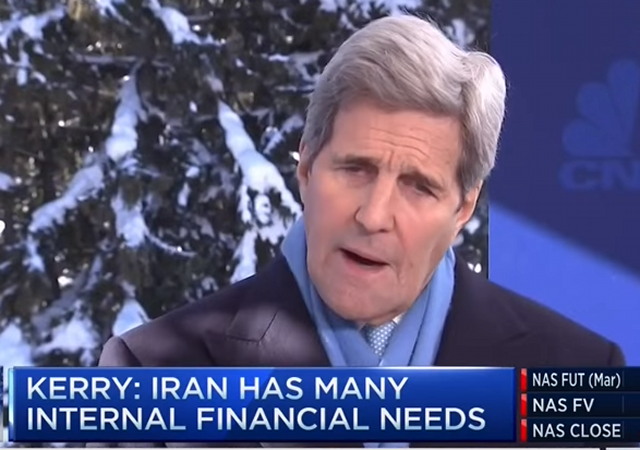
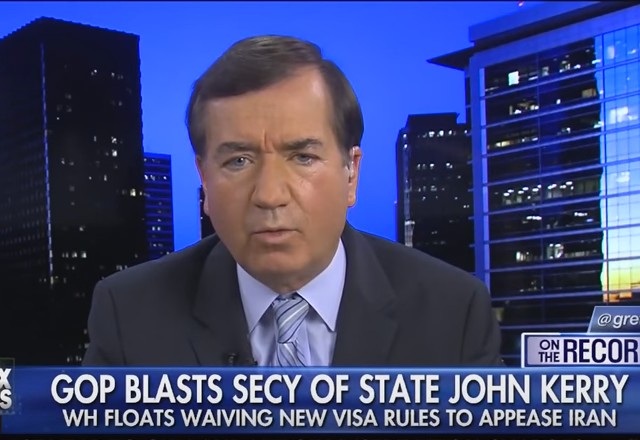
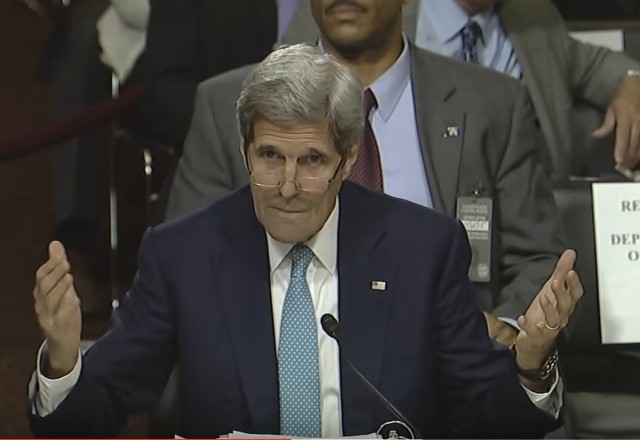
If you had any concerns about Obama's Iran Deal rest assured, the news only gets worse. Speaking to a CNBC panel yesterday, John Kerry admitted that some of the money the U.S. is giving to Iran is likely to end up in the hands of terror groups. CNN reports:
John Kerry: Some sanctions relief money for Iran will go to terrorism Secretary of State John Kerry acknowledged to CNBC Thursday that some of the money Iran received in sanctions relief would go to groups considered terrorists. When asked about whether some the $150 billion in sanctions relief to Iran would go to terrorist groups, Kerry reiterated that, after settling debts, Iran would receive closer to $55 billion. He conceded some of that could go to groups considered terrorists, saying there was nothing the U.S. could do to prevent that.

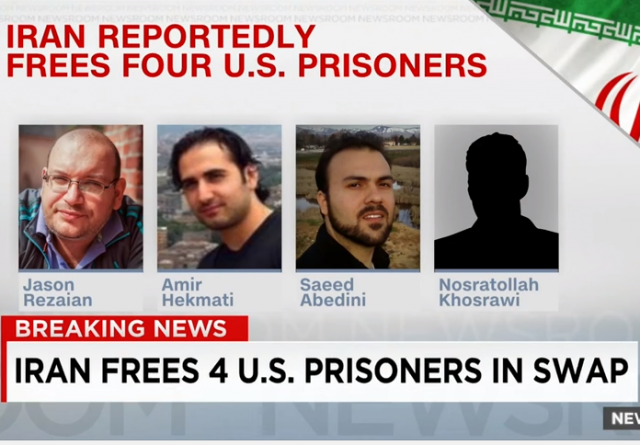
International financial sanctions against Iran are being lifted today as part of the Iran Nuclear Deal. The influx of tens of billions of funds are expected first to go to support Iranian efforts to destabilize the Middle East, including helping Assad in Syria, Hezbollah in Lebanon, and Hamas in Gaza. Not coincidentally, a prisoner swap also is taking place today between Iran and the U.S. HuffPo News reports:
As part of the exchange, the U.S. will release seven Iranians who were being held in the country on sanctions violations. All were born in Iran, but six are dual Iranian-American citizens. The seven men all have the option to remain in the U.S. The deal will bring home four Americans who have been imprisoned in Iran for years on trumped up charges, or in some cases no charges at all: Washington Post Tehran correspondent Jason Rezaian, former U.S. Marine Amir Hekmati, Christian pastor Saeed Abedini, and Nosratollah Khosrawi-Roodsari. The imprisonment of Khosrawi-Roodsari has never been previously reported.
Here is who Iran is getting back:

With the news that Iran has seized two American boats and detained 10 American sailors in the Persian Gulf just ahead of the State of the Union earlier this week, I'd like to go back to something that President Barack Obama said a little more than a year ago. Even though the sailors have been released, albeit under humiliating circumstances, the real story here, which the media is generally ignoring, is that they were taken prisoner in the first place. At the end of 2014, Obama gave an interview to Steve Inskeep of NPR. When explaining his rationale for the nuclear deal this is what Obama said:
So, when I came into office, the world was divided and Iran was in the driver's seat. Now the world's united because of the actions we've taken, and Iran's the one that's isolated.

At a time when tensions in the Middle East are rising, it is perhaps a time to once again review President Barack Obama's qualifications for office. To be sure his qualifications were fabricated, or at least oversold. This wasn't just the doing of the Obama campaign. Campaigns are supposed to do present their candidates in the best possible light. The problem  was that America's supposedly independent media boosted the first terms senator's prospects with little or no skepticism. This was certainly the case in reporting where most reporters bought into the historical aspect of Obama's candidacy as well was the rebuke to Republicans for the failings of the Bush presidency. (If not the failings, then the aspects that the liberal media disagreed with.) For the purpose of this exercise let's look at parts of The Washington Post's 2008 endorsement of Obama. I am using the Post as an example of what we saw so frequetly because even though the Post is a liberal paper, its editorial position regarding foreign policy is generally responsible. However in the Post's enthusiasm for Obama, all caution was disregarded and they promoted a man who did not really exist.

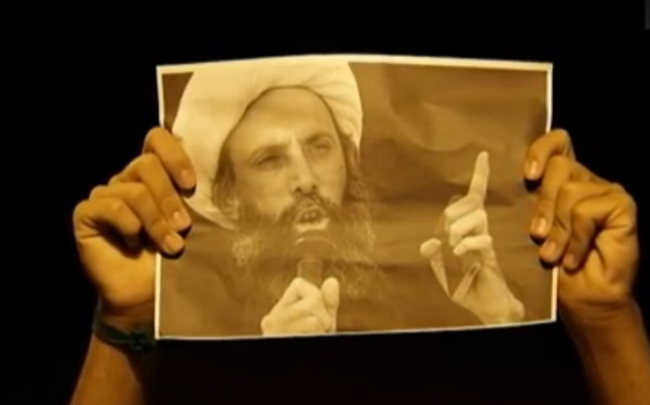
The fallout from the execution of prominent Shiite cleric Nimr al-Nimr in Saudi Arabia on Saturday will roil the Middle East region for some time to come. Below, I review the recent developments since our last posts (see here and here) and discuss some of the lessons to be learned from this latest episode in the unraveling of the Muslim Middle East.

Saudi Arabia Cuts Ties with Iran

As we reported, Saudi Arabia has broken diplomatic ties with Iran. On Sunday afternoon, the Saudi Foreign Minister, Adel al-Jubeir announced at a press conference that Iranian diplomats had 48 hours to leave the kingdom.

Two ongoing news stories that broke this past week show the Obama administration's contrasting styles towards America's top Middle East ally and a rogue nation that continues to flout international law. Obama and his top officials have no problem playing hardball with Israel, but become like Rex the dinosaur in Toy Story, who doesn't like confrontations, when dealing with  Iran. First, last Tuesday The Wall Street Journal (Google link) reported that the administration excluded Israeli Prime Minister Benjamin Netanyahu from the list of foreign leaders it would not spy on after Edward Snowden revealed that the NSA regularly spied on friendly heads of state. Quoting current and former U.S. officials the spying on Netanyahu was deemed by Obama to be a “compelling national security purpose.” Of course the reason for this was Netanyahu's objections to the Iran nuclear deal. The fear was that Netanyahu would leak sensitive information he had been told by the United States in order to torpedo the deal. (Israel insisted that the secret details that it learned came from spying on Iran.)

If you ask me what the most important article in The New York Times of the past week, it would not be the front page editorial advocating stricter gun control. That editorial was important in terms of the mindset of the Times, but had little real new value. The most significant new article in The New York Times during this past week was Friday's analysis of the nuclear deal with Iran. The article is a devastating indictment of the administration and its zeal to reach a nuclear deal with Iran at all costs. To be sure the reporter, David Sanger, an excellent journalist, presented the administration's positions respectfully. But there's no getting around that however President Barack Obama and Secretary of State John Kerry justify their capitulations, they are willing to lift sanctions on Iran without requiring Iran to come clean about its past illicit nuclear research. In the wake of last week's IAEA report about Iran's past nuclear research, the administration is reportedly satisfied that Iran has provided the IAEA with enough information to close the investigation into Iran's past nuclear work and move ahead to the implementation of this summer's nuclear deal. The administration's rationale is that "preventing a nuclear-armed Iran in the future is far more important than trying to force it to admit" its past illicit nuclear research.

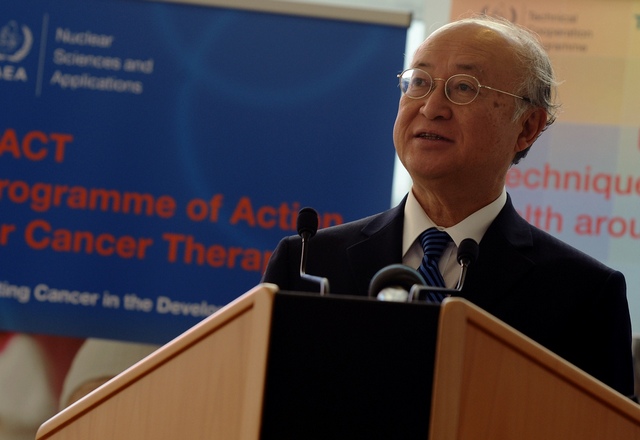
Armin Rosen of Business Insider had a bombshell report on Monday about the Obama administration's diplomatic malpractice with Iran in the context of the nuclear deal announced earlier this summer. Citing a recently obtained State Department document, Rosen reported that the administration has no intention of ensuring that Iran provide the International Atomic Energy Agency (IAEA) with all the details of its past nuclear research. Though "extensive evidence" exists that Iran had a nuclear weapons program until at least 2003, the United States has so watered down Iran's requirements for answering questions about its past nuclear work, that the IAEA  will not have a complete picture of the extent of Iran's military nuclear program. As IAEA Director General Yukiya Amano made clear earlier this week, Iran is still stonewalling. The problem is that the United States is okay with that. Rosen reported:

Last week saw a very important piece of news about the nuclear deal with Iran. And it was covered by neither The New York Times nor The Washington Post. International Atomic Energy Agency Director-General Yukiya Amano said that Iran, instead of coming clean about its past nuclear work, has continued to stonewall. Amano, too much the bureaucrat to use those actual words, said that his agency's report will not be "black and white." But Iran was obligated to come clean by the interim Joint Plan of Action (JPOA) from two years ago "to facilitate resolution of past and present issues of concern." That obligation to come clean also was required by this summer's Joint Comprehensive Plan of Action (JCPOA) to "fully implement the 'Roadmap for Clarification of Past and Present Outstanding Issues' agreed with the IAEA, containing arrangements to address past and present issues of concern relating to its nuclear programme." Since Amano did not say that Iran "fully" addressed questions about its past nuclear work, he's acknowledging that Iran did not comply with its obligations.

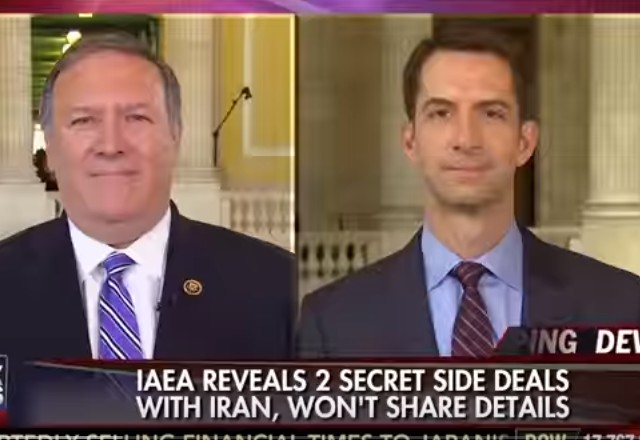
Rep. Mike Pompeo (R - Kan.) and Sen. Tom Cotton (R - Ark.) have a lot in common. Both are army veterans and both are graduates of Harvard Law School. And both have been doing a great job of exposing aspects of the nuclear deal with Iran that the administration would rather keep quiet. This week it was reported that an inquiry from Pompeo got the State Department to admit that the nuclear deal was never signed and is not "legally binding." Julia Frifield, the Assistant Secretary of State for Legislative Affairs, wrote in response to Pompeo's inquiry if he could see the signed agreement, in a letter reproduced at the congressman's website, that the nuclear deal was not binding and that it was not signed by any party. The key parts of the letter read:
The Joint Comprehensive Plan of Action (JCPOA) is not a treaty or an executive agreement, and is not a signed document ...