



William A. Jacobson is a Clinical Professor of Law and Director of the Securities Law Clinic at Cornell Law School.
He is a 1981 graduate of Hamilton College and a 1984 graduate of Harvard Law School. At Harvard he was Senior Editor of the Harvard International Law Journal and Director of Litigation for the Harvard Prison Legal Assistance Project.
Prior to joining the Cornell law faculty in 2007, Professor Jacobson had a highly successful civil litigation and arbitration practice in Providence, Rhode Island, concentrating in investment, employment, and business disputes in the securities industry, including many high profile cases reported in leading newspapers and magazines.
Professor Jacobson has argued cases in numerous federal and state courts, including the Courts of Appeal for the First, Fifth and Sixth Circuits, and the Rhode Island Supreme Court.
Professor Jacobson has a national reputation as a leading practitioner in securities arbitration. He was Treasurer, and is a former member of the Executive Committee and Board of Directors of the Public Investors Arbitration Bar Association, a professional organization of attorneys dedicated to protecting public investors. He frequently is quoted in national media on issues related to investment fraud and investor protection, and in the past has served as one of a small number of private practice attorneys who trained new arbitrators for the Financial Industry Regulatory Authority.
Professor Jacobson is co-author of the Securities Arbitration Desk Reference (Thomson-Reuters), updated annually.
Professor Jacobson is frequently quoted in the media on political and legal topics, has authored many Op-Eds in major publications, and appears on television and radio to discuss politics and the law.
A more complete listing of Professor Jacobson's professional background is available at the Cornell Law School website. The views expressed here are his own and not those of any employer or organization,
The best way to reach Prof. Jacobson is by e-mail here.
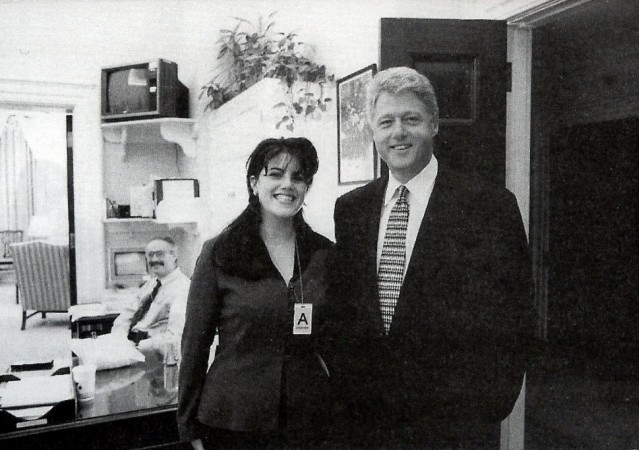
After 10 years of virtual silence (“So silent, in fact,” she writes, “that the buzz in some circles has been that the Clintons must have paid me off; why else would I have refrained from speaking out? I can assure you that nothing could be further from the truth”), Lewinsky, 40, says it is time to stop “tiptoeing around my past—and other people’s futures. I am determined to have a different ending to my story. I’ve decided, finally, to stick my head above the parapet so that I can take back my narrative and give a purpose to my past. (What this will cost me, I will soon find out.)” ..., “Sure, my boss took advantage of me, but I will always remain firm on this point: it was a consensual relationship. Any ‘abuse’ came in the aftermath, when I was made a scapegoat in order to protect his powerful position. . . . The Clinton administration, the special prosecutor’s minions, the political operatives on both sides of the aisle, and the media were able to brand me. And that brand stuck, in part because it was imbued with power.”Which brings to mind this Branco cartoon:
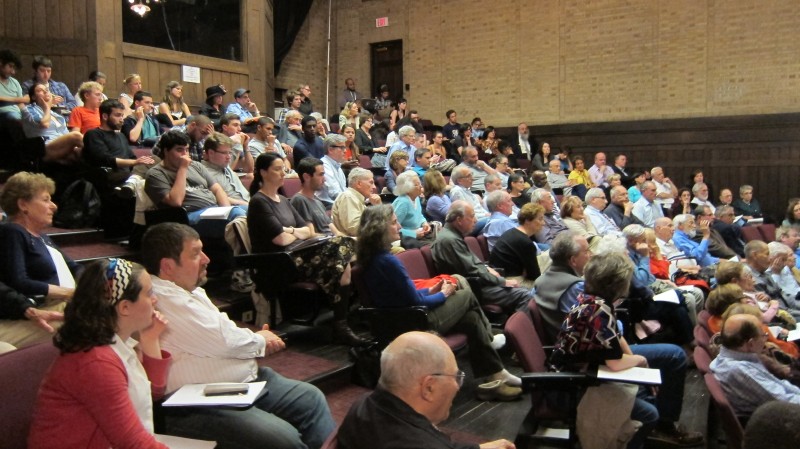
My speech for Israel and against the academic boycott was well-attended....
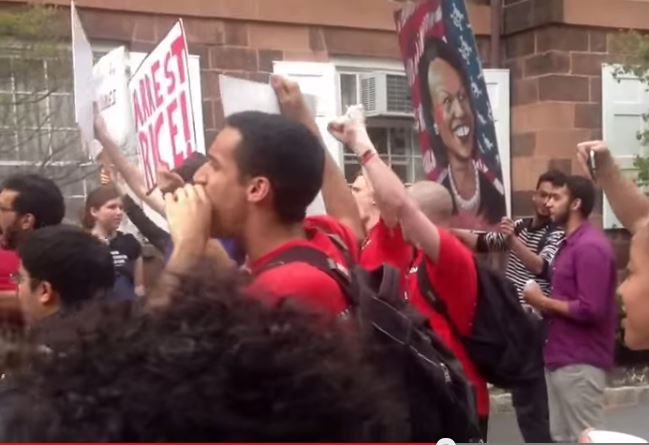
College campuses essentially operate on mob rule at this point. http://t.co/CxGXKG3XcR
— Sonny Bunch (@SonnyBunch) May 3, 2014Commencement should be a time of joyous celebration for the graduates and their families. Rutgers’ invitation to me to speak has become a distraction for the university community at this very special time. I am honored to have served my country. I have defended America’s belief in free speech and the exchange of ideas. These values are essential to the health of our democracy. But that is not what is at issue here. As a Professor for thirty years at Stanford University and as it’s former Provost and Chief academic officer, I understand and embrace the purpose of the commencement ceremony and I am simply unwilling to detract from it in any way. Good luck to the graduates and congratulations to the families, friends and loved ones who will gather to honor them.Why are we always the ones concerned about distractions caused by other people? This is why we lost the campuses. We let the load mouths and bullies have their way. I blame Rice as much as the bullies. By withdrawing, Rice sends a message to other campuses that the tactic works. I also blame the President of Rutgers, who according to NRO, turned out to be a wimp:
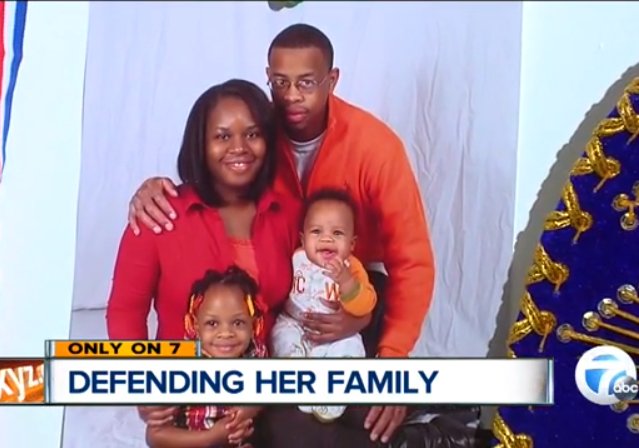
"I wouldn't want to take a life, but if it's a threatening situation, you just have to do what you have to do"...
It is difficult to work up much sympathy for the man — a billionaire with a history of rank intolerance and questionable business ethics. And that his remarks came from a conversation with a woman who is not his wife does little to help his cause. Nevertheless, one should be a little reluctant to applaud the recording and dissemination of a private telephone conversation simply because it has skewered someone unpleasant. At yesterday’s press conference, one especially earnest member of the audience asked whether the powers-that-be at the NBA intended to conduct an investigation to find out if anyone else involved with basketball had ugly views — an instinct that, when coupled with the performance-art outrage and glancing-at-the-cameras indignation that are the hallmarks of our age, carried with it a whiff of inquisition....
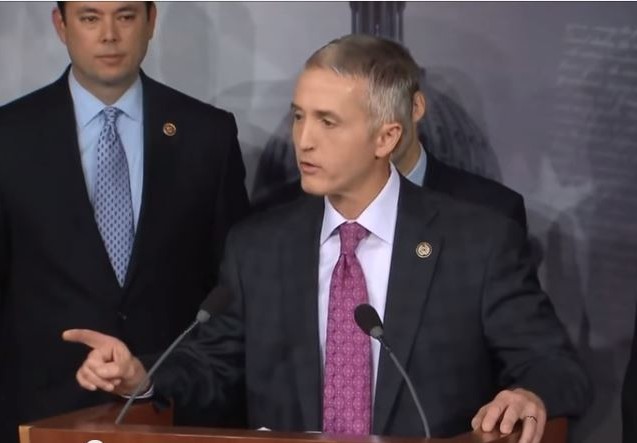


Rush Limbaugh used CBS' decision to hire comedian Stephen Colbert as the new host of The Late Show as evidence that ratings are irrelevant following reports that the talk radio firebrands' own ratings have collapsed. On the May 1 edition of his radio show, Limbaugh declared that CBS' decision to replace David Letterman with Colbert is proof that "ratings don't matter in a lot of television." Limbaugh latched onto recent comments by CBS president Les Moonves to repeatedly gloat that he was right when he claimed that "it's not about ratings anymore" but rather about coolness. In fact, during the entire first segment of his show, Limbaugh repeated the phrase "ratings don't matter" a total of nine times....Media Matters provided a 7 minute audio, and a partial transcript, to back up its claim. I happened to listen to that segment live when I was in the car yesterday, so I knew what Media Matters readers were not informed: The audio and transcript were edited to end just before Limbaugh made clear that the type of approach the networks can take for late night TV does not apply to him. Here's the part of the transcript Media Matters did not include:

Democratic candidate for governor Brett Hulsey plans to hand out white Ku Klux Klan hoods to Wisconsin Republicans to highlight what he says are their racist policies. Hulsey on Thursday came into the state Capitol press room to show off a white hood he says he made with his daughter's sewing machine using curtain material he purchased for $1. Hulsey, a state representative from Madison, is running a long-shot campaign for the Democratic nomination against the better funded and more broadly supported candidate Mary Burke. Hulsey says he will attempt to hand out the KKK hoods to Republicans as they gather Friday for the state party convention in Milwaukee. State GOP executive director Joe Fadness calls it a "reprehensible, vile stunt" that should outrage everyone.The Milwaukee Journal Sentinel further reports:

The Madison representative running for governor got little attention for his plan announced earlier this week to portray Republicans as modern-day secessionists by dressing up as confederate soldiers and parading outside the GOP convention in Milwaukee.
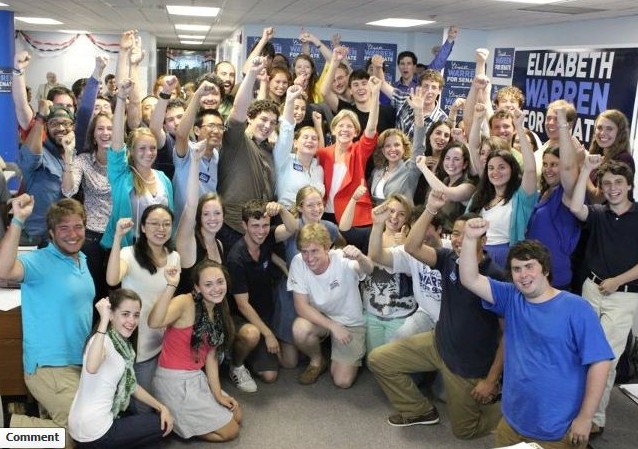
What Barney Frank lacks in tact, he makes up for in clarity. The former Massachusetts congressman tells the State House News Service in Massachusetts that it's "very unlikely" Hillary Clinton won't seek the presidency in 2016. But he also believes Sen. Elizabeth Warren, D-Mass., – who is in the midst of a publicity tour for her new book – privately harbors White House ambitions. She is a senator, after all. Asked whether Warren has any inclination to seek the presidency, Frank said, "Oh, I think yes. In the first place, why would you want to get into a profession and have no interest in rising to the top of it? I don’t know anybody who has that."Despite Elizabeth Warren's statement that she isn't running for President (technically true), the media is making the case for her. The latest is Aaron Blake at WaPo's The Fix, Why Elizabeth Warren is perfectly positioned for 2016 (if she wanted to run):
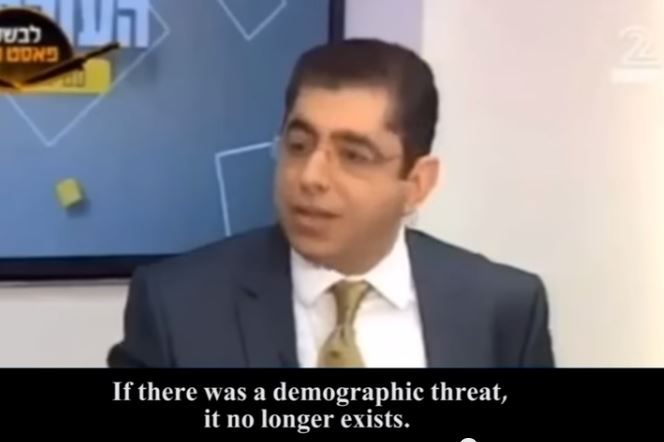
A possibly fictional demographic time bomb is no reason to expose Israelis to real bombs....
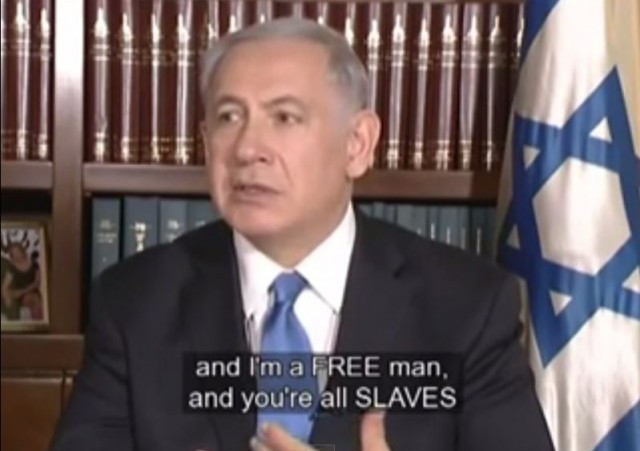
"You're slaves to your gadgets"...
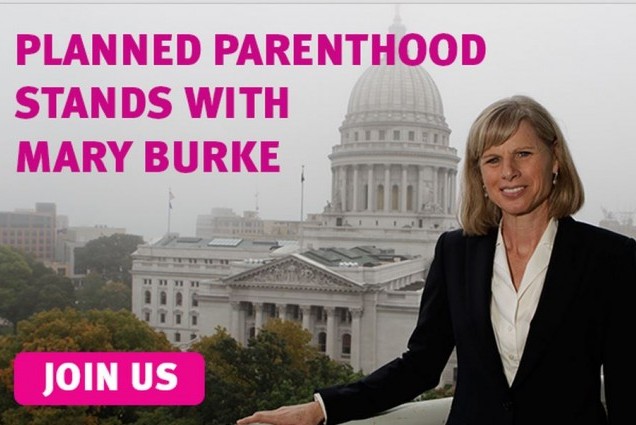
Republicans call her “Millionaire Mary,” but Mary Burke has plenty of assets aside from her wealth to make her a strong contender to derail the reelection of Wisconsin Gov. Scott Walker, along with his dreams of the presidency. Polls show the former Trek Bicycle executive either tied with Walker or trailing by just a few percentage points, while the Republican governor, who weathered a recall election in 2012, looks headed for a closer race than anyone expected.... “The things he has done with women’s choice issues puts Wisconsin right there with Mississippi,” she said over an iced tea Tuesday afternoon. Burke, who was in Washington for an Emily’s List dinner that night, has the pro-choice group’s endorsement, and it is making a big push to elect more Democratic women as governors.... At 55, Burke is a political novice, and in a polarized electorate, that might be a winning formula.The polling is, indeed, competitive, but Walker has faced such challenges before and prevailed. It's Wisconsin, so of course it will be relatively close, but close is not good enough and Burke knows it. So Burke has resorted to War on Women rhetoric that even Politifact Wisconsin rated False:
 Walker just signed a $504 million dollar tax cut:
Wisconsin Governor Scott Walker, a Republican, on Monday signed into law a measure that uses the state's projected surplus to give a tax break of more than $500 million to workers and property owners. The law puts into place $504 million in tax cuts, consisting of $406 million in property tax relief and a $98 million state income tax break for those in the lowest tax bracket. A typical state homeowner will see a $100 reduction in property taxes and a worker who makes $40,000 will save about $58 annually, according to the governor's office.The collective bargaining changes are paying off to the extent that Burke is not making it a major issue.
J Street failed to gain admission to the Conference of Presidents of Major American Jewish Organizations. The vote of conference members Wednesday was 17 in favor, 22 against and three abstentions, according to four sources. J Street needed a two-thirds majority of the entire membership, 34 out of 51, for entry.It was a no lose vote for J Street in reality. If it was admitted, it would be vindication for the relatively young group that it was a major player. If it lost, it could play victim, accuse others of smears (as it did to the Brandeis student who challenged it), and otherwise leverage its anti-establishment narrative. Indeed, J Street lashed out at "right-wing" groups:
We are especially disappointed that a minority of the farthest right wing organizations within the Conference has chosen to close the Conference’s doors to this emerging generation of inspiring and passionate young leaders. In the long run, it does a grave disservice to the American Jewish community to drive some of our brightest young people away and to tell them that there is no place for them in an ever-shrinking communal tent where the conversation on Israel’s future is limited.And its saavy media operation tweeted out a photo of a collapsed tent:
So to speak. pic.twitter.com/zVHdOhEKRS
— J Street (@jstreetdotorg) April 30, 2014Vote today was more a test for Conference of Presidents and Jewish establishment than for J Street. Sadly, the establishment failed.
— Jeremy Ben-Ami (@JeremyBenAmi) April 30, 2014The point here is that rather than signifying its acceptance, today’s vote is merely a sign that J Street failed in its mission to overturn the Jewish consensus on Israel. A seat in what is, for all intents and purposes, a debating society–most of whose members are little known even among American Jews–strikes me as a poor consolation prize for such a defeat.It's not at all clear, however, that the rejection has to do with J Streets politics. Yair Rosenberg notes that there are members who are even more left-wing than J Street. It appears to be personal, based on J Street's sharp elbows:
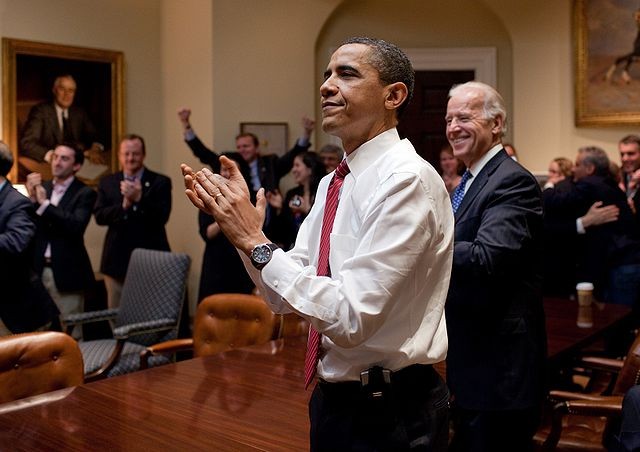
Data provided to the committee by every insurance provider in the health care law’s Federally Facilitated Marketplace (FFM) shows that, as of April 15, 2014, only 67 percent of individuals and families that had selected a health plan in the federally facilitated marketplace had paid their first month’s premium and therefore completed the enrollment process. Nationwide, only 25 percent of paid enrollees are ages 18 to 34.... ...bThe committee has compiled the data that provides a snapshot of the true enrollment picture as of April 15, 2014, after the official end of the open enrollment period. Due to the administration’s repeated and unilateral extensions and changes, as well as the fact that many insurers have reported that individuals will still have time to pay their first month’s premium, the committee plans to ask the insurers in the federally facilitated marketplace to provide an enrollment update by May 20, 2014. On April 17, 2014, President Obama declared the success of his law, claiming that 8 million Americans had signed up for health insurance, but data from the insurance providers reveals that the president’s figure is largely misleading. As of April 15, 2014, insurers informed the committee that only 2.45 million had paid their first month’s premium for coverage obtained through the federally facilitated marketplace. While the administration has relied on questionable nationwide figures to boast the law’s success, the state-by-state breakdown compiled by the committee underscores the serious problems facing some states.
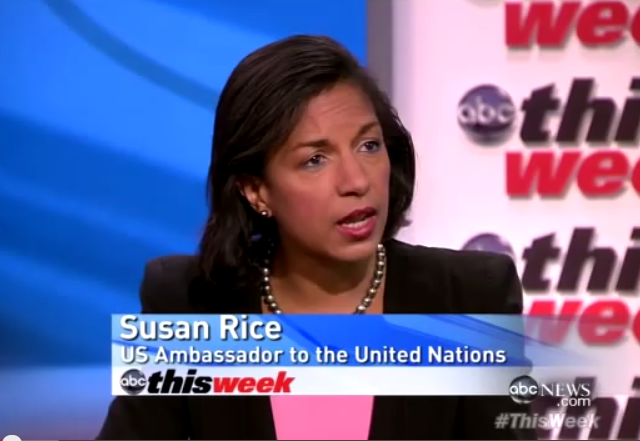
Newly-released documents reveal direct White House involvement in steering the public narrative about the September 11, 2012 terrorist attacks in Benghazi, Libya, toward that of a spontaneous protest that never happened. One of the operative documents, which the government had withheld from Congress and reporters for a year and a half, is an internal September 14, 2012 email to White House press officials from Ben Rhodes, President Obama’s Assistant and Deputy National Security Advisor. (Disclosure: Ben Rhodes is the brother of David Rhodes, the President of CBS News, where I was employed until March.) In the email, Ben Rhodes lists as a “goal” the White House desire “To underscore that these protests are rooted in an Internet video, and not a broader failure or policy.” The email is entitled, “RE: PREP CALL with Susan, Saturday at 4:00 pm ET” and refers to White House involvement in preparing then-U.S.Ambassador to the U.N. Susan Rice for her upcoming appearance on Sunday television network political talk shows. The Rhodes email states that another “goal” is “To reinforce the President and Administration’s strength and steadiness in dealing with difficult challenges.” A court compelled the release of the documents, which were heavily-redacted, to the conservative watchdog group JudicialWatch, which has sued the government over its failed Freedom of Information responses. I have also requested Benghazi-related documents under Freedom of Information law, but the government has only produced a few pages to date. Today, Sen. Lindsey Graham (R-SC) called the Rhodes email the “smoking gun” showing the “political manipulation by the White House” after the attacks.Kudos to Jon Karl, he has been on this case since the beginning, and has been the subject of administration intrigue, as I documented in May 2013, White House-created “doctored” war on Jon Karl and Stephen Hayes falls apart: