

Image 01 Image 03

Author: William A. Jacobson

Profile photo

William A. Jacobson

William A. Jacobson is a Clinical Professor of Law and Director of the Securities Law Clinic at Cornell Law School.

He is a 1981 graduate of Hamilton College and a 1984 graduate of Harvard Law School. At Harvard he was Senior Editor of the Harvard International Law Journal and Director of Litigation for the Harvard Prison Legal Assistance Project.

Prior to joining the Cornell law faculty in 2007, Professor Jacobson had a highly successful civil litigation and arbitration practice in Providence, Rhode Island, concentrating in investment, employment, and business disputes in the securities industry, including many high profile cases reported in leading newspapers and magazines.

Professor Jacobson has argued cases in numerous federal and state courts, including the Courts of Appeal for the First, Fifth and Sixth Circuits, and the Rhode Island Supreme Court.

Professor Jacobson has a national reputation as a leading practitioner in securities arbitration. He was Treasurer, and is a former member of the Executive Committee and Board of Directors of the Public Investors Arbitration Bar Association, a professional organization of attorneys dedicated to protecting public investors. He frequently is quoted in national media on issues related to investment fraud and investor protection, and in the past has served as one of a small number of private practice attorneys who trained new arbitrators for the Financial Industry Regulatory Authority.

Professor Jacobson is co-author of the Securities Arbitration Desk Reference (Thomson-Reuters), updated annually.

Professor Jacobson is frequently quoted in the media on political and legal topics, has authored many Op-Eds in major publications, and appears on television and radio to discuss politics and the law.

A more complete listing of Professor Jacobson's professional background is available at the Cornell Law School website. The views expressed here are his own and not those of any employer or organization,

The best way to reach Prof. Jacobson is by e-mail here.

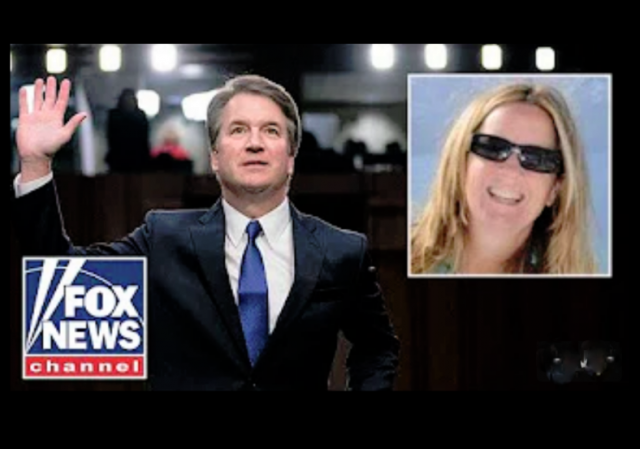
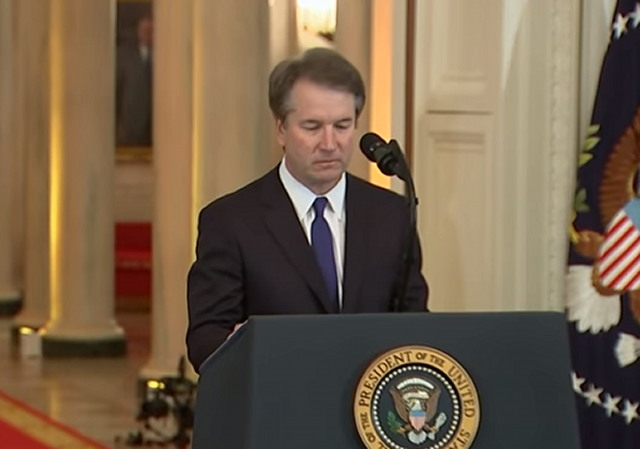
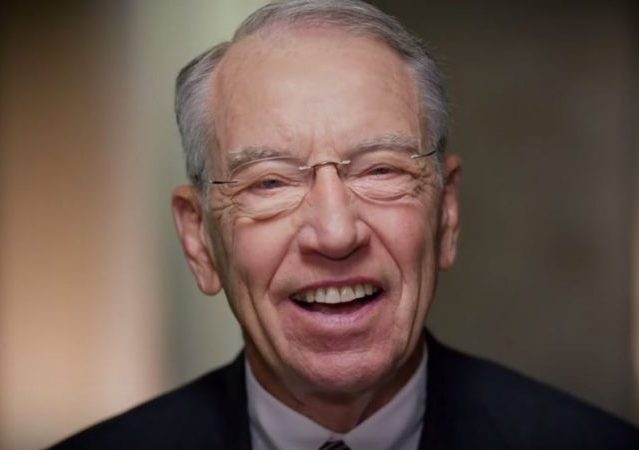
Jeff Flake is getting the blame for the further delay in the Senate confirmation floor vote for Brett Kavanaugh. After announcing he would vote in favor of Kavanaugh at the Judiciary Committee, without any conditions, Flake was pulled aside in the Senate hearing anteroom and aggressively lobbied by Democrats. It was an unusual scene, with Chuck Grassley and other Republican Senators waiting for Flake to emerge so that a vote could be taken.

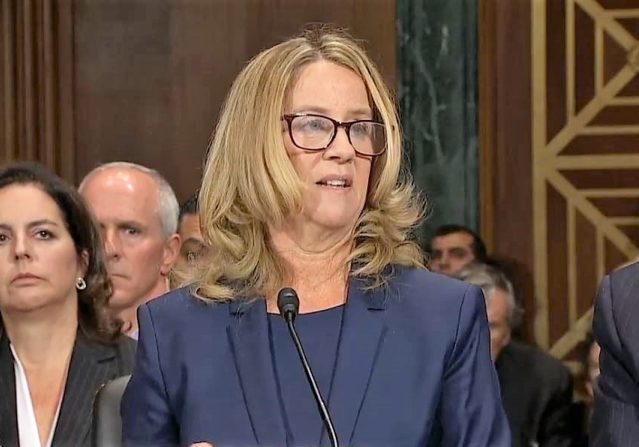
Brett Kavanaugh's testimony is over. I assessed Christine Ford's testimony earlier, Mid-Hearing Assessment: Christine Blasey Ford believes an untruth. I heard Kavanaugh's opening statement, but missed over half of his question and answer because of another commitment. So I've been catching up via Twitter, highlights and reports. I think I have a good sense of how it went.

Embedded below is an interview (pdf.), under oath, with Brett Kavanaugh conducted by the Senate Judiciary Committee majority (Republican) staff, regarding the allegations by Yale classmate Deborah Ramirez, and the new allegations by Michael Avenatti's client Julie Swetnick. The denials are categorical and unequivocal, as they were as to the Christine Blasey Ford accusations. (Prior interview pdf.) Kavanaugh left no gray zone.

As of this writing, it appears that Christine Blasey Ford still plans on testifying at the Senate Judiciary Committee hearing on Thursday, September 27. A committee vote tentatively has been scheduled for 9:30 a.m. on Friday, and a floor vote is likely early next week. Ford's attorneys still are objecting to some of the planned procedures, including the use of an as-yet unidentified female sex crimes prosecutor to ask questions for Republicans. Having complained that a female accuser would face questioning from the all-male Republicans on the committee, Democrats are now complaining that those male Senators have hired a female attorney to ask questions.

On Sunday night, September 23, 2018, The New Yorker published an article about accusations by Deborah Ramirez, a former Yale classmate of Supreme Court nominee Brett Kavanaugh. The authors were Ronan Farrow and Jane Meyer. The New Yorker article noted, deep into the article, that Ramirez's accusations were not corroborated by any witnesses with first hand knowledge, and that Ramirez herself had gaps in memory that were cleared up only after 6 days of thinking about it and consulting with lawyers.

There is a reason Democrats and Ford's team have been stalling both a committee vote and testimony in the Brett Kavanaugh confirmation hearings. They managed to postpone things until Thursday, in an obvious attempt to gain as many extra days as possible. We covered today's developments in Kavanaugh accuser to testify Thursday even though all her eyewitnesses dispute her story. They've been hoping, and probably working on finding, someone else to make an accusation. Looks like they found a person who initially told the New Yorker there were gaps in her memory of the incident in college that prevented her from "characterizing Kavanaugh's role" in an alleged incident, but after six days of thinking about it and consulting with attorneys, she was finally ready to make the accusation.

I told you Friday night that the attempt to derail Brett Kavanaugh's nomination with a post-hearing accusation was not over. I expected a cameo appearance by Gloria Allred at a press conference this week with the accuser, but it didn't take that long and it wasn't Allred.

The Algemeiner "was founded in 1972 by famed journalist Gershon Jacobson as Der Algemeiner Journal and was originally published in Yiddish." It's now one of a core of "Jewish" publications, but unlike some leftist publications like The Forward, it's more moderate in its politics. We often link to Israel and BDS-related stories that run in The Algemeiner. In that regard, there's an overlap with our coverage of those issues.