

Image 01 Image 03

Vladimir Putin Tag

A judge in Spain's National Court has sent out international arrest warrants for Russian citizens, including some close to President Vladimir Putin, allegedly linked to the mafia. Judge Jose de la Mata, who investigates organized crime, found "very serious facts" against each of the men stemming from the Troika operation. The court opened that investigation in in 2008 two mafias in Eastern Europe: Tambov and Malyshev. "(The Tambov group) maintains strong links with political, economic, legal and security powers in Russia and also with members of other international criminal organizations," he said in his report.

In a rather surprising move, Russia's president Vladimir Putin announced Monday that he would begin withdrawing troops from Syria the very next day.  Those of us watching the Middle East carefully were not only surprised by the move but also intensely curious about possible motivations and what the move will ultimately mean in the region, particularly with regard to Israel. Tuesday, retired U. S. Army lieutenant colonel Ralph Peters offered a compelling analysis of Putin's move and of what it means not only in the Middle East but, ultimately, for the United States. Positing that Putin has quickly seen—Russia's been in Syria only since September—that the power that will emerge in the region will be Iran's, not Russia's, Peters concludes that Putin's decision was based in cold, hard reality. In his article, "The Syrian War Just Taught Putin to Worry About Iran," for the The New York Post, Peters writes:

This is actually a big deal, if for real. The Russian air force and associated troops manning the airfield and anti-aircraft systems have been responsible for many of the recent gains by Syrian, Hezbollah, and Iranian-backed foreign militias fighting to keep Assad in power. Russia Today, generally perceived as pro-Putin, reports:
Russian President Vladimir Putin has ordered Defense Minister Sergey Shoigu to start the withdrawal of forces from Syria starting Tuesday. “I consider the objectives that have been set for the Defense Ministry to be generally accomplished. That is why I order to start withdrawal of the main part of our military group from the territory of the Syrian Arab Republic starting from tomorrow,” Putin said on Monday during a meeting with Shoigu and Russian Foreign Minister Sergey Lavrov. To control the observation of ceasefire agreements in the region, Moscow will keep its Hmeymim airbase in Latakia province, Putin said.

With each passing day, it gets more and more difficult to ignore the monumental disaster that Obama’s foreign policy actually is. Nowhere is its utter failure more glaringly evident than in the Syrian Civil War. But first, let us not underestimate the pathologies of the Middle East that have led to the present disaster in Syria, but Obama administration’s policies have created perils that we would be dealing with, in decades to come. The geopolitical vacuum created by President Obama’s push to shrink America’s footprint in the Middle East has quickly been filled by Comrade Putin’s soviet-style jackboots. And President Obama-backed Nuclear Deal has single-handedly contributed billions of dollars to Islamic Republic of Iran’s war chest geared at funding global terrorism and regional adventures.

The Office of Foreign Assets Control ("OFAC") added five more Russians to the Specially Designated Nationals List pursuant to the Magnitsky Act on February 1. In a press statement, a senior State Department official noted that one of the officials had nothing to do with the murder of the eponymous Sergei Magnitsky, but rather was involved in Russia's brutal war in Chechnya.

Sergei Magnitsky and the Magnitsky Act

The Magnitsky Act is named for Sergei Magnitsky, a Russian attorney arrested on trumped-up charges arising in retaliation for his exposing official Russian corruption in the course of representing of American investor Bill Browder.  Magnitsky died after being beaten by Russian police while in police custody and denied medical treatment despite his injuries and preexisting illness.

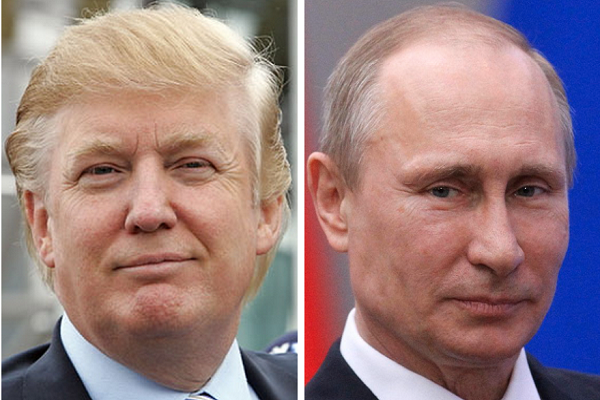
While I didn't think Donald Trump did a particularly great job in Tuesday's CNN debate, his poll numbers and recent comment about a temporary halt to Muslims coming into the country have stirred interest in his candidacy abroad.  The latest foreign leader to weigh in on Trump is Russian president Vladimir Putin who thinks Trump is "brilliant," "talented," and "very colorful." The Hill reports:
Russian President Vladimir Putin had kind words for his “stablemate” Donald Trump during an annual end-of-the-year Q-and-A session in Moscow. "He’s a really brilliant and talented person, without any doubt,” Putin told reporters, according to a translation by Interfax. "It’s not our job to judge his qualities, that’s a job for American voters, but he’s the absolute leader in the presidential race.”
Putin claims that Trump was the "absolute leader" in the GOP presidential debates.

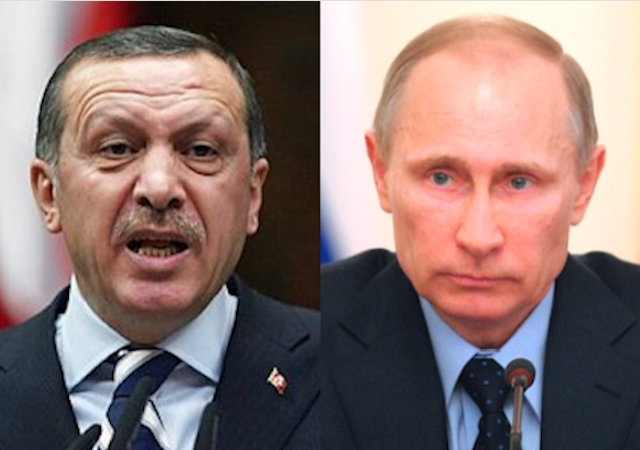
Yesterday, Russian President Vladimir Putin signed a decree imposing sanctions against Turkey in retaliation over last week's downing of a Russian jet that crossed into Turkish airspace near the Syrian border. The decree went into effect immediately, and places a stranglehold both on Turkish businesses operating in Russia and on Russians who planned on traveling to or doing business with Turkey. Via Reuters:
The decree, posted on the Kremlin's website, spoke of the need to protect Russia's national security and Russian citizens "from criminal and other illegal activities". In it, Putin ordered the government to prepare a list of goods, firms and jobs that would be affected. Some of the measures announced have already been informally introduced.

Earlier today, Turkey shot down a Russian fighter plane after repeated warnings.
According to the Turkish military, officials warned “an unidentified aircraft” ten times over the course of five minutes that its path would violate Turkish airspace over the border town of Yayladagi, in Hatay province. A spokesman for U.S. officials leading the coalition from Baghdad confirmed that his team heard Turkish officials give those warnings over “open channels.” NATO called an emergency meeting today to address rapidly escalating tensions between Turkey and Russia, where Secretary General Jens Stoltenberg stood in solidarity with Turkey.
According to The Telegraph, Obama spoke with the Turkish president who's said they're working to avoid any repeats of todays events:
Recep Tayyip Erdogan, the Turkish president, has spoken to Barack Obama by telephone. The Turkish presidency said: "They were in accord on the importance of de-escalating tensions and making arrangements to prevent a repeat of such incidents." They also expressed their commitment to a bringing about a transitional political process for peace in Syria and joint determination to continue the fight against Isil, the statement added.
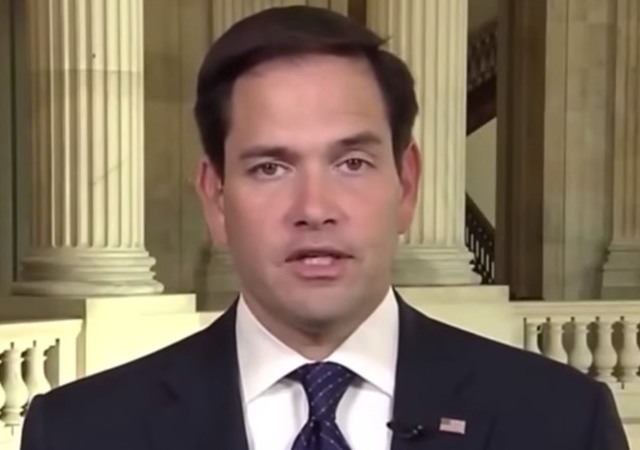
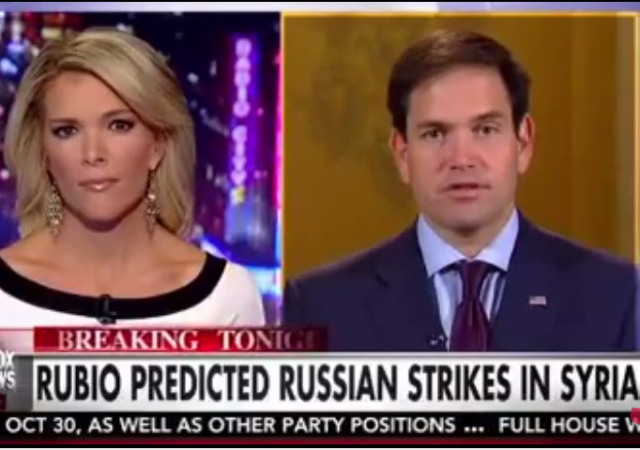
Shortly after news of the skirmish broke, Senator Rubio joined Fox News and was asked how the U.S. should respond. Rubio explained that if Turkey finds itself threatened by Russia, the U.S. must respond and defend the Turks.

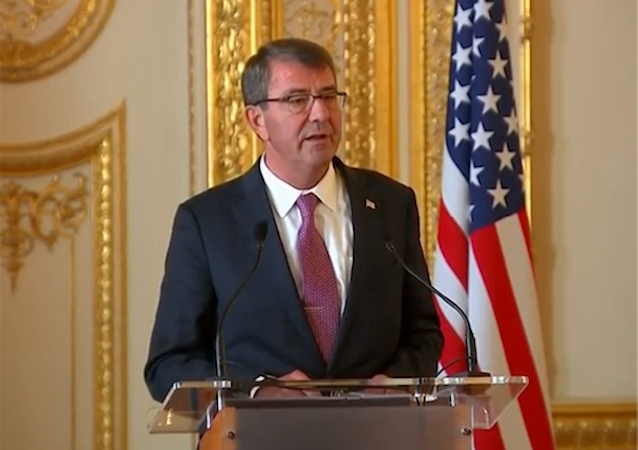
The United States will discontinue its efforts to create a new, moderate rebel fighting force in Syria as part of the effort to "degrade and defeat" the Islamic State, the Pentagon said Friday. Most analysts believe that this reflects a failure of the US's current strategy in the region. That strategy---which focused on training new fighters---drew widespread criticism, particularly from Congress. In a statement to the media, Defense Secretary Ash Carter defended the change in policy by emphasizing the Administration's continued commitment to relying on local forces to get the job done, saying, "I remain convinced that a lasting defeat of ISIL in Syria will depend in part on the success of local, motivated, and capable ground forces. I believe the changes we are instituting today will, over time, increase the combat power of counter-ISIL forces in Syria and ultimately help our campaign achieve a lasting defeat of ISIL." During a brief press conference, Carter cited the work that US forces have done with rebels in northern Syria as an example of what they would like to pursue with other groups in other parts of Syria going forward:

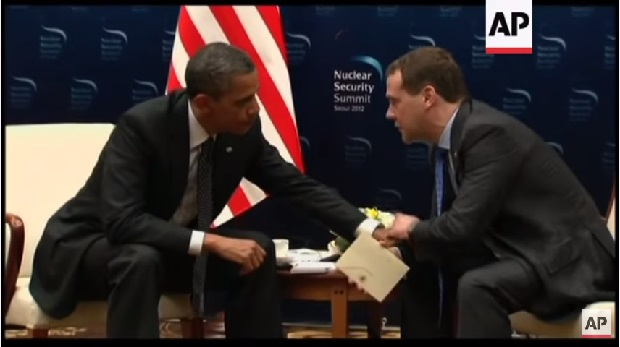
Remember President Obama’s open mic moment in Seoul, South Korea back in 2012, when he was overheard by reporters, promising Russian President Dmitry Medvedev more “flexibility” to Russians in Eastern Europe after his re-election? The NATO generals in Europe are now finding out the hard way what happens when you offer ‘harmless’ concessions to tyrants and imperialists. President Obama offered a bit of leg space to Comrade Putin in a fit of mindlessness and now you have Russian jackboots dangling all over Eastern Europe. Putin and his ex-KGB clique in control of Kremlin, have not forgotten humiliating Soviet retreat from the countries of Eastern Europe and are back from the cold to correct the 'historic injustice'. Today, Putin’s Russia is running a well-coordinated and highly effective campaign of propaganda and subversion in Eastern Europe that even communist-tyrant Stalin would be proud of. This “hybrid warfare” involves covert cyber operations, misinformation campaigns and psychological warfare to disrupt political and military decision making in Europe. Recently a leading NATO commander acknowledged the damage Russians are inflicting on U.S. allies in Eastern Europe:
Speaking at the Atlantic Council on Tuesday, US Admiral Mark Ferguson, who is in charge of the Allied Joint Force Command in Naples, Italy, said that Russia is developing military capabilities and hybrid method of war are designed to "cripple" the functional abilities of the NATO alliance, according to a transcript from US Naval Institute news. Russia's focus on hybrid and asymmetrical warfare, including its development of cyber and information warfare capabilities, is “designed to cripple the decision-making cycle of the alliance," Ferguson. "Their capabilities have focused on the creation of ambiguity.” Admiral Mark Ferguson explained the objectives of Russian tactics against the NATO member states, saying, "Russia exploits ethnic and religious divisions, makes use of an aggressive information campaign, and extensively uses misinformation and deception to delegitimize the forces under attack while confusing the attribution of their actions."

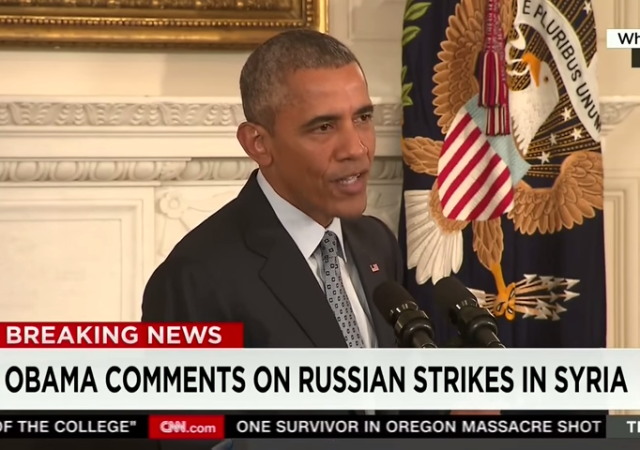
President Obama has a habit of trying to make himself look like the smartest guy in the room when things aren't going his way and the disaster unfolding in Syria is no exception. Speaking to the press Friday, Obama claimed that Putin is operating in Syria out of weakness and that this is all some sort of ruse on Russia's behalf. Jenna Lifhits of the Washington Free Beacon:
Obama: Putin Sent Military Into Syria ‘Out of Weakness’ Obama echoed the White House narrative that Russia was forced to enter Syria because the Assad regime, a long-time Kremlin client state, is in danger of collapse. “Mr. Putin had to go into Syria not out of strength but out of weakness because his client Mr. Assad was crumbling and it was insufficient for him simply to send them arms and money. Now he’s got to put in his own planes and his own pilots,” Obama said.

Two weeks ago at the second Republican presidential primary debate, Senator Marco Rubio predicted what happened in Syria yesterday with alarming accuracy. Here's a refresher from David Rutz of the Washington Free Beacon:
Everything Marco Rubio Said About Russia and Syria at the GOP Debate Is Coming True Sen. Marco Rubio (R., Fla.) was prophetic at CNN’s GOP presidential debate Sept. 16, predicting that Russia would continue to exploit a vacuum in the Middle East and “prop up” Syrian dictator Bashar al-Assad to demonstrate to the Middle East it was the most important power broker there. The Obama administration was admittedly caught by surprise this week when Russia announced an intelligence-sharing agreement with Iran, Syria and Iraq to battle the Islamic State, another example of Vladimir Putin expanding his influence in the region after he deployed warplanes and tanks to help Assad earlier this month. Over the weekend, Russia announced it would step up its military support to prevent the collapse of Assad, which Putin believes would be destabilizing. This, Rubio said at the time, is Putin’s vision for repositioning Russia “as a geopolitical force.”

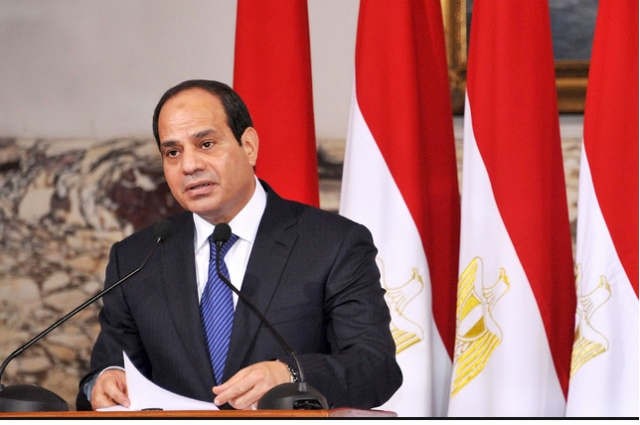
Egyptian President Abdel Fattah al-Sisi is one of the key heads-of-state participating in the United Nations General Assembly's 70th meeting. President al-Sisi, an advocate of an Islamic "reformation" and one of the most engaged warriors in the war against terror, says the struggle he faces is "ferocious."
Egypt's President Abdel-Fattah el-Sissi said in an interview that the Mideast region needs to cooperate to defeat a worsening terrorist threat that has led to a "ferocious war" in Egypt and created the danger of some countries "sliding into failure." In a wide-ranging interview with The Associated Press Saturday night, el-Sissi also said that Syria should not be divided after its civil war, that the Egyptian military needs to be "augmented" to defeat terrorists fighting in the Sinai and Western Desert, and that efforts should be renewed to solve the Palestinian issue and expand Egypt's nearly 40-year-peace with Israel to include more Arab countries.
Egypt's President also indicated that the last two years were a "real test of the endurance and strength" of the ties with this nation. It appears that al_Sisi has a bit more to endure, as he has been given another taste of the Obama Administration's SmartPower™.
While Mr. Obama insists on welcoming the Russian autocrat whom the West has sanctioned for invading his neighbors and repressing his own people, he has refused to meet the president of Egypt, the most populous Arab nation and a traditional American ally that is battling Islamic extremists on two fronts.

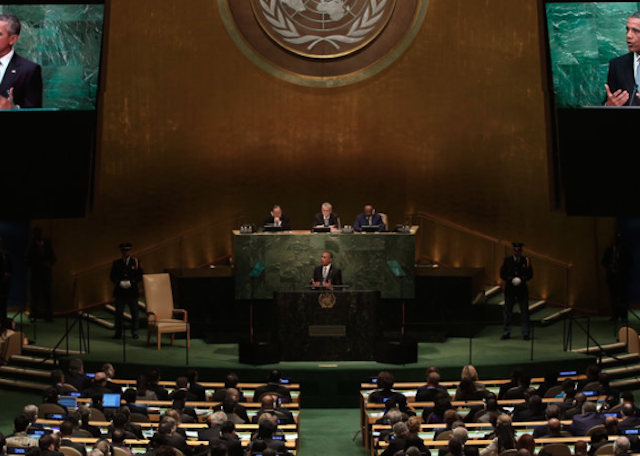
Today before the United Nations General Assembly, Barack Obama and Vladimir Putin sparred publicly over how their respective nations have approached a solution to crises in Ukraine and Syria. For both leaders, these speeches were an opportunity to regain control of a spiraling military, security, and human rights narrative that is now being influenced not only by the spread of Islamic terrorism, but the effects of mass migration out of the Middle East and Africa and into Europe. President Obama lashed out at Putin over Russia's aggression toward Ukraine and criticized Putin's leadership (or, lack thereof) on the Syrian crisis. Oddly enough, though, Obama somehow managed leave himself space to justify a partnership with Russia as a way of addressing conflict in Syria. From the New York Times:
Mr. Obama made a forceful defense of diplomacy but also castigated Russia by name multiple times in his speech for its defense of the Syrian government, its takeover of Crimea and its actions supporting Ukrainian rebels. “Dangerous currents risk pulling us back into a darker, more disordered world,” Mr. Obama said. Those currents include major powers that want to ignore international rules and impose order through force of military power, he said.

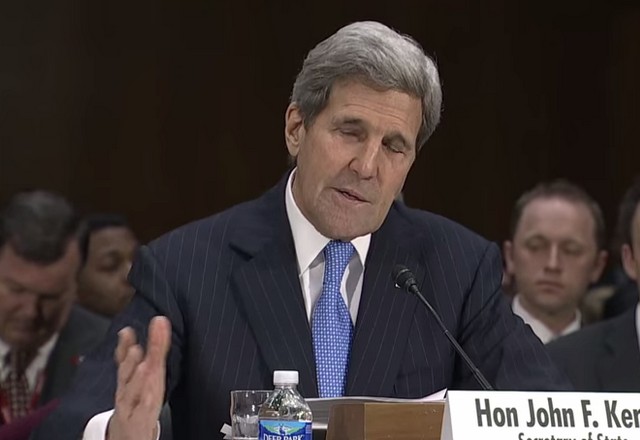
Brace yourselves for an international incident: John Kerry is going to Russia...and he wants to talk about Ukraine. And Iran. And Syria. I don't think I'm out of line for assuming that some sort of disaster will come of this, even if he does manage to make progress with the increasingly belligerent and wholly unaccountable Russian leadership. This will be Kerry's first visit to Russia since 2013, and only his second as Secretary of State. The 2013 visit fell just before Russian relations with Ukraine bottomed out amid the conflict that eventually led to the 2014 annexation of Crimea. Based on statements released by both Moscow and Washington, this trip is less of a diplomatic jaunt, and more of a salvage operation. From the AP:

Our long international nightmare (daydream?) is over---Vladimir Putin is back in action. Putin's 10 day absence from the public eye launched the international media into a frenzy of rumors, speculation, and justified nervousness on the part of Putin's political enemies. Some speculated that he had fallen ill, others that he had died. Still others believed that he was in Switzerland to celebrate the birth of his love child with former gymnast Alina Kabaeva. Yet today he resurfaced, by all accounts looking bright eyed and bushy tailed---and amused at the rumor mill he set in motion. From The Times of Israel:
Kyrgyz President Almazbek Atanbayev, who met with Putin Monday in St. Petersburg’s ornate Konstantin Palace, referred to the swirling rumors about Putin’s condition, saying that the Russian leader is in good shape. Atanbayev said that Putin drove him around the palace’s park before the talks, adding that “the president of Russia not only walks, but speeds around.” “It would be dull without gossip,” Putin retorted with a smile. ... Putin’s spokesman Dmitry Peskov greeted reporters Monday with sarcastic remarks: “So, have you seen the president paralyzed and seized by the generals? He has just come back from Switzerland where he attended the delivery.” Peskov added on a more serious note that the Kremlin has grown tired of refuting speculation about Putin’s condition. “The more we talk about it, the more intense (the speculation) becomes,” he said.

Putin spokescomrade Dmitry Peskov has the worst job in the world this weekend. Vladimir Putin hasn't been seen in public since March 5, and the public is starting to ask questions. Some of Putin's most vocal opponents are dropping off the map in the wake of opposition leader Boris Nemtsov's murder; Putin's absence has done nothing to quell the fears of critics. Others are speculating that Putin has fallen ill (or even died), claims that have been summarily rejected by Peskov and other Putin insiders:
“No need to worry, everything is all right. He has working meetings all the time, only not all of these meetings are public,” Dmitry Peskov said on Thursday in an interview with Echo of Moscow radio. He added that the president is “absolutely healthy” and that “his handshake is so strong he breaks hands with it.” Shortly before the radio interview Peskov dismissed the rumors of Putin’s possible illness in an interview with TASS. “As soon as the sun appears in spring, when the smell of spring is in the air, some people suffer from crises. … Some have hallucinations about the government dissolution and some cannot see Putin on television for several days,” he said. “We have a calm attitude to such crises and keep answering all questions in a patient manner.”
My favorite rumor so far comes from Swiss newspaper Blick. Blick contends that Putin snuck away to Switzerland to witness the birth of his love child with ex-gymnast Alina Kabaeva: [caption id="attachment_119755" align="aligncenter" width="500"]Screenshot via http://www.blick.ch/ Screenshot via Blick[/caption] The New York Post explains (in English---thanks):

A while back I noted that Egypt looked like it was networking with European powers to address the chaos that threatens the vital Suez Canal. Russia's President Vladimir Putin came to Cairo this week, bearing gifts that indicate he understands Egyptian needs.
Just hours before a summit in Minsk that could decide the fate of eastern Europe for a generation, Vladimir Putin had a gift for the president of Egypt: an assault rifle. A photo of the rifle, with its wooden stock and accompanying gun case, along with a smiling President Abdel-Fattah El-Sisi, was posted on the website of Egypt’s state-controlled MENA news agency. The rifle was identified as an AK-47, according to the state-run Russia Today’s Arabic website.
A video of the exchange, which occurred at the Cairo Aiport shortly after Putin arrived. But the AK-47 isn't the only present in Putin's bag: Last year, the two countries made a $3 billion deal that includes Russian attack helicopters and MiG-29 fighter jets. Additionally, Russian businesses have agreed to proceed with a major grain storage construction project in Egypt.