

Image 01 Image 03

Vaccines Tag

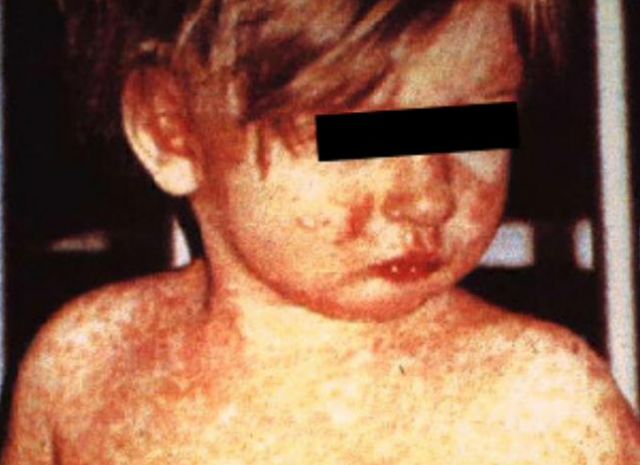
A measles outbreak in Minnesota is widening as the state's public health and emergency preparedness officials scramble to stop the spread.
As of Thursday afternoon, April 27, the Minnesota Department of Health had confirmed 28 cases in Hennepin County and one in Stearns County. All were among children under age 5, most of them unvaccinated. "Measles is very contagious and can spread very quickly," said Denise Kragenbring, public health supervisor with Kandiyohi County Public Health.

As the weather gets warmer, public health officials are bracing for more outbreaks of Zika virus infections in this country. Cooler weather temporarily stemmed the spread of the virus, which hit over 5100 Americans in 2016. However, in the interim since my last report on this topic in November, researchers have made a troubling discovery. Based on reports from South America, the pathogen is believed to cause a wide array of neurological birth defects when women become infected when pregnant. Now, reports from women in this country who have given birth after infection confirm the potential health impact.

Last year, I noted that once vanquished diseases were emerging across America, in part because of the steady stream of infected immigrants crossing the border. These included the tuberculosis, the historic killer that once once responsive to the antibiotics our medical professionals prepared. However, the influx of refugees with resistant strains of this pathogen is now threatening the quality of our nation's health.
The rise of drug-resistant tuberculosis (TB) threatens to derail decades of progress in the fight against the disease, experts warn in a new report published in The Lancet Respiratory Medicine. TB kills more people worldwide every year than any other infectious disease, including HIV/AIDS. In 2015 alone, researchers estimate TB killed 1.8 million people.

President Donald Trump released his plan for the 2018 federal budget titled "America First: A Budget Blueprint to Make America Great Again." The plan includes cuts to some departments and slashes programs in order to reallocate funds to a bigger defense budget. "One of the most important ways the Federal Government sets priorities is through the Budget of the United States," wrote Trump. "Accordingly, I submit to the Congress this Budget Blueprint to reprioritize Federal spending so that it advances the safety and security of the American people."

What’s happening to Jewish and pro-Israel students on many American universities and colleges from coast to coast is horribly ugly. On “hotspot campuses” the problem is only getting worse. “Hate Spaces: The Politics of Intolerance on Campus”, a new 70 minute documentary recently released by the organization Americans for Peace and Tolerance, chronicles the rampant anti-Israel and anti-Jewish activism prevalent on many of America’s institutions of higher learning. We featured the film’s trailer in a recent post and the movie premiered in NYC on November 30. Last week, I had the opportunity to watch the film in its entirely. In this follow-up post, I review the documentary’s central themes and take-home messages.

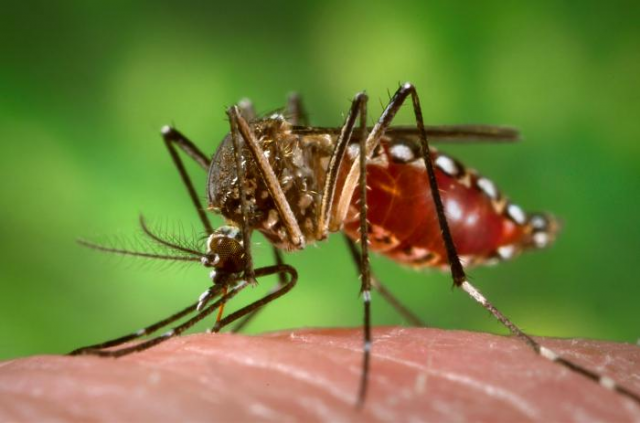
We have been following the mosquito-borne Zika virus epidemic, which had been declared an international medical emergency by the World Health Organization (WHO). The good news: The organization has officially ended the emergency status. The bad news: The virus is now a permanent addition to our nation.
By lifting its nine-month-old declaration, the UN's health agency is acknowledging that Zika is here to stay. The infection has been linked to severe birth defects in almost 30 countries.

More troubling news is now coming from infectious disease experts. The Centers for Disease Control and Prevention (CDC) is reporting that the first cases of a drug-resistant and potentially fatal fungal infection have occurred within the United States.
The fungus, Candida auris, is known to occur in health care settings such as hospitals and nursing homes. Seven cases occurred between May 2013 and August 2016 in four states: Illinois, Maryland, New Jersey and New York. As of August 31, four of these seven patients, all with bloodstream infections, died, though it is unclear whether their deaths were due to C. auris. The remaining six cases were identified after August and are still under investigation.

Reports have surfaced that a new pathogen has made the hop from South America to the Caribbean, and may soon head to our shores. Researchers at the University of Florida have identified the Mayaro virus in an 8-year-old Haitian, the first reported case in that region.
"The virus we detected is genetically different from the ones that have been described recently in Brazil, and we don't know yet if it is unique to Haiti or if it is a recombinant strain from different types of Mayaro viruses," Dr. John Lednicky, an associate professor in the environmental and global health department at the University of Florida, said in a press release.

I noted that Senate Democrats protected the sacred cow of Planned Parenthood when they blocked a bill to fight the spread of the Zika virus in this country. That decision now has consequences, as the coffers for the War against Zika are now running low.
Another government agency fighting Zika has run out of cash to do it, as Congress fights over whether and how to come up with more. The National Institute of Allergy and Infectious Diseases has spent all the money it has for work on Zika, says the agency's director, Dr. Anthony Fauci. That includes money for further work on a Zika vaccine.

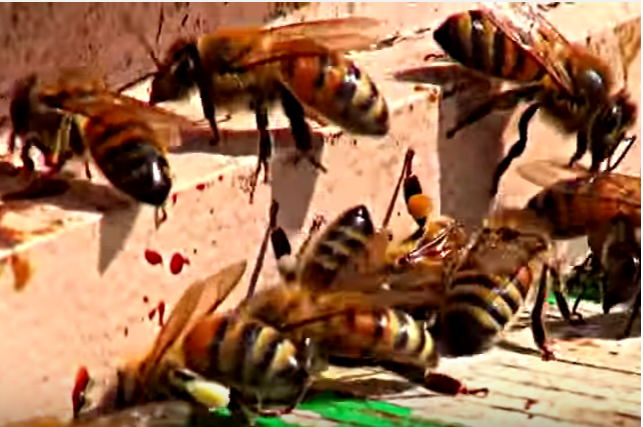
There is another disturbing report related to the spread of the Zika virus; however, this one doesn't involve birth defects or neurological problems. Millions of honey bees were killed after areas of South Carolina were sprayed to kill the mosquitoes that transmit the pathogen.
"On Saturday, it was total energy, millions of bees foraging, pollinating, making honey for winter," beekeeper Juanita Stanley said. "Today, it stinks of death. Maggots and other insects are feeding on the honey and the baby bees who are still in the hives. It's heartbreaking." Stanley, co-owner of Flowertown Bee Farm and Supply in Summerville, South Carolina, said she lost 46 beehives -- more than 3 million bees -- in mere minutes after the spraying began Sunday morning. "Those that didn't die immediately were poisoned trying to drag out the dead," Stanley said. "Now, I'm going to have to destroy my hives, the honey, all my equipment. It's all contaminated."
Truly, the images of the bee-keepers assessing the loss of both their bees and their livelihoods are heartbreaking:

Some intriguing news has been reported that gives me hope that our bureaucrats are taking the public health threat related to the Zika virus seriously. As you may recall, the last time I reported on the Zika epidemic, 4 Floridians had developed locally-acquired infections (probably from mosquito bites). Now, there are 16 cases and stores in the impacted area of Miami are closing due to the viral spread.
Cafes and art galleries in Miami’s Wynwood Art District would normally be bustling this week, even during some of the hottest days of the year, but with Zika virus spreading in the area, businesses like Wynwood Yard and Gallery 212 are keeping their doors shut. There were 16 cases of mosquito-transmitted Zika reported in the mainland U.S. as of Friday, and health officials have traced most to a square-mile area north of downtown Miami. Empty streets there reminded Gallery 212 owner Michael Perez of when he had to temporarily close a store in New York in 2001, after the Sept. 11 attacks. “I’m just like living my life all over again, with this Zika thing,” he said in a telephone interview. “It’s crazy, the streets are bare right now.”
Florida is not only an important beacon of tourism for this nation; it is a critical swing state in this election. Therefore, it should surprise nobody that the normally slow-moving Food and Drug Administration just approved the releasing of mutant Zika-killing mosquitoes in the Sunshine State.

While Democratic members of Congress built a pillow fort on the floor of the House to oppose gun rights, the Republicans continued their work on behalf of the American people.
At about 1 am on Thursday, while drowned out by cries of "Shame! Shame! Shame!" from Democrats and partially blocked from C-SPAN’s cameras by protest signs, Ryan held some procedural votes on when the House would reconvene to vote on emergency funding to address the Zika virus. The votes were held at 2:30 am, and the Zika bill passed.
The need for a robust response to Zika is becoming more evident each day, as reports of more outbreaks in this country continue to mount.

I have previously reported that a coalition of 17 state attorney generals has formed (AGs United for Clean Power), which intends to promote the climate change agenda by targeting the fossil fuel industry. The first victim of the Climate Change purge was the Competitive Enterprise Institute (CEI), a non-profit organization that has assisted businesses in countering climate justice activism, when Attorney General Claude E. Walker of the U.S. Virgin Islands issued a subpoena in an attempt uncover the content of CEI’s comprehensive work on climate change policy.

Despite numerous efforts to fight the Texas's campus carry law, including a bizarre protest involving dildos, the law stands, and students are free to carry licensed firearms on campus beginning on August 1st of this year. A University of Texas (UT) Architecture dean has declared that the new law is the reason for his decision to leave UT. The Texas Tribune reports:
The University of Texas at Austin's longtime architecture dean announced on Thursday he is leaving, saying the state's new campus carry law played a major role in pushing him out. . . . . The departure is a blow for UT-Austin. Its architecture school has consistently ranked among the best in the nation under Steiner. This year, Architectural Record ranked its undergraduate program seventh.