

Image 01 Image 03

US Senate Tag

The GOP looks like it can maintain its majority in the Senate, but the main Senate super PAC has decided to spend $21 million more in six races just to be on the safe side. The Senate Leadership Fund has moved its concentration to New Hampshire, North Carolina, Indiana, Missouri, Nevada, and Pennsylvania. Republicans have become more confident since they have seen voters separate GOP presidential candidate Donald Trump from the Senate candidates. This week, The New York Times Upshot blog said the GOP had a 53% of maintaining the majority. That same blog gave the GOP only a 40% chance in August.
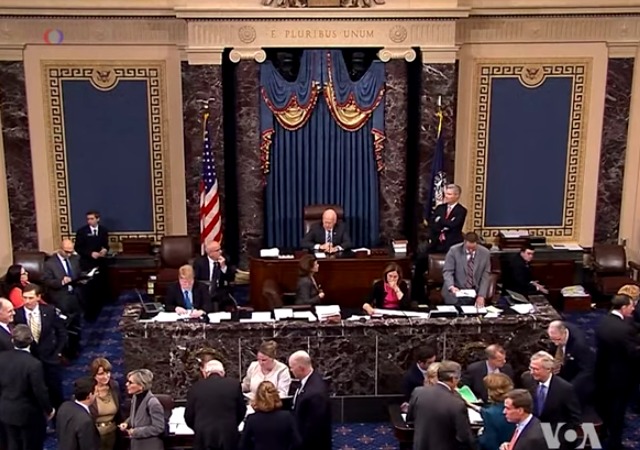
For months now, "smart" people on the left and the right have claimed that Donald Trump would destroy the Republican Party's chances of holding onto the Senate. It's now looking as though those predictions were premature. Mike DeBonis of the Washington Post:
Democratic hopes of winning Senate fade as Trump proves less toxic for Republicans Democrats are now facing a tougher road to capturing the Senate majority as the presidential race tightens and Donald Trump is not proving to be the dramatic drag on down-ballot candidates that Republicans once feared.

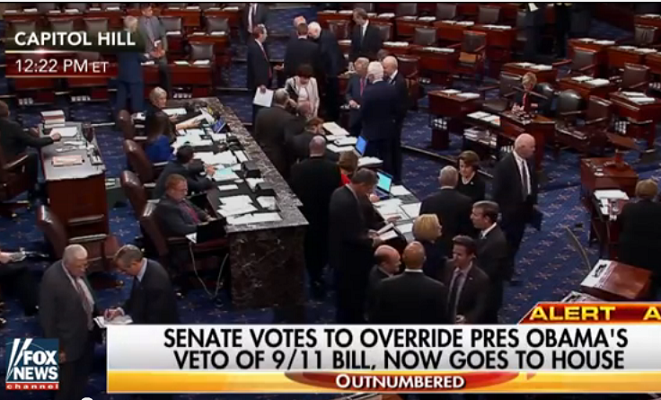
Yesterday, I wrote about today's Senate vote expected to override Obama's veto and today they voted overwhelmingly to do just that. Fox News reports:
The Senate voted overwhelmingly Wednesday to overturn President Obama’s veto of a bill letting families of Sept. 11 victims sue the Saudi Arabian government, bringing Congress within reach of completing the first successful veto override of Obama’s presidency. The Senate voted 97-1 to reject the veto. The measure heads next to the House, where lawmakers will need to muster a two-thirds majority, as in the Senate, to override.

The fight over the short-term spending bill continues to grow as Senate Minority Leader Harry Reid (D-NV) warned that his party will vote against the GOP bill if it doesn't include funding for Flint, MI. He said:
"Democrats have been clear that Congress should not leave Flint and other lead-tainted communities out of any (stopgap spending) negotiation that includes emergency disaster funding," said Senate Minority Leader Harry Reid, D-Nev., and other top Democrats in a Tuesday morning letter to McConnell. "Our request is simple: include both bipartisan disaster relief packages for consideration in the CR. We urge you to include bipartisan Flint legislation in the CR."

It's that time of year when Congress will fight over a short-term funding bill to avoid a government shutdown. We all know what will happen. They'll talk tough and then pass something at the last minute and go their merry ways. Senate Majority Leader Mitch McConnell (R-KY) has faced criticism from Democrats and members of his own party for the Senate's version of the bill. Some of his fellow GOP members believe the version "doesn't include conservative policy proposals." House conservatives want to do what they can to extend this stopgap bill into January so Congress isn't rushed to pass a full spending bill before Christmas.

As Marco Rubio faces a tough battle for his Senate seat in Florida, he introduces a new gun bill aimed at limiting terrorist access to guns. The legislation, according to Rubio's Senate website, "builds on some of the best ideas that have been proposed, and improves them in ways that I hope will make a bipartisan solution more likely."
Rubio’s Terror Intelligence Improvement Act would:

I continue to keep an eye on the vulnerable Republicans in the Senate because the Democrats only need four seats to retake the majority. Not helpful is that Hillary and her campaign hope to raise $1 billion to help unseat vulnerable GOP senators. Their efforts may not come to fruition as Sen. Jon Tester (MT), the campaign chairman for the Senate Democrats, sounded the alarm on Wednesday. He claimed the party could only regain three seats if they held elections today.

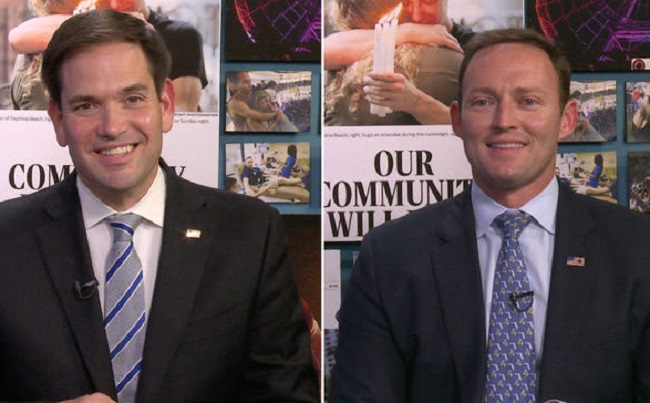
Back in May, I wrote about Harry Reid being "fairly certain" that Democrats can retake the Senate this year.  He has reason to be fairly certain in part because Republicans are defending far more Senate seats than Democrats: "Democrats need five Senate seats to retake the Senate, and while it’s not a lock, things don’t look good for Republicans who are defending 24 seats to the Democrats’ 10." Watch Bret Baier's overview: With the Senate hanging by a thread this November and the high stakes involved in losing it to the Democrats, we've been paying close attention to the Senate races across the country. The Florida primaries are on Tuesday, and judging by the way Marco Rubio (R) and Patrick Murphy (D) are running their campaigns, they are each confident they will win their respective races.

Indiana Democrat Senate candidate Evan Bayh wants to win back the seat he gave up in 2011, but does he even live in the state? He told WISH-TV:
“Well,” he said, “1142 C Canterbury Court, Indianapolis, Indiana. It’s on my drivers license.”
But Independent Journal Review found that his address is actually on Canterbury Square. This has only added fuel to claims that he doesn't actually live in Indiana and rarely visits.

The GOP has worried it may lose its Senate majority in November and Toomey may be one of the victims. Sen. Pat Toomey (R-PA) has received an endorsement from former Democratic congresswoman Gabby Giffords as he faces a tough reelection in November. The endorsement from Giffords and her anti-gun violence group Americans for Responsible Solutions might be just what Toomey needs to defeat his Democratic challenger Katie McGinty, who has slightly pulled ahead in four polls.

I've been keeping an eye on the tough Congress elections headed into November, especially since the GOP could easily loses its majority in the Senate. North Carolina could lose one of its GOP senators while New Hampshire could lose its only GOP senator in Kelly Ayotte. The tough reelection has led her to distance herself from GOP presidential candidate Donald Trump. Ayotte said she would vote for Trump, but stopped before giving him her full endorsement. This has frustrated the independent voters she needs to win. She didn't even attend a rally attended by Vice President candidate Mike Pence where he told the crowd they need her "back in the U.S. Senate." As The Washington Post described it, she "is stuck between Donald Trump and a hard place."

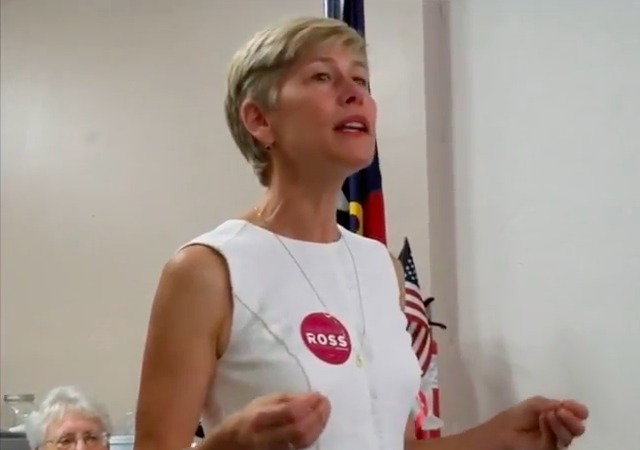
The GOP has panicked lately about their majority in Congress, especially in the Senate, as the party divides over Donald Trump and the lack of fundraising. Their worst fears appear to becoming true in North Carolina, once seen as a lock for the GOP. The Wall Street Journal reports that Democrat Deborah Ross may beat two term GOP Senator Richard Burr. The Democrats also gained a rise because Democrat presidential candidate Hillary Clinton has placed North Carolina high on her priority list. Ross tends to climb the polls as Clinton does the same. When Clinton went up nine points, Ross found herself up two points on Burr for the first time in the election.

A young woman who is a Republican apparently tried to infiltrate the Russ Feingold campaign but she was sniffed out through profiling. Aren't Democrats against that sort of thing? Ashe Schow reports at the Washington Examiner:
Feingold campaign outs an infiltrator by profiling her A young Republican attempted to infiltrate the Russ Feingold campaign but was quickly discovered. The reason she first raised suspicion, however, appeared to be due to profiling.

Even though his official campaign for the presidency is over, Ted Cruz isn't taking a vacation. Last Tuesday Cruz began conducting a hearing:
...investigating...“Willful Blindness: Consequences of Agency Efforts To Deemphasize Radical Islam in Combating Terrorism.”... This hearing will likely focus on which figures within the federal government worked to squelch any research connecting the dots between local Muslim Brotherhood officials, these individual terrorists, and foreign terror networks. Senators on the committee now have an opportunity to expose the Muslim Brotherhood influence within DHS and the FBI, their invidious “Countering Violent Extremism” Agenda, and their hand in covering up counter-terrorism investigations. They can demonstrate how the federal government has hamstrung local law enforcement by refusing to cooperate and share information regarding jihadists living in their communities.
One question is whether anyone's listening except those already disposed to be concerned about how the Obama administration is handling the problem.

You may have read Andrew McCarthy's excellent work at National Review, but you might not be aware that McCarthy is a former federal prosecutor and expert on Islamic terrorism. McCarthy offered some very enlightening and chilling testimony this week at a Senate hearing on Islamic terrorism which was led by Senator Ted Cruz. He described his testimony in vivid detail in a column at PJ Media:
Willful Blindness and Radical Islam: My Testimony On Tuesday, I was a panelist at the Senate Judiciary Committee’s hearing on “Willful Blindness: Consequences of Agency Efforts to Deemphasize Radical Islam in Combating Terrorism.” The hearing was held by the Subcommittee on Oversight, Agency Action, Federal Rights and Federal Courts,” chaired by Senator Ted Cruz (R. Tex.).

Four gun control measures—two sponsored by Democrats, two by Republicans—failed in the Senate on Monday. USA Today provides a brief overview of each amendment (to a DOJ spending bill):
► An amendment by Sen. Dianne Feinstein, D-Calif., would allow the attorney general to deny a gun sale to anyone if she has a "reasonable belief" — a lesser standard than "probable cause" — that the buyer was likely to engage in terrorism. The proposal is popularly known as the "no-fly, no-buy" amendment, but wouldn't just apply to people on the "no fly" terrorist watch list. ► An Republican alternative by Sen. John Cornyn, R-Texas, which would require that law enforcement be alerted when anyone on the terror watch list attempts to buy a weapon from a licensed dealer. If the buyer has been investigated for terrorism within the past five years, the attorney general could block a sale for up to three days while a court reviews the sale. ► An amendment by Sen. Chuck Grassley, R-Iowa, would make it more difficult to add mentally ill people to the background check database, giving people suspected of serious mental illness a process to challenge that determination.

Last month, I wrote about Harry Reid's statement that he is "fairly certain" the Democrats will retake the Senate this year, and as I noted, it is a very real possibility given a number of factors.  The Democrats need win only five seats to retake the Senate (four if Hillary wins the WH), the Republicans are defending 24 seats to the Democrats' 10, and many of the states in play—Florida, Wisconsin, Illinois, New Hampshire—went to Obama in both 2008 and 2012. As we consider and discuss the importance of the Supreme Court and who will be nominating the next Justice who will replace Justice Scalia—and potentially two (or more) others—during his or her term, it may be a good idea to think about the Senate races across the country and to do what we can to ensure that the Senate is not lost to Democrats. No matter who wins the general and nominates the next Justice/s, the Senate is still the body that confirms a presidential nomination to the Court.  A Democrat-controlled Senate, I think we can all agree, would be a disaster on many levels, but particularly so in light of the upcoming Supreme Court nominee/s.

As we've seen for months, the burning question thrown at Republican candidates around the nation has been, "Will you support Donald Trump if he's the nominee?" Democrats and media alike have worked to tie republican candidates to the newly declared presumptive GOP presidential nominee, who is arguably the most despised political candidate in modern U.S. history. Unfortunately, 24 GOP Senate seats are up for election in November, many of which the Democrats see as ripe for the plucking. Due in part to the Tea Party effect in 2010, the Democrats are only defending 10 seats. Even worse, as the Huffington Post points out, is the fact that 6 of the Republican senators are in states that President Obama won twice. The Democrat Senatorial Campaign Committee has wasted little time, launching its "Party of Trump" campaign back in March. The effort seeks to scorn vulnerable Senate Republicans with their prior remarks, including those promising that they would support the Republican presidential nominee, whoever he or she turns out to be.