


Image 01 Image 03

Trump Economic Policy Tag

President Trump has faced many opponents during his quest for the White House and the early days of his administration. However, no group seems to be as powerful as the judiciary when it comes to gutting his policies. Legal Insurrection readers will recall that one of Trump's first acts as President was signing the executive order to move forward with the Dakota Access and Keystone Pipelines. The good news is that the Dakota Access Pipeline began shipping oil on June 1.
House Freedom Caucus Chairman Mark Meadows (R-NC) and other members have showcased their ambitions:   the caucus wants to add welfare, health care, and tax reform all into one bill and pass it all by the end of the summer. The biggest stars of reform, health care and taxes, have caused the White House and members of Congress to butt heads. The White House wants to accomplish health care reform in the summer and take tax reform into the fall.

In May, Treasury Secretary Steven Mnuchin asked Congress to raise the debt ceiling before members take their summer recess in order for America to pay its debts. The ability to borrow money expired on March 16. Now Mnuchin has said that he and the department have started to formulate plans to fund the government until September if Congress does not raise the debt ceiling. From The Wall Street Journal:

They did it! The House passed the Financial CHOICE Act, which would roll back regulations established in Dodd-Frank, one of former President Barack Obama's biggest pieces of legislation. From The Hill:
Sponsored by House Financial Services Committee Chairman Jeb Hensarling (R-Texas), the CHOICE Act is the most ambitious Republican effort to roll back the Dodd-Frank Wall Street Reform and Consumer Protection Act, passed in 2010. Republicans have long targeted Dodd-Frank, saying it has created a crushing regulatory burden that suffocates small businesses and banks while empowering unaccountable bureaucrats.

The House of Representatives will vote on the Financial CHOICE Act this week, which will repeal a lot of the Dodd-Frank Reform Act. The Hill reported:
The CHOICE Act is an effort to undo much of Dodd-Frank, a law long panned by Republicans as a burden on the U.S. economy and businesses. The bill, sponsored by House Financial Services Committee Chairman Jeb Hensarling (R-Texas), passed that panel earlier this month with unanimous Republican support and unified Democratic opposition.

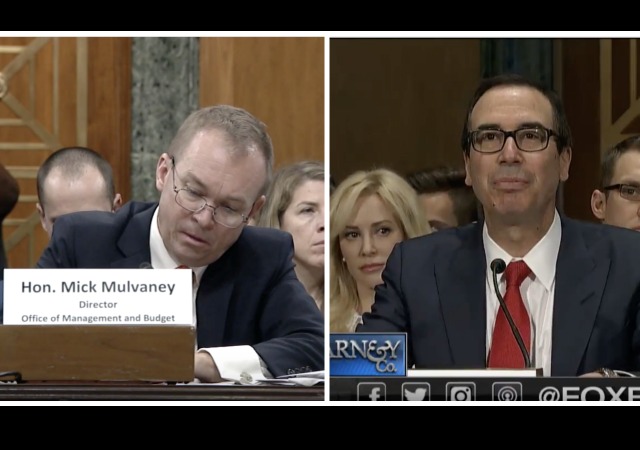
I think it's safe to assume that a tax reform plan will take a lot longer than Trump's administration thinks, especially when his officials cannot agree on how the plan will work. That's exactly what happened when White House Budget Director Mick Mulvaney and Treasury Secretary Steven Mnuchin testified in front of two different Senate committees. Mulvaney told the Senate Budget Committee that the "tax plan doesn't bank on any revenue stemming from faster economic growth." At the same time, Mnuchin told the Senate Finance Committee that the "tax plan will partly pay for itself with economic growth."

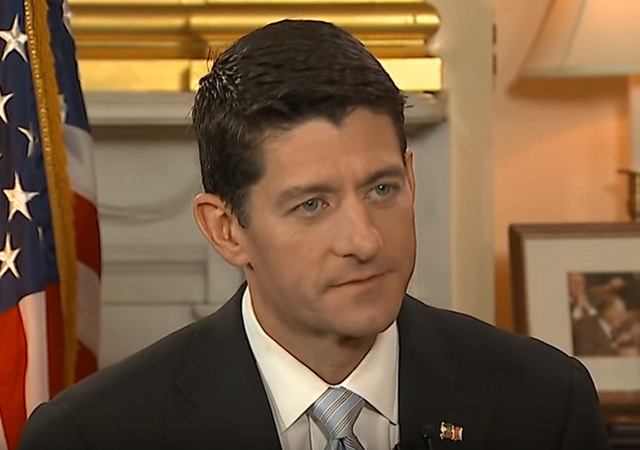
Speaker Paul Ryan (R-WI) will not let go of a border adjustment tax (BAT) when it comes to tax reform, which will set up a major showdown with the White House and possibly the Senate. Ryan admitted today that the House could pass a tax bill without the BAT, but he's still trying to sell the idea to his fellow lawmakers and the White House.

President Donald Trump has officially alerted Congress that he will begin NAFTA renegotiation talks. This gives Trump's administration, Congress, and businesses a 90 day consultation period before he sits down with Canada and Mexico. From Fox Business:
"Today, President Trump is fulfilling one of his key promises to the American people," U.S. Trade Representative Robert Lighthizer told reporters on Thursday. In a letter to congressional leaders, Mr. Lighthizer said the administration will start talks with Canada and Mexico as soon as 90 days from Thursday, in line with congressional rules on negotiating trade deals subject to expedited consideration by lawmakers.

President Donald Trump wants to push through his agenda no matter what it takes. On Tuesday, he proved that when he tweeted out that the Senate change the rules to eliminate the 60 votes needed to avoid a filibuster when it comes to a spending bill. The GOP in the Senate have put down their foot and gave the president a short answer: NO.

Democrats in some blue states do not like that President Donald Trump's tax plan includes eliminating the ability to deduct state and local taxes. Just a thought...maybe the states should not tax their citizens so much? Instead, they complain about the burden placed on the citizens from the federal government. From The Wall Street Journal:
At the center of the fight is New York, home of Mr. Trump, Mr. Cohn and Senate Democratic Leader Charles Schumer, who says killing or scaling back the break would be “devastating for middle-class families in New York and elsewhere.”

Secretary of Treasury Steven Mnuchin and National Economic Council Director Gary Cohn spoke to the press at the White House today about President Donald Trump's tax reform plan. Trump wants to slash the corporate tax rate to 15%, which I covered yesterday. But he also wants to place income taxes for us regular Americans into three brackets. From The Wall Street Journal:
“Clearly we have a unique opportunity to do something major here,” Mr. Cohn told a small group of reporters in the White House on Wednesday morning. “It’s our intention to create a huge tax cut and equally as important, a huge simplification of the tax system in America.”

President Donald Trump has offered us a little hint into the tax reform plan he wants to unveil on Wednesday. He has demanded aides to draft a plan that cuts the corporate tax rate to 15%. It would help him keep one of his campaign promises. On the trail, he vowed to bring the tax rate to 15% from 35%. Yet, it could cause a fight on Capital Hill. Republicans want to cut taxes, but they cannot agree on how much.

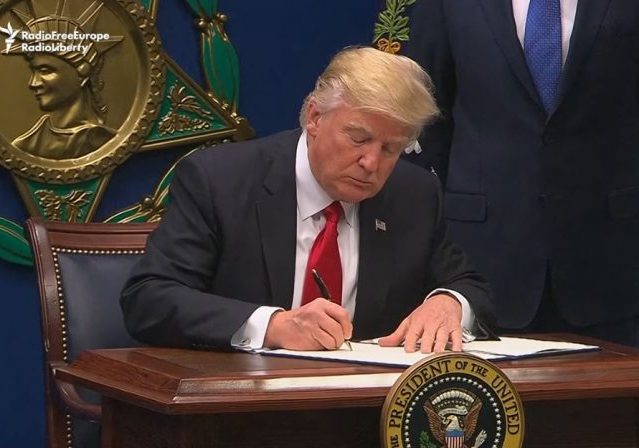
President Donald Trump will sign an executive order for Treasury Secretary Steven Mnuchin to target financial regulations from former President Barack Obama that have caused companies trouble to conduct business. Mnuchin has said that the orders from Trump "are meant to emphasize the administration's economic priorities to the American people." This includes parts of the Dodd-Frank Act and tax regulations handed out in 2016.

President Trump is set to sign a "Buy American, Hire American" Executive Order today that is expected to direct federal agencies to buy American when possible and to refocus the H-1B visa program to discourage companies from replacing American workers with lower paid foreign workers.  Rather than a new set of rules, the Executive Order seeks to ensure enforcement of decades old existing laws and rules that have gone unenforced. In yesterday's White House background briefing, a senior administration official explained that the rules for buy American and hire American have been abused and "enormously diluted over time" due to waivers and exemptions.  President Trump's executive order is intended to rectify this problem.

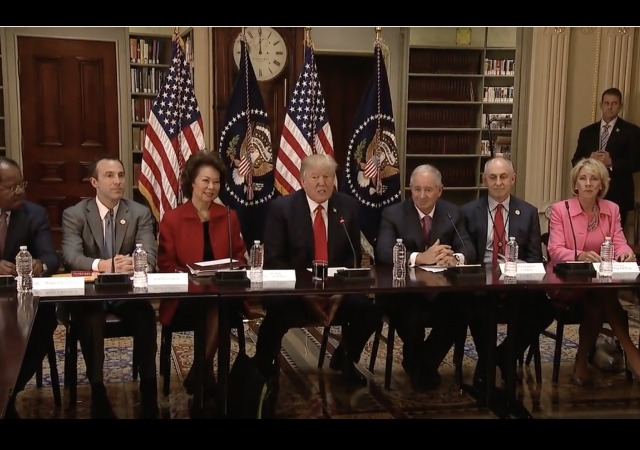
President Donald Trump met with CEOs along with five Cabinet members again today to discuss tax reform, NAFTA, and Dodd-Frank. He believes reforming all of those will help domestic businesses. Fox Business reported:
“At the top of our agenda is creating great high paying jobs for American workers ... We've created over 600,000 jobs already … and it's catching on,” the president told the press Tuesday, before adding Americans can expect “some pleasant surprises” regarding NAFTA.

White House aides have told the Associated Press that President Donald Trump has decided to scrap the tax reform plan he campaigned on and start from scratch as a way to bring in more Republicans. Trump and House Republicans already endured one defeat when many Congressional Republicans would not vote for their healthcare plan. The White House wants to take a more active role with tax reform so failure does not happen again.

Now that the GOP healthcare bill is dead, the administration will more than likely set its eyes on tax reform. However, this could very well end like the healthcare bill. House Speaker Paul Ryan (R-WI) insisted that the party has "more agreement" when it comes to tax reform while Treasury Secretary Steven Mnuchin explained that the "plan to overhaul the U.S. tax code would face smoother sailing" than healthcare. Oh really?