Image 01 Image 03

Iran Tag

Rep. Jared Polis started calling Arkansas Senator Tom Cotton "Tehran Tom" after word got out that the Senator had led a coalition of 47 Republicans in the drafting of a letter to Iran. The "#47Traitors" hashtag took off on Twitter, and over 200,000 people have signed a petition accusing those senators of violating the Logan Act. You'd think we'd never seen anything like this before, right? Well, that's exactly what progressives want you to think. Tom Cotton may have caused a scandal, but he hasn't come close to the misdeeds of Democrats who came before him.

1983: Kennedy appeals to Moscow

ted_kennedy_and_the_soviets-620x382 In 1991, the London Times published a memo pulled from the Soviet archives offering proof that in 1983, Senator Ted Kennedy worked with an old law school friend by the name of John Tunney to relay a message from himself to Yuri Andropov, a top official in Russia's Communist regime.

The recent move from the Texas Governor's Mansion hasn't quelled Governor Perry's passion for all things American. Since creating RickPAC last year, Governor Perry has travelled the country spreading his message. Securing the border and as a byproduct, national security, are part of Perry's message. Yesterday, RickPAC released a video calmly hammering President Obama for his 'weakness and fecklessness' on the international stage: "There's a lot of talk in America today about leadership and America's role and security on the international stage. As someone who believes America is the greatest force for freedom and prosperity in the world, it's frustrating to see the president shuffle from one crisis to the next, and to hear his words ring hollow when there should be unwavering resolve. But let's step back for a minute and imagine the view from the outside. Imagine how the president's weakness and fecklessness are received by both our friends and our enemies. Imagine the view from Tehran, as they're trying to negotiate a nuclear agreement with the United States. They see the leader of the western countries scrambling to get Vladimir Putin to sign a piece of paper that he'll completely ignore within hours."

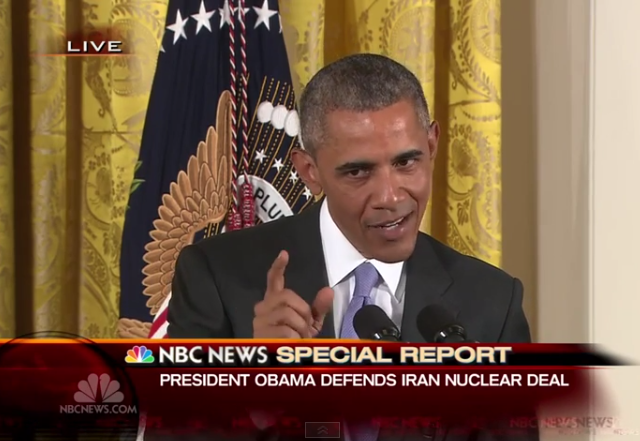
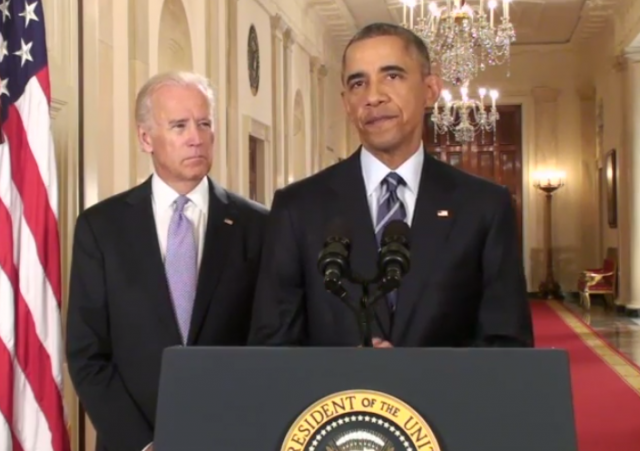
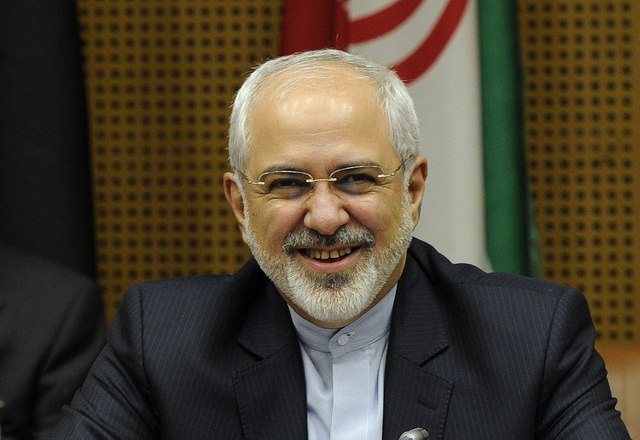
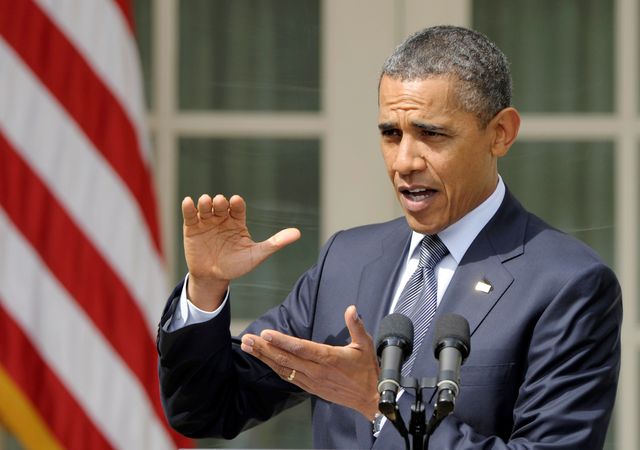
In October, the New York Times reported President Obama intended to fly solo on Iranian negotiations. "But the White House has made one significant decision: If agreement is reached, President Obama will do everything in his power to avoid letting Congress vote on it," they reported. Fast forward to Monday, when freshman Senator Tom Cotton kicked a hornet's nest. Joined by 46 Republican Senators, Senator Cotton wrote an open letter to Leaders of the Islamic Republic of Iran. The letter was an exposition of the Constitutionally guaranteed Congressional role in international agreements. Most notably, a reminder that international agreements arranged by the President are non-binding until they've received Congressional approval. President Obama responded, accusing participating Senate Republicans of allying themselves with Iranian hardliners, "I think it's somewhat ironic to see some members for Congress wanting to make common cause with the hard-liners in Iran. It's an unusual coalition," Obama said Monday ahead of a meeting with European Council President Donald Tusk." Vice President Joe Biden weighed in calling the letter "beneath the dignity of [the Senate,] an institution I revere." And then the Democratic dog pile began. Iran too, responded. Foreign Minister, Dr. Javad Zarif called the letter a propaganda ploy and proceeded with a self-righteous lecture on international law:
I should bring one important point to the attention of the authors and that is, the world is not the United States, and the conduct of inter-state relations is governed by international law, and not by US domestic law. The authors may not fully understand that in international law, governments represent the entirety of their respective states, are responsible for the conduct of foreign affairs, are required to fulfill the obligations they undertake with other states and may not invoke their internal law as justification for failure to perform their international obligations.
Zarif's statement isn't exactly incorrect, but it in no way negates the fact that for any agreement involving the United States to be a binding agreement on the international stage, it must first pass Congressional scrutiny... which is exactly what Senator Cotton and his 46 compadres pointed out. Conversely, any agreement reached without Congressional consent is not legally binding.

Didn't take long to drop some "we're still working on this" language, did it? The Obama Administration may have played their high-profile troubles over the pending Iran nuclear deal as a grudge match between the U.S. and Israel, but the Israelis aren't the only ones with questions about the President's "all or nothing" deal. France has a history of raising questions about how far the international community is and has been willing to go to gain concessions from Iran regarding its nuclear program. Recently, the French have publicly raised concerns that commitments made by Iran don't go far enough to ensure that any future nuclear program will make allowances for a system of inspections and verifications ensuring that the program is compliant with international standards. Secretary of State John Kerry has been busy over the weekend running damage control over France's most recent objections. Via Reuters:
"We are on the same page," U.S. Secretary of State John Kerry told reporters after talks with French Foreign Minister Laurent Fabius in Paris. "If we didn’t think that there was further to go, as Laurent said, we’d have had an agreement already," Kerry added. "The reason we don't have an agreement is we believe there are gaps that have to be closed, there are things that have to be done to further strengthen this; we know this." The goal of the talks is to persuade Iran to restrain its nuclear program. In exchange, Iran would get limited relief from sanctions that have crippled its economy. EU's foreign policy chief, Federica Mogherini, says the next two weeks will be crucial: "In the coming few days, there will be intense work from all sides to bridge the gaps that are still remaining and to make sure that this historic opportunity is not missed."
Watch:

In a previous post at Legal Insurrection, I suggested that the terrorist attacks in Paris and Copenhagen and the Salman Rushdie fatwa issued in 1989 by Supreme Leader Ayatollah Khomeini of Iran are analogous. In the case of the fatwa, a Muslim leader and cleric called on Muslims to kill a Western author deemed to be guilty of blasphemy towards Islam, more or less the same action the modern-day terrorists have taken on themselves against Western cartoonists who lampoon Mohammed. In light of Obama's repeated insistence that terrorists do not act as agents of Islam, doesn't he need to answer some questions about the Rushdie fatwa? The questions appear in an essay of mine in the Weekly Standard, and whether or not Obama ever addresses them (please do not sit on a hot stove until he does), they point out the absurdity of his denial of the connection between such killings and Islam. Here's an excerpt:
The fatwa Khomeini issued makes chilling reading even today. Here’s a translation: "I would like to inform all the intrepid Muslims in the world that the author of the book entitled ‘Satanic Verses’. . . as well as those publishers who were aware of its contents, are hereby sentenced to death. I call on all zealous Moslems to execute them quickly, wherever they find them, so that no one will dare to insult Islamic sanctity. Whoever is killed doing this will be regarded as a martyr and will go directly to heaven."

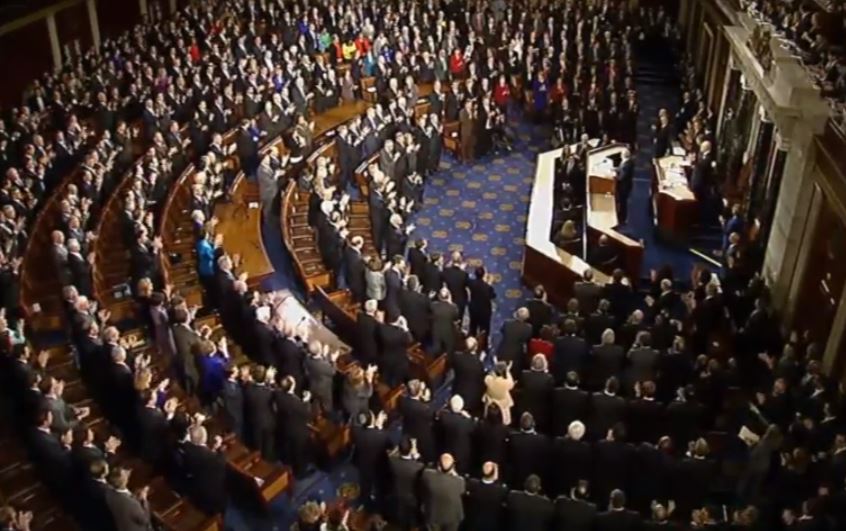
In case you missed it, yesterday Israeli Prime Minister Benjamin Netanyahu delivered a speech before Congress eviscerating Obama's policy toward Iran and triggering a complete meltdown amongst Democrats and liberal talking heads. I included the rail-jumping from MSNBC institution Chris Matthews in a previous post, but something he said during his rant has been nagging at me ever since I blew it off and hit "publish":
Speaking to Thomas Roberts shortly after Netanyahu’s speech ended, Matthews said definitively, “This man from a foreign government walked into the United States legislative chamber and tried to take over foreign policy.” “He said you should trust me, not your president on this,” Matthews continued, describing the tone of Netanyahu’s remarks. “I’m the man you should trust, I’m your true leader on this question of U.S. geopolitics. If you want to protect yourself, you must listen to me and not this president.” Calling the situation “startling,” Matthews said, “It’s a remarkable day when the leaders of the opposition in Congress allowed this to happen. Think it through, what country in the world would let a foreign leader come in and attempt to rest from the president control of U.S. foreign policy?” “This was a takeover attempt by Netanyahu with his complying American partners to take American foreign policy out of the hands of the president,” he concluded.
Watch:

In an interview with Reuters published yesterday, President Obama launched a pre-emptive strike against Israeli Prime Minister Benjamin Netanyahu's planned speech before a session of Congress. I won't attempt to fisk the whole thing, but a few things stuck out as patently false.
Now keep in mind the prime minister, when we signed up for this interim deal that would essentially freeze Iran’s program, roll back its highly enriched uranium - its 20 percent highly enriched uranium - and so reduce the possibility that Iran might breakout while we were engaged in these negotiations, when we first announced this interim a deal, Prime Minister Netanyahu made all sorts of claims. This was going to be a terrible deal. This was going to result in Iran getting 50 billion dollars worth of relief. Iran would not abide by the agreement. None of that has come true.
I'm not sure that Netanyahu made a claim of $50 billion in sanctions relief. I believe the number was closer to $20 billion and that the actual relief Iran got was closer to the Israeli estimate than the administration's lowball estimate. But I don't have the time right now to research this, but I'm skeptical about this claim.

The administration continues in its attempt to marginalize Prime Minister Netanyahu ahead of his speech on Iran. And the efforts appear to be backfiring. Jeffrey Goldberg tells some important truths in today's column, Danger Ahead for Obama on Iran:
I’m fairly sure Netanyahu will deliver a powerful speech, in part because he is eloquent in English and forceful in presentation. But there is another reason this speech may be strong: Netanyahu has a credible case to make. Any nuclear agreement that allows Iran to maintain a native uranium-enrichment capability is a dicey proposition; in fact, any agreement at all with an empire-building, Assad-sponsoring, Yemen-conquering, Israel-loathing, theocratic terror regime is a dicey proposition. The deal that seems to be taking shape right now does not fill me—or many others who support a diplomatic solution to this crisis—with confidence. Reports suggest that the prospective agreement will legitimate Iran’s right to enrich uranium (a “right” that doesn’t actually exist in international law); it will allow Iran to maintain many thousands of operating centrifuges; and it will lapse after 10 or 15 years, at which point Iran would theoretically be free to go nuclear. (The matter of the sunset clause worries me, but I’m more worried that the Iranians will find a way to cheat their way out of the agreement even before the sun is scheduled to set.) ... This is a very dangerous moment for Obama and for the world. He has made many promises, and if he fails to keep them—if he inadvertently (or, God forbid, advertently) sets Iran on the path to the nuclear threshold, he will be forever remembered as the president who sparked a nuclear-arms race in the world’s most volatile region, and for breaking a decades-old promise to Israel that the United States would defend its existence and viability as the nation-state of the Jewish people.
And as Goldberg noted, three years ago Obama promised in one of Goldberg's columns, “We’ve got Israel’s back.”

Obama knows he's vulnerable on Iran, and Israeli Prime Minister Benjamin Netanyahu's impending visit to the U.S. and Congressional address isn't doing him any favors when it comes to gaining a vote of confidence from lawmakers and other world leaders. The White House expects Netanyahu to hit back against its efforts to strike a nuclear deal with Iran---and they're already rebutting what they anticipate Netanyahu will say:
In a briefing for reporters, senior administration officials contended that even an imperfect agreement that kept Iran’s nuclear efforts frozen for an extended period was preferable to a breakdown in talks that could allow the leadership in Tehran unfettered ability to produce enriched uranium and plutonium. “The alternative to not having a deal is losing inspections,” said one senior official, who would not be quoted by name under conditions that the administration set for the briefing, “and an Iran ever closer to having the fissile material to manufacture a weapon.”
Since House Speaker John Boehner announced the invitation, reactions from Democrats and the White House have unraveled, from boycotts, to snubs, to outlandish statements like one from national security advisor Susan Rice, who said that the address would be "destructive" to the U.S. - Israel relationship. This is nothing new. The tension began the moment Obama took control of the White House.

Yesterday's New York Times editorial on the emerging nuclear deal between the West and Iran is completely delusional. I will try to tackle the editorial's arguments in the order of ridiculousness, from most to least:
Critics of any deal — including those in Congress, such as Senator Mark Kirk, a Republican of Illinois, and Senator Robert Menendez, a Democrat of New Jersey; and Prime Minister Benjamin Netanyahu of Israel — demand complete dismantlement of Iran’s program given the country’s history of lying about its efforts to produce nuclear fuel and pursue other weapons-related activities. But their desired outcome simply cannot be achieved. President George W. Bush wasn’t able to secure that goal in 2003 when Iran had only a few dozen centrifuges, the machines that enrich uranium for nuclear fuel. Now, 12 years later, Iran has an estimated 19,000 centrifuges, not to mention scores of other facilities, including some that have been hardened to withstand a military attack.
Hold on. This is saying that a miscreant gets to determine the level of his punishment. We can't get Iran down to zero centrifuges because Iran refuses to dismantle them. This is just saying we don't have the political will to demand such a result. We haven't been able to secure that result is because we haven't tried. Certainly if we say we're going allow 6,000 or 6,500 centrifuges we're not going to get zero. But given Iran's "history of lying" we also don't know how many undeclared centrifuges it might have either. To give Iran veto power over how many centrifuges it gets to keep operating, considering its "history of lying," means that we'll be enabling it to enrich enough uranium for a nuclear bomb.

From the headline of this AP article, "Historic US-Iran nuclear deal could be taking shape," the casual reader would be hard-pressed to tell whether the deal was good, bad, or indifferent for the US. The article goes on to offer the usual quotes alternating between those who laud the potential agreement and those who criticize it, and closes on a note of optimism about the talks and sympathy for Iran:
Daryl Kimball of the Washington-based Arms Control Association said that with the IAEA's additional monitoring, the deal taking shape leaves "more than enough time to detect and disrupt any effort to pursue nuclear weapons in the future." In exchange, Iran wants relief from sanctions crippling its economy and the U.S. is talking about phasing in such measures.
Contrast that with this piece by David Horovitz in The Times of Israel. He observes that, although the Obama administration has been engaged in denying Israeli rumors of what might be in the agreement and accusing Israel of "misrepresenting the specifics for narrow political ends," the pending agreement that the AP article describes not only contains many of the things Israel had been complaining about, but is even worse than was previously thought. According to Israel’s "most respected Middle East affairs analyst," Ehud Ya’ari, the deal would be likely to have some catastrophic consequences:

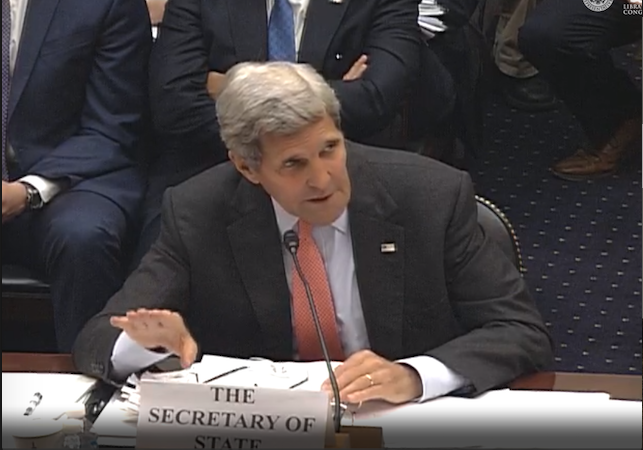
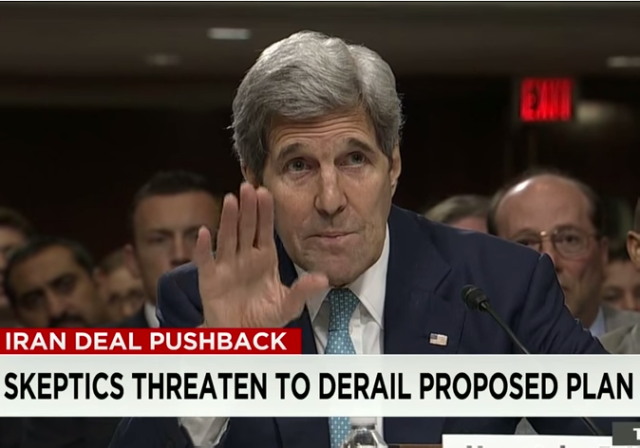
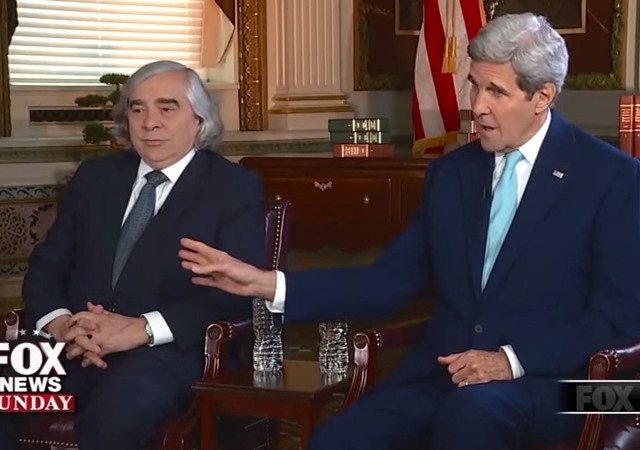
At a Senate Appropriations Committee Hearing yesterday, Secretary of State John Kerry took aim at critics of the Obama administration's posture towards Iran:
World powers grouped under the so-called P5+1 “had made inroads” since reaching an interim deal with Iran in November 2013 on reining in its suspect nuclear program, Kerry said. “We’ve gained unprecedented insight into it,” Kerry told the Senate appropriations committee at the start of two days of intense congressional foreign policy budget hearings. ... Taking aim at critics, such as official Israel, that are opposed to the agreement, Kerry said they did not “know what the deal is.” “I caution people to wait and see what these negotiations produce. Since 2013, we have been testing whether or we can achieve that goal diplomatically — I don’t know yet,” Kerry insisted.
Testing? 15 months after the P5+1 nations agreed to the Joint Plan of Action (JPOA), the administration is still "testing?" Here's one thing we know. The JPOA (.pdf) required this:
A Joint Commission of E3/EU+3 and Iran will be established to monitor the implementation of the near-term measures and address issues that may arise, with the IAEA responsible for verification of nuclear-related measures. The Joint Commission will work with the IAEA to facilitate resolution of past and present issues of concern.

Last week, Prof. Jacobson noted that The Washington Post published an editorial criticizing President Obama's handling of the nuclear negotiations with Iran. Prof. Jacobson's mentioned the editorial in the context of arguing that the likely deal is against "the best interests of the American people." But there's something else remarkable about the editorial. It was the fifth one since October in which the Post questioned the concessions being made by the P5+1 nations; and several of the central points of the editorial were buttressed by Sen. Tim Kaine (D - Va.), so they could hardly be called partisan. To quote from the editorial:
A related problem is whether Iran could be prevented from cheating on any arrangement and acquiring a bomb by stealth. Mr. Kaine (D) underlined that an attempt by the United States to negotiate the end of North Korea’s nuclear program failed after the regime covertly expanded its facilities. With Iran, said Mr. Kaine, “a nation that has proven to be very untrustworthy . . . the end result is more likely to be a North Korean situation” if existing infrastructure is not dismantled. The administration at one time portrayed the nuclear negotiations as distinct from the problem of Iran’s sponsorship of terrorism, its attempts to establish hegemony over the Arab Middle East and its declared goal of eliminating Israel. Yet while the talks have proceeded, Mr. Obama has offered assurances to Supreme Leader Ayatollah Ali Khamenei that the two countries have shared interests in the region, and the White House has avoided actions Iran might perceive as hostile — such as supporting military action against the Syrian regime of Bashar al-Assad.

Argentinian president Cristina Fernandez de Kirchner has been formally charged with trying to cover up the involvement of the Iranians in a bombing of a Jewish center. This comes after shocking reports that prosecutor Alberto Nisman had (before his suspicious death) drafted a warrant for the arrest of Fernandez, charging her of attempting to shield Iranian officials from responsibility for the bombing. Nisman was found dead in his home a day before he was slated to testify against the current Argentinian government. BBC News explains how the scandal has ballooned for the Argentinian president:
Although this was an expected move, it could not have come at a worse time for the Argentine president. Cristina Fernandez de Kirchner was already facing criticism for the way she has been managing the Nisman case, which has become the worst crisis of her political career so far. Now she will also face pressure from the judiciary, which is demanding an unprecedented investigation into a sitting president - one that could end up with an impeachment-like process if she is found guilty. Meanwhile, prosecutors are calling for a massive protest on the streets of Buenos Aires next week in what is expected to become the largest anti-government march in recent years. Opposition leaders, unions and even the Catholic Church are joining calls for a fair and independent investigation into a death that has shocked this nation.

As threats of congressional boycotts by Democrats swirl, and as his political enemies in Israel and the U.S. seek to use the controversy against him, Israeli Prime Minister Benjamin Netanyahu just issued a statement that he still plans to speak before Congress next month:
10/02/2015 Prime Minister Benjamin Netanyahu issued the following statement: "First, on behalf of the people of Israel, I wish to send condolences to President Obama, the American people and the family of Kayla Mueller. We stand with you. Israel’s survival is not a partisan issue, not in Israel nor in the United States. This doesn’t mean that from time to time Israeli governments have not had serious disagreements with American administrations over the best way to achieve the security of Israel. Israel's first Prime Minister, David Ben-Gurion, declared Israel’s independence in the face of strong opposition from US Secretary of State George Marshall. Likewise, Prime Minister Eshkol’s decisions at the start of the Six Day War, Prime Minister Begin’s decision regarding the nuclear reactor in Iraq, and Prime Minister Sharon’s decisions to press ahead with Operation Defensive Shield; these were all strongly opposed at the time by American administrations.

Over the past several months, we've watched the situation in Yemen devolve to the point of chaos. In September, Iranian-backed Houthi rebels took informal control of the capital city of Sanaa; then, in mid-January, Yemen's active al-Qaeda cell took credit for the terror attacks on Charlie Hebdo in Paris, and threatened similar acts of violence. Around the same time, American officials in Yemen began to question the security of State Department and other officials stationed at the embassy in Sanaa, and on January 20, were poised to evacuate. Houthi rebels had amped up the violence in the city, and laid siege to the presidential palace and personal residence of Yemeni President Abed Rabbo Mansour Hadi. A compromise was reached between the rebels and the now-hostage government, but negotiations quickly broke down; President Hadi and his government resigned, and the Houdi maintained comfortable control of key areas of the capital. Now, the Houthi have dissolved parliament, and for all intents and purposes taken formal control of the country. Via NPR:
A televised statement read by an unidentified Houthi member called the takeover "a new era that will take Yemen to safe shores." He said the group was forming a 151-member presidential council that would act as a government for two years. Revolutionary Committees would be in charge of forming a new parliament, the statement said. The Associated Press adds:
"The development also plunges the impoverished country deeper into turmoil and threatens to turn the crisis into a full-blown sectarian conflict, pitting the Iran-backed Houthi Shiites against Sunni tribesmen and secessionists in the south."

Going through some old bookmarks I never wrote about, I found Israel’s Fair-Weather Fans, an August 7, 2014, NY Times Op-Ed by Shmuel Rosner. The column is a rebuttal to liberal Jewish American critics worrying about the alienation of liberal American Jews from Israel. It seems relevant today, as some Democrats put Barack Obama's alleged hurt feelings ahead of the legitimate security concerns of our friends, from Israel to the Gulf Arab states, over Iranian nuclear and regional ambitions:
Two prominent black Democrats in the House of Representatives are vowing to skip Prime Minister Benjamin Netanyahu's speech to Congress next month, a move that a White House insider says was put in motion by the Obama administration. John Lewis of Georgia and G.K. Butterfield of North Carolina both said Friday that they disapproved when House Speaker John Boehner invited the Israeli leader to address a joint session of Congress on March 3 without consulting President Barack Obama first.