

Image 01 Image 03

China Tag

We have been following the developments related to Canada's arrest of China’s Huawei Technologies Chief Financial Officer Meng Wanzhou, who faces extradition to the United States on suspicion she violated U.S. trade sanctions against Iran. The Department of Justice officially unsealed charges against the tech giant, the executive, and several subsidiaries, alleging the company stole trade secrets and misled banks about its business...as well as violating U.S. sanctions.

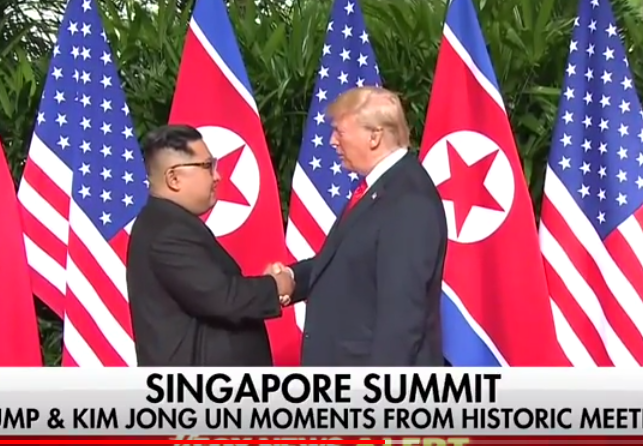
Chinese officials are currently planning to send their top trade negotiator to Washington, D.C., next month for trade talks designed to end the tariff battle between the two nations. Ahead of the meetings, the Chinese are appearing to leverage their influence with North Korea to optimum benefit. North Korea's Chairman Kim Jong-un was in Beijing this week, and made significant statements related to promises made during June's Singapore Summit.

Chinese authorities are cracking down on Christmas celebrations. Several Chinese cities have banned Christmas decorations, with government officials ordering the removal of Christmas trees, lights and bells from shopping malls and offices.

During talks with President Trump on Saturday, China reportedly agreed to label the synthetic opioid fentanyl a controlled substance. The White House is calling this move a "wonderful humanitarian gesture." The National Institute on Drug Abuse reported that "a research letter published in the Journal of the American Medical Association (JAMA) concluded that nearly half of opioid-related deaths in 2016 involved fentanyl."

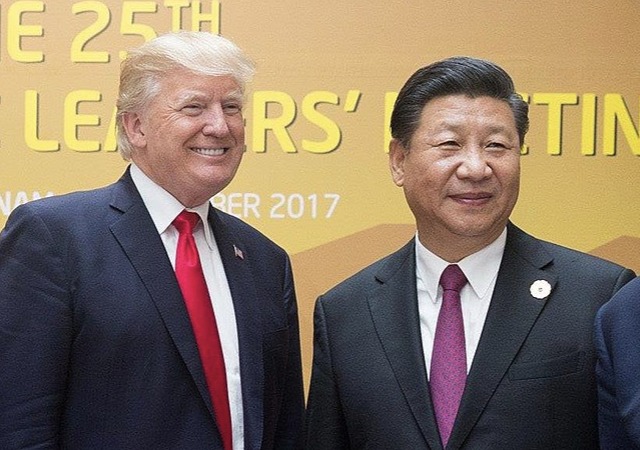
In a meeting between President Trump and China's Xi Jinping, Trump agreed to delay the increase in tariffs scheduled for January 1, 2019 while trade talks continue. The tariffs in question were set to jump from 10% to 25%, but this increase will not take place while the two countries engage in further trade talks.  The talks are currently expected to last 90 days.

China is planning an authoritarian system which will essentially reward people for good behavior and punish others with difficulty based on a points system. And if you think this sounds like something that will happen in the distant future, guess again. Beijing is planning to begin implementation in 2020.

Chinese President Xi Jingping announced at the large China International Import Expo (CIIE) that he will lower tariffs and increase imports as a way to "demonstrate goodwill amid mounting frictions with the United States and others." While this appears like a good thing, Xi has made these promises before.

Last year, after several American diplomats developed odd neurological problems that were theorized to be caused by sonic attacks, President Donald Trump ordered all non-essential personnel out of Cuba, then sent 15 Cuban diplomats packing. Then, this May, American diplomats in China developed health conditions similar to those reported by the staff who were serving in Cuba. Now NBC News has published a detailed review of the investigation of these “health attacks."
Physicians enlisted by the State Department have identified what they call a "Brain Network Disorder" acquired by U.S. personnel serving abroad, say U.S. officials, that includes structural changes to the brain not found in any previously known disorder.

A leading Chinese bank, which acted as the main conduit for payments to Iran, is halting financial transactions with the Islamic Republic, Reuters news agency reports. The state-owned Bank of Kunlun's decision was made "under pressure" of impending U.S. sanctions due to take effect early November, news reports disclose. The halting of transactions spells trouble for Iran's commercial ties to China, the country's biggest oil consumer. The Bank of Kunlun is controlled by China's state-owned energy group CNPC, a company running multi-billion dollar gas exploration projects in Iran.

The Centers for Disease Control and Prevention report that drug overdose deaths surpassed 72,000 in 2017, representing an increase of more than 6,000 deaths over the estimate projected from the data for the previous 12-month period. Fentanyl overdoses contributed significantly to this grim, new statistic.
That staggering sum works out to about 200 drug overdose deaths every single day, or one every eight minutes.