Image 01 Image 03

Le·gal In·sur·rec·tion

/var/www/vhosts/legalinsurrection.com/httpdocs/wp-content/themes/bridge-child/readFeeds.incFALSE

LATEST NEWS

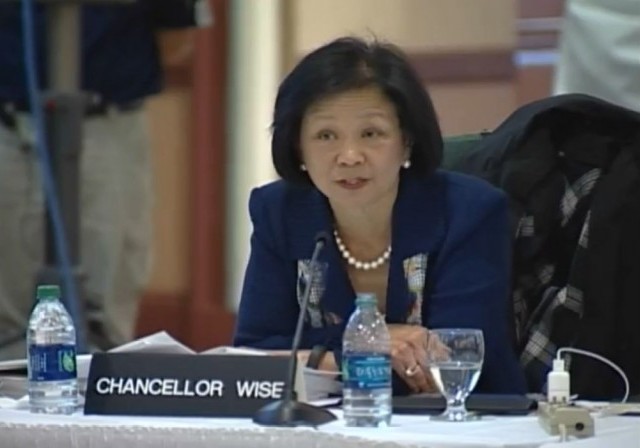
(WAJ Note:  This is a GUEST POST regarding an attempt by some Syracuse University faculty to pass a faculty Senate resolution supporting Steven Salaita, who was denied a tenured position at the University of Illinois at Champaign-Urbana.  We are running this Guest Post because such resolutions have been or are being brought at many universities, and the Syracuse experience sheds light on the process.) ----------------- On November 5, Syracuse University’s (SU) University Senate voted for the second time to table a resolution that calls on the administration of the University of Illinois-Urbana Champaign (UI-UC) to either honor the contract of Dr. Steven Salaita, the former Virginia Tech associate professor who posted noxious anti-Semitic rants to Twitter for months before and during this summer’s Israel-Hamas war, or “to demonstrate, via AAUP recognized procedures of academic due process, that termination is warranted”. The resolution in question wasn’t actually written by any SU faculty. It’s a template that’s currently circulating broadly on various American campuses, endorsed (primarily, I believe) by well-meaning and principled higher education professionals who’ve been led to think that, by denying Dr. Salaita’s job offer, UI-UC’s Chancellor Wise and its Board of Trustees “assaulted” Salaita’s academic freedom. It turns out that SU’s resolution came by way of Louisiana State University (LSU), which as it happens just the day before defeated in a split decision vote a substantially revised pro-Salaita resolution (reports claim that LSU faculty devoted three months of meetings to revising the initial document introduced at SU). My sense is that at SU, and on other campuses, these resolutions are being introduced not just to support Salaita but as part of a larger effort to recalibrate the relationship between the faculty and the administration. Faculty don't much like it when university CEOs overturn the preceding reviews of faculty bodies lower down the chain, like departments and search committees. In today's university climate, when many faculty are sick and tired of Chancellors and Trustees running roughshod over shared governance, pro-Salaita resolutions will have broad appeal precisely because they are construed as vehicles for committing administrators to "fairness and transparency in all academic procedures and practices, including faculty hires and other labor practices".


When my friends and I first signed up for Facebook back in 2003, I don't think any of us had any idea how the platform would grow and monetize itself over the next decade. What was once the anti-MySpace is now arguably one of the most powerful tools political campaigns and marketing firms have on hand to help push their brands. Political advertising on Facebook ebbs and flows with the cycle, but Facebook has developed and implemented a new way to read user data that will help their team make Facebook ads even more (creepily) specific. "Sentiment analysis"---or, reading a user's feelings on a particular subject based on what they write---is desperately tricky to get right, but if Facebook can do it, everyone from marketing and political consultants to media outlets will be able to gauge reactions on hot button issues simply by looking at a "sentiment analysis." Experts predict that this type of digital strategy could end up outpacing TV and radio as the primary platforms for regional analysis. From Buzzfeed:
Facebook is on the cusp — and I suspect 2016 will be the year this becomes clear — of replacing television advertising as the place where American elections are fought and won. The vast new network of some 185 million Americans opens the possibility, for instance, of a congressional candidate gaining traction without the expense of television, and of an inexpensive new viral populism. The way people share will shape the outcome of the presidential election. Even during the 2014 midterms, which most Americans ignored, Facebook says it saw 43 million unique individuals engage in the political conversation. Now a rawly powerful video may reach far more voters in a few hours than a multimillion-dollar ad buy; and it will reach them from trusted sources — their friends — not via suspect, one-way channels.
Is this new big data push a substitute for traditional polling, though? Experts say no:

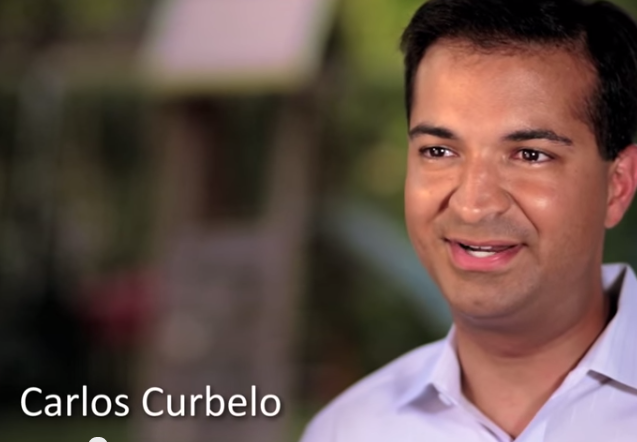
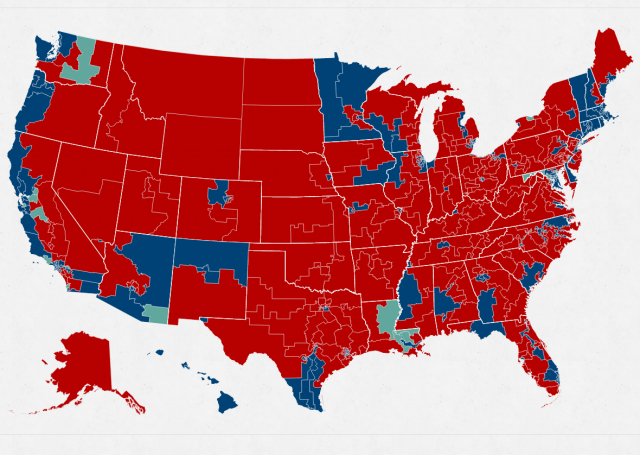
It's been nearly a week since the Republican midterm election wave---(see also, tsunami, deluge, shellacking, take your pick)---so I think it's appropriate to reflect on some key House races we've been covering since the summer. First up is Carlos Curbelos's successful flipping of Florida's 26th district out of the hands of Democrat Joe Garcia, a tried-and-true liberal Democrat and right-hand man to the Obama-Pelosi-Reid political agenda. Curbelos is easily described as a moderate Republican whose stance on immigration in particular is a little questionable, but overall seems to be on board with the minimize-government-maximize-freedom conservative brand. Here's an excerpt from Curbelo's victory speech:
“We are celebrating an electoral victory, but we cannot forget that the American people remain frustrated and disillusioned with their government. Here in our community, and throughout the country, Americans are seeking leaders who will put the cause of a stronger, greater nation before their personal political interests.”
This GOP pickup was key considering that in 2012 the district flipped in the opposite direction. The original GOP House Rep. for FL26, David Rivera, was defeated by Garcia in 2012 while he was in the midst of a campaign finance scandal. Curbelos surged from a unknown Miami-Dade School Board Member in a lean Democrat district to clinching 51.50% of the district's votes. Of course, the question is whether Curbelos won this election or whether Garcia simply lost, particularly because of his affiliation with President Obama.

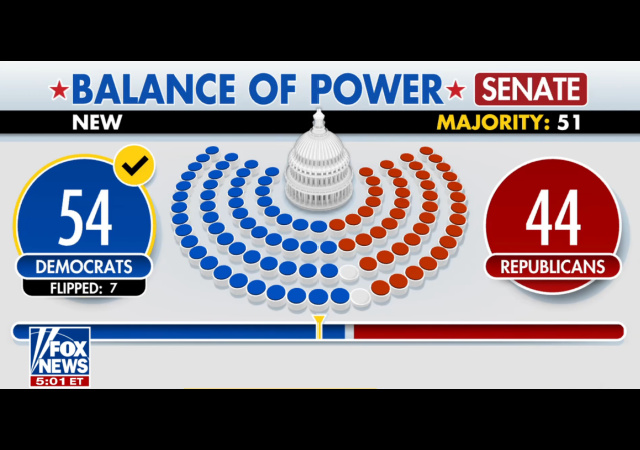
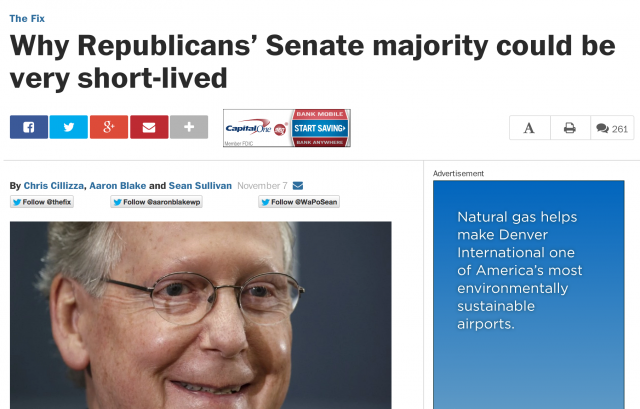
Desperate to find a silver lining in the 2014 Midterm shellacking, the media has come up with a new mantra: "The GOP's victory is short lived." 2016 is the GOP's to lose, and I would never put it past the Republicans to snatch defeat from the jaws of victory; but to act as though a Republican loss of the Senate in 2016 is a forgone conclusion is premature at best. Yes, the map will be different, and yes, the GOP has no policy agenda carved in stone, yet neither of these ensure defeat in 2016. The truth is very simple: no one knows what will happen in 2016. And yet... "We were destroyed in the Midterms, what do we say?! What should we write?!" "I know, let's tell everyone that there's no way Republicans can win again in 2016." "Brilliant!" And then they got to work:

WaPo

Screen Shot 2014-11-09 at 2.38.43 PM  

A constitutional crisis may loom on the horizon if President Obama follows through on his threats of executive action on immigration reform. So it might be a good time to revisit what the Founders had to say about protecting future generations from the kind of tyranny that could occur even in a democracy. When the Founders set up our government the way they did, it was not because of any sort of naiveté or vague hopefulness about government or its leaders in general. They realized that there is no way to protect people who have lost their own wisdom and judgment about these things. The Founders tried to put in all the built-in, automatic stops to tyranny they could devise, and they were tremendously clever and creative about it. But they also realized that the task of protecting people was impossible, and that the temptation to go the way of tyranny would be great. Perhaps even unstoppable. But they tried their best. Maybe even the best anyone could have done. Let's hear John Adams:
I do not say that democracy has been more pernicious on the whole, and in the long run, than monarchy or aristocracy. Democracy has never been and never can be so durable as aristocracy or monarchy; but while it lasts, it is more bloody than either. … Remember, democracy never lasts long. It soon wastes, exhausts, and murders itself. There never was a democracy yet that did not commit suicide. It is in vain to say that democracy is less vain, less proud, less selfish, less ambitious, or less avaricious than aristocracy or monarchy. It is not true, in fact, and nowhere appears in history. Those passions are the same in all men, under all forms of simple government, and when unchecked, produce the same effects of fraud, violence, and cruelty. When clear prospects are opened before vanity, pride, avarice, or ambition, for their easy gratification, it is hard for the most considerate philosophers and the most conscientious moralists to resist the temptation. Individuals have conquered themselves. Nations and large bodies of men, never.
From the same letter:

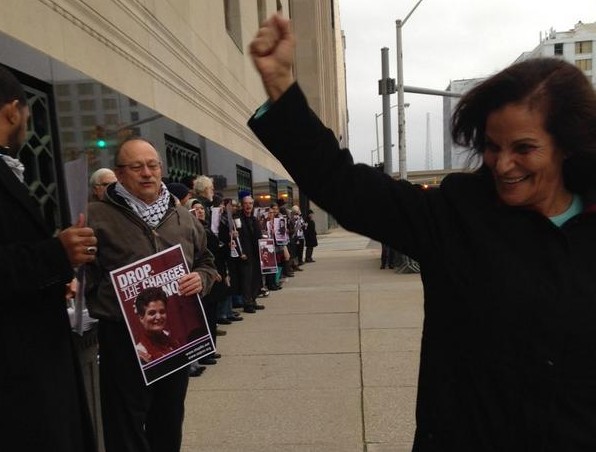
The trial in Detroit federal court of convicted Palestinian supermarket bomber Rasmieh (Rasmea) Odeh, for failing to disclose her conviction and prison time in Israel during the immigration and naturalization process, completed testimony Friday. As detailed before, the defense strategy has been jury nullification -- having the jury render a verdict based on the broader political dispute, while contesting the underlying conviction through claims by Odeh she was tortured into confessing. The Judge cut off the latter approach by ruling that allegations of torture were legally irrelevant since the legal issue was the non-disclosure to immigration officials, not whether the conviction was justified. In fact, there is evidence other than the confession of Odeh's involvement in the bombing, but to reopen the original conviction would have created a trial within a trial. The judge ordered that the defense could not mention the alleged torture. Nonetheless, according to a report from a supporter of Odeh, while testifying on cross-examination, Odeh volunteered to the jury that the was tortured. The Judge struck the testimony, but you can't unring the bell. Via the anti-Israel Electronic Intifada:

On the eve of the 2010 midterms, I noted that Democrats were about to be politically decapitated in Congress:
The Democrats face a political decapitation tomorrow. Dozens of senior Democratic Party leaders in the House and Senate, and in Statehouses around the country, are likely to lose. Unlike Republicans in 2008, there is no next generation of Democratic leaders. Who are the Democratic Party equivalents of Marco Rubio, Mitch Daniels, John Thune, Bobby Jindal, Paul Ryan or Eric Cantor? The Republican Party has numerous rising stars. I cannot think of a single Democratic Party rising star. Can you?
And so it came to pass in November 2010 -- other than a few figureheads, Democrats in the House (in particular) lost their leadership generation, as I laid out in my Brilliant Thoughts from Post-Tsunami, Hurricane-Ravaged, Earthquake-Shaken America:
The Democrats received the feared political decapitation. The Democrats lost, in a single night, two generations of leadership: Numerous members of the old guard, including multiple committee Chairmen, lost, as did dozens of newer members from the 2006-2008 cycles. Because the Tsunami struck in one cycle, there are no young Democratic guns waiting to step into the breach. The Democratic Party in the House is worse than a chicken with its head cut off, it is a chicken with its head and feet cut off.
The devastation of 2010 continued into 2011, as dozens of Democrats, including senior figures like Barney Frank, announced retirement. It just wasn't going to be much fun for them in a House run by Republicans.

As expected, on Saturday Obama nominated Loretta Lynch to replace Eric Holder as Attorney General. I'm not sure how many more times I'll make this disclosure -- but for the second time I'll note that I'm biased in favor of my law school classmate. I remember Loretta as a very nice person, not something that can be said about some of my classmates. Loretta's career, to the extent I've followed it, seems pretty straight forward as a prosecutor:
President Clinton first appointed Lynch to be a U.S. Attorney in 1999. She left for private practice in 2001 before being appointed a second time by Obama in 2010. In her years in the post, Lynch's office in Brooklyn has handled a wide-ranging caseload — cutting-edge cybercrime, high-stakes financial fraud and dramatic Mafia busts straight out of a Martin Scorsese movie. The office also helped convict the masterminds of the thwarted al Qaeda plot to attack the New York subway system. This year, Lynch's office announced it would indict Rep. Michael Grimm, R-N.Y., on federal fraud, tax evasion and perjury charges. Grimm, who won his re-election bid Tuesday, has pleaded not guilty. Lynch has also prosecuted several Democratic public officials, including State Sen. John L. Sampson, former State Sen. Pedro Espada Jr. and Assemblyman William F. Boyland Jr.

Democrats are still in full cover up mode days after the Republican wave crashed over the heads of embattled progressive candidates, and even pundits who have conceded that Democrats totally blew it are still scrambling to convince the American people that the election had nothing to do with the merits of liberal policies. Bill Maher hosted a romp on his Friday night show in which he did his best to convince his guests that this election wasn't a rejection of progressive lawmaking, but a referendum on Barack Obama, his blackness, and...other...things?...that I can't quite tease out at the moment. Via Mediaite:
That being said, he still had some issues with Republicans, like how, Maher claimed, the entire GOP victory was all about a continuing resentment of the “first black president.” Maher said their entire strategy was “screw Obama, we hate Obama,” and was amazed that it actually worked. Senator Bernie Sanders said it’s very easy to beat up on Obama instead of talking about big issues that affect the country. Maher pointed out how few Democratic candidates said anything positive about Obama and said they just suck. He argued they didn’t have that hard of a record to run on, and when actual Democratic policies were on the ballot, voters approved them. Maher said the Democrats were just horrible and “treated Obama like a teenager treats his mother.”
Watch:

Byron York remarks on one of the more remarkable aspects of Obama's post-election press conference, the notion that those who did not vote have given him a mandate:
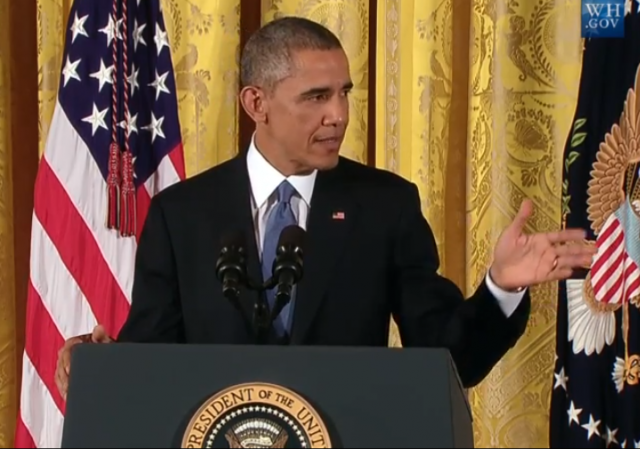
President Obama did something extraordinary, perhaps unprecedented, in his post-election news conference Wednesday: He claimed a mandate on behalf of voters who didn't vote. "To everyone who voted, I want you to know that I hear you," the president said. "To the two-thirds of voters who chose not to participate in the process yesterday, I hear you, too." What did that mean? What did those non-voters say? It would probably be more useful to ask what the president heard. And apparently Obama heard expressions of support from non-voters across the land. The president explained that many more voters turned out when he was elected, and then re-elected, than in Tuesday's midterms that left Republicans firmly in control of House and Senate. "One of the things that I'm very proud of in 2008 and 2012, when I ran for office, was we got people involved who hadn't been involved before," Obama said. "Part of what I also think we've got to look at is that two-thirds of people who were eligible to vote just didn't vote."
http://youtu.be/VMIWgaPd_1w?t=26s York continues:

Amidst all the good news from election 2014, the victories of Tim Scott, South Carolina's Senator, and Mia Love, new Representative from Utah's 4th District, are especially noteworthy. There's no way to deny that their race becomes important, if only because Democrats have emphasized race so very much. Sadly, these usually-baseless accusations of Republican racism have become more frequent, not less, since the administration of Barack Obama. Scott and Love are living, breathing refutations of that rhetorical approach, and proof that conservative black candidates can win even in a place like Utah, which is one of the whitest areas in the US. Here's an example of Scott's approach to answering questions about his race and his conservative politics: The Democratic Party must be shaking in its shoes worrying that the black community might actually start listening to someone like Scott or Love.

Louisiana has some crazy election rules and so rather than a decisive Cassidy victory Tuesday night, the battle for the bayou Senate seat will drag on for another month. December 6 to be precise. Things have probably looked better for Landrieu. Two days ago, the Democratic Senatorial Campaign Committee (DSCC) decided to cut some of their ad buys for Landrieu. Politico reported:

The Democratic Senatorial Campaign Committee is canceling at least some of its advertising reservations for Sen. Mary Landrieu ahead of the December runoff in Louisiana.

The committee canceled buys planned from Monday through December 6 in the Lafayette, Baton Rouge and New Orleans markets, three sources tracking the air war told POLITICO.

“Mary Landrieu is a proven run-off winner and we support her 100 percent,” said DSCC spokesman Justin Barasky. “We are going to make ongoing determinations on how best to invest in the race. We made the initial reservation when there were concerns that the rates would skyrocket but they have stabilized, giving us more flexibility to make week-to-week decisions.”
The DSCC made a similar move in the race between Alison Lundergan Grimes who was looking to unseat Senate Minority Leader, Mitch McConnell. They pulled ad buys in mid-October. McConnell went on to win by more than 15 points. Yesterday, someone in Landrieu's camp thought it was a good idea to hold a press conference, print out signs, and demand to know where Republican challenger, Bill Cassidy was during the rebuilding of the VA hospital following hurricanes Katrina and Rita. And thus the "Where Was Bill" campaign was launched. ... only to crash moments later:

Congress is gearing up for the next big budget battle, and the Administration's latest funding request could stir tensions between the midterm election's winners and losers. This week President Obama approved deployment of an additional 1,500 U.S. soldiers to help train Iraqi and Kurdish forces in their battle against ISIS. The additional forces and support activities will tack on an additional $5.6 billion to the budget, but defense officials argue that continuing success in the region means putting more resources to the task:
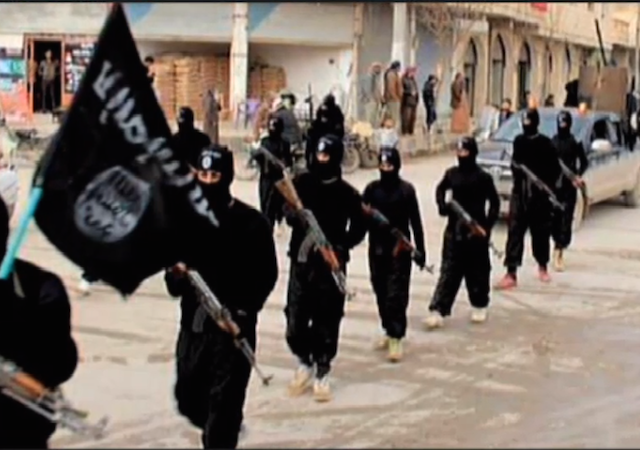
Lately, with the aid of the U.S. strikes, the Islamic State has suffered a number of losses in Iraq, where it is fighting government forces, peshmerga and Shiite militias aided by Iran and the Lebanese Hezbollah group. Last week, Iraqi forces recaptured the town of Jurf al-Sakher. ISIS also lost Rabia, Mahmoudiyah and Zumar, a string of towns near the Syrian border, last month. Besieged Iraqi troops have also managed to maintain control of Iraq's largest oil refinery outside the town of Beiji north of Baghdad, despite numerous attempts by the Islamic State group to capture it. At the same time, some have warned the U.S. operation is insufficient. In particular, there have been calls to send troops to the western Anbar province, where extremists have been slaughtering men, women and children. A senior military official said one of the operations centers being set up by the U.S. will be in Anbar Province, and that it is likely that the bulk of the additional troops will be in Iraq by the end of the year. ... The money will also go toward “replenishing or replacing munitions expended while conducting air strikes against ISIL, including from Air force and Navy platforms” as well as “financing operations and maintenance costs for air, ground and naval operations, including: flying hours; ship steaming days; and fuel, supplies and repair parts,” according to the White House.
The elephant in the room, of course, is this past week's elections, which many believe served as a mandate against President Obama's policies at home and abroad. The media has already begun to hint at trouble brewing for this new mission and its funding.