


Image 01 Image 03

Author: David Gerstman

Profile photo

David Gerstman

David Gerstman blogged as Soccer Dad from 2003 to 2010. Formerly a computer programmer, he is now a blogger for The Israel Project's The Tower blog.

Please see Mandy for more coverage of the crisis here. As Brian and Neo have previously posted, during the 2012 campaign Mitt Romney was mocked by President Obama and his cheerleaders for highlighting the Russian threat to American interests. Romney wasn't the first Republican mocked for suggesting that Obama wasn't ready or willing to stand up to Russia's leader. In 2008, vice presidential candidate, Sarah Palin warned of Russian troops invading the Ukraine.
In October 2008, after Russia's invasion of neighboring Georgia emerged as a foreign policy flashpoint in the homestretch of a heated campaign, Palin told an audience in Nevada, "After the Russian army invaded the nation of Georgia, Senator Obama's reaction was one of indecision and moral equivalence, the kind of response that would only encourage Russia's Putin to invade Ukraine next." Her prediction was derided by Foreign Policy magazine  as "strange" and "extremely far-fetched," but Palin, frequent media antagonist that she is, couldn't resist crowing about how events have played out.
Twitchy, it seems, never forgets. (In this case aided by Jammie Wearing Fool.) Gov. Palin is enjoying the vindication on Facebook.
Yes, I could see this one from Alaska. I'm usually not one to Told-Ya-So, but I did, despite my accurate prediction being derided as “an extremely far-fetched scenario” by the “high-brow” Foreign Policy magazine.
Twitchy (again) notes that the editor in question is digging deeper.
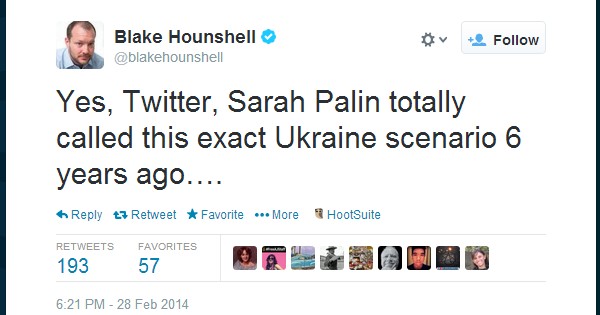
Hounshell_Palin_2014-03-02_064752

Earning himself an appropriate rebuke.

According to an article last month in the New York Times Iran is facing a major water crisis.

Iran is facing a water shortage potentially so serious that officials are making contingency plans for rationing in the greater Tehran area, home to 22 million, and other major cities around the country. President Hassan Rouhani has identified water as a national security issue, and in public speeches in areas struck hardest by the shortage he is promising to “bring the water back.”

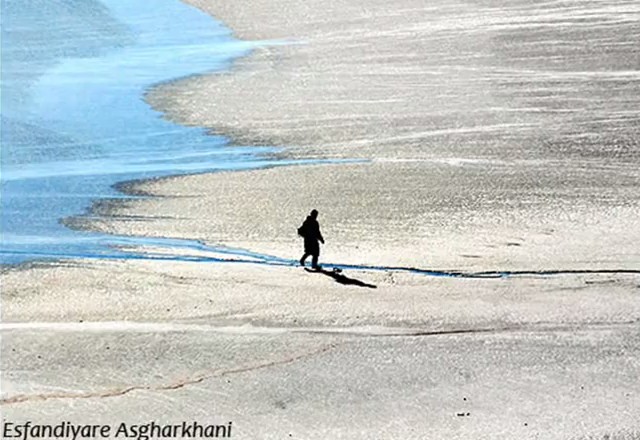
Experts cite climate change, wasteful irrigation practices and the depletion of groundwater supplies as leading factors in the growing water shortage. In the case of Lake Urmia, they add the completion of a series of dams that choked off a major supply of fresh water flowing from the mountains that tower on either side of the lake.

According to a recent op-ed in the New York Times, Iran didn't always have a water problem.

That cooperation began in 1962, after a severe earthquake in the Qazvin region of Iran killed more than 12,000 people. The earthquake collapsed a chain of wells that engineers had drilled in a qanat, or tunnel, style. Hundreds of thousands were at risk from lack of drinking water. Israel flew in teams of drillers. New water supplies were identified, and a series of artesian wells were drilled. The drilling was such a success that Israel’s water engineering company, today a private enterprise, was hired to identify and gain access to underground resources elsewhere in Iran.

Beginning in 1968, a desalination company owned by the Israeli government built dozens of plants in Iran. These are now aging, while Israel continues to innovate: On its Mediterranean coast, it recently opened an immense, energy-efficient desalination plant. More than half of Israel’s drinking water — purer, cleaner and less salty than natural sources — now comes from seawater.

Recently, Joshua Muravchik wrote Why the Left Should Stop Carping and Love the Jewish State, Again, at The Tower Magazine. In one paragraph he presents the gist of his argument.
Moreover, when viewed in the light of the core values of the Left—and, indeed, much of the contemporary Right—Israel actually comes off remarkably well; often much better than its most violent critics. These values are summed up by the great slogan of the French Revolution: “liberté, egalité, fraternité,” “liberty, equality, fraternity.” Israel’s record with respect to these core values ranks among the best in the world, while that of its principal enemies, the Arab nations, is dismal. Indeed, Israel’s record is in some cases better even than its European and other Western critics. Because this record is often obscured in the angry polemics against Israeli policies toward the Palestinians, it is worth examining it in depth.
One thing Muravchik mentions is the record of Israel's Arab enemies. It's indeed something worth looking into. However there's also the record of Iran, Israel's major non-Arab enemy that's worth examining. The liberal (or leftist) world has made a cause of reaching out to Iran. In doing so the Left ignores the way Iran violates many of its cherished values. I'd like to look at a few of these issues.

Minority Rights

Contrary to the impression presented by Iran's leadership, Iran has a huge minority population, including Kurds, Azeris, Balochs and Arabs. According to this list, minorities make up at least 40% of Iran's population. (I recently attended a lecture that put the figure at 50%.) What rights do minorities in Iran have? In last year's election, then-candidate, Hassan Rouhani promised greater freedom for Iranian minorities.

Previously we noted that the New York Times has a tendency to play up the successes of the BDS movement and to play down the true nature of the BDS movement. The New York Times has since carried two more articles about BDS; one in the news section and one op-ed. Surprisingly, the opinion article took a critical look at BDS. Unfortunately the news story was consistent with previous New York Times coverage of the issue. In the news section, Jerusalem bureau chief, Jodi Rudoren wrote West Bank Boycott: A Political Act or Prejudice? For the most part Rudoren treats the issue "evenhandedly," giving each side equal time and not judging either side. In the course of the reporting Rudoren interviews BDS activist Omar Barghouti.
“He can say anything he wishes, but immoral? Resistance to his immoral policies can never be immoral,” Mr. Barghouti said of Mr. Netanyahu. “The litmus test is are you boycotting a group of people based on their identity, or are you boycotting something — an act, a company, a business — that you disagree with. “We have three reasons,” Mr. Barghouti said, citing the movement’s goals of ending the occupation; ensuring equality for Palestinian citizens of Israel; and promoting the right of return for Palestinian refugees. “End the three reasons and we won’t boycott.”
Barghouti, who got a degree from Tel Aviv University is a pretty good example of equality of Israel's minorities. That degree also makes Barghouti a hypocrites as his boycott would affect Tel Aviv University too. Rudoren ignores these inconsistencies. She also remains silent about Barghouti's demand for the right of return. Everyone knows that the point of that "right" is the destruction of Israel. In fact, Barghouti's claim confirms that the  the goal of the BDS movement is an assault on Israel's right to exist is correct. Rudoren doesn't appear to grasp this. Oddly, it is columnist Roger Cohen who got things right about BDS. In The B.D.S. Threat, Cohen writes:

Professor Jacobson made a very good point last week:
The BDS movement presents little real threat to Israel currently, while the European governments do present a potential threat, but it is a diplomatic, not boycott, threat.  Kerry, and the boycott movement, conflate the two.
The problem is that despite the fact that there's no evidence that the BDS movement is gaining mainstream acceptance there are many who pretend that it has. Let's look at the New York Times coverage of some recent BDS activity. Last May the paper reported, Stephen Hawking Joins Boycott Against Israel:
The academic and cultural boycott, organized by international activists to protest Israel’s policies toward the Palestinians, is a heated and contentious issue; having Dr. Hawking join it is likely to help the anti-Israel campaigners significantly.
There are two items of note. The first is that the BDS movement is described in terms of being a "protest" against "Israel’s policies toward the Palestinians." It is not described as a movement to delegitimize Israel. The second is the assertion that Hawking's action "is likely to help the anti-Israel campaigners significantly." This is a judgment, but it is also somewhat quantifiable. Will subsequent reporting use similar standards? The article later noted that the Oxford student union overwhelmingly voted against an academic boycott of Israel. Later that month when Alicia Keys announced that she would defy the anti-Israel activists two months later, the New York Times reported:

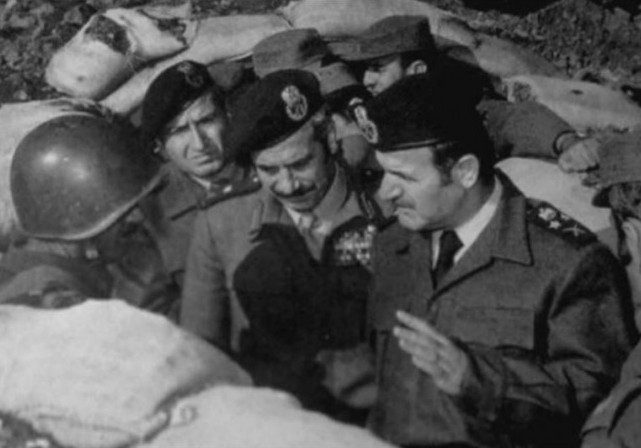
Thirty two years ago yesterday, February 2, 1982, Syrian President Bashar Assad's father, Hafez, began an assault on the city of Hama to put down a Muslim Brotherhood revolt against his regime. Two years ago NPR recounted:
The facts of that event are well-known, but the photographic evidence has been scant. Then, Syria's branch of the Muslim Brotherhood led an uprising centered in Hama, a central city of around 400,000. In response, President Hafez Assad, the father of the current president, ordered 12,000 troops to besiege the city. That force was led by Hafez Assad's brother Rifaat. He supervised the shelling that reduced parts of Hama to rubble. Those not killed in the tank and air assault were rounded up. Those not executed were jailed for years. To this day, the death toll is in dispute and is at best an estimate. Human rights groups, which were not present during the slaughter, have put the toll at around 10,000 dead or more. The Muslim Brotherhood claims 40,000 died in Hama, with 100,000 expelled and 15,000 who disappeared. The number of missing has never been acknowledged by the Syrian leadership.
As we know the lessons of the father have been well learned by the son. Kill enough people and no one will make you pay a price. Somehow the UN and Secretary of State John Kerry thought that they could get some sort of agreement to stop the killing in Syria. The latest round of talks ended on Friday, apparently in failure.
Secretary of State John Kerry and Foreign Minister Sergey V. Lavrov of Russia raised expectations in January at a joint news conference in Paris that a way would be found to open humanitarian aid corridors and possibly establish local cease-fires in Aleppo and other cities and towns. But to the dismay of the United Nations and other humanitarian organizations, even those basic steps proved elusive.

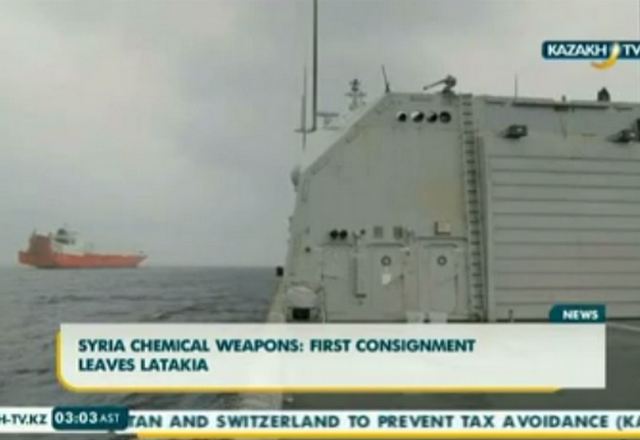
You might remember that Secretary of State John Kerry was quick to praise President Bashar al-Assad of Syria for completing the job of destroying all chemical weapons facilities in record time. According to the deal worked out in September with Assad's protecter, Russia, Syria was to rid itself of all of its chemical weapon compounds and production facilities. The first part of that obligation was to neutralize all of the factories so that they could no longer produce chemical weapons. Syria reportedly allowed that task to be completed on time.
Syria has destroyed its declared chemical-weapons production facilities, international inspectors said Thursday, marking a major step in the complex task of ridding the country of the weapons of mass destruction. The declaration came a day before a Nov. 1 deadline as the team overseen by the inspectors hewed to an ambitious schedule for destroying Syria’s entire chemical arsenal by the middle of next year — a far more rapid process than comparable efforts in other countries and one that must be implemented in the middle of a civil war.
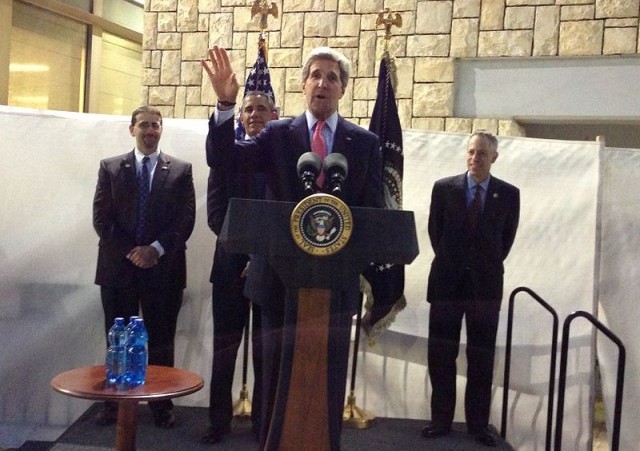
A week later, Kerry publicly praised Assad.

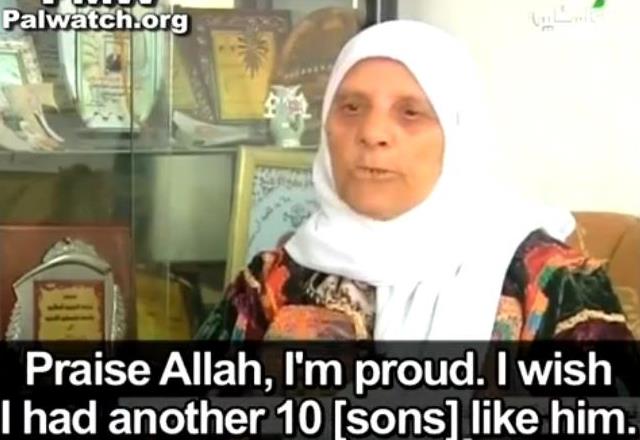
On American TV, a show called "Lovers' Tales," would likely be a romantic comedy. On Ma'an, the independent Palestinian television network, it is a weekly show interviewing freed prisoners. This week Palestinian Media Watch reports on the interview of one Issa Abd Rabbo.
Until his release, Issa Abd Rabbo was serving two life sentences for killing two Israeli university students, Ron Levi and Revital Seri, who were hiking south of Jerusalem on Oct. 22, 1984. At gun point he tied them up, put bags over their heads and then shot and murdered both. Abbas' "hero" has now given an interview to the independent Palestinian news agency Ma'an on its weekly TV program Lovers' Tales, which interviews released prisoners. There he calmly describes how he initiated the killing, spotted the two hiking university students and waited until they sat down to rest under a tree. He then recounts how he tied them up and murdered them in cold blood.
Here's the clip. Note how he betrays absolutely no remorse.

The Israeli public historically doesn't like when Israeli Prime Ministers feud with American Presidents, and take it out on the Israeli Prime Minister. It previously happened with Netanyahu and President Clinton in 1999 and earlier with Yitzchak Shamir and President George H. W. Bush. In the months before an Israeli election both Prime Ministers ran afoul of the American administration and lost the subsequent elections. There have been two high-profile clashes between Obama and Netanyahu of the sort that previously would have landed an Israeli Prime Minister in trouble back home.

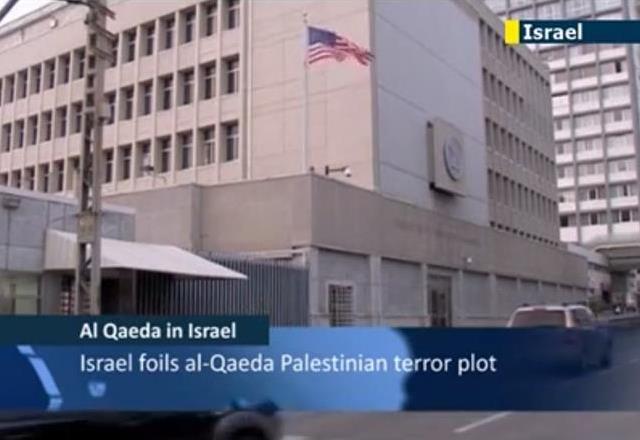
It was reported yesterday that Israel's internal security agency, the Shin Bet broke up an al Qaeda cell operating in Jerusalem. According to the report, three men in Jerusalem were recruited by an al Qaeda operative in Gaza to carry out three attacks: targeting the Jerusalem-Maale Adumim bus line, the Jerusalem convention center and the American embassy in Tel Aviv. (Last year, in an apparently unrelated case, Israel arrested an Iranian national photographing the embassy.) The Jerusalem Post notes:
The Shin Bet (Israel Security Agency) said an al-Qaida operative in Gaza, named as Ariv al-Sham, recruited the men separately as three independent terrorist cells. Senior Shin Bet sources said they believed Sham received his orders directly from the head of al-Qaida, Ayman al-Zawahiri. Using Skype and Facebook, Sham was able to recruit Iyad Khalil Abu-Sara, 23, of Ras Hamis of east Jerusalem, who has an Israeli ID card. During questioning, Abu-Sara, who was arrested on December 25, admitted to volunteering to carry out a “sacrifice attack” on an Israeli bus traveling between Jerusalem and Ma’aleh Adumim. In the planned attack, terrorists would shoot out the bus’s tires, causing it to overturn, before gunning down passengers at close range and firing on emergency responders.
One of them was planning to arrange to bring foreign terrorists to Israel posing as Russian tourists to aid in the execution of his plans. The report in USA Today explained why this discovery is a big deal:

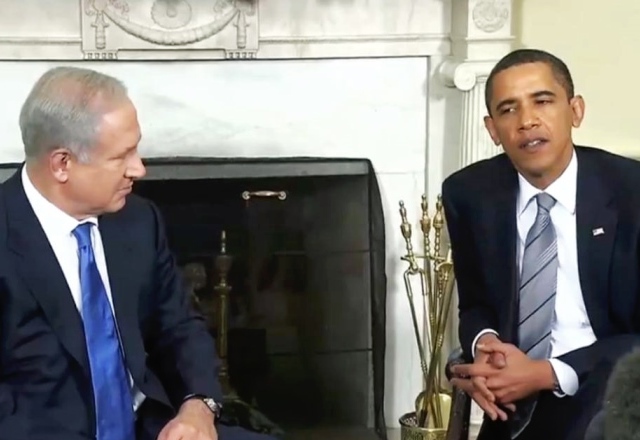
According to numerous press reports, the Palestinians have refused any meaningful concessions in the John Kerry-led peace talks.  No compromise on recognizing Israel as a Jewish state, on refugees, on borders, on security arrangements, on anything meaningful.  Instead, they are planning a diplomatic intifada to try to isolate Israel when the talks break down. But, the Palestinians are happy to pocket the dozens of convicted killers released as part of the inducement to get them the negotiating table. More important, they make their uncompromising positions as the baseline for future negotiations. This tactic of pocketing concessions while conceding nothing has a recent history. In May 2011, Israeli Prime Minister Benjamin Netanyahu gave Barack Obama a now famous talking-to in front of the cameras about the Middle East and the peace process: Columnist Jeffrey Goldberg would describe the incident like this:
It was an extraordinary scene: President Barack Obama, sitting impassively in the Oval Office in May as Israeli Prime Minister Benjamin Netanyahu lectured him, at considerable length and at times condescendingly, on Jewish history, Arab perfidy and the existential challenges facing his country.

I never expected Ariel Sharon to be treated fairly by the mainstream media. I'd like to reiterate one point made by Prof. Jacobson in his post memorializing Sharon: Sharon's visit to the Temple Mount was not the cause of the so-called Second Intifada. The New York Times obituary of Ariel Sharon gets it wrong:
Given how he had crushed the Palestinian guerrilla infrastructure in Gaza in the early 1970s, there was logic to his election. But there was a paradox, too. It was Mr. Sharon’s visit, in September 2000, accompanied by hundreds of Israeli police officers, to the holy site in Jerusalem known to Jews as the Temple Mount and to Muslims as the Noble Sanctuary, that helped set off the riots that became the second Palestinian uprising.
Similarly, the Washington Post's obituary: