


Image 01 Image 03

Author: David Gerstman

Profile photo

David Gerstman

David Gerstman blogged as Soccer Dad from 2003 to 2010. Formerly a computer programmer, he is now a blogger for The Israel Project's The Tower blog.
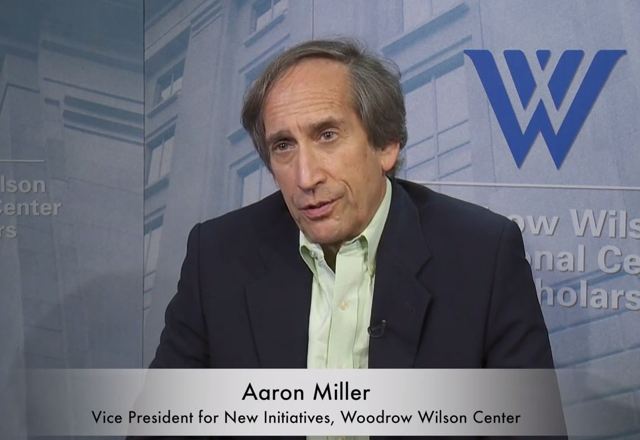
The Los Angeles Times just published The Mideast peace gap: Why Kerry has failed by Aaron David Miller. Miller, a long time peace processor (he served under both Presidents George H. W. Bush and BillClinton) nails the essential problem with the Kerry's peace process.
Simply put, the maximum that Israeli Prime Minister Benjamin Netanyahu is prepared to give on the core issues that drive the Israeli-Palestinian conflict can't be aligned, let alone reconciled, with the minimum that Palestinian Authority President Mahmoud Abbas is prepared to accept. You want to know why every effort in the last decade has failed? That's why.
If Miller had left it at that he would have been correct. Obvious. But correct. The problem with the op-ed is that he continued. For example:
The idea that Netanyahu is ready to pay the price and could be persuaded to do so was a fundamental misunderstanding of the man and his times. Now the longest continuously serving prime minister in Israel's history, Bibi never envisioned himself as the midwife or father of a Palestinian state. That's not who he is. Ideology, family, politics and his fears of the Arabs all drive him in a different direction. His self-image is as the Israeli leader who is to lead Israel out of the shadow of the Iranian nuclear bomb and to guide it through the challenges of a dangerously broken, angry and dysfunctional Arab world. And he reflects the mood of an Israeli public that sees almost no reason or urgency — regardless of U.S. doom-and-gloom threats of violence, third intifadas, apartheid state or demography — to grapple with the problem. Governing is about choosing. And for now, Netanyahu has made his choice.
This is not a serious appraisal of Netanyahu, but psychoanalysis by an unlicensed psychiatrist. Instead of looking at Netanyahu's record, Miller strung together a series of cliches that every right thinking peace processor would believe. I would agree that Netanyahu "never envisioned himself as the midwife or father of a Palestinian state." But he also understands that as a leader of a democratic country he is bound by the obligations of his predecessors. Netanyahu would not have been elected in 1996 if the peace process had been successful. He was elected in the wake of ten days of terror in February and March of 1996. Though he was elected because of his critique of the peace process, he continued it. Backed by assurances of the Clinton administration (later betrayed), Netanyahu withdrew Israel from most of Hebron, and as Charles Krauthammer pointed out, "With Hebron, Netanyahu managed to bring most of the nationalist camp of Israel to recognize that Oslo is a fact." Has Miller, who now demeans Netanyahu at a distance, ever done as much for the peace process?
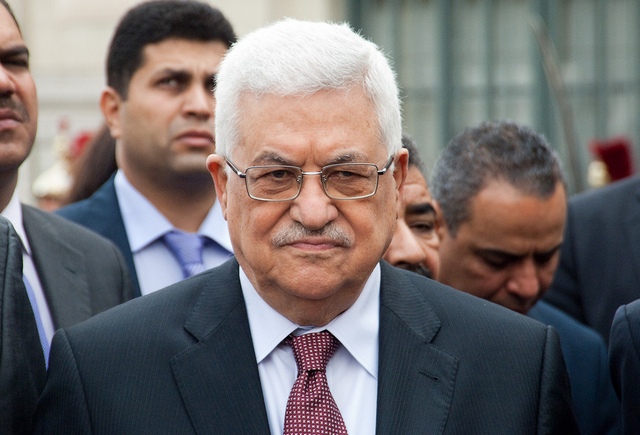
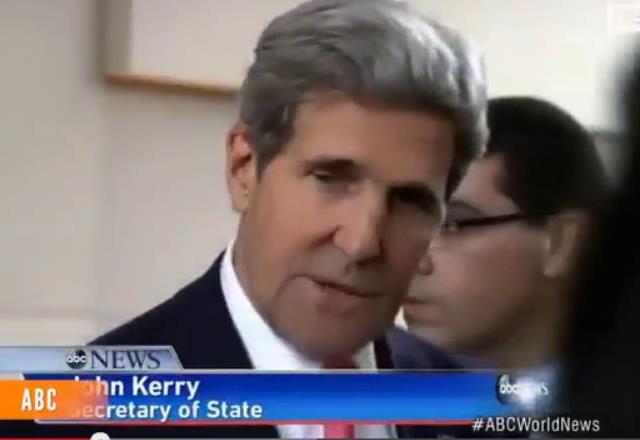
Why is it so hard to achieve peace between Israel and the Palestinians? Look at the final scorecard of the latest round of Middle East peace talks. Israel allowed three groups of prisoners - a total of 78 - to go free in exchange for talks. These prisoners were murderers. When they went to their homes their actions were celebrated. Put aside why Israel didn't release the final group of prisoners. Put aside the spectacle of a society that honors killers and what that implies for peaceful coexistence. Israel paid a price for negotiations that led nowhere. This isn't the first time either. In 2010, the administration pressured Israel to agree to a "settlement" freeze in order to coax Palestinian Authority President Mahmoud Abbas to negotiate. Abbas dragged his heels and in the last few weeks of the freeze. When the Palestinians finally started to negotiate the freeze was set to expire. The United States tried to encourage Israel to extend the freeze but Israel refused and the Palestinians walked away from the negotiations at the end of the freeze. Earlier too, Israel paid a price just to get the Palestinians to negotiate. A commenter on an earlier post of mine made a great point:

It is hard to believe that it has been three months since Barry Rubin passed away. With all going on in the world, and especially in the Middle East, Barry's absence is pronounced as there are few who saw things as clearly as he did. Barry's essays and columns are not disposable, like those of some other columnists and analysts. He wasn't looking for some pithy phrase to describe a complex problem or looking for new evidence to support his ideology. He looked at events and facts and drew his conclusions. Consequently something Barry wrote could still be relevant or true, months or years later. Two recent stories illustrate this point. Barry had been a critic of the Obama administration's handling of Syria's civil war. The Times of Israel last week featured an interview with a Syrian dissident Kamal Al-Labwani, Israel is our last hope, indicates Syrian dissident. The point referred to in the headline is Labwani's belief that Israel could win over the moderate rebels in Syria and much of the population if it helped protect civilians.
“If you only helped us intercept low-flying [regime] helicopters by providing a limited amount of antiaircraft weapons, with American approval, it would have a huge effect, morally and militarily,” Labwani said. “There are a million ways such weapons can be given to recognized people [in the opposition]. These weapons have ‘fingerprints’ and deactivation modes.” Alternatively, he said, Israel could declare a no-fly zone in southern Syria, as NATO did in Libya in its bid to topple Muammar Gaddafi. Such a move would immediately cause a large segment of Syrian society to support peace and normalization with Israel.
But there's more to the interview. Labwani is not currently among the Western backed rebels. He explained why:
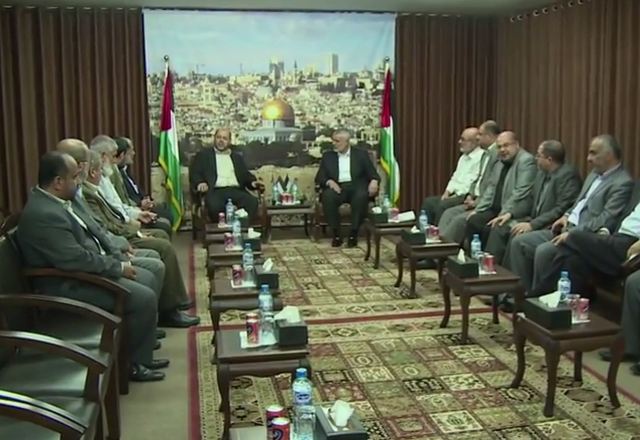
In the wake of Fatah's embrace of Hamas earlier this week there has been a very interesting reaction. Actually, the reaction has been interesting because it's been mostly non-existent. Though the New York Times and Washington Post have reported on Fatah's betrayal of the American sponsored peace process, neither has published an angry editorial denouncing Palestinian President Mahmoud Abbas for endangering or destroying the peace process. Few news events shatter perceptions more clearly than when a supposed moderate embraces extremism. And even given the fraught history of past Fatah-Hamas agreements the symbolism here is unmistakable. A week before Secretary of State John Kerry hoped to have a framework agreement, the Palestinian Authority came to an agreement with the terrorist Hamas organization and not with Israel. Let's do a few comparisons. Exhibit A: New York Times  In March 2010, when Vice President Joe Biden was visiting Israel, Israel's Interior Ministry announced plans to build houses in Ramat Shlomo. Even though Ramat Shlomo is part of Jerusalem and a part of Israel's capital that everyone expects will be part of Israel in any final agreement with the Palestinians, the announcement precipitated a diplomatic crisis between Israel and the United States. An editorial in the New York Times two days later stated about the announcement, "And it is hard to see the timing as anything but a slap in the face to Washington." In 2010, the Israeli announcement didn't and wouldn't change anything about the Middle East materially and yet the New York Times criticized the Israeli action. That Fatah-Hamas agreement, on the other hand is a game-changer. Israel dropped its objections to the PLO when the PLO renounced terror. Of course, under Arafat that declaration was meaningless as he encouraged terror against Israel even after Oslo. Abbas was supposed to be the peaceful one. But now he's embraced a terrorist organization.

Fatah and Hamas have reached an agreement to put their differences behind them and form a unity government. The New York Times reports:
The two groups — the Palestine Liberation Organization, which runs the Palestinian Authority in the West Bank, and Hamas, the militant Islamist group that dominates the Gaza Strip — have reached similar accords before that were never carried out. But the latest deal comes as the fragile American-brokered peace efforts between the Palestinians and Israel are approaching an April 29 deadline without a resolution in sight. People familiar with the discussions have said the Israeli and Palestinian sides were far apart even on how to extend the talks past the deadline.
The Times article ends in typical understatement.
Analysts remained skeptical about whether the Palestinian reconciliation efforts would lead to a tangible change on the ground, because neither of the factions has shown interest in genuine power-sharing in the past, and they have deep differences over how to deal with Israel, which Hamas does not recognize. Even so, some experts said that the latest effort at reconciliation appeared more serious than past attempts, because both factions are under growing pressure. Gaza under Hamas has been severely weakened by an Egyptian crackdown on the smuggling tunnels along the Gaza-Egypt border and an Israeli blockade. And Mr. Abbas, for his part, has faced growing criticism from West Bank residents about the negotiations with Israel and his own legitimacy, with Palestinian elections long overdue. He has threatened to dissolve the Palestinian Authority, which exercises limited self-rule in the West Bank, if the talks with Israel end in failure.
No Hamas does not recognize Israel. It is also a genocidal terrorist organization devoted to destroying Israel. Note terror is not mentioned.
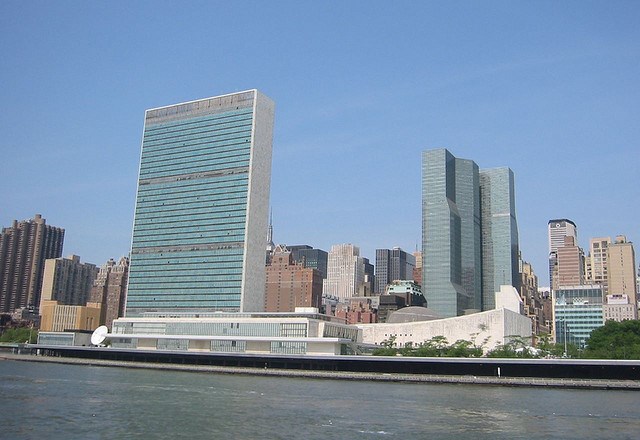
Is there anything that the U.N. does right? I noticed a story earlier this week, Apology for UN refusal to stop Rwanda genocide. The context for the apology is the twentieth anniversary of the Rwandan genocide.
Former New Zealand ambassador Colin Keating issued the rare apology during a council meeting to commemorate the 20th anniversary of the genocide and examine what has been done since to prevent new genocides. The open session elicited praise for the U.N.'s stepped-up commitment to put human rights at the center of its work but widespread criticism of its failure to prevent ongoing atrocities in Syria, Central African Republic and South Sudan.
Keating was the President of the Security Council twenty years ago. Of course, another U.N. official was in charge of peacekeeping operations at the time one million Rwandan's were killed. His name is Kofi Annan. Despite his failure to prevent the genocide he was promoted to Secretary General of the United Nations. (There is even a Kofi Annan Peacekeeping Training Centre in his native Ghama. It's as if he actually succeeded at his job. The job he's good at is funding vanity projects.) To be sure Annan apologized for his failure ten years ago. Two months ago, U.N. diplomat, Lakhdar Brahimi also apologized:
Last month, Jeffrey Goldberg published an interview with President Barack Obama, ahead of Israeli Prime Minster Benjamin Netanyahu's trip to the United States to attend the AIPAC conference. The President wasn't at all friendly in the interview, warning (in Goldberg's words) that "time is running out." Roughly four weeks later, Mahmoud Abbas, president of the Palestinian Authority refused to continue negotiations with Israel. Is there a connection between the two? Put a different way, in the words of Neo-Neocon Did Obama Sabotage Kerry on Peace Talks? The answer is "yes," and here's how. There are two points that Obama made in his interview worth recalling. Answering a question from Goldberg about Abbas, President Obama said:
We don’t know exactly what would happen. What we know is that it gets harder by the day. What we also know is that Israel has become more isolated internationally. We had to stand up in the Security Council in ways that 20 years ago would have involved far more European support, far more support from other parts of the world when it comes to Israel’s position. And that’s a reflection of a genuine sense on the part of a lot of countries out there that this issue continues to fester, is not getting resolved, and that nobody is willing to take the leap to bring it to closure.

Israeli homes built on land captured in the 1967 war is the perennial go-to blame game for Palestinians' hard line at negotiations.  But it's just a negotiating ploy as to which Western leaders are all to eager to engage. The other day, for example, David Weinberg wrote in Blame those Damn Settlements that removing the settlements would not alter threats to Israel or Muslim rejectionism of a Jewish national entity:

If it wasn't for the settlements, you see, the Palestinians undoubtedly would recognize Israel's right to exist as a Jewish state. Palestinian Authority President Mahmoud Abbas would formally forgo the so-called "right" of return for Palestinian refugees. Hamas and Fatah would bury the hatchet. U.S. Secretary of State John Kerry would win the Nobel Peace Prize, twice. And the boycott, divestment and sanctions movement would stop seeking to demonize and delegitimize Israel.

If it wasn't for the settlements, the Iranian Supreme Leader Ayatollah Ali Khamenei and President Hassan Rouhani would announce an end to Iranian nuclear enrichment activities and the dismantlement of all related nuclear facilities. The Iranians would also stop shipping missiles to the Islamic Jihad and Hamas.

After his litany, Weinberg, of course, acknowledged that he was being facetious and observes, "Settlements are an issue for negotiation, a solvable matter of dispute." It is easier to use settlements as an excuse for the lack of peace. Doing so, lets the Palestinians off the hook.  It assumes that Israel has a partner for peace.

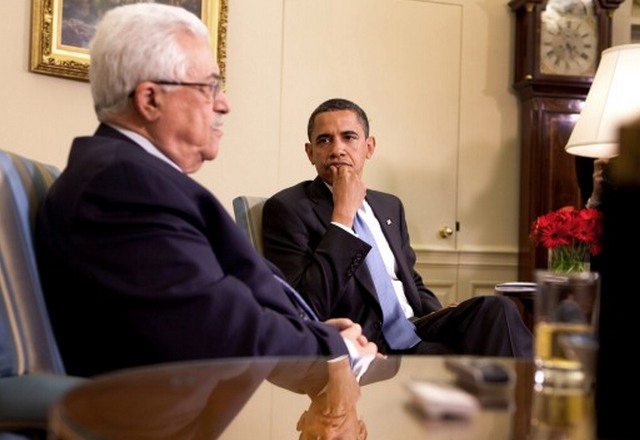
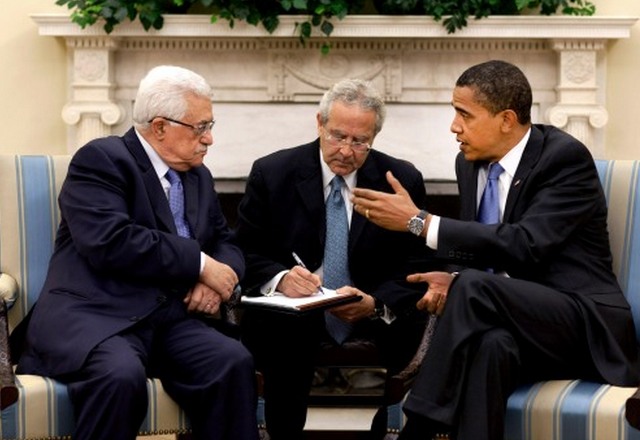
When he met with Palestinian President Mahmoud Abbas earlier this week, that's the approach that President Obama took. Obama said:

During the past year, three English speaking heads of state have spoken in Israel. Nearly a year ago, President Barack Obama addressed the people of Israel in the Jerusalem's International Convention Center. In January, Canadian Prime Minister Stephen Harper addressed the Knesset. This week British Prime Minister David Cameron did too. The contrasts between the President Obama's speech and those of Harper and Cameron are striking. First of all, President Obama chose to forego addressing the Knesset on his first state visit to Israel. According to Jay Carney, “The president will speak to all of the Israeli people in front of an audience of young Israelis who … have it within their hands the power to shape Israel’s future." In other words, President Obama doesn't like the direction Israel is taking (Israel held election two months earlier) and will seek to engage Israelis who may be more receptive to his message that Israel's elected leaders. Although the president was addressing university students, he refused to allow students from Ariel University attend his speech. To be sure, President Obama said many of the right things in his speech. He even acknowledged that Israeli efforts at making peace resulted instead in being "... faced terror and rockets." But these professions of sympathy come across as perfunctory.

The video embedded at the bottom of the post is of Dr. Massad Barhoum, the medical director of the Western Galilee Medical Center, one of three Israeli hospitals to treat Syrians wounded in that country's civil war. He tells of how his hospital was informed by the IDF that they would be receiving Syrian casualties. He gives the background of his hospital too. It is six miles from Lebanon and has come under rocket fire. It serves the 600,000 residents of the Galilee - Jews, Christians, Muslims and Druze - that make up the "tapestry" of the population in northern Israel. He also explains that there's an extra worry the Syrians have when they find themselves in Israel - that they are alone with no support system. Dr. Barhoum speaks with empathy of those patients who, all of a sudden, find themselves receiving help from a country they have been taught to hate. The whole talk is worth listening to. Dr. Barhoum speaks well and is direct but understated. But here are three quotes that stood out:
  • "Who are these wounded? These mysterious patients who travel in secret, the whole story is wrapped in melodrama, victims of war seeking medical salvation at the hands of their sworn enemies. Yet when they past through the gates of my hospital, the cease to be Syrians. Just as when we walk through the gates we cease to be Jews, Muslims, or, like me, an Arab Christian. They are patients, we are caregivers and nothing else matters."
  • "Arriving unconscious they awoke to a strange language and the sudden terrifying realization that they are in Israel. For every patient this fright, this mistrust is natural. They have been saved by the Israel they have been told to fear and hate. But I have seen this terror dissolve into trust, to appreciation and thanks for the Israeli doctors who saved their lives."
  • "... But still we help. Israel's decision to provide medical care to Syrians in their time of need is recognition of a shared humanity and compassion. That to us has no race, no ethnicity, and no borders."