

Image 01 Image 03

Saudi Arabia Tag

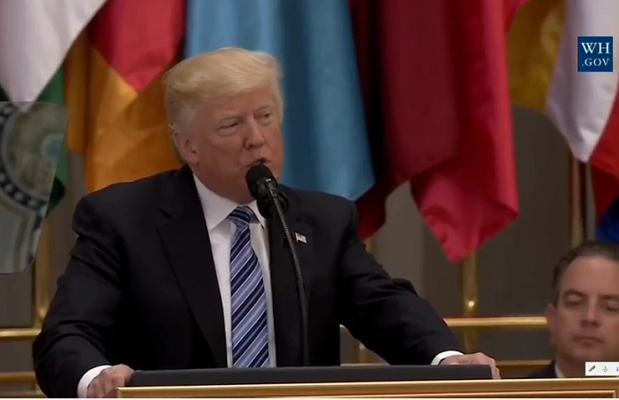
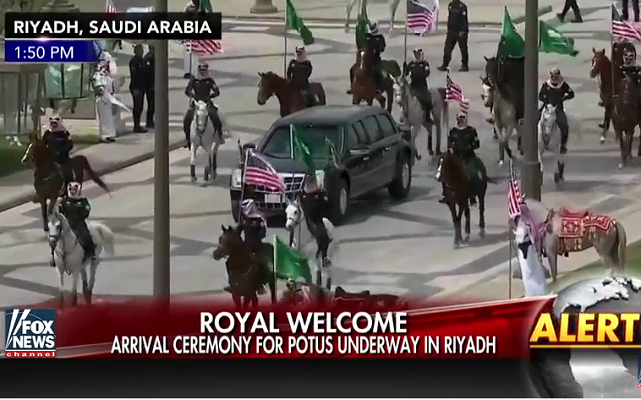
In Saudi Arabia for his first foreign trip as president, President Trump delivered a speech on Islamic extremism and the need for the world to unite against and eradicate it.  Trump urged the Muslim-majority countries to "take the lead in combating radicalization" and to expel Islamist extremists from their places of worship, communities, holy lands, and the planet. Some highlights from the full text of President Trump's speech.
"I stand before you as a representative of the American People, to deliver a message of friendship and hope. That is why I chose to make my first foreign visit a trip to the heart of the Muslim world, to the nation that serves as custodian of the two holiest sites in the Islamic Faith." "Our vision is one of peace, security, and prosperity—in this region, and in the world. Our goal is a coalition of nations who share the aim of stamping out extremism and providing our children a hopeful future that does honor to God."

The Arab world's most-watched TV network, MBC 1, will air a prime-time TV drama depicting life under ISIS. The 30-part series will debut during Ramadan. “Black Crows", "paints a picture of the Islamic State, also known as ISIS, as a brutal criminal organization run by corrupt and hypocritical leaders. But recruits are depicted as victims, and women who challenge the militants’ control are heroes," reports the New York Times.

Unfortunately, I am not kidding when I say that the UN elected Saudi Arabia to the Women's Rights Commission. It reminds me of when the UN elected Iran to the human rights council. Remember that? Saudi Arabia received its spot when the Economic and Social Council voted on new members for the women's rights commission, which wants to help promote equality for females. The commission's website states that females "suffer violence and discrimination" and remain "under-represented in political and economic decision-making processes." Females around the world also "lack decent access to basic education and face occupational segregation and gender wage gaps." Too many countries still deny females "access to basic education and health care." Gee, what country falls into most of these categories? Saudi Arabia!

I worked in National Security at Breitbart, which made me very grateful to live in America. Every day I covered stories describing actual oppression of females. I bet you anything those females would love to have the cost of their birth control as their only worry. Those marches made me ashamed of my sex since governments in other countries actually treat its female citizens like second class citizens. I will concentrate on three countries: Saudi Arabia, Iran, and India.

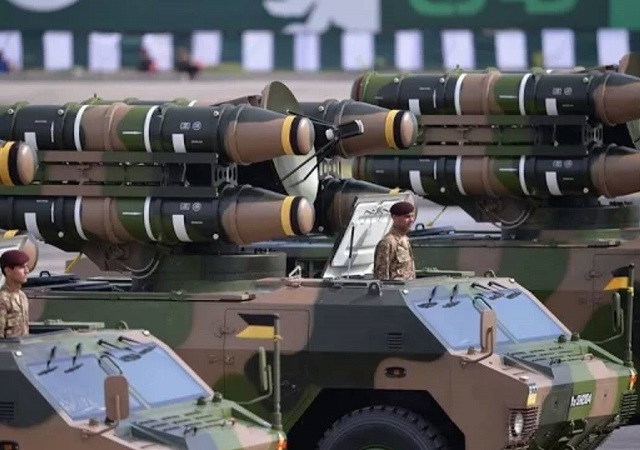
Saudi Arabia is pushing ahead with its plans of creating an international Islamic army. Saudi-led Islamic Military Alliance (IMA) comprises of 39 Sunni Muslim states including nuclear-armed Pakistan. According to a report published this week by the British newspaper Guardian, former Pakistan army chief Raheel Sharif has been tapped to become the first commander of this "Muslim Nato". Saudi-led Islamic army is not backed by Iran, which is busy building a rival Muslim block by financing and arming standing armies and terrorist militias in Shia-majority countries and regions. The declared aim of this military alliance is to fight terrorism. Ironically, its leading member states are direct sponsors of Jihadi terrorism across the world. Pakistan's military actively nurtures and sponsors Islamic terrorist groups operating against Hindu-majority India, along with its long-standing ties with Taliban in Afghanistan. Gulf Arab States and Turkey have supported and funded Islamic State (ISIS) at one time or another.

The Senate voted to override President Barack Obama's veto of a bill that allows families of 9/11 victims to sue Saudi Arabia, which means lawyers have started to move ahead with cases already pending in court:
James Kreindler, whose New York firm represents hundreds of victims’ families, said attorneys would soon file papers at the Second U.S. Circuit Court of Appeals in New York seeking to reinstate Saudi Arabia as a defendant in lawsuits filed shortly after the 2001 terrorist attacks and consolidated in the New York-based federal court. “If we haven’t done it by today, we’ll do it Monday,” Mr. Kreindler said in an interview.

Yesterday, I wrote about today's Senate vote expected to override Obama's veto and today they voted overwhelmingly to do just that. Fox News reports:
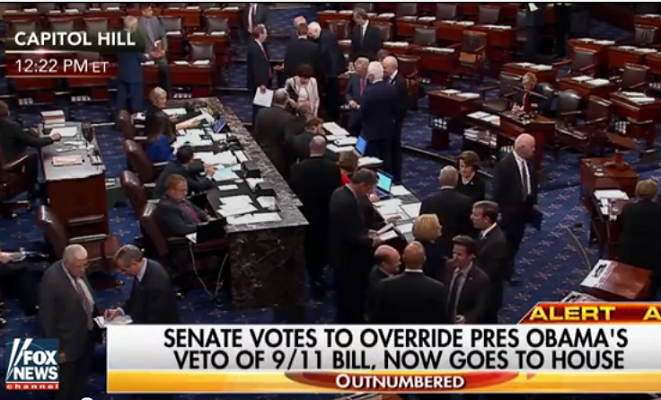
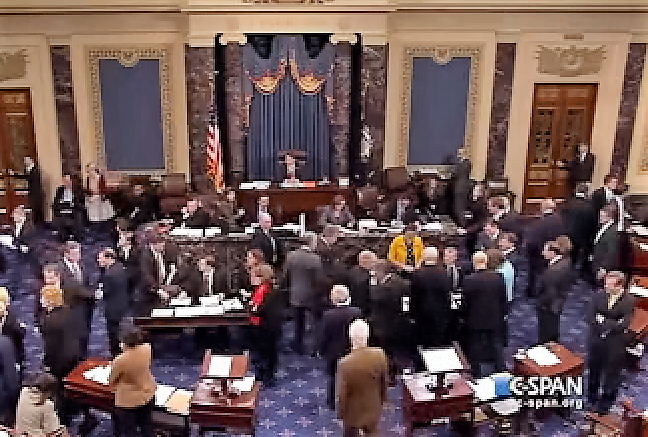
The Senate voted overwhelmingly Wednesday to overturn President Obama’s veto of a bill letting families of Sept. 11 victims sue the Saudi Arabian government, bringing Congress within reach of completing the first successful veto override of Obama’s presidency. The Senate voted 97-1 to reject the veto. The measure heads next to the House, where lawmakers will need to muster a two-thirds majority, as in the Senate, to override.

As Mary noted earlier this month, Obama's veto of the bill to allow 9/11 families to sue Saudi Arabia for its involvement is likely to be overridden by Congress.  The votes will occur this week:  in the Senate on Wednesday and in the House on Friday. ABC News reports:
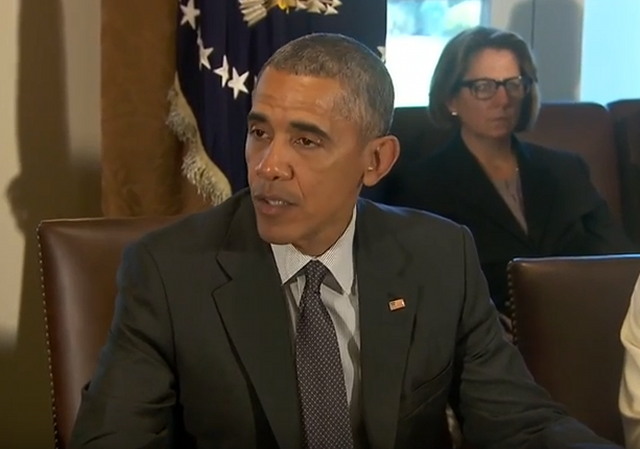
For the first time in President Obama’s tenure, the Senate is set to override his veto of a bill that would allow the families of 9/11 victims to sue Saudi Arabia in U.S. courts. The president vetoed the bill Friday, citing concerns that it could open the U.S. government to similar lawsuits.

The House of Representatives passed a bill allowing families of 9/11 victims to sue Saudi Arabia. The Senate drafted legislation in April. Saudi Arabia threatened economic retaliation if the U.S. passed this bill and the Obama Administration pressured both parties not to proceed with the bill, even though families and victims from 9/11 voiced their approval for the legislation.

The United Nations has shown they care more about money than children's rights as they removed Saudi Arabia from a list of countries who committed atrocities in Yemen. The kingdom threatened to pull money from numerous UN programs if they remained on the list. UN General Secretary Ban Ki-moon immediately gave into their demands and will remove Saudi pending a review. Not just human rights. This list only mentioned countries that violated CHILDREN'S rights. The UN put money above innocent children. The list claimed that "the Saudis' campaign against Houthi rebels in Yemen was blamed for causing 60% of child deaths in the conflict."

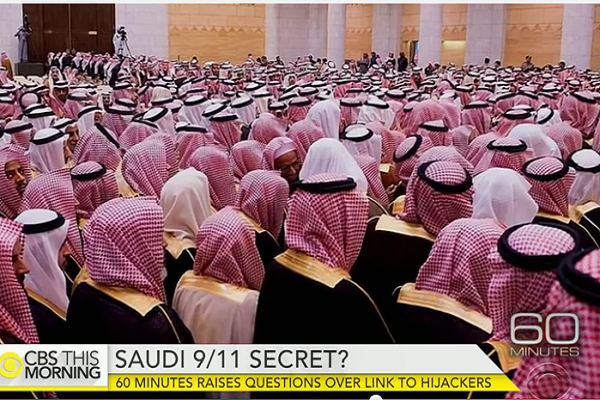
Last week, CBS aired a special report on the missing or redacted 28 pages of the 9/11 Commission's report that might implicate Saudi Arabia in the 9/11 attacks.  In the CBS report, former Senator and former Florida Governor Bob Graham (D-FL) restated his long-held view that these 28 pages should be declassified. From the transcript of the CBS report entitled "28 Pages":
. . . [T]he White House and intelligence officials are reviewing whether to declassify one of the country's most sensitive documents -- known as the "28 pages." They have to do with 9/11 and the possible existence of a Saudi support network for the hijackers while they were in the U.S. For 13 years, the 28 pages have been locked away in a secret vault. Only a small group of people have ever seen them. Tonight, you will hear from some of the people who have read them and believe, along with the families of 9/11 victims that they should be declassified. Bob Graham: I think it is implausible to believe that 19 people, most of whom didn't speak English, most of whom had never been in the United States before, many of whom didn't have a high school education-- could've carried out such a complicated task without some support from within the United States.
Graham, who has seen the 28 pages and has been trying to get the pages declassified since 2003, has to be careful about what he says, but he is confident that there is connection.

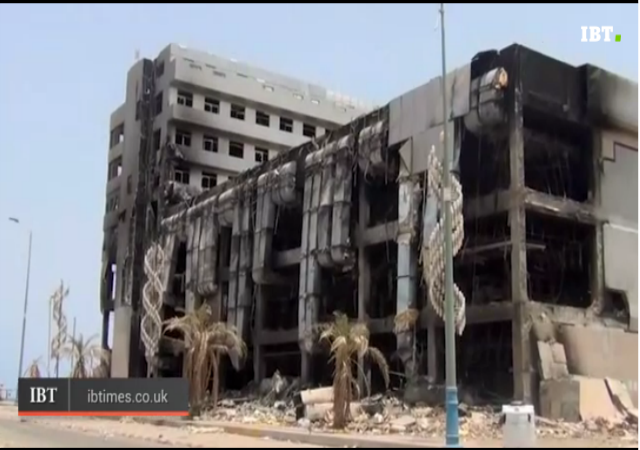
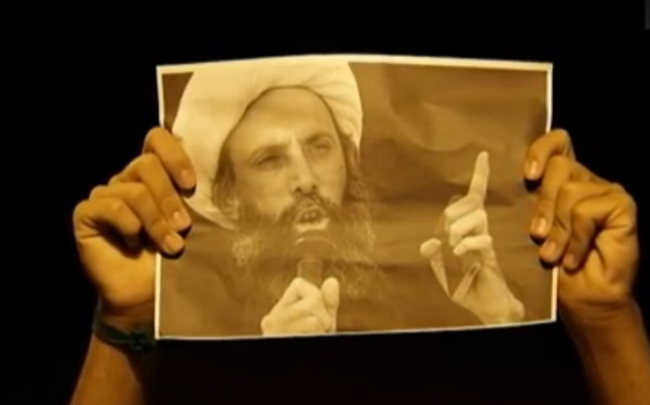
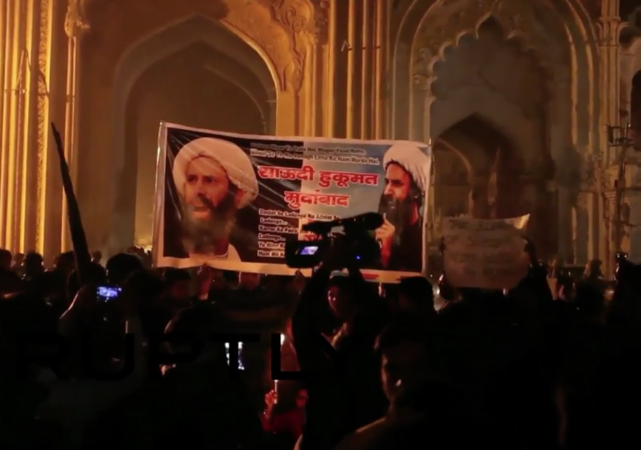
The fallout from the execution of prominent Shiite cleric Nimr al-Nimr in Saudi Arabia on Saturday will roil the Middle East region for some time to come. Below, I review the recent developments since our last posts (see here and here) and discuss some of the lessons to be learned from this latest episode in the unraveling of the Muslim Middle East.

Saudi Arabia Cuts Ties with Iran

As we reported, Saudi Arabia has broken diplomatic ties with Iran. On Sunday afternoon, the Saudi Foreign Minister, Adel al-Jubeir announced at a press conference that Iranian diplomats had 48 hours to leave the kingdom.

This is one of those incidents which both cannot be understood in isolation and has the real possibility of escalating. Saudi Arabia executed 47 people, including a prominent Shia cleric:
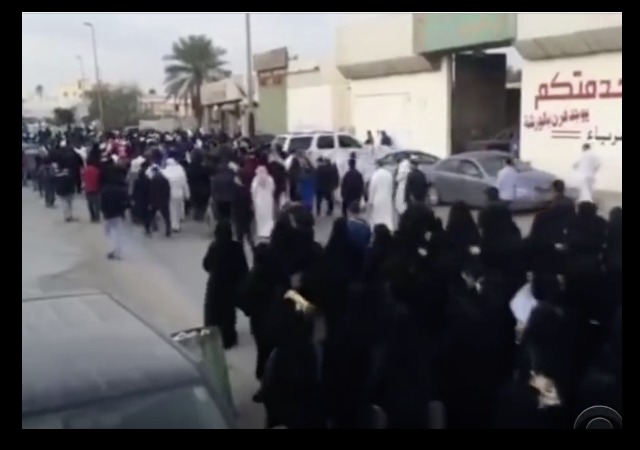
The Middle East braced for sectarian violence Saturday after Saudi Arabia said it had executed 47 prisoners, including a prominent Shiite cleric responsible for anti-government protests. There were warnings of a backlash against the ruling Al Saud family after Sheikh Nimr al-Nimr was named on list of prisoners carried by the state-run Saudi Press Agency. Al-Nimr was a central figure in protests that erupted in 2011 as part of the Arab Spring, and his execution may spark new unrest among the oil powerhouse's Shiite minority.
This was not just typical Saudi brutality, it also was a reaction to Iran's relentless use of local Shia communities throughout the Gulf States and indeed throughout the Middle East to foment trouble for local Sunnis. So the executions don't stand in isolation. The Iranian reaction was, typically, to set the mobs loose in Tehran: