Image 01 Image 03

Nicolas Maduro Tag

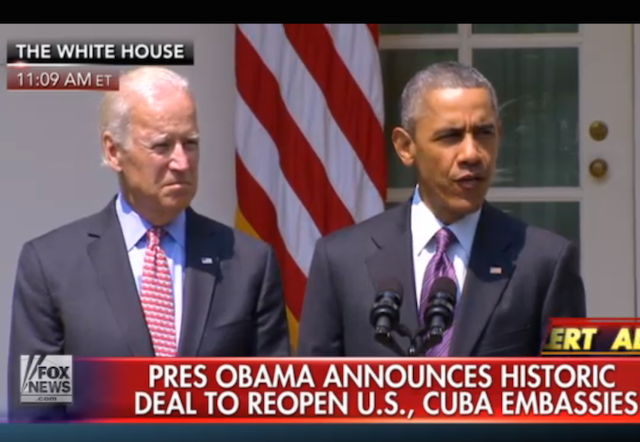
On October 14, 2016, Obama issued a "presidential policy directive" in which he laid out a multi-pronged approach "to promote engagement with the Cuban government and people, and make our opening to Cuba irreversible."  In this directive, Obama directs the Director of National Security to share intelligence with Cuba and to cooperate with Cuban intelligence. Members of Congress are concerned that U. S. intelligence will be shared by Cuba with Iran, particularly in light of Iran's recent assertion that it will "open a new chapter in relations with Cuba." The Washington Free Beacon reports:
Obama administration efforts to bolster the sharing of critical intelligence data with Cuba is likely to benefit Iran, which has been quietly bolstering its foothold in the country with the communist government’s approval, according to conversations with members of Congress and other sources familiar with the matter.

The economic crisis in Venezuela canaptly be described as a centralized control crisis, a crisis socialist and communist states know and for some reason insist on repeating.  Over and over.  We've seen the reports on shortages ranging from toilet paper to food, and rather than risk a revolution that would topple government, the Venezuelan government has decided that it will ease up on price controls on food and other essentials (like toilet paper). NPR, in October of last year, wrote about the problems with Venezuela's price controls and the firm grip the government had its citizens access to food.
For Caracas housewife Anny Valero, today is grocery day — whether she likes it or not. Here's why: It's Monday, and if Valero doesn't go now, she'll have to wait four more days to buy food. In Venezuela, government supermarkets sell price-controlled food, making them far cheaper than private stores. But Valero explains that people are allowed in state-run supermarkets just two days per week, based on their ID card numbers. The system is designed to prevent shoppers from buying more than they need and then reselling goods on the black market at a huge markup.

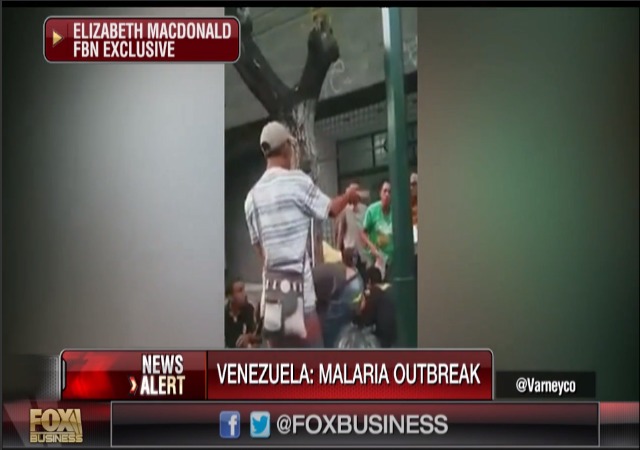
Not only has Venezuelan President Nicolas Madura's socialist policies starved people to death, but he has also brought back malaria. The New York Times has reported that desperate times have forced people to seek out gold in watery mines infested with mosquitos, which has led to the malaria resurgence because socialism ruined the economy and the country lacks medicine.

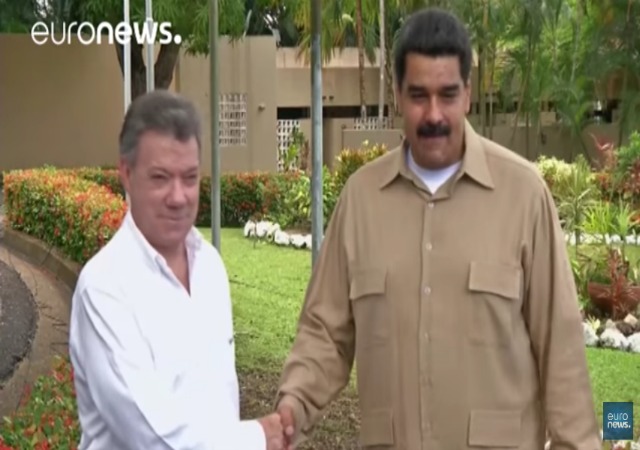
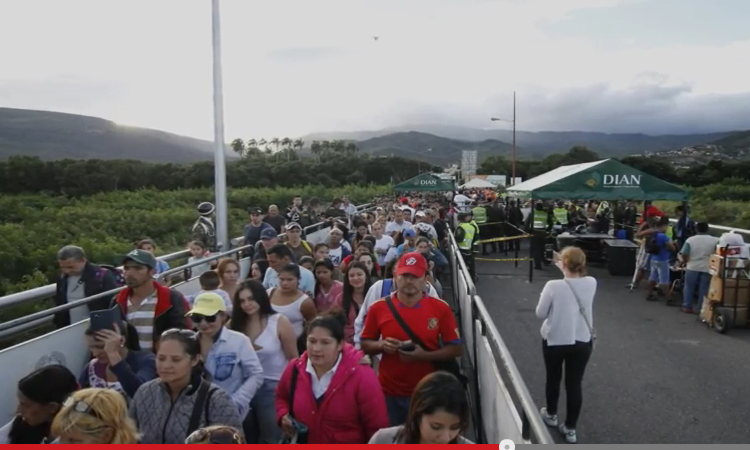
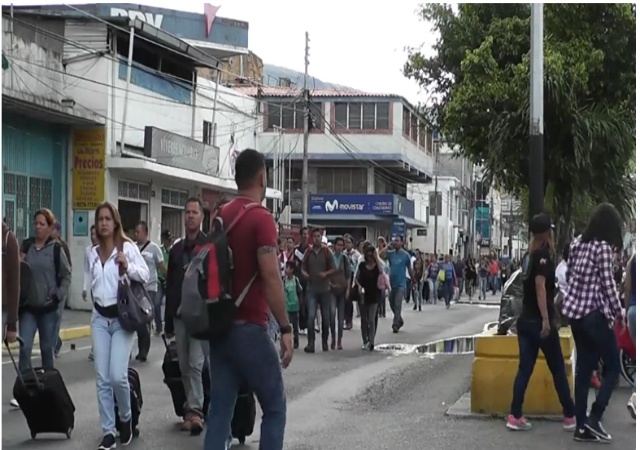
The Colombian and Venezuelan governments have agreed to partially open their border as Venezuelans need food and basic goods for survival. Venezuelan President Nicolas Maduro closed the border last year to prevent smuggling, but with his people literally starving to death due to his socialist policies, he had to change course.

Here at Li, we've been covering the failure of socialism unfolding in Venezuela.  Toilet paper, sugar, and food shortages have resulted in violence and thus far unsuccessful attempts to oust President Nicolas Maduro.  With the country's citizens tired, hungry, and angry, Maduro has landed on a "solution" that would make Pol Pot proud:  forced labor. CNN reports:
In a vaguely-worded decree, Venezuelan officials indicated that public and private sector employees could be forced to work in the country's fields for at least 60-day periods, which may be extended "if circumstances merit." . . . .  President Nicolas Maduro is using his executive powers to declare a state of economic emergency. By using a decree, he can legally circumvent Venezuela's opposition-led National Assembly -- the Congress -- which is staunchly against all of Maduro's actions.

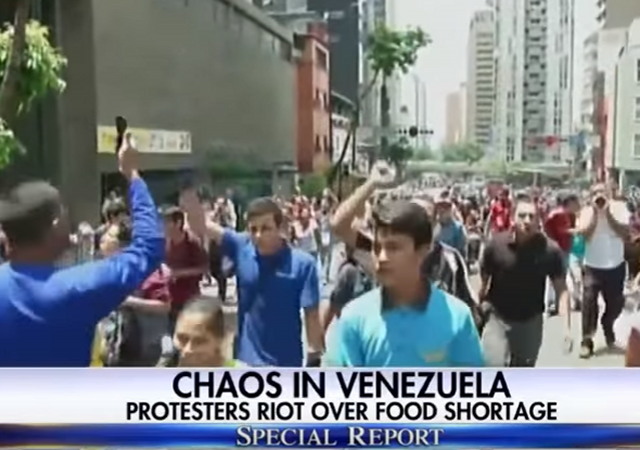
The biggest supporters of Venezuelan President Nicolás Maduro's programs have turned against him since they now suffer from the food shortages affecting the rest of the country. Party officials stressed to The London Times that Maduro's distribution system has "broken down and that conditions are ripe for civil war." He hoped the system would end the long lines "and black marketeers at state-subsidised supermarkets." Riots have exploded in these areas:
What is striking is that the riots — sometimes half a dozen a day in the capital — are in working-class slums far from the middle-class areas where support for the opposition has traditionally been strongest. The opposition, which controls congress, is trying to push through a referendum to remove Mr Maduro but that will take time and hungry people are more concerned about procuring food. To put an end to the vast queues and black marketeers the government recently started distributing food directly to local community councils. In an area of Antímano, one of the largest slums, a council spokeswoman said that the first delivery was supposed to arrive in April but only half of it arrived. To avoid riots — and accusations that it had stolen the missing food bags — the council did not give out any supplies. Last month none arrived. This month’s supply has still not come and now there is no food in the supermarkets either.

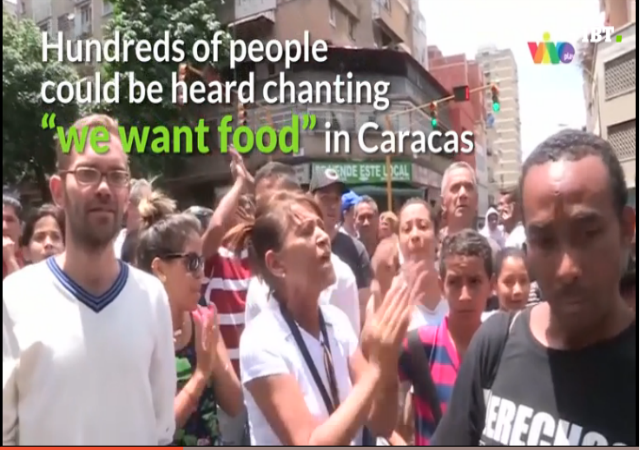
Most people can do without certain luxuries and conveniences for a significant amount of time. Temporary power and internet outages due to storms are common in many parts of America and people get through it. Food on the other hand, is a different story. As any student of history can tell you, when people can't find food things get ugly pretty fast. Venezuela is quickly entering that danger zone. Reuters reports:
'We want food!', Venezuelans cry at protest near presidency Venezuelan security forces fired teargas at protesters chanting "We want food!" near Caracas' presidential palace on Thursday, the latest street violence in the crisis-hit OPEC nation.

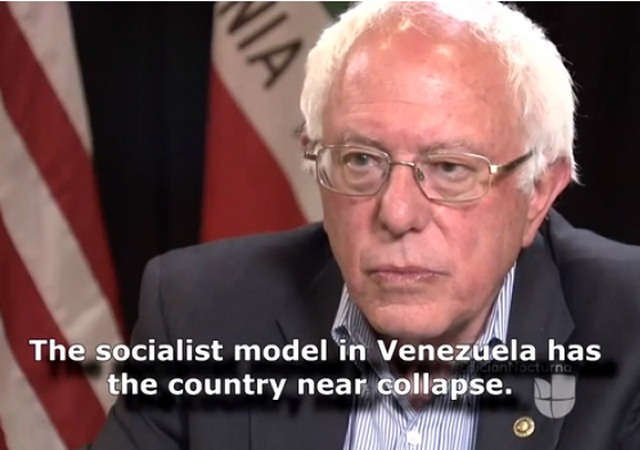
The socialist paradise of Venezuela is falling apart as panicked citizens suffer through shortages of food, toilet paper, electricity and other necessities. Bernie Sanders was recently interviewed on Univision and the host asked Bernie for his thoughts on the situation. Once again, leave it to someone in foreign media to ask a question no one in American journalism has thought to ask. Sanders clearly didn't like where the interview was going. NewsBusters reported:
Bernie Hits Bump on Univision: Speechless on Socialism’s Failures The Democrats’ socialist candidate for President of the United States, Bernie Sanders, was seriously tripped up this week in an interview with Univision’s León Krauze.

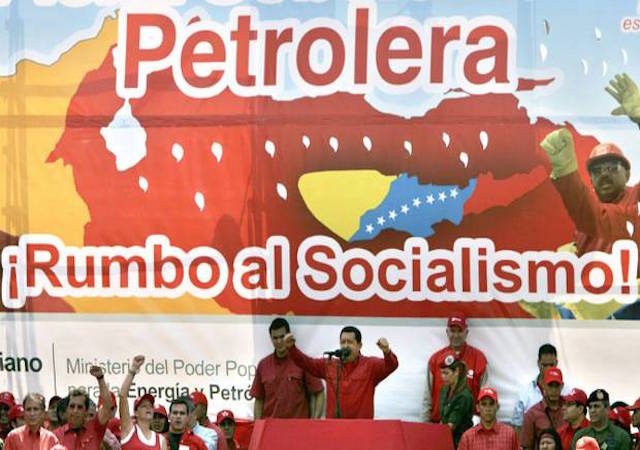
What could be seen as the final act in Venezuela’s worsening economic crisis, the Latin American country has begun selling its remaining gold reserves. Just three year after the death of its socialist leader, Venezuela -- once a leading oil producer -- is on the verge of bankruptcy. It is yet another 'miracle of socialism' that a country with the world's largest oil reserves can go almost broke. Venezuela's total oil reserves stand at an estimated 296.5 billion barrels, which is higher than Saudi Arabia’s 265.4 billion barrels. But the cash-strapped country is struggling to get investments and technical expertise to convert its oil reserves into revenue. Socialist leader Hugo Chávez got elected as country’s President in 1999 and introduced the ideology of “Socialism of the 21st Century”. Chávez enacted a new constitution, taking control of the state and the economy to carry out his “socialist revolution”.

Coca-Cola has become the latest victim of socialism as the company announced it will no longer develop its product in Venezuela. Without sugar, they can only produce sugar free Coca-Cola. From CBS News:
The Atlanta-based company said in an emailed statement Friday said that its production of sugar-sweetened beverages will be suspended in the coming days after local suppliers reported they had run out of the raw material. Sugar-free beverages are not affected and the company said its offices and distribution centers remain open in Venezuela.

Over the summer I covered the Argentine government’s default on its debts owed to U.S. hedge funds—its second default in just 13 years. Now fellow Latin American socialist paradise Venezuela is gearing up for a default of its own, as precipitously falling oil prices have decimated the country’s budget and will continue to pressure its currency reserves. Since mid-June, crude oil prices have declined by more than 30%, with West Texas Intermediate (the benchmark measure for North American oil) dipping to $60.55/barrel before ultimately settling at a 5-year low of $61.54/barrel on Wednesday. A CNBC report on the prospect of a Venezuelan default cited a Capital Economics report stating that a default could be expected by next September or October when $5 billion in debt payments come due. Only an upswing of oil prices to somewhere around $121/barrel would allow Venezuela to balance its budget, according to some estimates. But with OPEC recently slashing its 2015 production levels to a 12-year low in response to decreasing estimated global oil demand and increasing supply via U.S. shale production, a significant oil price increase in the short-term seems highly unlikely. Bloomberg reports that the implied probability of default---derived from complex financial formulas---in the next five years stands at 93%, the highest in the world. Meanwhile, low oil prices translate into low oil revenues for PDVSA, Venezuela’s state-owned oil and natural gas company, which means the Venezuelan government will have to dip into dwindling reserves to service debt payments. Ratings agency Moody’s estimates that the country’s non-gold reserves are less than $7 billion, with only half of that “freely available and usable.” How is it that the country with the largest proven oil reserves—more than 297 billion barrels—sports an economy in such shambles? There are many reasons, but a few stand out:

Venezuela Update: Is the end of violence finally in sight after two months of deadly anti-government  protests? In February, I highlighted the Venezuela protests with depiction of protesters taking to the streets to fight against corruption in the government, high inflation, and a high murder rate. At least three people were confirmed to have been killed during anti-government protests by “armed vigilantes on motorcycles.” After nearly two months of protests, 39 deaths, and and hundreds of people detained after confrontations with Venezuela security forces, talks between the government and opposition are in the works. BBC News reports that an umbrella opposition group says it is willing to enter into talks with the government as long as certain conditions are met. According to BBC News:
In a letter addressed to the Unasur delegation, the umbrella opposition group Table for Democratic Unity (MUD) said it was "willing to hold a true dialogue, with a clear agenda, equal conditions [for both sides] and the first meeting of which will be transmitted live on national radio and television channels".
Additionally, the opposition wishes to have a third, independent involved in the talks in order to facilitate the process. Venezuelan President Nicolas Maduro earlier agreed to meet with members of the opposition, reports the Latin Times. Unasur and the Vatican have made offers to act as observers, and President Maduro said he "accepted" the Unasur proposal, according to BBC News. On Sunday, a graphic video depicting the Venezuelan people confronting the government for control of the streets was posted to Youtube. Watch it below:

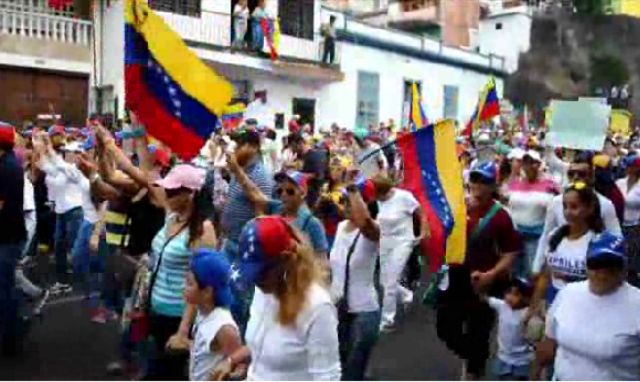
Both opponents and supporters of President Nicolas Maduro took to the streets in Venezuela on Saturday to participate in competing rallies, after days of unrest. From the Associated Press via ABC News:
Venezuelans on both sides of the nation's political divide took to the streets on Saturday after nearly two weeks of mass protests that have President Nicolas Maduro scrambling to reassert his leadership of this economically stricken country.

In Caracas, tens of thousands of opponents of President Nicolas Maduro filled several city blocks in their biggest rally to date against Maduro's 10-month-old government. Across town, a mostly female crowd of government backers gathered in T-shirts and baseball caps, forming a sea of red — the color of Maduro's Socialist party.

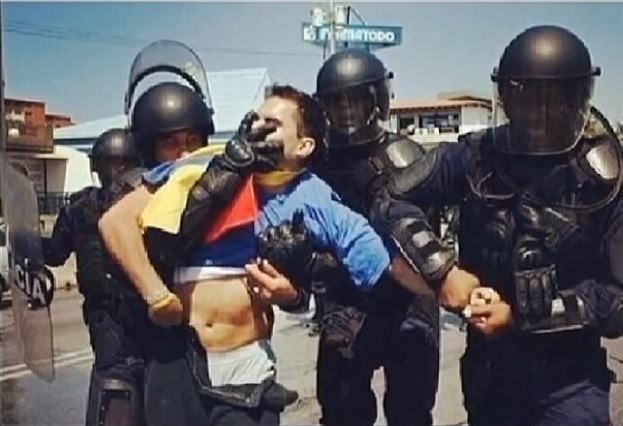
The dueling protests capped a violent week in which a government crackdown jailed hard-line opposition leader Leopoldo Lopez and dozens of other activists. The violence also left at least nine people dead on both sides and injured at least 100 others.

Venezuelans woke up Saturday to smoldering barricades of trash and other debris in the streets of some major cities, but there were no reports of major violence. Protesters have called on Maduro to either resolve problems such as rising crime and galloping inflation or step aside.

Maduro meanwhile has been highly critical of the United States and media organizations over the course of the crisis. From AFP via Yahoo News:

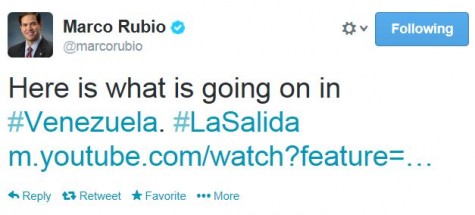
On Sunday, Florida Senator Marco Rubio took to Twitter to draw attention to the deadly street protests in Venezuela. Marcho Rubio Twitter Venezuela What's Happening The tweet links to a powerful youtube video titled "What's going on in Venezuela in a nutshell (English version)," where a Venezuelan woman living in America explains the current anti-government protests and government backlash. The video depicts photos and footage of the violent scene in Venezuela.  At the end of the video, the woman narrator concludes, "If you are human, and want to share the truth, please, share this video." Over the past week, Venezuelan protesters have been fighting against corruption in the government, high inflation, and a high murder rate.

UPDATES below the post. Multiple outlets are reporting that NSA leaker Edward Snowden has accepted asylum in Venezuela, and the news is spreading like wildfire.  But there doesn't seem to be reliable confirmation of this news, as most reports appear to be based on a single source - a Russian lawmaker who deleted his relevant tweet. I've been monitoring this for the last two hours and was waiting for actual confirmation, but the news cycle doesn't appear to want to wait. Here's how it's all gone down on Twitter so far. Make sure you read to the end. Several news outlets tweeted earlier today that Snowden had accepted asylum in Venezuela, based on a tweet from Alexey Pushkov, a Russian lawmaker close to the Kremlin. https://twitter.com/AP/status/354609751511924736 https://twitter.com/AFP/status/354607382564835329 https://twitter.com/ReutersWorld/status/354610306347053057 Shortly thereafter however, that lawmaker’s tweet was memory holed. https://twitter.com/b_fung/status/354610393261412352