Image 01 Image 03

China Tag

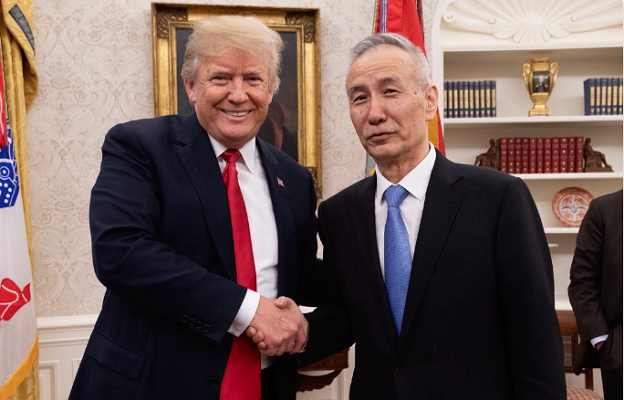
President Donald Trump is expected to announce new tariffs on Chinese exports to the United States later today. The decision comes after a seven-month-long investigation by the Trump administration into the U.S. intellectual property theft orchestrated by Beijing. The move is expected to hit $50 billion worth of Chinese imports.

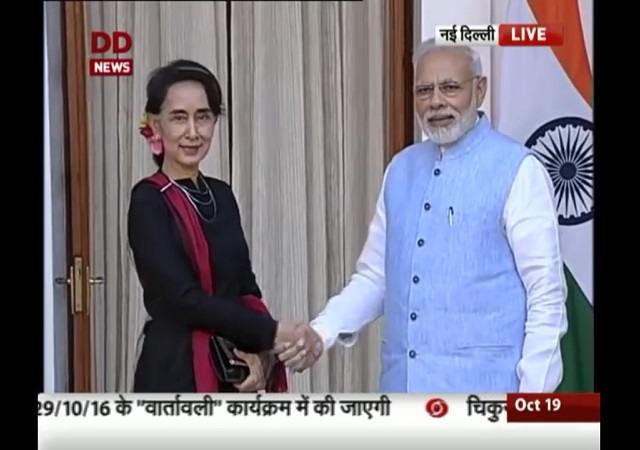
Prime Minister Narendra Modi is rolling out the red carpet for the leaders of Southeast Asian countries on the eve of India's Republic Day. What is being described by the Indian media as a diplomatic 'coup' in India's ongoing territorial row with China, ten heads of states from Southeast Asian countries will finalize the details of a new maritime mechanism with New Delhi and attend tomorrow's Republic Day parade, an annual event that showcases India's military prowess.

A former CIA officer, Jerry Chun Shing Lee, has been charged with "unlawful retention of national defense information." Lee allegedly had in his possession notebooks containing the details and identities of current CIA operatives and is suspected of identifying both spy recruits and CIA agents to the Chinese government. The New York Times reports:

A former C.I.A. officer suspected by investigators of helping China dismantle United States spying operations and identify informants has been arrested, the Justice Department said on Tuesday. The collapse of the spy network was one of the American government’s worst intelligence failures in recent years.

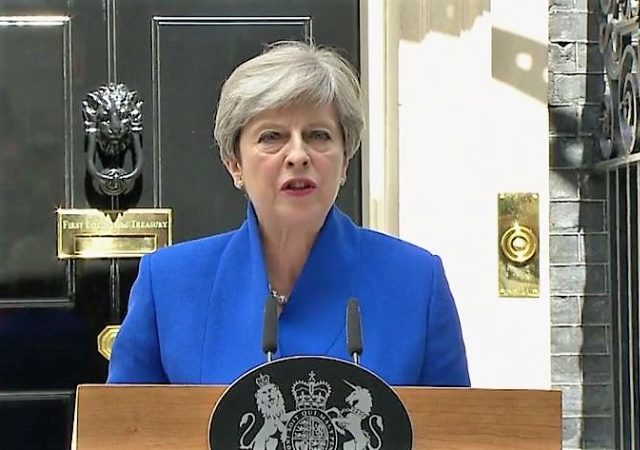
Prior to the Brexit vote, the Centre for Economics and Business Research (CEBR) lent fuel to the "remain" proponents' "Project Fear" by predicting economic gloom for the UK should voters choose "leave."  Their doom and gloom report assured the world that leaving the EU would plunge the UK into economic decline. Indeed, the Bank of England predicted, incorrectly as it's turned out, that a UK vote to leave the EU would lead to recession.  This didn't happen, and as I noted in 2016, the UK has no problem reaching trade agreements on its own.  Unfettered by the EU albatross, the UK economy is now expected—by the CEBR no less—to flourish.

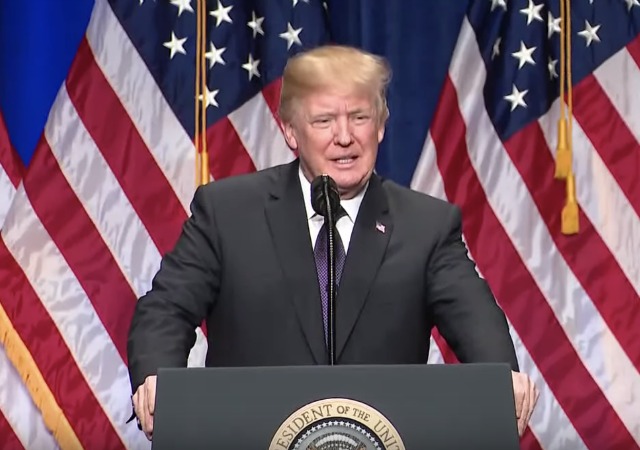
The White House has unveiled President Donald Trump's national security strategy. It has four main points: Protect America, promote our prosperity, preserve peace through strength, and advance our influence. But one of the biggest points is the return of using "jihadist" and "Sharia," language President Barack Obama's administration tried to avoid.

There has been a fascinating developments in relations between North Korea and China over the past week. Just before Thanksgiving, North Korea’s Kim Jong-un appeared to have snubbed China by not agreeing to meet with Chinese President Xi Jinping’s diplomatic envoy.
Song Tao, head of the Communist Party’s international department, wrapped up his four-day trip to North Korea on Monday, the first visit by a senior Chinese official since 2015.

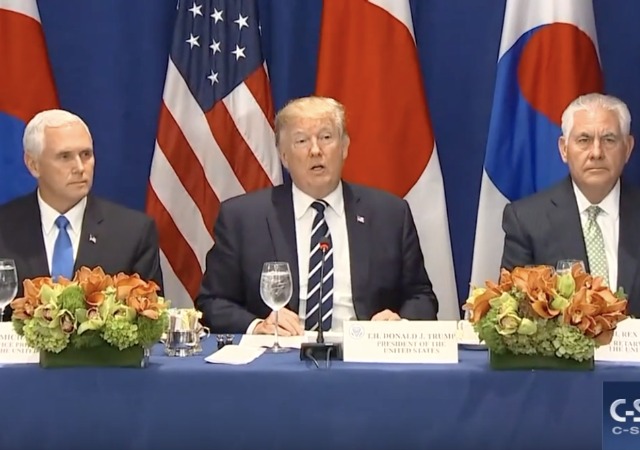
It was a busy day in New York concerning North Korea. We learned that China's central bank told banks to stop working with North Korea. President Donald Trump met with South Korean President Moon Jae-in and Japanese Prime Minister Shinzo Abe to discuss the North Korean nuclear crisis. Trump also announced new sanctions against North Korea. From The Hill:
Speaking at the United Nations before a working lunch with Japanese Prime Minister Shinzo Abe and South Korean President Moon Jae-in, two key allies in the region, Trump said the order would significantly expand the U.S.’s ability to crack down on individuals and companies that do business with North Korea. The president said he had empowered the Treasury Department to “target any individual or entity that conducts trade in goods, services or technology” with North Korea.

While the American Press has been navel-gazing after the Charlottesville violence, there has perhaps been a more significant clash on the other side of the world that seems...under-reported. This weekend, I noted that India’s military has increased operational readiness along the eastern Indian border with China, as the nations have been embroiled in a two-month confrontation on the Doklam plateau (claimed by both China and India’s ally, Bhutan).

Last month, we reported that a territorial dispute along the China-India border is threatening to turn into a military conflict. Now, while the world's attention is focused on North Korea, India has increased its alert level amid increased tension with China.
India's military has increased operational readiness along the eastern Indian border with China, sources said, as neither side shows any sign of backing off from a face-off in a remote Himalayan region near their disputed frontier.

Thousands of North Koreans are fleeing the Communist prison state thanks to an underground Christian network spread across China, reports the British newspaper Daily Express. The 3000-mile long network, run by South Korean and Chinese Christians, also dubbed as the ‘underground railroad’, helps dissidents from the north to escape to freedom into Thailand. Many of these escapees later find a new home in South Korea.

Hoping to capitalize on the burgeoning sharing economy, a Chinese start-up company lost almost all of its wares within weeks of opening up shop. E Umbrella, which opened up operations in eleven different Chinese cities, is now without umbrellas to "share".

A territorial dispute along the China-India border is threatening to turn into a military conflict between the two nuclear-armed nations. The area under dispute is located near the ‘Bhutan tri-junction’, where the borders of China, India, and the tiny Buddhist Kingdom of Bhutan meet. The Chinese envoy to New Delhi described the latest standoff as "the most serious confrontation between the two nations in more than 30 years," Chinese daily South China Morning reported China and India fought a war in 1962 over similar border disputes, which ended in a devastating defeat for India. Almost 55 years later, and two Asian giants continue facing off each other along a three thousand kilometre-long contested mountainous border.

Between 2010-2012, the Chinese government murdered or imprisoned 18 to 20 CIA agents after it demolished America's spying operations within the country. The CIA has been investigating how this happened, whether a mole leaked information to Beijing or the Chinese managed to break our codes. The New York Times reported:
Assessing the fallout from an exposed spy operation can be difficult, but the episode was considered particularly damaging. The number of American assets lost in China, officials said, rivaled those lost in the Soviet Union and Russia during the betrayals of both Aldrich Ames and Robert Hanssen, formerly of the C.I.A. and the F.B.I., who divulged intelligence operations to Moscow for years.