Image 01 Image 03

BDS Tag

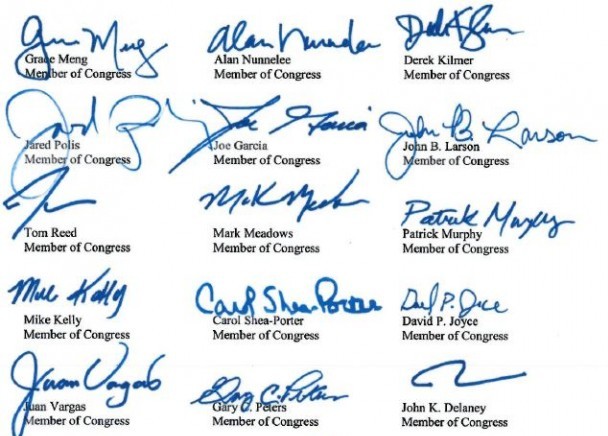
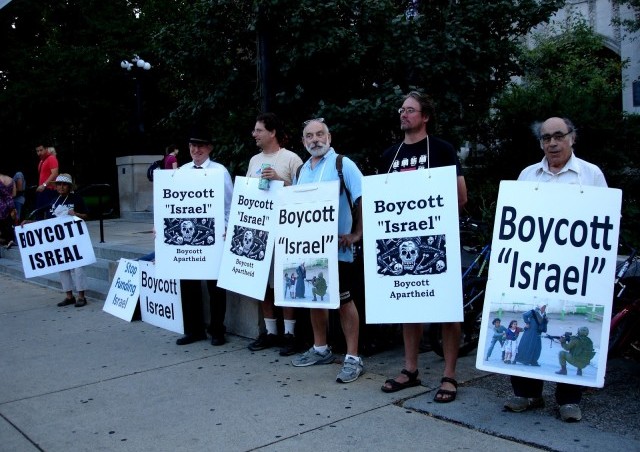
A total of 134 Members of the House of Representatives have signed a letter, organized by the offices of Reps. Peter Roksam (R) and Ted Deutch (D) condeming the academic boycott of Israel passed by the American Studies Assoction. The effort was truly bipartisan, with 65 Republicans and 69 Democrarts signing.  The full list of signatories is at the bottom of this post. As previously reported, the congressional organizers were hoping for 50 signatures, so the response was better than expected. Gathering signatures on short notice was difficult, one of the staffers explained to me, because of the press of House business before members left today on break. In a Press Release by the Office of Rep. Peter Roksam, the background of the letter was explained:
Today, a bipartisan coalition of House lawmakers condemned the American Studies Association’s (ASA) academic boycott of Israel. 134 Members of Congress, led by Reps. Peter Roskam (R-IL), Ted Deutch (D-FL), Doug Collins (R-GA), and Brad Schneider (D-IL), sent a letter to ASA President Curtis Marez opposing ASA’s boycott as bigoted and an affront to academic freedom. “We come together—Democrats and Republicans alike—to strongly condemn the ASA boycott, which undermines academic freedom and exhibits flagrant prejudice against the Jewish State of Israel,” said the House lawmakers. “This boycott doesn’t advance peace between Israelis and Palestinians, but only reinforces dangerous stereotypes that limit mutual understanding and cooperation—two things that should be at the very heart of our academic endeavors. We therefore cannot tolerate these ignorant smear campaigns to isolate Israel and deteriorate the historic U.S.-Israel relationship.”
The letter reads, in full:

For background, see my prior posts: The letter will be finalized tomorrow morning as the House goes into recess Friday and many members leave tomorrow afternoon.  The letter is being coordinated through the offices of Representatives Peter Roksam (R) and Ted Deutch (D). With the crush of business before the recess, it's hard to get the attention of Representatives. Is your House Representative on the list of signatories? If not, now is the time to reach out to their offices and find out why not TODAY. You can find your Representative and office contact information here: Find Your Representative. Here is the current list: UPDATE, list closes 9 a.m. Eastern, Thursday, so if your Rep has not signed by then, too late.

Based on its Quarterly publication, the American Studies Association as of last year had 80 Institutional Members. Since ASA announced its academic boycott of Israel, we have confirmed that 6 universities have dropped their Institutional Memberships, while 11 more have denied being Institutional Members despite being so listed. The updated list appears at the very bottom of this post. While over 190 university presidents have denounced the ASA academic boycott of Israel, many have decided either to keep the membership or to leave the decision to individual American Studies Departments.  Some others are switching the membership listing to their American Studies Departments, rather than the full University name. Anything other than a full termination of Institutional Membership, however, opens up the universities to legal liability for national origin discrimination under Title VII of the Civil Rights Act of 1964. That potential liability is explained in a recent article by two attorneys at the Seyfarth Shaw law firm. Seyfarth Shaw is an 800+ international law firm with a 380+ attorney labor and employment law practice. On January 7, 2014, two Seyfarth Shaw attorneys published an article regarding the potential liability of university employers arising out of the ASA academic boycott. In their article, they make points similar to those I made in my challenge to ASA's tax-exempt status: The boycott constitutes national origin discrimination. While I approached it from the angle of whether such discrimination is a valid tax exempt purpose (it's not), the Seyfarth Shaw lawyers approached the problem from the perspective of employer liability under Title VII. Here are relevant portions of the Seyfarth Shaw analysis (emphasis added), including the recommendations of dropping institutional membership in ASA and evaluating whether boycott advocates can serve on hiring and tenure committees.

I reported last Friday on the draft Bipartisan Congressional letter to denounce academic boycott of Israel. The letter reads, in part:
We write in strong opposition to the American Studies Association’s (ASA) recent decision to boycott Israeli universities and academic institutions. While ASA has every right to express its views on policies pursued by any nation or government, we believe that the decision to blacklist Israeli academic institutions for Israeli government policies with which ASA disagrees demonstrates a blatant disregard for academic freedom.... Even more concerning is the singular targeting of Israel for boycott. Like all democracies, Israel is not perfect. But to single out Israel, while leaving relationships with universities in autocratic and repressive countries intact, suggests thinly-veiled bigotry and bias against the Jewish State.
As of Friday, there were 36 signatories. As of yesterday, the number had risen to 57.  [Update - see list at bottom of post for most current numbers and signatories] The final signature list should be released later this week. American civil society has been heard loud and clear, with major academic organizations and 190 University Presidents (as of this writing) rejecting the academic boycott. Now it is the time for American political society to be heard against the anti-Israel academic boycotters, as well. Is your House Representative on the list of signatories? If not, now is the time to reach out to their offices and find out why not. You can find your Representative and office contact information here: Find Your Representative. Tell them the letter is being coordinated through the offices of Representatives Peter Roksam and Ted Deutch.  Give them the link to this post if you send an email. Pick up the phone or send an email right now.  (I emailed my Rep. last night.)

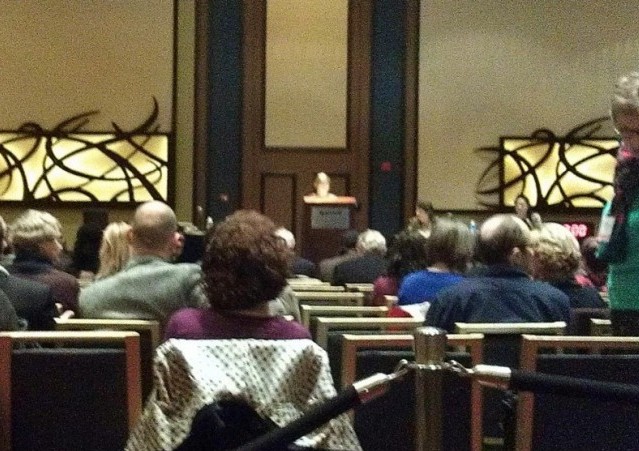
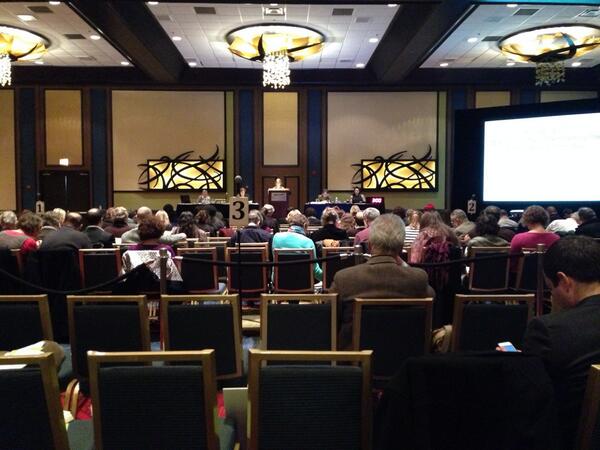
The Modern Language Association House Delegates voted on two anti-Israel Resolutions today. (The Resolutions are at the bottom of this post.) The main resolution, asking for the State Department to contest Israeli denials of entry visas to traveling academics: "Be it resolved that the MLA urges the US Dept of State to contest Israel's denials of entry to the West Bank by US academics...." The language was amended at the last minute to take out the word "arbitrarily" and to delete reference to Gaza. A House of Delegates vote is NOT a binding resolution that commits the organization to action. A resolution, if it passes the House of Delegates, then goes to the Executive Committee, which can reject the resolution for a variety of reasons, including that the resolution would jeopardize tax-exempt status). I would be surprised if the Executive Committee rejected it, since the operative language is so weak. We will have a post later from someone who was in the room. For now, I will post some of the Tweets from those in the room. Notice that there was significant pushback, and that the supporters of the resolution basically said take our word for it, when challenged as to the proof. That apparently was enough. The actual operative language of the resolution is not particularly damaging, and was watered down. But the "wherefore" clauses were highly anti-Israel and pretty-much propaganda. Those "wherefore" clauses will be the main victory for the anti-Israel group. The second resolution was an "Emergency" Resolution asking the MLA to denounce supposed attacks on the supporters of the American Studies Association boycott resolution. That Emergency Motion, which actually was explicitly pro-boycott, was rejected. 

I have obtained a copy of a letter circulating in Congress denouncing the academic boycott of Israel by the American Studies Association. The authors of the letter hope to have at least 50 co-signers (maybe more), split roughly evenly between Democrats and Republicans. Here is the text of the letter, with the initiating four Members of Congress inticated:
Mr. Curtis Marez President American Studies Association 1120 19th St NW, Suite 301 Washington, DC 20036 Dear Mr. Marez: We write in strong opposition to the American Studies Association’s (ASA) recent decision to boycott Israeli universities and academic institutions. While ASA has every right to express its views on policies pursued by any nation or government, we believe that the decision to blacklist Israeli academic institutions for Israeli government policies with which ASA disagrees demonstrates a blatant disregard for academic freedom. The ASA claims that the boycott “is in solidarity with scholars and students deprived of their academic freedom and it aspires to enlarge that freedom for all, including Palestinians.” We believe that this boycott accomplishes just the opposite. The university is an institution intended to foster, encourage, and inspire constructive dialogue and original thought. However, this boycott undermines academic freedom by prohibiting educational and cultural exchanges with Israeli universities and academic institutions.

Shurat HaDin, The Israel Law Center (ILC), founded by Nitsana Darshan-Leitner, has had great success in suing on behalf of terror victims, and otherwise confronting anti-Semitism through the legal process. Among other things, ILC is suing an Australian academic for discriminating against an Israeli researcher as part of the Boycott, Divest and Sanction (BDS) movement. (We featured that suit in our prior post, Academic boycotters don’t want done unto them what they did unto Israelis). Some of the points raised with regard to the difference between expressing an opinion as opposed to imposing a discriminatory boycott are similar to point made in my challenege to the tax-exempt status of the American Studies Association, although in a different context. ILC has taken note of the ASA academic boycott of Israel, and is representing several Israeli academics. ILC today sent a demand letter to the the incoming President of ASA (embedded at bottom of post), demanding that ASA cease and desist from discriminatory practices, or ILC will commence suit on behalf of a group of Israeli professors. (h/t Times of Israel) The letter reads in part:

Several of most prominent promoters of the American Studies Association academic boycott of Israel attended a bizarre "redwashing" panel discussion in Beirut, at which they tried to delegitimize the Jewish people's indigenous history in Israel and connection to other indigenous peoples. I'll have much more on that insidious conference in another post, but for now you can read the posts by Jeffrey Goldberg and Prof. Jonathan Marks. These academic boycotters gave an interview to The Daily Star of Lebanon that is very revealing. They played upon classic anti-Semitic tropes of Jewish money controlling the press in trying to minimize the overwhelming rejection of the academic boycott throughout most of academia. ASA scholars stand firm by Israel boycott (emphasis added):
Since then, the organization has been forced to defend itself from a barrage of highly vocal critics who have accused the ASA of everything from anti-Semitism to threatening academic freedom. At the conference this week, however, many ASA members reiterated their strong support for the motion. “The boycott is also about the vision of a right to education for people; it’s about a right to democratic participation of all people and it’s about the right to land,” said Alex Lubin, a professor at AUB [American University in Beirut, on leave from University of New Mexico] and ASA member. Despite efforts to publish op-ed pieces explaining the ASA’s position, Lubin said the organization had “effectively been blocked out of [the] U.S. press.” The reason, he said, was “donor dollars that come to them [the publications] from the Israel lobby.” Lubin also said many Americans took issue with the comparison between the treatment of Palestinians and Native Americans.

The President of Middlebury College issued one of the most stinging rebukes to the American Studies Association anti-Israel academic boycott: “the vote is a sad reflection of an extreme and hateful ideology of some members of the academy …. I urge others in the academic community to condemn the ASA boycott and reaffirm their support for academic freedom.” Now the American Studies Program at Middlebury College has followed suit by issuing an Open Letter to ASA's President and Executive Committee. (H/t Inside Higher Ed) The Middlebury professors made one of the points I made in the challenge to ASA's tax-exempt status, that the ASA mission as expressed in its Constitution does not include the anti-Isrel political activism which now dominates ASA.  The Open Letter reads, in part (emphasis added):
Below is an open letter to the President and Executive Committee of the American Studies Association. Though written by faculty at Middlebury College, we hope that many other institutional members of the ASA, American Studies programs, individual members, and present and former officers of the organization will support the letter’s call for discussion of the ASA’s mission statement.... To the President and Executive Committee of the American Studies Association: .... The American Studies Program at Middlebury does not support, and will not honor, the American Studies Association’s resolution to boycott academic institutions in Israel.... Beyond our concerns about the merits of academic boycotts in general (and this one in particular), we are concerned that the ASA resolution is inconsistent with the stated mission of the organization. The ASA seems to be neglecting, or at the very least interpreting in a particularly tendentious way, the language of its own constitution. Effectively a mission statement, Article I, Section 2 of the ASA constitution reads:
Sec. 2. The object of the association shall be the promotion of the study of American culture through the encouragement of research, teaching, publication, the strengthening of relations among persons and institutions in this country and abroad devoted to such studies, and the broadening of knowledge among the general public about American culture in all its diversity and complexity.

George Mason University apparently has an active anti-Israel group.  It has proclaimed the achievement of boycotting Israeli hummus, and staged a walkout on a commencement speaker with close ties to Israel. The propaganda-named Students Against Israeli Apartheid (SAIA) now is playing the race card against GMU's President, who tweeted his opposition to the academic boycott of Israel: https://twitter.com/CabreraAngel/statuses/420266494463717376 https://twitter.com/CabreraAngel/statuses/420311957200060416 There's no racism in those tweets. Except that the SAIA say that the reference to "blowing up" relationships is a racist referral to all Palestinians as bombers, GMU President Cabrera’s Racist Tweet Opposing Academic Boycott:
His line that “Universities exist to build bridges of understanding, not to blow them up” insinuates that being in solidarity with Palestinians is on par with terrorism. Not only is this metaphor racist and distasteful, but it was also irresponsible. Supporters of the academic boycott are endangered when their activity is distorted through fear mongering. Cabrera’s use of damaging language is a blatant response to the support GMU SAIA received from faculty as a result of the NO HONOR IN APARTHEID campaign. His response is only a small part of the national “McCarthyite” campaign to destroy the positive learning environments student organizations have created regarding the Palestinian-Israeli conflict on campuses. While academic integrity is often cited as a value of the administration, Cabrera’s rhetoric serves to limit discussion, exploration, and academic freedom around critical issues. While President Cabrera’s support for Israeli apartheid is no secret, his allegiance, to the best of our knowledge, is linked to position and profits.
Why does the anti-Israel group assume that referring to blowing up relations among universities is a reference to Palestinians blowing themselves up in cafes, buses, pizza shops and Passover Sedars?

Most universities which were listed as Institutional Members of the American Studies Association have left it up to particular departments which took out the membership to decide whether to continue. Of the 83 Institutional Members listed by ASA, at least 11 deny being members, as detailed...

When the National Council of the American Studies Association endorsed the academic boycott of Israel in early December, and put the boycott Resolution to a quick membership vote, I wondered how the ASA National Council could do such a thing not just on the merits, but because the boycott put ASA's tax-exempt status at risk. I stated my intention of filing a challenge to that tax-exempt status should the Resolution pass and the academic boycott go into effect. The ASA membership approved the boycott Resolution with less than a quarter of the total membership voting for it (there was such low turnout, that was enough). The reaction to ASA's boycott has been overwhelmingly negative.  At least 125 universities and leading academic organizations have spoken out against the boycott and issued strong statements as to the damage to higher education such boycotts inflict. Earlier today my attorneys filed with the IRS a whistleblower complaint challenging ASA's 501(c)(3) tax exempt status in light of the academic boycott. The Complaint without Exhibits is embedded below. The Complaint with Exhibits is available here. Here is the Introduction, which summarizes the reasons why ASA no longer is organized and operating exclusively in accordance with its educational exempt purpose, and no longer is entitled to its 501(c)(3) status under the IRS Code and Regulations.

Several dozen universities have issued rejections of the academic boycott of Israel passed by the American Studies Association, many with forceful statements. Among the most forceful was Trinity College in Connecticut, whose President and Dean of Faculty issued a stinging rebuke in a letter to the ASA President (emphasis added):
To The Immediate Attention of the President of the American Studies Association: Our Dean of the Faculty, Thomas Mitzel, and I wish to go on record renouncing the boycott of Israel on the part of the ASA. Trinity once years back was an institutional member (we were then advertising for an open position), and apparently some members of our faculty are individual members. Were we still an institutional member, we would not be any longer after the misguided and unprincipled announcement of the boycott of the only democracy in the Middle East. The Dean and I oppose academic boycotts in general because they can so easily encroach upon academic freedom. In this strange case, why the ASA would propose an academic boycott of Israel and not, for example, of Syria, the Sudan, North Korea, China, Iran, Iraq, or Russia escapes rational thought. Trinity has participated in the Rescue Scholar program since its inception; we have welcomed scholars from some of the most repressive countries on the planet, and it is inconceivable to us that we would ever be welcoming a Rescue Scholar fleeing Israel for political reasons. As President of the ASA, you have tarnished a once distinguished association.