

Image 01 Image 03

Author: David Gerstman

Profile photo

David Gerstman

David Gerstman blogged as Soccer Dad from 2003 to 2010. Formerly a computer programmer, he is now a blogger for The Israel Project's The Tower blog.

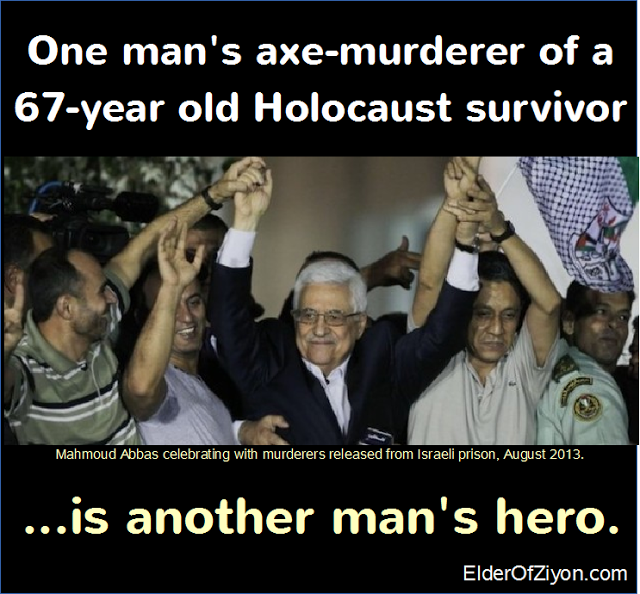
As we've noted earlier, much of the media is obsessed with settlements, intent on portraying them as the main obstacle to peace. There's a tendency on the other side to take one of the most outrageous examples of Palestinian behavior and dismiss it. As Professor Jacobson noted last week, Israel, in order to entice the Palestinians to negotiate for a state of their own offered to release 104 prisoners from jail. These aren't just prisoners. Most, if not all, are remorseless murderers who are treated as heroes by all segments of Palestinian society, including their leaders. Jonathan Tobin made an apt observation about this phenomenon:
One group of people was happy as murderers went free while others wept. But the gulf here is more than emotional or merely, as the Times seemed to describe it, a difficult process that is part of the price Israel must pay for the chance of peace. In fact, the “emotional gulf” is indicative of a vast cultural divide between these two peoples that explains more about the absence of peace than any lecture about history, borders, or refugees. Simply put, so long as the Palestinians honor murderers, there is no reason to believe they are willing to end the conflict.
Consider the way the New York Times in the article cited by Tobin portrayed the Israeli reaction to the prisoner release:
In Israel, where the returnees are widely viewed as terrorists, the release on Tuesday, like the one in August, has stirred protests and anguish. Many said it was too heavy a price to pay for entering negotiations with no guarantee of a peace accord.
"[W]idely viewed?!?!" This statement is incredible. It's not only in Israel that they are "viewed as terrorists," but by definition. Only in the crazy New York Times worldview is the definition of terrorists subjective.
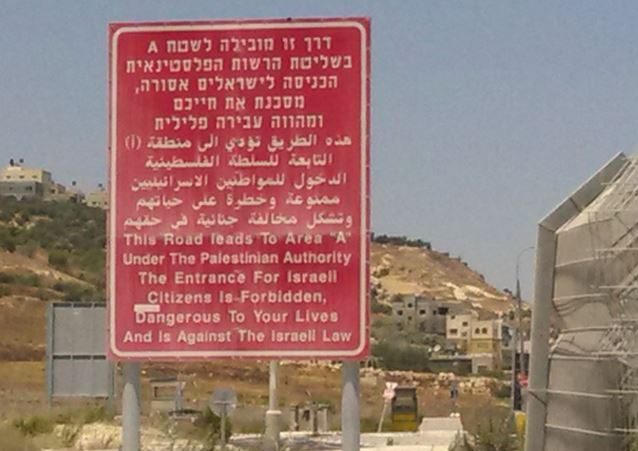
To read through recent news reports one could assume that the biggest obstacle to Palestinian Israeli peace are "settlements." To cement that impression the New York Times published an article, 1,500 Units to Be Added in Settlement, Israel Says. The caption of a photograph directly beneath the headline reads:
A Palestinian construction worker at a building site on Wednesday in the Ramat Shlomo settlement in East Jerusalem.
If there is an official "East Jerusalem," I am unaware of it, but perhaps the paper meant "east Jerusalem." However if you read down a few paragraphs you learn:
The 1,500 new apartments are to be added to Ramat Shlomo, a largely religious neighborhood of 20,000 on the city’s northern edge. They were originally announced during a 2010 visit to Jerusalem by Vice President Joseph R. Biden, causing a diplomatic crisis that dampened Israel’s relationship with the White House and Europe for months.
So actually, Ramat Shlomo isn't in the city's east but in its north (or northeast) and it's not a settlement but a neighborhood. And while the announcement led to a major diplomatic blowup, it was of the administration's making. The Vice-President, Secretary of State and President could have remained silent. Everyone expects sections of Jerusalem, even those illegally occupied by Jordan from 1948 to 1967 to be part of Israel in any final agreement with the Palestinians. The announcement had occurred during an Israeli ban on settlement building outside of Jerusalem. That settlement ban brought about no serious negotiations. (The PA returned to the table only a few weeks before the end of the freeze and, when the freeze expired, walked away.) If settlement freezes were so important to the Palestinians, why didn't they negotiate then? So "settlements" provide a convenient excuse for a Palestinian refusal to negotiate or concede anything to Israel. But should they?

Last week as we noted, the New York Times ran a devastating article about President Obama's Syria policy. The Times reported, among other things, that the President was disinterested in planning discussions about Syria. Two other articles reported that America's Middle East allies generally and the Saudis specifically were upset by the administration's Middle East policy. I guess that the New York Times had enough serious reporting about the shortcomings of the Obama administration's Middle East policy, because over the weekend, it published Rice Offers a More Modest Strategy for Mideast by its foremost White House cheerleader, Mark Landler. (Landler contributed to the Syria report, but was not one of the bylined reporters.)
Each Saturday morning in July and August, Susan E. Rice, President Obama’s new national security adviser, gathered half a dozen aides in her corner office in the White House to plot America’s future in the Middle East. The policy review, a kind of midcourse correction, has set the United States on a new heading in the world’s most turbulent region. At the United Nations last month, Mr. Obama laid out the priorities he has adopted as a result of the review. The United States, he declared, would focus on negotiating a nuclear deal with Iran, brokering peace between the Israelis and the Palestinians and mitigating the strife in Syria. Everything else would take a back seat.
The article goes on to point out that even Egypt was no longer a priority. In a jab at President Obama's predecessor we learn:

In the more recent iterations of the Star Trek television show, there were villains called Cardassians. They were even more ruthless than the Klingons. They also had a remarkable justice system as is shown in the following dialogue:
Gul Dukat: In Cardassia, the verdict is always known before the trial begins; and it's always the same. Commander Sisko: In that case, why bother with a trial at all? Gul Dukat: Because the people demand it. They enjoy watching justice triumph over evil, every time. They find it comforting. Commander Sisko: Isn't there ever a chance you might try an innocent man by mistake? Gul Dukat: Cardassians don't make mistakes. Commander Sisko: I'll have to remember that.
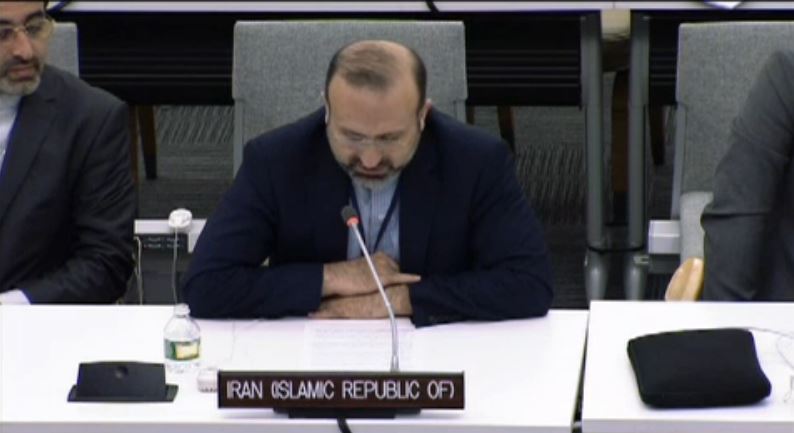
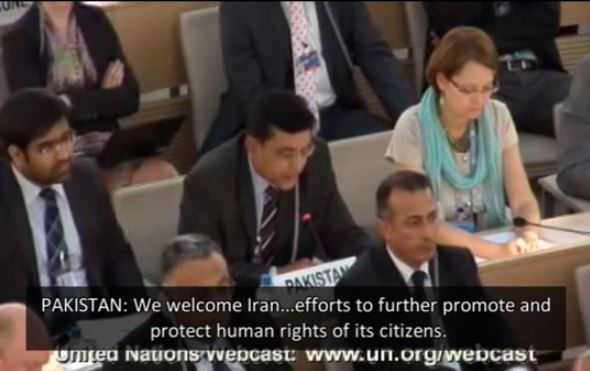
When reading Anne Bayefsky's latest account of the machinations of UN Human Rights Council, it's hard to think of a better analogy than the Cardassia's predetermined verdicts.  Israel is scheduled to sit before the UNHRC and be subjected to its Universal Periodic Review (UPR), here's how it works, as Anne Bayefsky explains:
As the UPR theory goes, once every four years the Council spends a few hours talking about the human rights record of each UN member state. The process has a number of stages. The country under consideration sends representatives to make some speeches about its terrific human rights situation. Other states are each given no more than two minutes to comment and make recommendations for improvement. The state concerned voices its acceptance or rejection of those recommendations. NGOs – including phony NGOs sponsored by governments – are allotted a limited time to make comments. And then the recommendations – and the government’s rejection of any of them – are put into a report which is perfunctorily “adopted.” In practice, the UPR looks like this. A very large number of friends of each rights-abusing country line up to praise its human rights record and generate a long list of faux congratulatory recommendations which can be easily “accepted.” The favor is repaid when their pals’ turns come along. These states then announce that serious recommendations “do not enjoy their support.” The praise and the rejections, all get included in a report that contains no findings and no conclusions, and there are no decisions to take action.

Recently, after the first round of nuclear talks with Iran had concluded one of the American negotiators said: "... I have never had such intense, detailed, straightforward, candid conversations with the Iranian delegation before." The word that bothered me most in that declaration was "candid." How did Iranian foreign minister start kick of the negotiations? He started it with a widely reported PowerPoint presentation titled "An End to the Unnecessary Crisis and a Beginning for Fresh Horizons." There's a word that sticks out there too, "unnecessary."

Yesterday's New York Times featured an article Obama’s Uncertain Path Amid Syria Bloodshed that is probably one of the most devastating indictments of the President's Syria policy published. I don't think that the reporters set out to critique the President and the tone of the article was always respectful. https://twitter.com/michaeldweiss/status/393101410037821440 Still there are two description that really stuck out. The first was a general critique.
As one former senior White House official put it, “We spent so much damn time navel gazing, and that’s the tragedy of it.”
Over the past two years the article describes the various rationales the administration had for not intervening and that sentence turns out to be a very apt theme for the way the administration acted, or, more precisely, chose not to act. Then there was this:
Even as the debate about arming the rebels took on a new urgency, Mr. Obama rarely voiced strong opinions during senior staff meetings. But current and former officials said his body language was telling: he often appeared impatient or disengaged while listening to the debate, sometimes scrolling through messages on his BlackBerry or slouching and chewing gum.
One would have assumed that a Syria policy was one of the two most important foreign policy issues facing the President. (The other is the question of Iran's nuclear policy.) Being "disengaged" during such momentous discussions is worse than being engaged but making bad decisions. https://twitter.com/tobyharnden/status/393025446348349441  

Last year the big technology news was how President Obama's re-election campaign used technology to beat Mitt Romney. This year's big technology news is the failure of the introduction of Obamacare's healthcare exchanges. https://twitter.com/JayCaruso/status/390835631493898240 Last year, even before the election, President Obama's IT operation got noticed. A June 2012 article in Politico asserted:
The depth and breadth of the Obama campaign’s 2012 digital operation — from data mining to online organizing — reaches so far beyond anything politics has ever seen, experts maintain, that it could impact the outcome of a close presidential election.

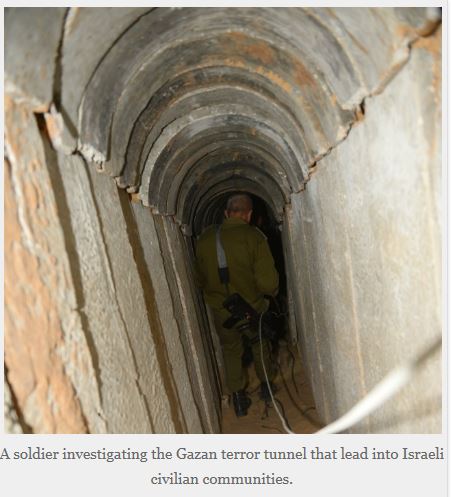
When you read the first few news dispatches below from the past year and a half, keep this photo in mind. Aid Groups and U.N. Agencies Urge Israel to Lift Gaza Blockade - The Associated Press - June 14, 2012 Fifty international aid groups and United Nations agencies urged Israel...

Israel is being told it must test Iran's intentions. But the lesson of the Oslo Accords is that untrustworthy partners cannot be trusted without grave consequences....

In a remarkable op-ed last week, Jackson Diehl of the Washington Post excoriated Obama's Myopic Worldview. After noting that the President claimed in his U.N. speech, “The world is more stable than it was five years ago," Diehl responded:
So: Why, according to Obama, is the world better off than in 2008? Well, the global economic crisis has abated. But that’s not all: “We’ve also worked to end a decade of war,” the president said, by withdrawing U.S. and NATO troops from Iraq and Afghanistan and “shifting away from a perpetual war footing.” Here’s where you could almost hear the head-scratching in the Iraqi and Afghan delegations: Violence in both of those countries is considerably worse than it was five years ago, in part because of the U.S. withdrawals. Also, as Obama half-acknowledged, al-Qaeda is more of a threat in more places — Kenya, Nigeria, Mali, Libya, Syria — than it was in 2008. And then there is the region stretching from Morocco to Iran, which is experiencing not stability but an epochal upheaval, one that has brought civil war or anarchy to a half-dozen countries and spawned the greatest crimes against humanity since the turn of the 21st century. It’s easy to dismiss Obama’s claim on factual grounds. More interesting is to see what prompted it: a soda-straw view of the world in which only the president’s inauguration-day priorities are visible. His aim then was to bring home U.S. troops, end the “endless war” of George W. Bush, defend the homeland from al-Qaeda and step back from the quagmire of the Arab Middle East. He did all that; ergo, the world is more stable — and from the attenuated perspective of an American who mainly wishes the world would go away, perhaps it is.
Unlike Diehl, I didn't find President Obama's speech to be that surprising. There wasn't much new in it. President Obama doesn't believe in letting troops fight to win a war but to bring them home and end it. He's said that in slightly different words throughout his presidency. https://twitter.com/JacksonDiehl/status/383563604739379201 What's remarkable about Diehl's column is that Diehl and the Washington Post's editorial board twice endorsed Barack Obama for President despite his myopic worldview. This is as thorough a verbal repudiation of the president as any I've seen. But it isn't just pundits who reject President Obama's foreign policies; it's allies too. A few weeks ago Walter Russell Mead wrote in The Failed Grand Strategy in the Middle East:

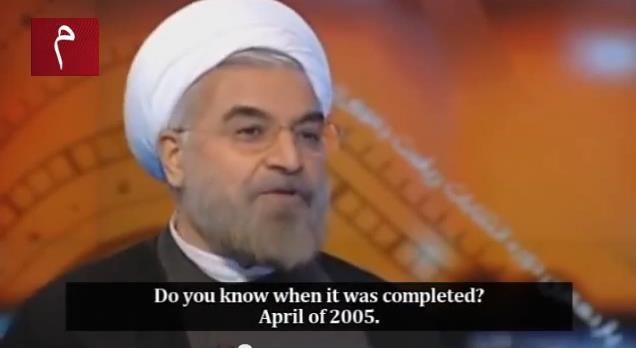
In his column yesterday, Hassan does Manhattan, Thomas Friedman wrote about Iran's new President Hassan Rouhani:
1) He’s not here by accident. That is, this Iranian charm offensive is not because Rouhani, unlike his predecessor, went to charm school. Powerful domestic pressures have driven him here. 2) We are finally going to see a serious, face-to-face negotiation between top Iranian and American diplomats over Iran’s nuclear program. 3) I have no clue and would not dare predict whether these negotiations will lead to a peaceful resolution of the Iranian nuclear crisis. 4) The fact that we’re now going to see serious negotiations raises the stakes considerably. It means that if talks fail, President Obama will face a real choice between military action and permanent sanctions that could help turn Iran into a giant failed state. 5) Pray that option 2 succeeds.
While there are no doubt domestic considerations that drove Rouhani to appear conciliatory, there's one reason that Friedman left out. A recent skeptical Washington Post editorial put it well:
Mr. Rouhani was in New York on Tuesday not because democracy triumphed in Iran but because Iran’s real leader decided to give the soft-sell strategy a try.
https://twitter.com/dubo1968/status/383804496088150016 In the end of Friedman's column, he writes: