

Image 01 Image 03

September 2015

Late last month, Virginia reporter Alison Parker and her cameraman Adam Ward were murdered on-air by a disgruntled former coworker. They woman they were interviewing, local chamber of commerce executive Vicki Gardner, was also shot---but miraculously, was able to walk to the ambulance, and made it to the hospital and through an intense operation. Vicki's doctors were cautiously optimistic in the wake of the attack, and kept a close watch for infection. (The bullet came "within centimeters" of taking her life.) But, she pulled through, and yesterday, Vicki Gardner was released from the hospital. From Vicki's Recovery Page:
Good News! Vicki’s Home! Vicki has been released from Carilion Memorial Hospital. We are thrilled to have her home but she does face a long recuperation time to be back at 100%. Vicki wants to thank all of you for your support and prayers and for respecting her privacy as she continues her journey back to full health. She will make a statement to the media as soon as she has had time to rest up and adjust to her new routine.
In the wake of the shootings, Gardner's condition became a sub-story, buried beneath ledes about mental illness, gun control, and racism. It shouldn't have been that way; but the media, as it often does, saw an opportunity to tout an agenda (or, three or four) and did so with gusto.

Remember when winning an election meant actually talking to voters about the various candidates' records and achievements? No? Me neither. Okay, that's a stretch; but so far this cycle, even with our very crowded and very deep bench, we've seen a lot of talk, and not a lot of action when it comes to actually explaining to those elusive primary voters why X or Y candidate is the most qualified to sit in the Oval Office. Jeb Bush's latest TV campaign manages to toe the line between touting his record as Florida governor, and hitting back at fellow GOP presidential hopefuls who (and I'll put this gently) have allowed rhetoric define their candidacies. Watch:

The wonderful thing about progressives is that they always seem to find worthy causes to rally behind. Racism? They have a solution* for that! Economic inequality? You bet they can fix** it! The latest cause the progressive establishment has chosen to rally around involves the unpardonable crime of...adding a former president's name to DC's local airport? You better believe it! Progressive social action group CREDO has a bone to pick with Republican leadership over the recent renaming of Mount McKinley to Denali. Their self-professed desire to "beat back right wing assaults" has manifested in an attack on Ohio-native John Boehner over his opposition to the renaming; and they've decided to hit back by demanding the Speaker revert the name of "Ronald Reagan Washington National Airport" back to "Washington National Airport." According to the petition, "John Boehner and his fellow Republicans in Congress weren’t so hesitant to remove a president’s name from a public landmark when they decided to rename Washington National Airport after Ronald Reagan." The shame of a nation, ladies and gentlemen. From the petition:

Since his return to the U.S. in 2014, there's been much speculation over which charges (if any) Bowe Bergdahl, alleged military deserter and former Taliban captive, would have to face. Tough criticism came from some of his fellow servicemen who believe Bergdahl is a deserter. A new report from the Associated Press via the Houston Chronicle says that Bergdahl will face one charge that's extremely rare:
Military selects rarely used charge for Bergdahl case Military prosecutors have reached into a section of military law seldom used since World War II in the politically fraught case against Army Sgt. Bowe Bergdahl, the soldier held prisoner for years by the Taliban after leaving his post in Afghanistan. Observers wondered for months if Bergdahl would be charged with desertion after the deal brokered by the U.S. to bring him home. He was — but he was also charged with misbehavior before the enemy, a much rarer offense that carries a stiffer potential penalty in this case. "I've never seen it charged," Walter Huffman, a retired major general who served as the Army's top lawyer, said of the misbehavior charge. "It's not something you find in common everyday practice in the military."

The United States Ambassador to the United Nations, Samantha Power recently wrote a piece for Politico arguing the Congress not reject the nuclear deal with Iran. In short she argued that rejecting the deal would leave the United States, not Iran isolated and the ability of the United States would be greatly compromised in its ability to influence outcomes globally. Towards the end she summed up her argument:
The Iran nuclear deal has been championed by the president of the United States, every one of America’s European friends and countless other countries around the world. If Congress rejects the deal, we will project globally an America that is internally divided, unreliable and dismissive of the views of those with whom we built Iran’s sanctions architecture in the first place. Although it is hard to measure the precise impact of these perceptions, I and other American diplomats around the world draw every day on our nation’s soft power, which greatly enhances our ability to mobilize other countries to our side. While that soft power is built in many ways, two of its most important sources are the belief among other countries’ leaders and publics that we share similar values, and that America delivers on its commitments. Of course, there is no substitute for the essential deterrent and coercive effects rooted in the hard power of America’s unmatched military arsenal. But we should not underestimate the political capital we will lose—political capital that we draw upon for influence—if we walk away from this deal.
What makes Power's plea so inexplicable is her record. As Claudia Rosett explained back in July:

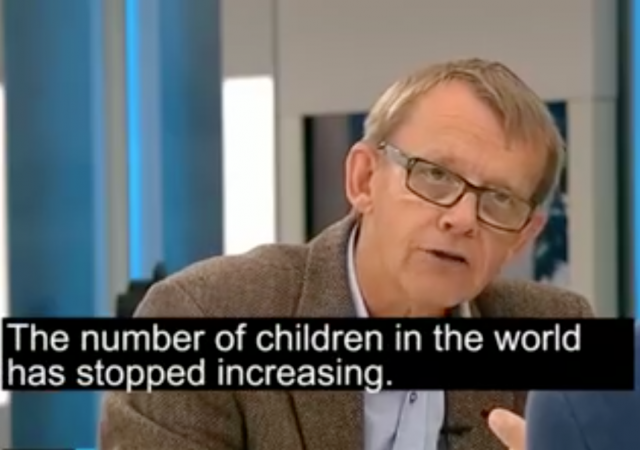
Hans Rosling from Gapminder explains why the media cannot and does not provide us with an accurate understanding of what's happening globally. The idea seems a bit obvious, but how often is it actually articulated? If it's not doom, gloom, scandal, or a puppy doing something cute, it doesn't make the nightly news cut. The resultant product leaves the casual viewer with a skewed view on the state of global affairs.
You need more than the media to grasp the world

You need more than the media to grasp the world

Posted by Gapminder on Friday, September 4, 2015

From the "This is Why We Can't Have Nice Things" Department: West Point's annual plebe pillow fight ended in actual bloodshed, broken bones, and 24 concussions. According to West Point Superintendent Lt. Gen. Robert L. Caslen, Jr., the majority of the plebes participating in the traditional fight, which took place on August 20, kept to the spirit of the thing---meaning they didn't arm themselves with the white sale equivalent of a medieval flail. More from Fox News:
Lt. Col. Christopher Kasker told the newspaper the annual fight is organized by first-year students as a way to build camaraderie after a grueling summer of training to prepare them for plebe life. He said upperclassmen overseeing the fight required cadets to wear helmets, but video shows many did not. Some cadets swung pillowcases believed to be packed with their helmets. The Times noted one freshman posted on Twitter: "4 concussions, 1 broken leg, 2 broken arms, 1 dislocated shoulder, and several broken ribs. That’s one hell of a pillow fight. #USMA19." Kasker said all cadets have since returned to duty. None of the participants have been punished.
Just watch the video---you know you want to:

Welcome to Labor Day---the calendar's signal that the August doldrums are behind us, and that it's time for a long slog toward "The Holidays" and the inevitable pedal-to-the-floor pace of an election year. It's sometimes hard to remember that almost none of the political battles we've fought over the past 8 months are over novel issues. Jobs, the economy, dealing with foreign governments---it has all been done before, in some form or another. Today, let Ronald Reagan's 1984 Labor Day message remind you why conservatives should fight for principles---not just for or against haphazard policies that come and go with each new President or Congress. Give it a read---you'll find some familiar themes. [Emphasis mine]:
Today, we pay tribute to America's working men and women, and I join with all Americans in celebrating the dignity and productivity of our working people. Labor Day brings a fitting opportunity to salute those who built our great nation and whose spirit, hard work and courage are now building a new era of lasting economic expansion filled with greater opportunities for all our people. America is on the move again. We're witnessing the fastest rate of job creation in the world—7 million jobs in the last year and a half—and today, more Americans are working than ever before. The erosive effect of inflation on workers' paychecks has ended, and the increase in after-tax personal income is the largest in our history.

Some classic cable news was created this weekend when CNN's Jake Tapper asked Sarah Palin what role she thought she could fill in a Donald Trump administration. Palin volunteered for the role of energy secretary but said that she'd close down the department. Even the Washington Post took notice. Vanessa Williams reported:
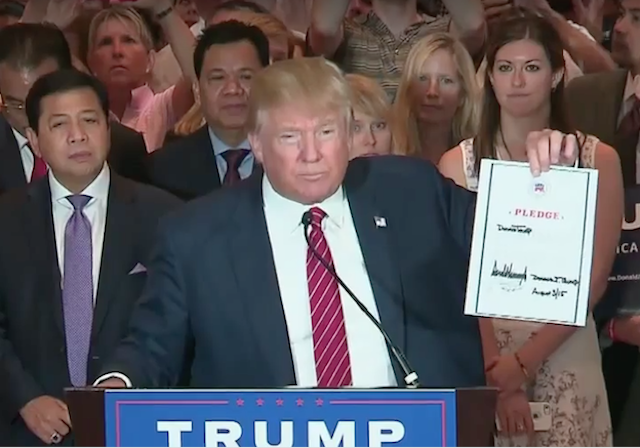
Sarah Palin would like to be energy secretary — but not for long Sarah Palin thinks she would make a great secretary of the U.S. Energy Department because as a former governor of Alaska she knows a thing or two about "oil and gas and minerals." But she would not stay in the job for long if Republican candidate Donald Trump won the presidency and asked her to serve. The businessman and reality TV show star has said that he would "love" to have Palin in his administration "because she really is somebody that knows what’s happening. And she’s a special person." Palin, during an interview Sunday on CNN's "State of the Union," said: "I think a lot about the Department of Energy, because energy is my baby ... And if I were head of that, I would get rid of it. And I would let the states start having more control over the lands that are within their boundaries and the people who are affected by the developments within their space."

California Governor Jerry Brown has hit a bit of a rough patch. The first bump: A tense visit from groups who usually have the support of progressives like Brown.
Occupiers from Black Lives Matter and the Council on American Islamic Relations (CAIR) descended upon California’s capitol Wednesday by the hundreds, demanding state legislators pass a new bill on racial profiling, and calling on Governor Jerry Brown to sign it. Senate Floor Analysis notes that the bill, AB 952, would require peace officers conducting “stops” to begin reporting the “perceived race or ethnicity, gender, and approximate age of the person stopped.”
One of the chants used by the activists even drew a comparison to ancient Egyptian tyrants: “This is what a Pharaoh looks like!” The second bump occurred while promoting his newest proposal for road repair. After contending with the latest flavor of progressive nuttiness, Brown was poised to market a plan featuring the implementation of new taxes:

As political pundits struggle to find an explanation for Trump's indisputable success in the GOP 2016 presidential primary contest, Josh Barro wonders if Trump is the candidate reform conservatives are seeking.  He writes:

For the last few years, a small but prominent group of conservative writers and thinkers has urged the Republican party to rethink its economic agenda with a greater focus on the needs of the middle class. The so-called reform conservatives have criticized the G.O.P.’s economic prescription of cutting entitlement programs and tax rates (especially on high earners) as unresponsive to the concerns of workers earning stagnant wages.

“Reform conservatism is based on a recognition that the American economy has not served middle-income people well, not just since the crisis of 2008 but at least since the year 2000,” said David Frum, the prominent Canadian-American conservative journalist and former speechwriter for George W. Bush who serves as a senior editor at The Atlantic.

As Hillary lags in the polls and her unfavorables soar, Draft Biden makes significant moves in Iowa. The Hill reports:
The group urging Vice President Joe Biden to launch a 2016 bid for the Democratic presidential nomination announced Friday that two longtime backers of Biden have signed on as co-chairs in the early-voting state of Iowa. . . . .  Draft Biden also announced on Friday that around a dozen Iowa elected officials have signed on to the effort as committee members, as well as a pair of political operatives, to direct organizing efforts in the state. The staff moves lend new credibility to the budding effort to convince the vice president to run against former secretary of State Hillary Clinton, the party’s front-runner. . . . .  The Draft Biden announcement on Friday also came on the same day that news emerged that Clinton's campaign would spend $4 million in ads in Iowa and New Hampshire over the next two months.

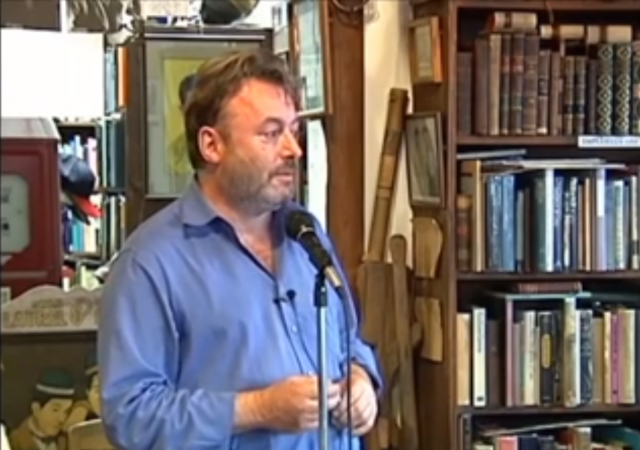
Years ago journalist and literary critic Christopher Hitchens shared his candid thoughts on a Hillary Clinton presidential bid. "As for Mrs. Clinton, as for all she's done for us and after all she's suffered on our behalf, she feels she's owed the presidency and who could possibly disagree? Her life is meaningless if she doesn't get at least a shot and one can only sympathize. Unless you think, as I do, that people should be distrusted, who are running for therapeutic reasons," said Hitchens. Hitchens passed away in 2011, but his arguments against electing Mrs. Clinton are even more relevant today in light of her poor performance as Secretary of State, EmailGate, and her relationships with foreign officials who's interests are not congruent with those of the United States:

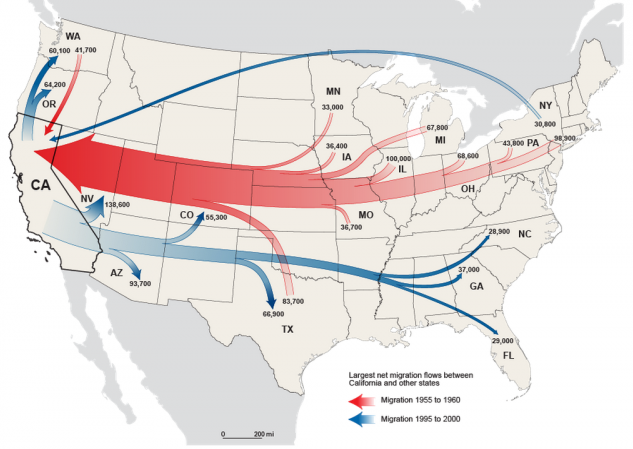
A newly published study shows taxpayers are (still) abandoning blue states and heading to states where Republicans retain a greater level of influence. Leah Jessen of the Daily Signal reported:
Study: Taxpayers Are Leaving Democrat-Run States for States Controlled by Republicans In an analysis of Internal Revenue Service income statistics and migration data, Americans for Tax Reform—an advocacy group for lower and simpler taxes—concluded that in 2013 more than 200,000 taxpayers fled states with a Democrat governor to states with Republicans in control. The analysis shows that in 2013 states run by Democrats lost 226,763 taxpayers while Republican-run states gained about 220,000 new taxpayers. The state with the most growth in new taxpayers? Texas. The state, governed by Republican Rick Perry during the 2012-2013 year, saw a positive net migration of 152,477 people. “Texas accounted for more than half of the net migration into the South,” the IRS reports.
The IRS report can be seen here.

Early in the 2016 cycle, the Republican establishment pushed Marco Rubio aside in Florida and put its money and support behind Jeb Bush. That decision has created a scenario which could rob both candidates of the state's highly coveted delegates. Jim Newell of Slate reported:
Has the Republican Establishment Created a Monster? Last fall, when Jeb Bush was still mulling a bid for the presidency, Bloomberg Politics reported on what was considered then—and is still considered now—Bush’s greatest advantage as a presidential candidate: His ability to separate wealthy donors from vast sums of money quickly. “Unlike his competitors,” the thinking went, “Bush could lure donors off the fence in a hurry, without undergoing a hazing trial to test skill and stability.” That is precisely what happened. Instants after announcing over the winter that he was “seriously considering the possibility of running for president,” Bush and his team set up the Right to Rise PAC and super PAC to serve as cash receptacles for eager GOP establishment donors. The money rolled in, and by July the super PAC announced that it had met its goal of raising more than $100 million in the first six months of the year.

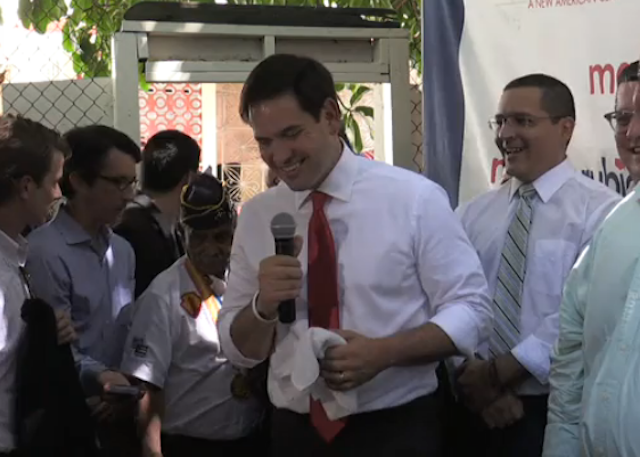
This week top presidential contenders from both parties journeyed to Puerto Rico to talk economics, health care, and the future of the commonwealth's place in American politics. Puerto Ricans won't vote in the presidential election, but their 23 delegates could mean the difference between life and campaign death in a field as crowded as the GOP's is, and the Democratic Party's is likely to become; and both Hillary Clinton and Marco Rubio appeared determined to stake their claim. Their events were only miles apart, but represented stark differences in the way the two candidates are courting voters. Marco Rubio played to a packed neighborhood bar, and made his speech (mostly in Spanish) while unabashedly wiping the sweat from his face. He made a point to jab at Clinton, referencing the scandal surrounding her private server, and predicting that her vision for Puerto Rico would be limited to the same policies that have contributed to the country's current fiscal crisis. From the AP:
Rubio said the island faces multiple challenges, but remained firm that allowing its municipalities and agencies to declare bankruptcy is not the answer. "I don't believe Chapter 9 would solve Puerto Rico's problems," he said, adding that the island has spent more money than it had available. "Ultimately, if there is no other option left, Chapter 9 is a viable option at that point."