


Image 01 Image 03

September 2014

The Scots voted against independence yesterday. At the time the BBC called the referendum election, the No votes (those voting against the referendum for independence) had garnered 54% of the votes counted. Alex Salmond, leader of the Scottish National Party and leader of the pro-independence movement, conceded the referendum loss late last night: There was nothing else on the ballot, just the question of independence.
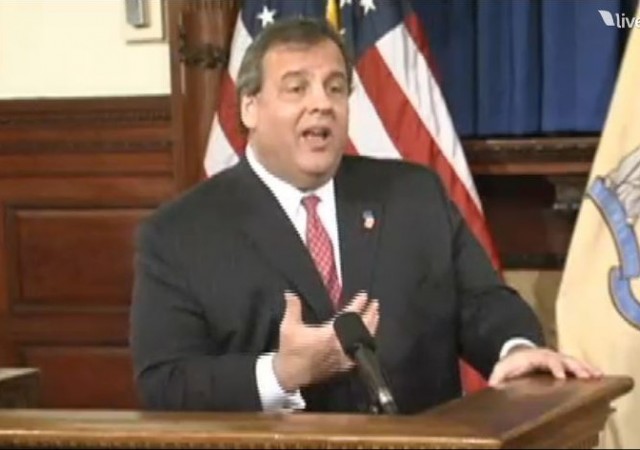
The nearly-year long investigation into New Jersey Governor Chris Christie's involvement in "Bridgegate" has revealed no evidence so far connecting Christie to last year's George Washington Bridge lane shutdown that caused complete gridlock for commuters traveling between New York and New Jersey. From NBC New York:
“My experience with federal law enforcement is that once you reach critical mass if you don’t have it within nine months or so you’re not likely to ever get it,” former federal prosecutor Robert W. Ray said. When the final report is issued, Christie may still face complications from the scandal, said Lee Miringoff, Director of the Marist Institute for Public Opinion “That’s good news for him,” Miringoff said. “The bad news remains that politically as chief executive it looks like he was not in control of his administration at the time when this occurred. So that remains the downside for him. That doesn’t go away but this panel provides greater credibility barring any further revelations coming out.”

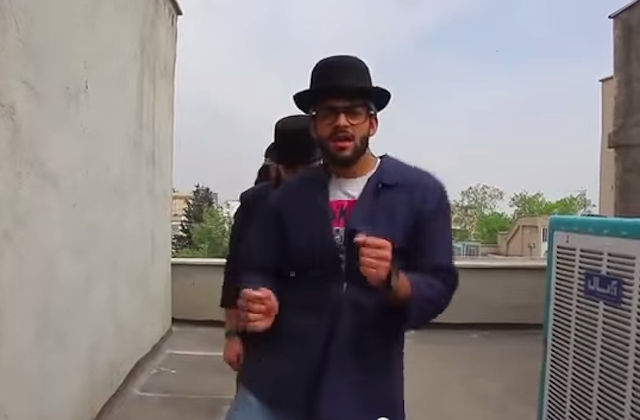
This is a horribly heart-breaking story. Seven young Persians filmed their own rendition of "Happy" by Pharrell Williams, but in totalitarian regimes like Iran's, no good deed goes unpunished. A CNN Reporter tweeted the following: According to the Iran Wire, six of the accused were sentenced to six months in prison and 91 lashes, while the remaining offender was sentenced to a year in prison and 91 lashes:

Today's the day of Scotland's historic vote on whether it should be an independent country after 307 years of membership in Great Britain. This a simple majority vote, and is described as very close at a near 50-50 split. Which brings us to a bigger question: should such a momentous decision be made by a simple majority of voters on a single day, at a single point in time? My answer would not be "yes." It depends on how much a person believes in a pure democracy. I do not trust it overly; I fear the tyranny of the overbearing majority that Madison feared. Apparently the Scots have no such trepidation. So, this is the sort of thing Scotland will get:
Conor Matchett, 19, a philosophy student at the University of Edinburgh, said he was both nervous and optimistic about the outcome after voting Yes. "I want change. It's as simple as that," he said. "I believe a Yes vote is the only way to do that." Matchett, originally from York, in Northern England, but granted a vote in Scotland's referendum on the grounds of his residency here, said he was voting to counter what he felt was the continuing politics of austerity from British politicians down south in Westminster. "They are attacking the welfare state and many other things that people in Scotland hold really dear," he said.
It seems unwise that a 19-year-old college student, attending school in Scotland but actually from York, should have a say in this matter. Hope/change; sound familiar? "Simple as that."

Apple's latest update to its OS includes a lot of neat bells and whistles, but one key upgrade has privacy advocates cheering. This latest reboot has eliminated Apple's longstanding capability to access users' iPhone and iPad passcodes; in the past, this allowed Apple to both help users remember forgotten passcodes---and comply with search warrants. iOS 8, however, will actually prevent Apple from accessing user passcodes. Via the Washington Post:
“Unlike our competitors, Apple cannot bypass your passcode and therefore cannot access this data,” Apple said on its Web site. “So it’s not technically feasible for us to respond to government warrants for the extraction of this data from devices in their possession running iOS 8.” As the new operating system becomes widely deployed over the next several weeks, the number of iPhones and iPads that Apple is capable of breaking into for police will steadily dwindle to the point where only devices several years old — and incapable of running iOS 8 — can be unlocked by Apple.
This update, however, does not prevent Apple from accessing data via iCloud. Apple will still have a legal obligation to give police access to any data (pictures, music, e-mails, text messages, etc.) that is backed up to the cloud. (You can turn off this setting on your individual device.) Surprising absolutely no one, law enforcement agencies have put on their "concerned face" over the new changes:

It's a good thing we still have scientists who refuse to accept settled science and scientific consensus, and keep on digging and questioning prevailing wisdoms. It seems that many of such scientists are in Israel, perhaps because politicized scientific conformity is not as prized in the "start-up nation" as it is in Euorpe and the U.S. One example from Israel we reported on previously was Nobel Prize in Chemistry awarded scientific denier:
Israeli scientist Daniel Shechtman won the 2011 Nobel Prize in chemistry on Wednesday for his discovery of quasicrystals, a mosaic-like chemical structure that researchers previously thought was impossible. The Royal Swedish Academy of Sciences said Shechtman’s discovery in 1982 fundamentally changed the way chemists look at solid matter. It initially faced strong objections from the scientific community, and even got him kicked out of his research group in the United States.
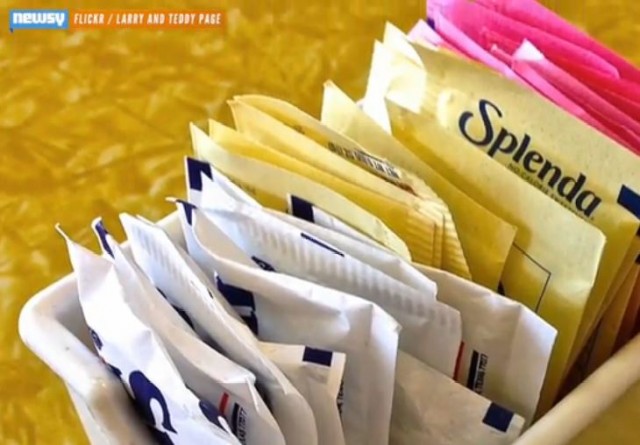
Now another, from AFP via Times of Israel, Sweeteners boost diabetes risk, Israeli study finds:

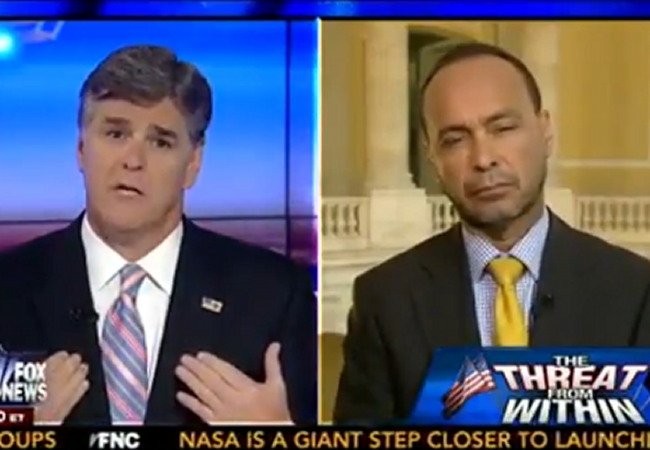
Luis Gutiérrez is a Democratic representative from Illinois who frequently attacks anyone who is not for amnesty. As an example, here he is on Sean Hannity's show claiming that securing the U.S. border would be a dereliction of his duty. Transcript and video via Real Clear Politics:
Gutierrez: Voting to Secure Border First "Would Be Derelict In My Duty to Protect America" SEAN HANNITY: Last word. You can pass a bill, secure the border first, would you support that? REP. LUIS GUTIERREZ (D-IL): No. Because it would be folly. It would be derelict in my duty to protect America. HANNITY: In the mean time, every day you don't pass that bill -- you're demanding amnesty. GUTIERREZ: I would be derelict to my duty. [CROSSTALK] GUTIERREZ: It sounds great. It sounds good. HANNITY: It doesn't sound great. GUTIERREZ: It sounds good, but it isn't an effective -- HANNITY: If you don't do it, it's a dereliction of duty, sir.
Here's the video:

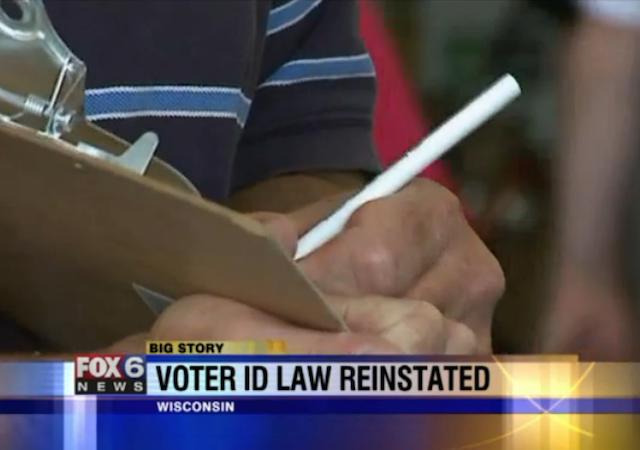
The legal challenges surrounding Wisconsin's contentious voter ID law just got a little more complicated. On Tuesday, the American Civil Liberties Union, League of United Latin American Citizens of Wisconsin and Advancement Project asked for a full-court hearing to reconsider September 12th's ruling allowing the State to implement voter ID requirements in time for the midterm elections. Via Bloomberg:
Contending last week’s ruling by a three-judge panel of the U.S. Court of Appeals in Chicago came too close to the election date and will sow confusion among voters and polling place officials, the American Civil Liberties Union, League of United Latin American Citizens of Wisconsin and Advancement Project asked for a rehearing by a full 10-judge panel. The groups submitted their request yesterday. The court today gave Wisconsin officials until Sept. 23 to respond. ... “No court has permitted a voter ID law to go into effect this close to an election based on last-minute changes to the law,” the opponents of the measure said in yesterday’s filing.
September 12's ruling allowed the provisions to go into effect only because the State eliminated barriers to acquiring a valid ID. This countered arguments that the requirements could cause irreparable harm to voters:

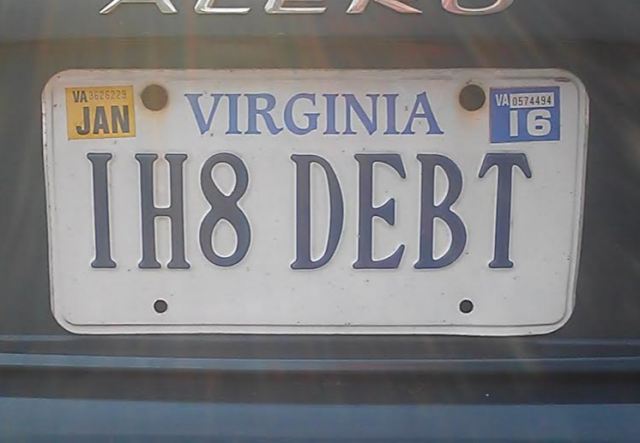
of debt, lover of country....

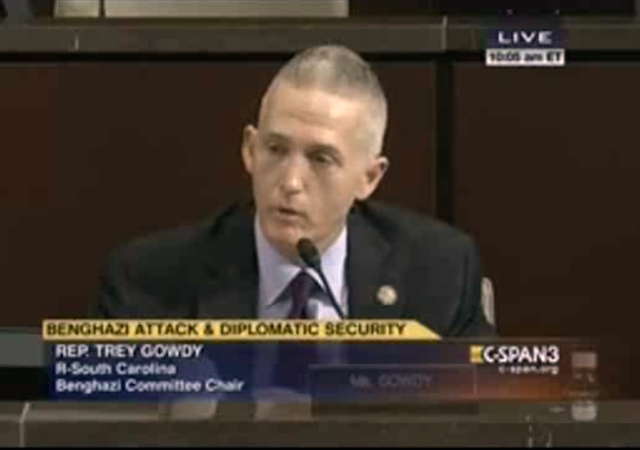
The House Committee tasked with uncovering what really happened when Ambassador Chris Stevens and three other Americans were murdered at the U.S. embassy in Benghazi held its first hearing today, reigniting the firestorm surrounding the State Department's alleged mishandling of diplomatic security in the region. Via ABC News:
Rep. Trey Gowdy of South Carolina vowed to pursue the facts wherever the lead him. Opening his committee's first public hearing since its establishment four months ago, he stressed the thoroughness of the task ahead, not the need to reach immediate conclusions. "Given the gravity of the issues at hand, I am willing to risk answering the same question twice rather than risk not answering it once," said Gowdy, a former federal prosecutor leading Congress' eighth investigation of the deadly Sept. 11, 2012, attack in eastern Libya. Congress is still seeking documents from the Obama administration related to the attack, he said. More witnesses are being interviewed and individuals who've participated in congressional investigations will be questioned again. The special investigation was created to "find all of the facts, and I intend to do so fully," Gowdy said.
Highlighted at today's hearing was the testimony of Todd Keil, who raised concerns about out-of-date security protocols governing diplomatic security. Keil, who is a member of the Independent Panel on Best Practices, ripped into the State Department for ignoring the Panel's advice and continuing on with ineffective methods of protecting diplomats overseas:

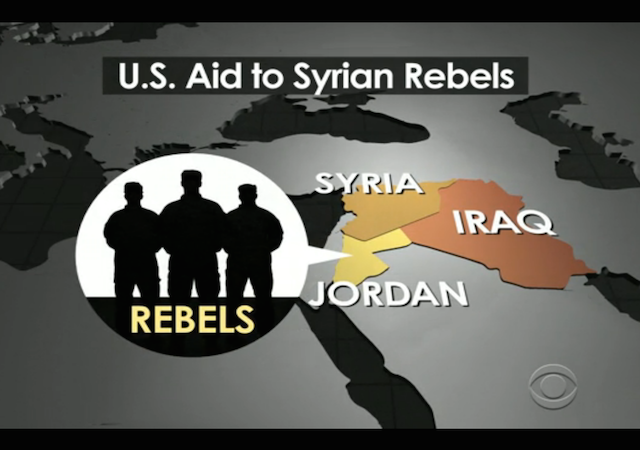
Today, the House approved a $500 million measure dedicated to the arming and training of Syrian rebels.
The authorization is limited in scope to training up to 5,000 members of the Syrian opposition in Saudi Arabia. It provides no new funding and requires the administration to provide status reports to Congress. The Obama administration said the mission may be funded by international contributions, but the resolution authorizes the Pentagon to shift funds from other accounts if necessary.
Although the vote was bipartisan (273-156), both Republicans and Democrats have serious concerns about the President's plan to roll back ISIS. Via the Washington Post:
Democrats are concerned that without clearly defined parameters passed by Congress in the coming months, new U.S. military operations in the Middle East could fester for several years with no clear strategy or definition of success. Republicans have worried that Obama's plans so far are too limited. One top GOP leader suggested Congress could go as far as giving the president blanket military authority, even if Obama doesn’t want it, when Congress holds a much broader debate after the November elections about the fight against Islamic terrorists.

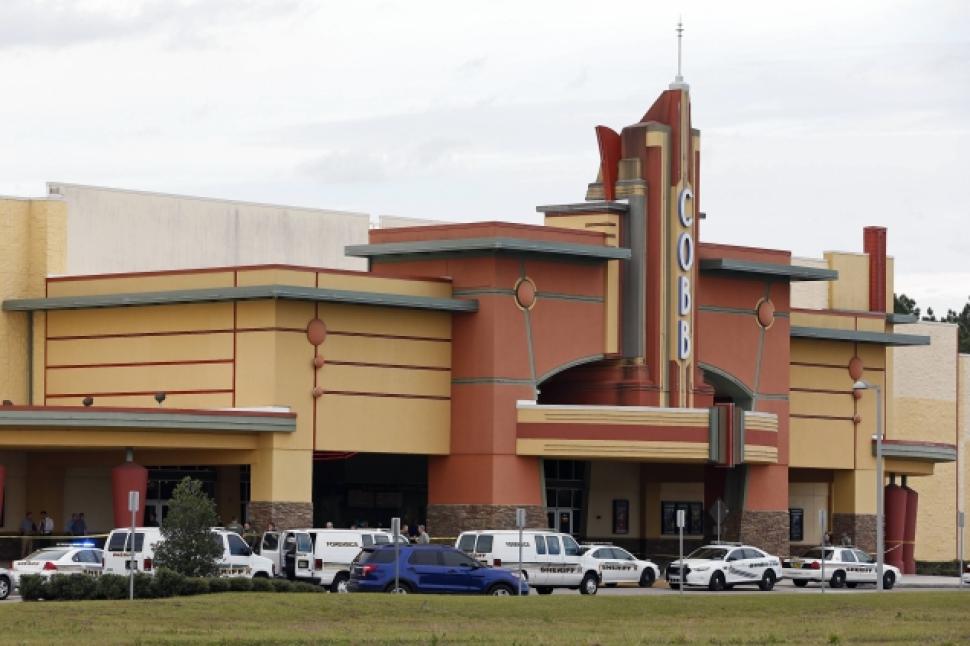
A trial date has finally been set for Curtis Reeves, the Florida retired police officer charged with murder in the shooting death last January of Chad Oulson over a dispute in a movie theater in which Oulson threw popcorn at Reeves. Trial Judge Pat Siracusa, overseeing the case, set a three week window for the trial, running from March 2 through March 30. We previously covered this case here at Legal Insurrection,  Florida Theater Shooting Induces Another Round of “Stand Your Ground” Mania; and over at the Law of Self Defense blog here, Legally-Sound Self-Defense Strategy Rule #1: KEEP OUT OF TROUBLE IN 1st PLACE.

Defense Informs Court it Intends to Depose ~100 Witnesses

Why such a long delay--14 months from the date of the shooting!--for the start of the trial? The answer seems to be the sheer volume of discovery and pre-trial preparation undertaken, which in turn is a function of how crowded the theater was with movie goers (now, of course, witnesses.) A court document (embedded at the bottom of this post) filed last week by defense attorneys Richard Escobar and Dino Michaels indicates that they intend to depose as many as 100 witnesses. In the nine months since the shooting they have deposed only 19 of these, leaving 81 to be completed in the less than six months remaining before the trial.

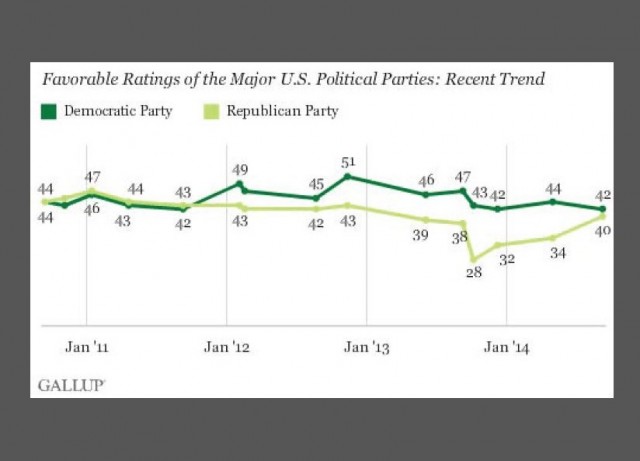
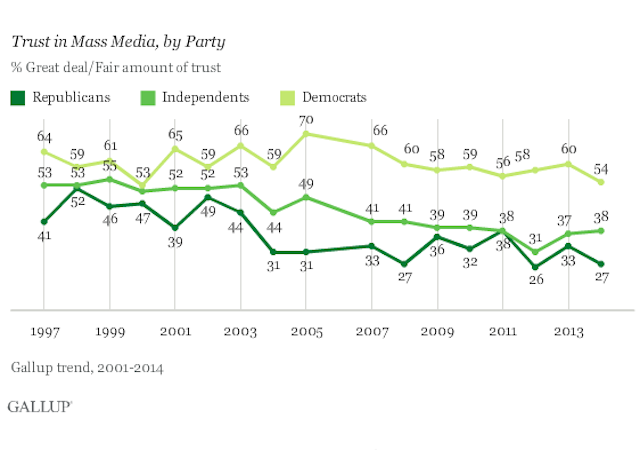
A new poll by Gallup shows that overall trust in the mass media has bottomed out at its previous all-time low of 40%. Via Gallup:
Prior to 2004, Americans placed more trust in mass media than they do now, with slim majorities saying they had a "great deal" or "fair amount" of trust. But over the course of former President George W. Bush's re-election season, the level of trust fell significantly, from 54% in 2003 to 44% in 2004. Although trust levels rebounded to 50% in 2005, they have failed to reach a full majority since. Americans' trust in the media in recent years has dropped slightly in election years, including 2008, 2010, 2012, and again this year -- only to edge its way back up again in the following odd-numbered years. Although the differences between the drops and the recoveries are not large, they suggest that something about national elections triggers skepticism about the accuracy of the news media's reporting.
The fact that trust in the MSM dips in election years isn't a surprise, and it says a lot about the media's place in America's electoral process. If only 40% of Americans trust what the media is saying, does the media play as big a role in swaying votes left as it once did? The midterms should be a good indicator of this, although I think "trust" has less to do with overall effect than does the constant bombardment (and and hero worship, in some cases) of one name over another.

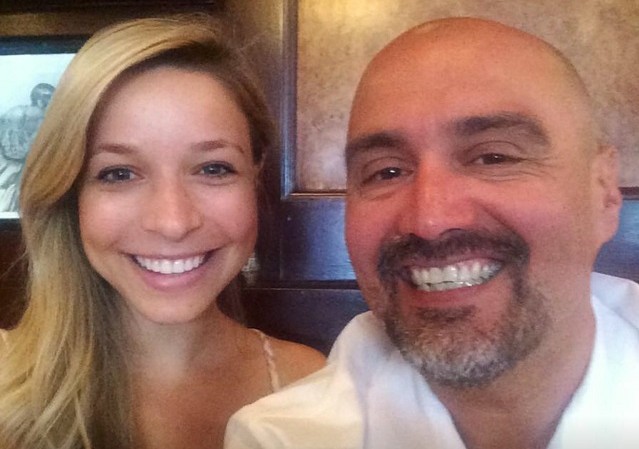
(Above, Kira Kazantsev, Miss America 2015, and former boss, Democratic activist Chuck Rocha of Solidarity Strategies.)
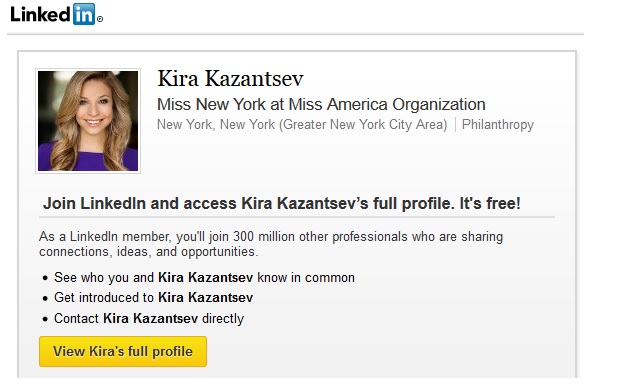
On Monday, Steve Ertelt of LifeNews.com reported an interesting fact he found on the LinkedIn page of the newly crowned Miss America. Kira Kazantsev LinkedIn1 Her most recent job experience (other than performing her duties as Miss New York and competing in the Miss America pageant) was three months as an "education" intern with Planned Parenthood. Her profile says that she presented programs in local schools regarding mutual respect and self-esteem. Is this how the country's leading abortion provider is insinuating itself into the lives of school children?

For the last few years, liberals have been trying to re-brand the War on Poverty as a fight against income inequality, but that effort may have come too late. According to a new report from Robert Rector at the Daily Signal, the writing is on the wall:
The War on Poverty Has Been a Colossal Flop Today, the U.S. Census Bureau will release its annual report on poverty. This report is noteworthy because this year marks the 50th anniversary of President Lyndon Johnson’s launch of the War on Poverty. Liberals claim that the War on Poverty has failed because we didn’t spend enough money. Their answer is just to spend more. But the facts show otherwise. Since its beginning, U.S. taxpayers have spent $22 trillion on Johnson’s War on Poverty (in constant 2012 dollars). Adjusting for inflation, that’s three times more than was spent on all military wars since the American Revolution. The federal government currently runs more than 80 means-tested welfare programs. These programs provide cash, food, housing and medical care to low-income Americans. Federal and state spending on these programs last year was $943 billion. (These figures do not include Social Security, Medicare, or Unemployment Insurance.)
Michael D. Tanner of the Cato Institute made a similar point in January of this year:
War on Poverty at 50 — Despite Trillions Spent, Poverty Won Fifty years ago today, President Lyndon Johnson delivered his first State of the Union address, promising an “unconditional war on poverty in America.” Looking at the wreckage since, it’s not hard to conclude that poverty won.

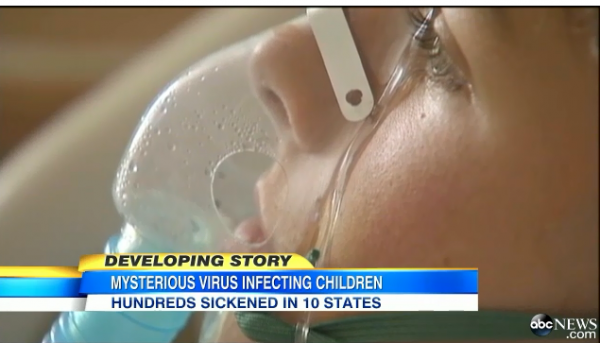
Last week, there were dozens of stories about American children flooding emergency rooms in 10 states; they were infected with a cold-like virus that devastated their respiratory systems. This week, the list of states reporting cases of the virus, now classified as Enterovirus D68, has risen to 12:
Since mid-August, the Centers for Disease Control and Prevention has confirmed more than 100 cases of Enterovirus D68 in 12 states: Alabama, Colorado, Illinois, Indiana, Iowa, Kansas, Kentucky, Louisiana, Missouri, Montana, New York and Oklahoma.

Yet the real number of severe respiratory illnesses caused by this virus is probably even higher, the CDC says.

Enterovirus D68 is related to the common cold virus. However, children who have asthma face potentially life-threatening symptoms without the proper treatment. Additionally, there are indications that the virus is already impacting other states beyond the 12 formally recorded.
The respiratory virus that’s been sweeping the nation and sending asthmatic children to the hospital may have only been officially reported in 97 children, but experts say that’s just the tip of the iceberg. Dr. Claudia Hoyen said the virus, called enterovirus D68, probably affected thousands of children -- and that’s just in Cleveland, where she works. The virus has been reported in 21 states, according to state health departments. At UH Rainbow Babies and Children's Hospital in Cleveland, about 20 children normally go to the intensive care unit each month with respiratory symptoms, said Hoyen, who heads the hospital’s pediatric infection control program. But for the last two months, the hospital’s intensive care unit has treated 80 children per month, she said. The rare enterovirus starts out like the common cold but can quickly turn more serious -- especially in children with asthma. Enteroviruses often appear in the summer and fall, but an outbreak like this hasn’t occurred since the 1960s, Hoyen said.