

Image 01 Image 03

US Supreme Court Tag

On Tuesday, the Supreme Court of the United States, stuck in a 4-4 deadlock, affirmed the lower court's decision in Friedrichs v. California Teachers Association, a labor union dues case. The one sentence decision offered no explanation and simply stated, "The judgment is affirmed by an equally divided Court."
Should public employee unions be able to impose mandatory dues?

At issue in the case was a challenge to the power of public employee unions to impose mandatory dues, an issue that has been bitterly fought by both sides of the labor union debate. Tuesday's ruling allows the unions to continue to collect dues for collective bargaining costs, pursuant to a prior case from 1977 that allowed these mandatory dues, so long as the employees were not forced to pay for political or ideological activities.

The Supreme Court of the United States ruled today that Second Amendment does include stun guns, in a ruling issued on Monday. In the short per curiam ("by the Court") opinion in Caetano v. Massachusetts, the Court set aside a ruling by the Massachusetts Supreme Judicial Court, rejecting the arguments offered for allowing the state to ban possession or use of stun guns as in conflict with the Second Amendment. Justices Samuel Alito and Clarence Thomas wrote a separate concurring opinion supporting the self-defense rights of Jamie Caetano, the Boston woman whose conviction was the basis for the case. The State of Massachusetts now has the choice of dropping the conviction against Caetano, or coming back to try new arguments to support their ban.

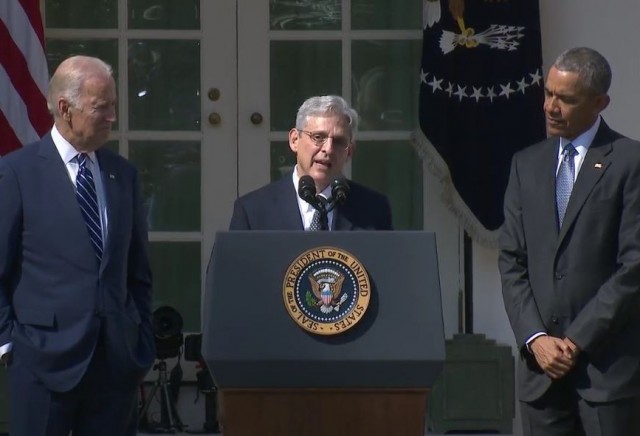
Numerous news reports indicate that at 11 a.m. this morning Obama will hold a press appearance to introduce Merrick Garland, currently Chief Judge of the U.S. Circuit Court of Appeals for the District of Columbia, as his nominee to fill the vacancy created by the death of Antonin Scalia. We will add additional information regarding Garland soon. Not that it likely matters, since Republicans in the Senate have promised not to act on any nomination until the next president. Though, wondering if that will change if Trump is the Republican presidential nominee and it becomes obvious he will lose the presidency and Republicans might lose the Senate, in which case Garland may be less bad than whoever Hillary picks. I predict some wobbling. But first, the really important question: Do you really think he looks like me? https://twitter.com/alwaysonoffense/status/710107700558958592

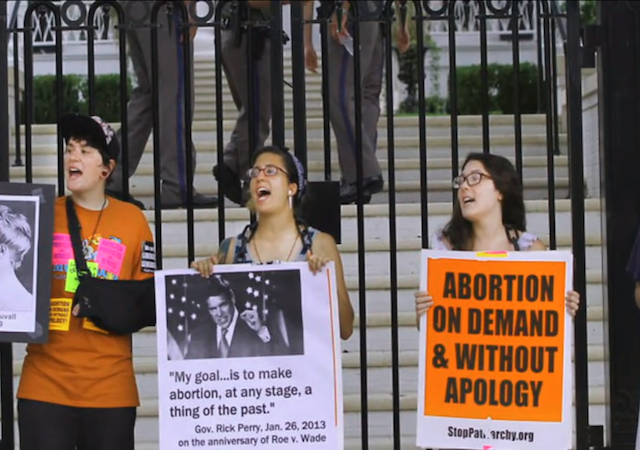
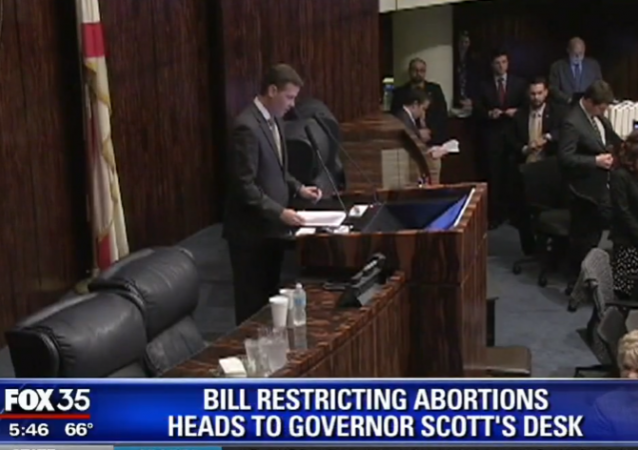
On Thursday, Florida Governor Rick Scott signed a bill that would cut off state funding to abortion provider Planned Parenthood and increases the safety requirements for abortion clinics. The bill was cheered  by pro-life activists across the country and also brings added importance to a case pending before the United States Supreme Court. The bill, HB 1411, contains provisions similar to those in the Texas abortion law currently being challenged before the Supreme Court, requiring abortion doctors to have admitting privileges at nearby hospitals and requiring abortion clinics to meet the same standards as ambulatory surgical centers. The Florida law also mandates annual inspections for abortion clinics, including a review of at least 50 percent of their records, in order to have their licenses renewed.

A reader sent me a post from a Chabad publication which sheds light on an aspect of Justice Antonin Scalia's career I did not previously know. But it doesn't surprise me. I'm a big fan of Chabad, as I've previously mentioned:
Chabad, the Lubavitch Orthodox Jewish organization, has emissaries and houses on campuses and locations around the world. It is not a proselytizing group. It doesn’t seek to convert anyone, focusing instead on bringing Judaism to Jews.
“Everything in this world was created for a divine purpose. All forms of modern technology can and should be harnessed to make the world a better place and, in the case of Jews, to spread Judaism in the widest possible manner.” as quoted in The New York Times “No Jew should ever be lost to the Jewish people, no Jew must ever be lonely.” as quoted in The Jewish Week
The campus Chabads are particularly fantastic, in my experience. Non-judgmental, welcoming, and enthusiastic (that’s an understatement). Major shout out to the folks at Cornell Chabad and the recently opened Chabad of Clinton (NY), servicing my alma mater, Hamilton College.
The article sent to me by the reader is Antonin Scalia Remembered as an Advocate for Religious Freedom:

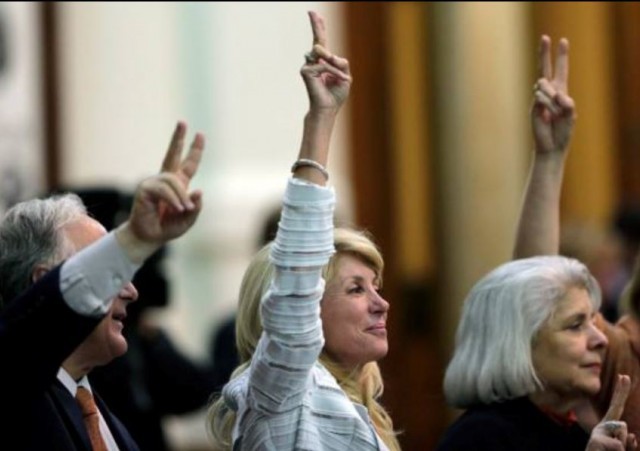
The Supreme Court of the United States has resumed hearing oral arguments since the death of conservative stalwart Justice Antonin Scalia. His seat remains empty, leaving the Court's already-tenuous balance even shakier as they address one of the most important abortion cases during recent years. Wednesday, the Court heard oral arguments in Whole Woman's Health v. Hellerstedt, the case challenging HB 2, the Texas abortion law made famous when then-State Senator Wendy Davis filibustered it in 2013 in pink sneakers. Davis' filibuster was a short-lived victory, as the law was passed days later in a special session, and her sneakers ended up at a garage sale. (Full transcript of the oral arguments posted here.) Wendy Davis rising victory sign via Facebook Page

(UPDATED: This post has been updated with the transcript of the oral arguments, at the bottom of this post. h/t Shall Not Be Questioned blog.) In a turn of events sure to shock those who follow the US Supreme Court, Justice Clarence Thomas has broken with his 10-year-long record of declining to engage in oral argument, reports USA Today. Only once in the last 10 years has Justice Thomas made even the slightest remark during oral arguments, and that was merely a one-sentence aside made in jest to Antonin Scalia some three years ago.  Justice Scalia, a close friend of Thomas', passed away two weeks ago. The case which prompted Thomas to substantively engage in oral argument, Voisine v. US, centers on the Second Amendment.  Thomas choosing to break his habitual silence on this Second Amendment case may have been in homage to his friend Scalia, who greatly enjoyed displaying his wit in oral arguments. The recently deceased Scalia was instrumental on crafting pro-Second Amendment decisions by the Supreme Court in recent years, including the acknowledgement of a Constitutional right to keep and bear arms for self-defense in the cases of Heller and McDonald.

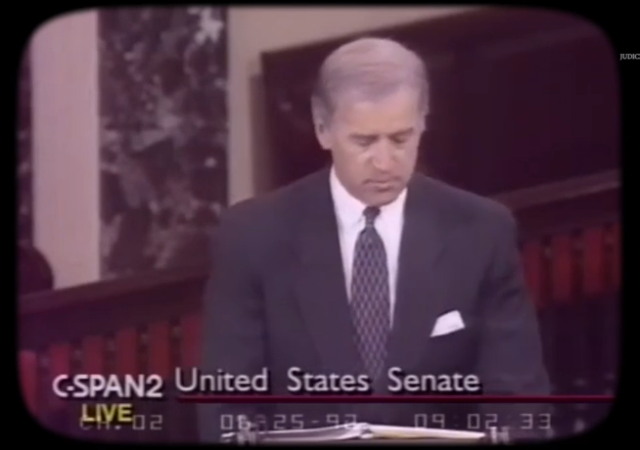
Democrats are pushing hard for the senate to lay down and approve an Obama nominee for the U.S. Supreme Court even after Chuck Schumer was caught on video urging Dems to block Bush nominees to the court in 2007. Now a video of Joe Biden has surfaced in which the VP, then a senator, said that SCOTUS nominations shouldn't happen during an election season. A group called the Judicial Crisis Network has spliced together the Biden footage with Hillary and other Democrats talking about the issue recently.

There were many moving images today as Justice Antonin Scalia's body was brought to and placed in repose in the Supreme Court. The Featured Image was one of the most moving. His former law clerks lined up outside the Supreme Court awaiting arrival of his body. (h/t @amandacarpenter) They continued to stand guard as the casket was carried up the steps: Scalia Law Clerks Casket Steps

Just four years ago, the Democrats were calling the GOP the party of old white people. Today, Democrats are running two old white people while the Republican candidates have been extremely diverse. Despite this new reality, Hillary Clinton is clinging to accusations of racism against Republicans, in this case because there is opposition to letting Obama choose Justice Scalia's successor. The Washington Post reports:
Clinton: ‘Racial language,’ ‘bigotry’ part of Republican Supreme Court delay Days after Supreme Court Justice Antonin Scalia died suddenly in Texas, Democratic presidential candidate Hillary Clinton has fused two of the most controversial issues of the 2016 campaign — the debate over who should choose Scalia’s successor, and race.

I don't normally watch Stephen Colbert on the Late Show. Somehow, it turned up on my TV last night. I'm not even sure I could replicate the error. When I heard him turn to the topic of Antonin Scalia I thought, oh boy, here we go. But I was so pleasantly surprised. Colbert told of his one personal interaction with Scalia, and it was both funny and moving, as Salon.com reported:
“Whether or not you agreed with him–or made a lot of jokes about him, like I did–one thing you’ve got to admit is that he had a great sense of humor,” Colbert began. “People have actually broken down the transcripts of oral arguments, and he told more jokes and got more laughs than any of the other justices.” “I was lucky enough to have one conversation with Antonin Scalia that explained his appeal to me,” Colbert continued, describing his speech at the 2006 White House Correspondents Dinner. “Not many people laughed in the front row,” where the “important people” sit.

Media discussion of Justice Scalia's death and its implications for the public unions case Friedrichs v. California Teachers Association overstates the impact and misses the larger issue. Before Justice Scalia died, it was very likely the Court would hold that it is unconstitutional for state law to require, or even simply allow, "agency shop" agreements compelling non-union members to nevertheless contribute to the union's collective bargaining and related expenses.  Now, the Court will probably affirm the Ninth Circuit's decision upholding agency shop agreements, but without setting precedent. That is obviously a better outcome for the Union, but how long will it last?  The New York Times says "a major threat to public unions has evaporated."  Reuters writes more temperately that "a 4-4 split is a likely outcome, which would hand a win to the unions as that would leave the lower court's ruling in their favor in place."

Back in 2007, Chuck Schumer stated plainly that Democrats should block all U.S. Supreme Court judges nominated by then president George W. Bush. There is no other way to interpret his words: Having been confronted with this irrefutable evidence that Democrats played partisan politics on this very issue, Schumer has responded by claiming that was totally different. Sam Reisman of Mediaite:

There are moments I always recall with great clarity. Learning about the death of Supreme Court Justice Antonin Scalia will be one of those events. As I have been closely following this news, I have noticed that there is a lot of chatter about the circumstances of his death and the disposition of his body. For example, reading The Drudge Report headlines, I could almost believe this story might soon be featured on Forensic Files. While dialoging with fans of Legal Insurrection's cartoonist, Antonio F. Branco, I noticed many comments I had also read elsewhere. For example, suspicious were shared about the pillow found over his head. Many Americans are expressing worries about the lack of an autopsy that would have confirmed the ruling of "natural death". I wanted to share some perspectives, which I thought might be helpful, based on my own experiences.

Justice Scalia's untimely passing has the entire political arena stressed. Senate Republicans refuse to confirm another justice until the next president is elected, but President Obama insists he will move forward with a nominee. NBC News has the breakdown:
While the president said Saturday was "a time to remember Justice Scalia's legacy," he did announce his intention to nominate a successor. The Republican Senate majority leader and chair of the Senate Judiciary Committee called for the decision to be delayed and left to the next president.

Two Supreme Court cases with significant public policy implications previously discussed on Legal Insurrection face very different futures in the wake of Supreme Court Justice Antonin Scalia's death on Saturday. Oral arguments in Fisher v. University of Texas and even more more so Friedrichs v. California Teachers’ Association suggested the Court would decide for the conservative position in both. Now those cases are thrown into turmoil.  The traditional response when a Justice dies after oral arguments but before a written decision has been to either affirm the lower court without setting precedent, or to order.  Either option is at least a temporary setback for conservatives.

Fisher revisited

I previewed the challenge to the University of Texas's affirmative action scheme in Fisher, here, and discussed the oral arguments, here.   In Fisher, the Court is reviewing UT's admission system that considers race as one factor among many for admitting applicants who did not otherwise qualify for admission for having graduated in the top-10 percent of their Texas high school class. As noted in the case preview:

The unexpected news that Antonin Scalia died was a punch in the gut. It reminded me of when I first heard that Andrew Breitbart had died -- my wife saw it on Twitter and asked whether it was true. Her comment about Breitbart applies equally to Scalia, A personal note on the death of Andrew Breitbart:
Since my wife called this morning to let me know of Andrew’s death, it has been hard to focus on anything else.  In her words, we don’t have that many bright media lights, and to lose him hurts.
Scalia was more than just a Justice. He was the embodiment of resistance to liberal political correctness and social justice war perpetrated through the judiciary rather than the electorate. I never met Scalia, but I heard him speak once at the Justinian Society in Providence, Rhode Island. He was larger than life, had total command of the room packed with 150 or more lawyers, and was incredibly self-deprecating. And we all laughed so hard at times it's a miracle no one choked on lunch.

Let's set the scene: it's nine months to the election, about eleven till the inauguration. The GOP controls the Senate, but there's a Democratic president (in case you hadn't noticed). The Supreme Court has been split between four liberal and four conservative justices and one swing justice. One of the conservative justices dies, Justice Scalia. President Obama has the right to nominate his successor, and that choice will entirely change the Court's makeup to predictably liberal. And yet he needs the Republican Senate's advise and consent to do it. In an ideal world, justices would be "neutral" and the august and objective law would be the only guide they followed. But in the real world, justices each have a judicial attitude and philosophy that is reflected in decisions that tend to consistently and predictably lean to one side or other in their political consequences. Therefore no judge Obama nominates will be "neutral"; that person will be liberal if not leftist. That is a given.