

Image 01 Image 03

Author: Vijeta Uniyal

Profile photo

Vijeta Uniyal

Vijeta Uniyal is a writer based in Germany. He is Senior Distinguished Fellow of the Gatestone Institute and founder of the "Indians For Israel".

If you are following mainstream media in the U.S. or Europe, you will get an impression that a thuggish Indian government is shaking down the helpless environmental activist group Greenpeace. The UK-based Guardian newspaper ran a story recently titled “India’s war on Greenpeace”, detailing a long litany of charges alleging India of investigating against “environmental activists”, freezing their funds and restricting their movement. In that article, a leading Greenpeace staffer describes peril of Greenpeace in India to The Guardian:
The weeks (...) had been the hardest Greenpeace India had ever faced. (…) Greenpeace’s registration was newly imperilled. Morale had plummeted. In all likelihood, the shakedown of Greenpeace, and of other civil society groups, will continue. It is in the character of this government to persecute its adversaries, and the convolutions of the law provide many ways for the state to install difficulties in their paths.
However, in reality it is Greenpeace holding India ransom; threatening dire consequences unless the country reviews its stand on coal.
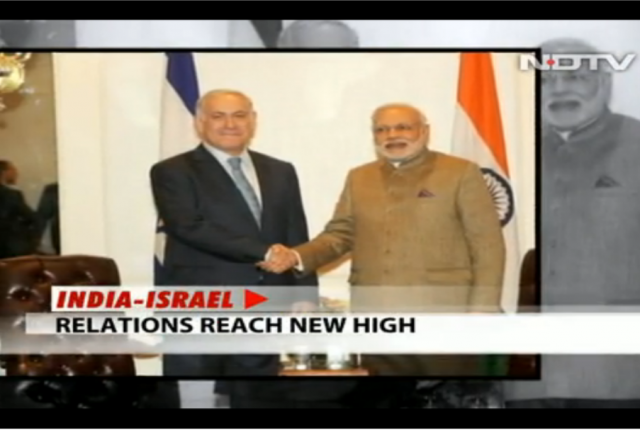

While Europe has been busy targeting Israeli researchers, artists and filmmakers in recent days, Asian countries like India, China and Japan are taking tangible steps strengthening its ties with Israel. Last week Norwegian Film festival rejected an Israeli film dealing with disability on the grounds that it “did not deal with occupation” or “discrimination of Palestinians.” In Spain, a music festival barred the Jewish-American reggae star Matisyahu for refusing to comply with the demands of the organizers to publically denounce Israel and endorse the “Palestinian cause” -- in keeping with the best traditions of Spanish Inquisition. In Paris "peace activists" threatened and harangued visitors attending a day-long festival celebrating Tel-Aviv’s culture with music and gourmet. Meanwhile in India, thousands gathered to see the opening on yet another Israeli Agriculture Technology Centre in Gujarat State. Israel runs 30 such centres across India, training farmers in latest agriculture technology and farming techniques. https://twitter.com/danielocarmon/status/632903906389966849

A high-profile trial is currently underway in Germany. 26 year-old Ebrahim H.B. and 27 year-old Ayoub B. are facing terrorism charges after returning back from Syria, having served as ISIS combatants. Just like in U.S., the German mainstream media too is clueless about the motivations of these two jihadists. Media can’t credibly talk about “resentment” and “alienation” in case of this relatively prosperous duo, it has to contend with "personal distress" and trauma as main reasons to explain the pathological behaviour of the alleged terrorists. Ebrahim H.B., a German citizen of Tunisian-origin is charged with planning a suicide bombing in Baghdad. The media repeatedly emphasized the "quiet" and "shy" nature of the alleged ISIS-mastermind, who joined the Terrorist group just because his “planned wedding was called off”. The leading German newspaper Süddeutsche Zeitung reported [Author’s Translation]:
On Monday, Ebrahim H.B. told the Regional High Court in Celle that he had been very upset at that time. In spring of 2014 his fiancée called off their planned wedding. “I felt extremely humiliated by that.”

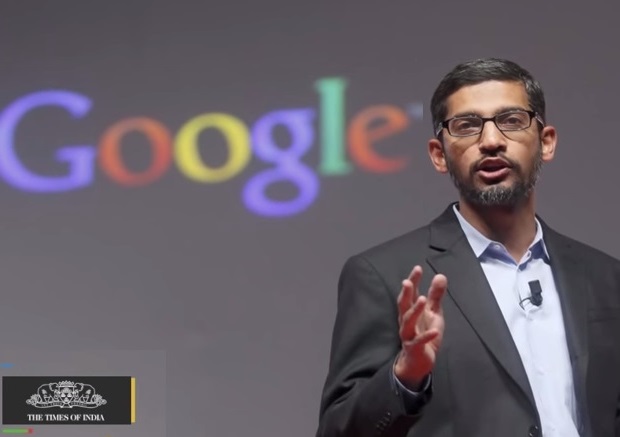
India-born Sundar Pichai has been named CEO of the newly restructured Google. The former Google CEO, Larry Page will now be heading a much larger Google entity. The news of Sundar Pichai's appointment, a former student of prestigious Indian Institute of Technology (IIT), was well received in India, with newspaper headlines using words like “pride”, "joy" and the fulfilment of the proverbial “American Dream” for a fellow countryman. The leading Indian Newspaper The Hindustan Times reported the Indian IT industry’s response to the news:
The Indian IT industry elated that 43-year-old Sundar Pichai is Google's new CEO. Pichai, who will succeed Google co-founder Larry Page as CEO a decade after joining the Silicon Valley behemoth in 2004, symbolises a new India, and represents talent, technological innovation, and managerial acumen, an Indian IT industry executive said.
The new Google CEO Sundar Pichai will not be the lone Indian-origin CEO at the helm of Corporate American. He will be joining corporate heavyweights like Microsoft’s CEO Satya Nadella, PepsiCo’s Chairperson & CEO Indra Nooyi, and Adobe’s CEO Shantanu Narayen -- just to name a few. Indians at home and abroad often highlight their country's success in Information Technology, and rightly so. But a less advertised aspect of India’s success in IT-sector has been the contribution of Indians returning back from the Silicon Valley, California -- bringing not only technical skills but also Silicon Valley’s attitude and values along with them. The truth is, there would be no Indian success story to report today if it was not for the Silicon Valley in the first place. Silicon Valley in turn is a product of entrepreneurship, spirit of enterprise and personal excellence -- values that are quintessentially American.

The migrant crisis in Europe has now reached historic proportions. Unwilling to secure EU’s borders and coastline, the European leaders have surrounded their foreign policy to human traffickers and people smugglers. Among all the EU member states, Greece has been worst hit by the influx of migrants on its shores. According to United Nation’s figures, the number of refugees entering into Greece has gone up a whopping 750 percent compared to last year. Margaret Wente explains the motivation of the refugees swarming the Greek islands in her column for The Globe and Mail:
The moment these people set foot on Greek soil, or are rescued by the coast guard, they’ve won the lottery. They can’t be deported unless they have applied for asylum and been rejected – and that can take years. Nor can they be returned to any place that is deemed unsafe. Because continental Europe has no internal border controls, they can go wherever they want. And if they don’t report for their asylum hearing, the system can easily lose track of them.
In July 2015 alone, more than 50,000 migrants landed on Greek beaches. That means, more migrants entered Greece last month than in the whole of 2014. The influx could not have come at a worse time for the Hellenic Republic, almost on the verge of a financial collapse. In the face of mounting crisis in Greece, EU bureaucrats and leaders are acting clueless and pleading helplessness.

Common sense is a rare commodity in Brussels (the seat of European Union's bureaucracy) when it comes to tackling the issue of mass immigration. The number of immigrants entering the European Union by land and sea has risen drastically in 2015. According to the UN, 153,000 migrants have crossed into Europe so far this year, marking a 150 percent spike compared to 2014. Considering the fact that many illegal immigrants prefer to stay undetected, the actual figures could be much higher. The European Union's response to the rising tide of immigrants is conspicuous inaction coupled with threats against individual EU member states who dare to undertake even the slightest of countermeasures. The EU bureaucracy is particularly irked by Hungary’s move to erect a 110 mile fence along its southern border. Wall Street Journal reports:

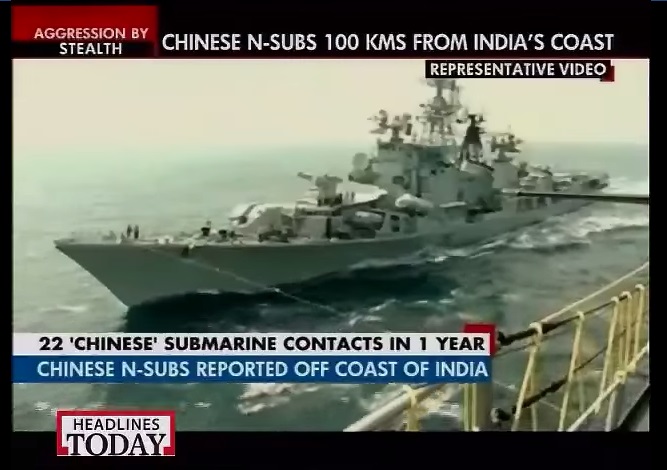
As President Obama is busy waging “quixotic” war on Greenhouse Gases, China is making real geostrategic and territorial gains in Indian Ocean and South China Sea. China is not only reclaiming Islands in its backyard -- furnished with airstrips and Naval bases in the South China Sea, but also building a corridor connecting the western Chinese city of Kashgar to the Arabian Sea. China’s plans are so aggressive and ambitious that it would make even a seasoned foreign policy expert’s head spin -- don't expect that from anyone in the current U.S. administration. While Obama administration spends big on climate change and works to shrink U.S.'s carbon-footprint, the administration is equally committed to shrinking U.S.'s geostrategic footprint in the world. Sensing U.S's disengagement from the Asia-Pacific and Indian Ocean, China is pasturing aggressively in the Indian Ocean to encircle its Asian rival, India. China and India share historic rivalries. After invading Tibet, China attacked India in 1962 -- successfully pushing back Indian defences and occupying roughly 40,000 km of Indian territory. Since 1960s, China has made further territorial claims in India. In September 2014, China docked a nuclear submarine at Sri Lanka's Colombo port [near India’s southern-most coastline], followed by an attack submarine just few weeks later. 

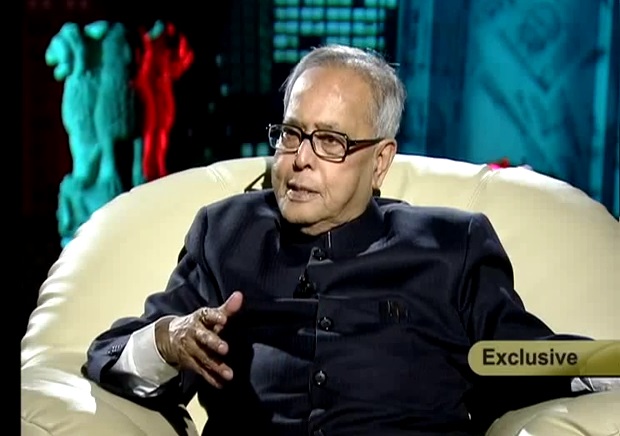
Indian President Pranab Mukherjee is set to become the first head of the state from India to visit Israel. The visit by the Indian head of the state, set for early October, has a great symbolic value -- considering India only established full diplomatic relations with Israel in 1992. Much like Israel, India too is a parliamentary democracy where President acts as a ceremonial head of the state, while executive powers rest with the Prime Minister and the cabinet. The high-level state visit is the result of tenuous diplomacy spanning decades that saw an erstwhile adversarial Asian giant turn into a trusted ally. Since India and Israel established diplomatic relations 24 years ago, Israel has become an important trade and technology partner for India -- not just in defence sector. Bilateral trade between the two countries that was pegged at $200 million in early 1990s has now crossed well over $4 billion. In recent months, Israeli defense companies like Israel Aerospace Industries (IAI), Rafael and Meprolight have entered in partnerships with Indian companies to form defence Joint Ventures – giving boost to Prime Minister Modi’s “Make in India” initiative aimed to develop India’s manufacturing capabilities.

Before the ink could barely dry on the Iran Deal, Germany's Economy Minister Sigmar Garbiel flew to Tehran, making him the first leading Western figure to do so after the nuclear agreement was reached Vienna earlier this month. Gabriel who is also Germany's Vice-Chancellor met with Iran's President Hassan Rouhani and other top Iranian leaders described the moods of the visit as "being with old friends." Germany's leading newspaper Süddeutsche Zeitung wrote [translation by me]:
Germans many not have been at the center of the talks, but as go-betweens for Iran, they were considerably important. Amongst all parties working to bring about a negotiated deal, Germans enjoyed [Tehran’s] special trust.
Germany had tremendous economic interest in ending sanction on Iran and it is not making any secrets of it. In June, just as the Iran deal was nearing its final phases, the Bavarian Chamber of Commerce (BIHK) noted in its newsletter[translation by me]:
The German media landscape agrees on one point: lucrative deals worth billions are waiting to be made in Iran. As soon as the sanction are lifted, the run on the markets begins.
Last week, at a press conference in Berlin, Minister Gabriel brushed aside human rights concerns in Iran, saying that the lifting of sanctions were only coupled to Iranian nuclear program and "not related to other matters." He further explained that his task as Economy Minister is to "help the German economy", pointing out that his French and Italian counterparts now heading to Tehran are doing just the same.

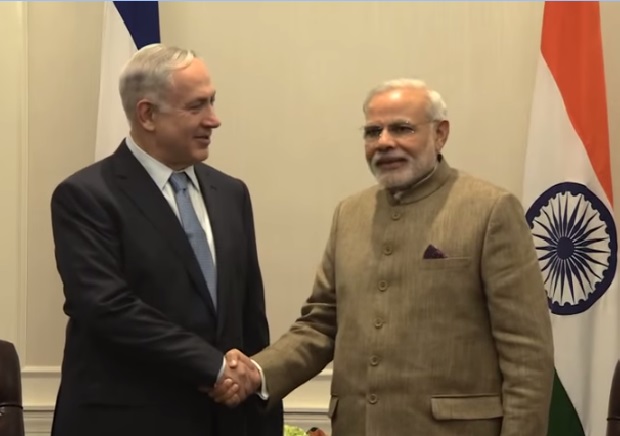
For the second time in a few weeks, India has abstained at the United Nations instead of voting on an Israel-related resolution. On July 3, 2015 India abstained from weighing in on a UN Human Rights Council resolution condemning Israel for 2014 Gaza conflict. The anti-Israel resolution passed with 47 votes in favour, with the US opposing, and India amongst 5 nations abstaining. Then on Monday, Israel unsuccessfully tried to table a resolution to challenge the official recognition of Hamas-linked NGO in the UN’s Economic and Social Council (ECOSOC). It is fair to ask: why abstain? Israel is one of India's leading defense partners, and an emerging trade partner. But considering the fact that until recently India was referred to as the "23rd Arab state" for siding with Arab-block on every anti-Israel resolution at the UN, this is a huge diplomatic shift for the world's largest democracy. Since India normalized diplomatic ties with the Jewish State in 1991, Israel has become India’s partner of choice when it comes modernizing the country’s military capabilities. The government is collaborating with Israel in agriculture, water management, and renewable and clean technologies; and India’s technology-driven IT giants have made significant investments in Israel’s innovation and startup ecosystem.

The threat of ISIS has spread from Syria and Iraq, to Egypt, and even to Europe and the United States. Islamic militants are using both ground operations and digital campaigns to infiltrate new territory, and recent reports show that now India's government is alarmed at the recent inroads made by ISIS, especially in the country's northern regions. India is home to the world's second largest Muslim population. Numbering roughly 180 million, Muslims make up for about 14 percent of the country's population, and ISIS is taking full advantage of the opportunity to seize control of new ground. Not only have young Indian Muslims joined the ranks of ISIS combatants in Syria and Iraq, they are also acting as influential jihadi propagandists online. In December 2014, Britain’s Channel 4 uncovered the identity of a Bangalore-based man allegedly operating ISIS' most influential Twitter account. ISIS’ influence in India is not limited to just talk anymore. Supporters of the terror outfit in Muslim-dominated regions are feeling emboldened to show their support outside the realm of cyberspace---and it shows. Nowhere is the support for ISIS stronger than in the northern Indian State of (Jammu-) Kashmir. In early 1990s, widespread anti-Hindu pogroms in Kashmir drove about half a million people from their ancestral homes. Having cleansed large parts of Kashmir from the native Hindu population, the Islamists are now fighting to carve out a separate, Islamic country.

Indian newspapers generally echoed Western sentiments by welcoming the Iran deal and India's Foreign Office also took a line similar to the one taken by the EU and other Western powers. But behind the scenes, India is  getting ready for the coming nuclear arms race in their Arab neighbourhood. Far from buying President Obama's optimism over the 'peace dividend', Indian defence establishment is building up its nuclear defence capabilities. In recent months, India has invested heavily in ramping up missile defences. With Israeli expertise, India will soon be able to detect and intercept missiles within the range of 5,000 km – double the aerial distance between New Delhi and Tehran. As President Obama was announcing the Iran deal to the world, Indian government was busy clearing new defence deals worth billions. Indian News website Firstpost reports: