

Image 01 Image 03

US Supreme Court Tag

Bloomberg reports that the executives of Aereo, Inc., are exploring ways to continue offering their streaming service by operating more like a cable TV provider. The startup's owners say that, by behaving more like a Comcast or a Time Warner, they will be able to reinstate their service. There is, of course, a catch to any plan aimed at reviving Aereo--the cost:
To operate as a cable company, Aereo would have to get and pay fees for a compulsory copyright license, which gives permission to transmit broadcast channels. Then the startup would have to negotiate with broadcast companies over retransmission fees, which are paid to broadcasters for the right to air their content. This would almost guarantee that Aereo would have to charge customers more to gain access to programming, said Neil Begley, an analyst at Moody’s Investors Service. For one, Aereo would most likely have to buy entire channel bundles to gain access to broadcast channels, he said. Content companies haven’t been keen on selling the rights to transmit individual channels to cable companies, instead favoring bundling offerings like Walt Disney Co. (DIS)’s ABC broadcast network with ESPN. Companies like Apple Inc. (AAPL) have tried and failed to persuade cable networks to let it sell their channels a la carte.
The beauty of Aereo is that its streaming service provided basic channels at an extremely low cost--$8 per month, versus $70-$80 per month with a mainstream subscription service like those offered by major cable companies. Aereo's selection was limited, but at under $10 per month, it was a good option for subscribers who weren't interested in scrolling through 300 channels. Last month, the Supreme Court ruled that Aereo's streaming service violated copyright law because the near-real time delivery of the television show amounted to a public performance of private material. (Aereo had previously claimed that they were merely "equipment providers," and were thus exempt from paying for copyright licenses and retransmission of the copyrighted material.) Now, lawyers on both sides are scrambling to respond to the Supreme Court's ruling:

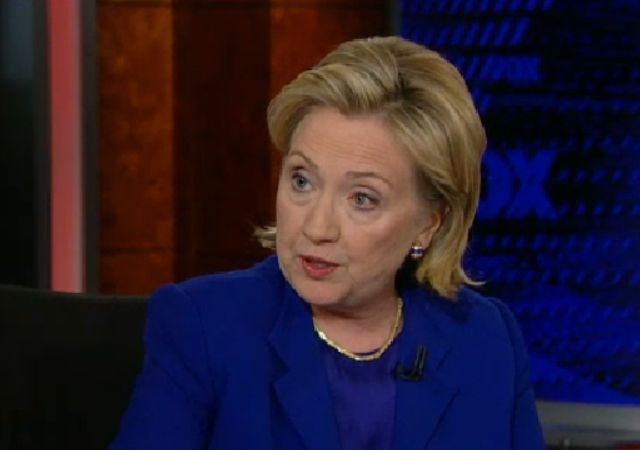
Hillary Clinton is a lawyer, and a smart one at that. So she knows better than this statement she made about the Hobby Lobby SCOTUS decision:
It’s very troubling that a salesclerk at Hobby Lobby who needs contraception, which is pretty expensive, is not going to get that service through her employer’s health care plan because her employer doesn’t think she should be using contraception.
Politifact rates Clinton's statement as Mostly False. The WaPo's fact-checker gave it 2 Pinocchios. But although both articles say Clinton is dissembling to a certain extent, they both give Clinton's statement a more generous interpretation than it deserves, with the WaPo even insinuating that her error might have been inadvertent. Absurd; as I said, Clinton is a razor-sharp lawyer when she wants to be. She should have gotten the maximum number of Pinocchios and then some.

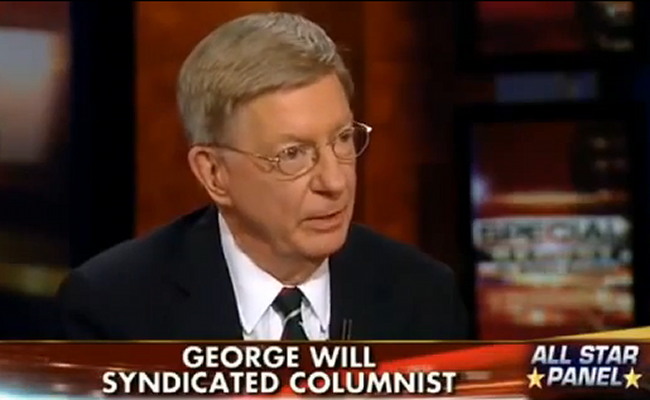
In his new column at the Washington Post, George Will examines the recent rulings of the Supreme Court on Hobby Lobby and unions. As usual, Will has the facts on his side:
The Supreme Court reins in government bullies

Two 5 to 4 decisions this week, on the final decision day of the Supreme Court’s term, dealt with issues that illustrate the legal consequences of political tactics by today’s progressives. One case demonstrated how progressivism’s achievement, the regulatory state, manufactures social strife and can do so in ways politically useful to progressives. The other case arose from government coercion used to conscript unwilling citizens into funding the progressives’ party.

Under the 1993 Religious Freedom Restoration Act (RFRA), any government action that substantially burdens religious practices will be subject to strict judicial scrutiny to determine if it, rather than some less intrusive measure, is necessary to achieve a compelling government interest. The Affordable Care Act, as supplemented by regulations, requires for-profit employers to provide health-care coverage that includes all 20 Food and Drug Administration-approved birth control methods.

These include four that prevent a fertilized egg from being implanted in the uterus. Some persons consider this tantamount to abortion and oppose these abortifacients for religious reasons. Why did Congress, having enacted RFRA, write this clearly incompatible birth control mandate? Congress didn’t.

Read the entire column here.

Meanwhile, the Obama administration is scrambling to find a way to work around the Hobby Lobby ruling.

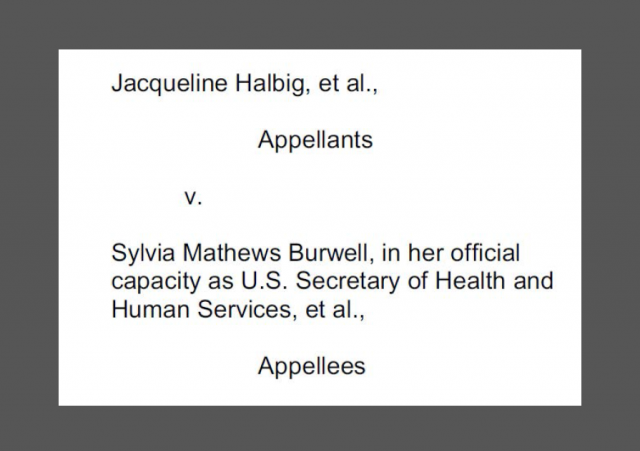
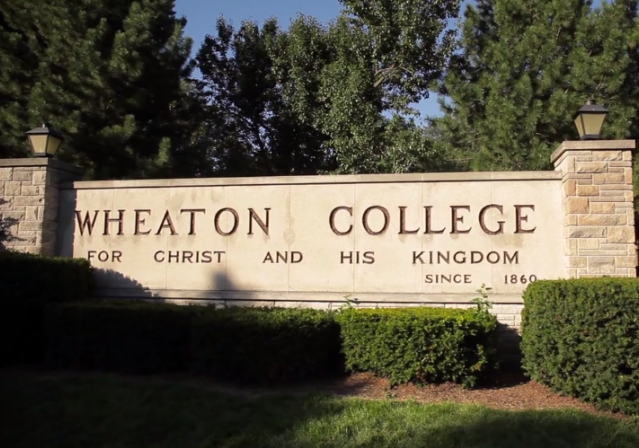
In light of the Hobby Lobby decision, the Supreme Court today granted an injunction pending appealy in favor of Wheaton College, which did not want to comply with certain Obamacare paperwork on religious grounds:
The application for an injunction having been submitted to JUSTICE KAGAN and by her referred to the Court, the Court orders: If the applicant informs the Secretary of Health and Human Services in writing that it is a nonprofit organization that holds itself out as religious and has religious objections to providing coverage for contraceptive services, the respondents are enjoined from enforcing against the applicant the challenged provisions of the Patient Protection and Affordable Care Act and related regulations pending final disposition of appellate review. To meet the condition for injunction pending appeal, the applicant need not use the form prescribed by the Government, EBSA Form 700, and need not send copies to health insurance issuers or third-party administrators.
Note that this really is not substantive, it's a matter of paperwork, as AP explains:
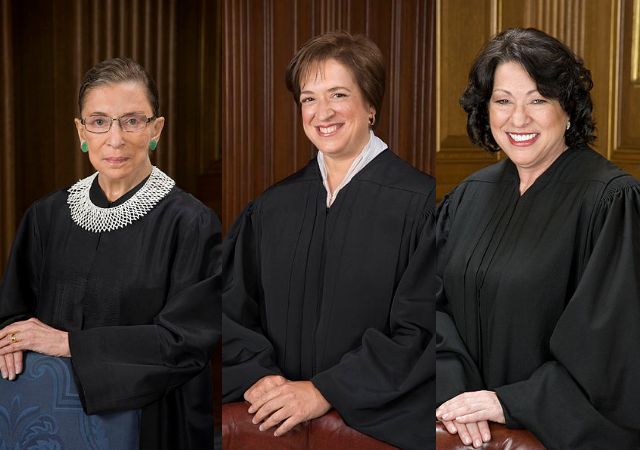
A divided Supreme Court on Thursday allowed, at least for now, an evangelical college in Illinois that objects to paying for contraceptives in its health plan to avoid filling out a government document that the college says would violate its religious beliefs. The justices said that Wheaton College does not have to fill out the contested form while its case is on appeal but can instead write the Department of Health and Human Services declaring that it is a religious nonprofit organization and making its objection to emergency contraception. The college does provide coverage for other birth control. Justices Ruth Bader Ginsburg, Elena Kagan and Sonia Sotomayor said they would have denied Wheaton's request and made the college fill out a form that enables their insurers or third-party administrators to take on the responsibility of paying for the birth control.
Yes, heads exploding:

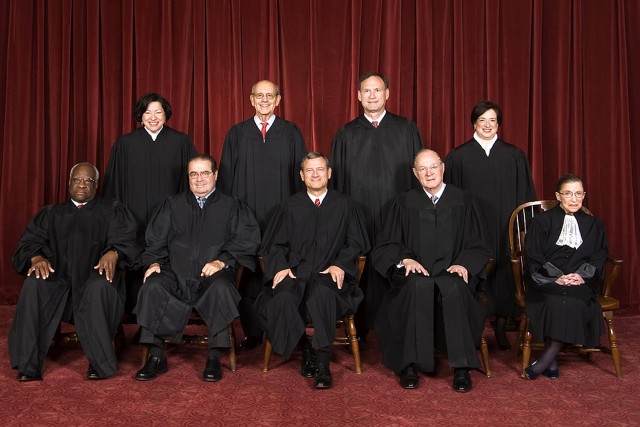
Ruth Marcus thinks that the female SCOTUS justices do. And she thinks it's a good thing:
How did the Supreme Court manage to agree unanimously that police must obtain a warrant before searching cellphones, yet split on whether employers must offer contraception as part of their health care plans? My explanation, slightly crude but perhaps compelling: All the justices, presumably, have cellphones. Only three have uteruses, and you know which way they voted.
This is hardly an isolated idea. It was inherent in Sotomayor's statements about the superior judgment of a "wise Latina":
And [Sotomayor] often said that she hoped those experiences would help her reach better judicial conclusions than someone without such a varied background might reach. The line was almost identical every time: "I would hope that a wise Latina woman with the richness of her experiences would, more often than not, reach a better conclusion." That sentence, or a similar one, has appeared in speeches Sotomayor delivered in 1994, 1999, 2002, 2004 and 2001. In that speech, she included the phrase "than a white male who hasn't lived that life" at the end, which sparked cries of racism from some Republicans.
A similar notion about the superiority and importance of membership in a minority or other group officially designated as oppressed was strongly suggested in an execrable comment by Harry Reid (is there any other kind?) in connection with Hobby Lobby, about which I wrote:

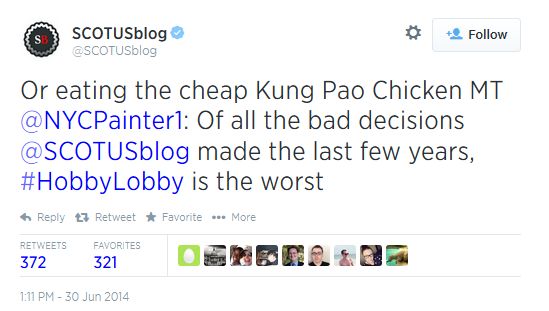
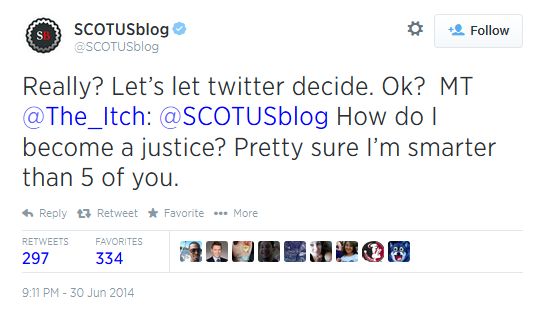
By now you've seen Monday's Supreme Court decisions here and here, which - quite predictably - set off a nuclear reaction on Twitter. Some of that outrage was misguidedly directed at SCOTUSblog by angry tweeters who thought they were surely tweeting the actual Supreme Court Justices. But as many of us know, and others have also pointed out, SCOTUSblog Is Not the Supreme Court. I never realized that the serious minds at SCOTUSblog had such a sense of humor, which was on full display in how they handled the barrage of hate wrongly dumped into their timeline. You must go visit SCOTUSblog's Twitter timeline to see all of their responses, but a handful of them are featured below. Well played SCOTUSblog, well played. scotusblog-tweet6 scotusblog-tweet5

The Supreme Court just handed down its decision in Harris v. Quinn, where the issues were (via ScotusBlog):
(1) Whether a state may, consistent with the First and Fourteenth Amendments to the United States Constitution, compel personal care providers to accept and financially support a private organization as their exclusive representative to petition the state for greater reimbursements from its Medicaid programs; and (2) whether the lower court erred in holding that the claims of providers in the Home Based Support Services Program are not ripe for judicial review.
The ruling was 5-4, with the majority authored by Justice Alito, as tweeted by ScotusBlog: TPM elaborated on the fear from the left, Unions Fear This SCOTUS Case Could Bring Their 'Final Destruction' From the Majority Opinion:
This case presents the question whether the First Amendment permits a State to compel personal care providers to subsidize speech on matters of public concern by a union that they do not wish to join or support. We hold that it does not, and we therefore reverse the judg­ment of the Court of Appeals.

Aereo is a video streaming service that allows subscribers (at around $8/month) to view live, over-the-air programming via the internet. The service also includes DVR-like capabilities, allowing for the recording of live programming to be watched later. Shortly after Aereo's launch last year, other television providers (think major networks) sued, claiming that the service violates the networks' right to publicly perform their copyrighted material. The Court rejected Aereo's argument that the company is merely an "equipment provider" and sided with the television providers (with Justices Scalia, Alito, and Thomas dissenting,) saying that the heart of Aereo's service involves a public performance of copyrighted material.

The United States Supreme Court unanimously ruled this morning that police may not search the cellphones of criminal suspects upon arrest without a separate warrant. This ruling is a huge boost for individual privacy rights advocates. Some of the decision is excerpted below, and we will update this post with analysis throughout the day.
By a 9-0 vote, the justices said smart phones and other electronic devices were not in the same category as wallets, briefcases, and vehicles -- all currently subject to limited initial examination by law enforcement. Generally such searches are permitted if there is "probable cause" that a crime has been committed, to ensure officers' safety and prevent destruction of evidence.
Chief Justice John Roberts wrote the opinion in Riley v. California and Justice Antonin Scalia agreed with the majority but wrote a concurring opinion. In the ruling Roberts strongly cited the Fourth Amendment's protection of an individual rights and the advances of technology that the cellphone represents.
We cannot deny that our decision today will have an impact on the ability of law enforcement to combat crime. Cell phones have become important tools in facilitating coordination and communication among members of criminal enterprises, and can provide valuable incriminating information about dangerous criminals. Privacy comes at a cost. Our cases have recognized that the Fourth Amendment was the founding generation’s response to the reviled “general warrants” and “writs of assistance” of the colonial era, which allowed British officers to rummage through homes in an unrestrained search for evidence of criminal activity. Opposition to such searches was in fact one of the driving forces behind the Revolution itself. In 1761, the patriot James Otis delivered a speech in Boston denouncing the use of writs of assistance. A young John Adams was there, and he would later write that “[e]very man of a crowded audience appeared to me to go away, as I did, ready to take arms against writs of assistance.” According to Adams, Otis’s speech was “the first scene of the first act of opposition to the arbitrary claims of Great Britain. Then and there the child Independence was born.”

[Edit: The title of this post was edited to better reflect the Court's ruling.] This morning the US Supreme Court released it's ruling in Abramski v. United States--the firearm "straw purchase" gun case--in which it affirmed Abramski's convictions.  (The full-length opinion is embedded at the bottom of this post.) In reaching it's decision the majority--led by Kagan, and including Ginsburg, Breyer, Sotomayor and the necessary swing-vote, Kennedy--the Court took a very broad interpretation of the government's statutes, regulations, and even mere practice in narrowing the scope of lawful 3rd-party purchases of firearms, arriving at their conclusion less by looking at the actual statutes and regulations and more by looking at their perception of the "context" and intended "purpose" of those statutes and regulations.

Facts

The defendant in this case, Abramski, arranged to purchase a Glock 19 for his uncle, Alvarez.  Abramski had previously been a law enforcement officer, and it is common practice for law enforcement officers to be able to purchase firearms at a discount to the price generally available to the public. Although Abramski had been fired from his LEO job two years prior, he retained his police officer identification, and intended to use that ID to purchase the pistol for his uncle at a favorable price. The Uncle wrote Abramski a check for $400 with "Glock 19" written in the memo field. Two day later Abramski appeared at an FFL (a Federal Firearms Licensee, through which most gun sales are required to occur) and purchased the gun.  In the process of doing so he completed the Federally required Form 4473.  Form 4473 asks for particular personal information, and also asks the buyer to reply to a series of interrogatories. Among the questions asked was 11.a, which asks whether the purchaser is the "actual buyer" of the firearm.  Abramski answered in the affirmative--absent which the sale would not have been processed by the FFL.  He also signed an acknowledgement that a false answer to 11.a constituted a felony. Abramski's purchase cleared the NICS (National Instant Criminal Background Check System) and the FFL sold him the Glock. Abramski then deposited the check from his uncle, transferred the gun to his uncle (lawfully, using an FFL in his uncle's state, which differed from his own), and received a receipt in return.

Joan Biskupic writing for Reuters reports on the fear in the legal community that has caused large law firms to refuse to take on clients who support keeping the "one man, one woman" definition of marriage, U.S. law firms flock to gay-marriage proponents, shun other side (h/t @AdamLiptak):
As U.S. lawsuits seeking gay-marriage rights move toward a likely showdown at the Supreme Court next year, major law firms are rushing to get involved — but only on the side of the proponents. A Reuters review of more than 100 court filings during the past year shows that at least 30 of the country's largest firms are representing challengers to state laws banning same-sex marriage. Not a single member of the Am Law 200, a commonly used ranking of the largest U.S. firms by revenue, is defending gay marriage prohibitions. These numbers and interviews with lawyers on both sides suggest that the legal industry has reached its Mozilla moment. The software company's CEO, Brendan Eich, resigned in April after being denounced by gay marriage supporters for a donation he had made in support of California's since-overturned gay marriage ban. Now in a similar vein, attorneys at major law firms are getting the message that if they want to litigate against gay marriage they should do so elsewhere.
None of this will come as a surprise to Legal Insurrection readers. We wrote in April 2011, how the large law firm of King & Spalding withdrew its representation of the House of Representatives on the DOMA litigation after the Human Rights Campaign started contacting King & Spalding clients unrelated to the litigation,  and threats were made to hold protests at clients' offices.  King & Spalding did not, however, simultaneously drop its representation of radical Islamic Gitmo detainees who promote societies that treat women and gays as subhuman. I wrote at the time that there was A Hostile Environment For Pro-Traditional Marriage Views At King & Spalding, such that the expression of any contrary view was a potential career ender.  We now know how true that can be, as the Brendan Eich case demonstrated.

We noted yesterday the Supreme Court's ruling in a case allowing for sectarian prayer at town council meetings. In a 5-4 decision, the court narrowly reversed a lower court ruling that prohibited the use of Christian-specific prayer on the grounds it "conveyed the message that [the town of] Greece was endorsing Christianity." Ultimately, the Supreme Court held legislative prayer in the context of an invocation prior to the conducting of regular legislative business did not violate the Establishment Clause of the first amendment. It did so by drawing on several cases form the past that essentially concluded the exact same thing, citing hundreds years of the existence of prayer in legislative bodies throughout the nation. More persuasive than this "tradition" argument, though possibly more constitutionally problematic in the long run, was the court's recognition of what would occur as a result of courts inquiring into the specific content of a prayer. [Emphasis Added]
To hold that invocations must be nonsectarian would force the legislatures that sponsor prayers and the court that are asked to decide these cases to act as supervisors and censors of religious speech, a rule that would involve government in religious matters to a far greater degree than is the case under the town’s current practice of neither editing or approving prayers in advance nor criticizing their content after the fact... Government may not mandate a civic religion that stifles any but the most generic reference to the sacred any more than it may prescribe a religious orthodoxy.
Because the plaintiffs in this case only wanted the Christian-specific aspect of the prayer removed from the town council, the above line of reasoning was invoked to buoy the more basic "tradition" argument also employed by the majority. But what about a constitutional challenge seeking a ban of prayer altogether? That would alleviate the need to inquire into the content of the prayer, thus freeing courts and governments from entangling themselves in the process of picking and choosing deities and faiths to pray to.
Outside the courts, people are already gravitating towards this method of religious restriction in the public sphere. As reported by the Daily Caller, one East Carolina University Professor recently instructed his students specifically not to mention God in their graduation ceremony speeches.

Yesterday, Chris Wallace featured two panelists to debate the outcome of a recent United States Supreme Court ruling on Affirmative Action and the use of race in the admissions process. The case upheld a Michigan voter referendum banning the use of race or gender based Affirmative Action programs in the public university admissions process, among other things. One panelist was a successful litigant from a prior Affirmative Action Supreme Court case, Jennifer Gratz. Gratz is also the CEO of XIV Foundation, an organization "dedicated to the principle that equal treatment is the essence of civil rights and that all people are entitled to civil rights." The other panelist was civil rights attorney, Shanta Driver. As I watched the debate unfold, one thing I could not help but notice was the use of the word "equality," in each opposing side's rationale for their position. Gratz, who advocated for upholding the Michigan referendum to end race preferences cited "equal treatment under law," regardless of race. Likewise Driver, advocated for the continuation of federally protected race preferences in the admissions, also citing the need for equality. In fact, Driver went so far as to compare this decision by the Supreme Court as a revival of Plessy v. Ferguson, the 1896 Supreme Court case that brought about the concept of "separate but equal" segregation.