

Image 01 Image 03

Trump Israel Tag

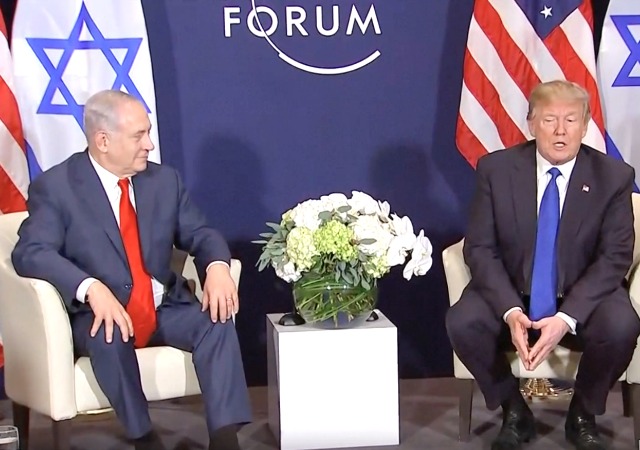
While in Davos, Switzerland, President Donald Trump has threatened to cut Palestinian aid unless they come to the table to discuss peace with Israel. From The Times of Israel:
“That money is not going to them unless they sit down and negotiate peace, because I can tell you that Israel does want to make peace, and they’re going to have to want to make peace, too, or we’re going to have nothing to do with it any longer,” he said.

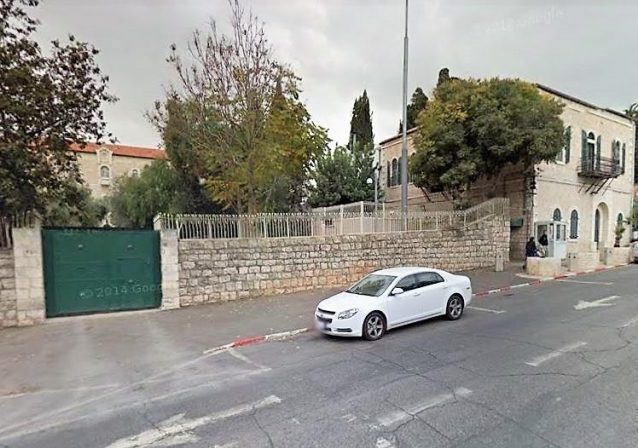
I reported this weekend on reports that the U.S. planned to move our Embassy from Tel Aviv, to Israel's capital Jerusalem, by the end of 2019. This timetable, which was faster than the 3-4 years previously discussed for building a new Embassy, was based on renovating the existing U.S. Consulate in Jerusalem, the main location of which was built in 2010 and is actually larger than the Tel Aviv embassy.

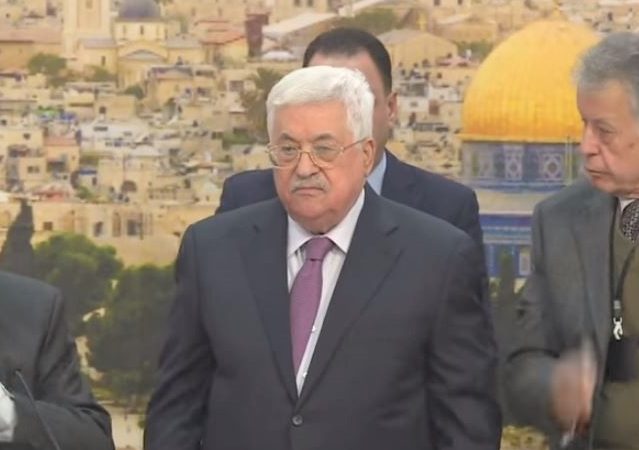
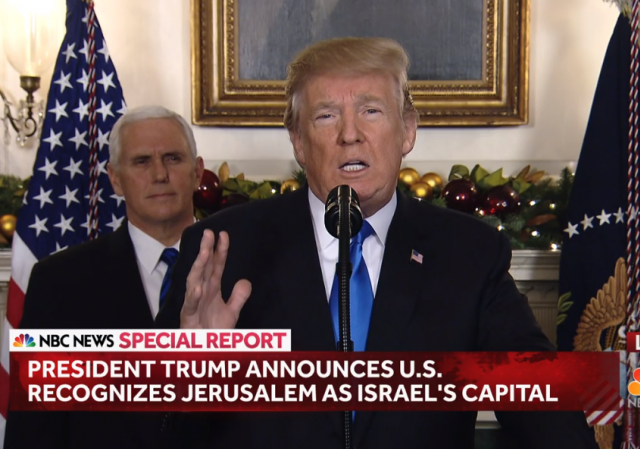
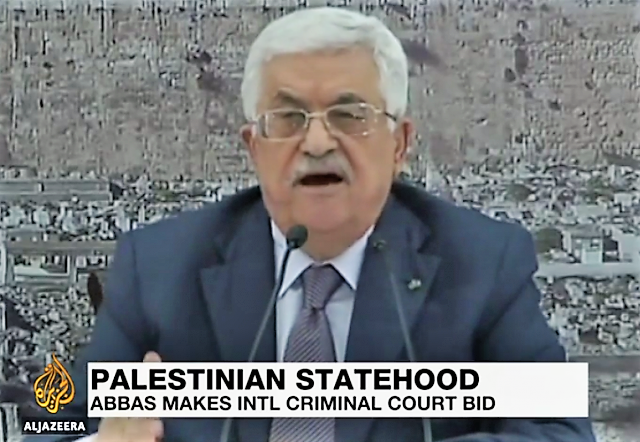
Donald Trump's announcement recognizing Jerusalem as Israel's capital and ordering preparations to commence to relocate the U.S. Embassy from Tel Aviv, did not lead to the widespread violence that critics predicted. It has, however, caused the Palestinian Authority leader Mahmoud Abbas to lay bare his decades old anti-Semitism in a recent tirade, and to engage in a name calling spree against Trump. The delay, to some uncertain future date, of the actual Embassy move was seen as making the recognition somewhat symbolic. And called into question whether it ever actually would happen.

Mahmoud Abbas is a "moderate" by Palestinian political standards. He fools the world into thinking the dispute with the Jews is over a little land here, a little land there. In fact, Abbas is steeped in anti-Jewish paranoia and conspiracy theories.

The government of Guatemala is going to follow the U.S. lead, and move its Embassy to Jerusalem, in recognition that Jerusalem is the capital of Israel. Ynet News reports:
Guatemalan President Jimmy Morales announced in a Facebook post Sunday night his country will be transferring its embassy from Tel Aviv to Jerusalem, following a conversation he had had with Prime Minister Benjamin Netanyahu and in the wake of President Donald Trump's recognition of the city as Israel's capital.

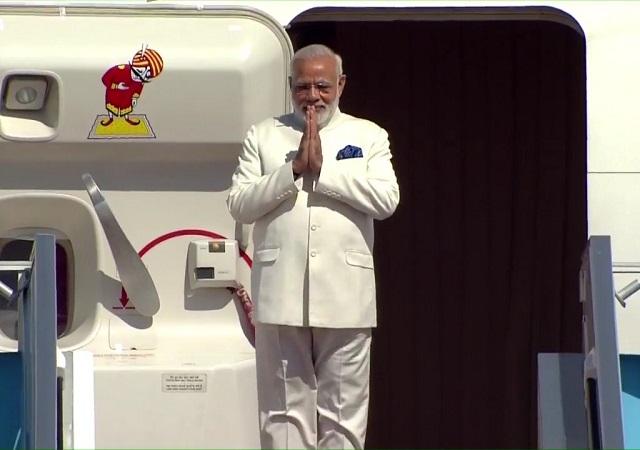
It was hailed as the reunion of friends when Indian Prime Minister Narendra Modi came calling on a historic visit to Israel in July—the first ever by a sitting Indian head of government. Media pundits in both Israel and India talked of genuine bond of friendship between Israeli Prime Minister Benjamin Netanyahu and his visiting Indian counterpart. The visit was heralded as the beginning of a new era of trust and friendship between the two counties. But the reality check came earlier this week, when the Indian government threw Israel under the bus at the United Nations by voting in favor of a resolution condemning the US decision to formally recognize Jerusalem as the capital of the Jewish State.

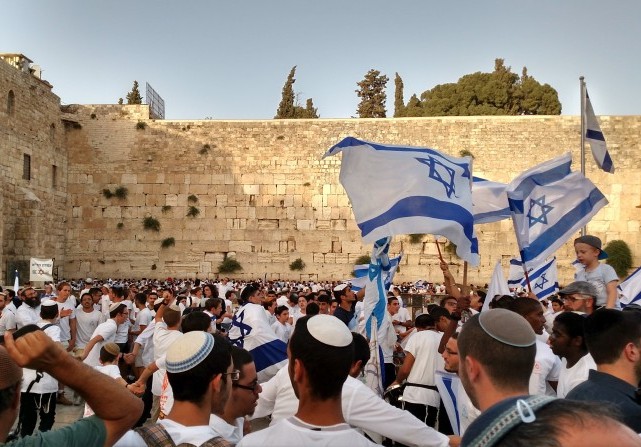
The Palestinian leadership has responded furiously to President Trump’s December 6th official recognition of the obvious reality that Jerusalem is the capital of Israel. Over the past several weeks, there’ve been heated denunciations, some of which trafficked in ugly antisemitic tropes and canards; the usual Hamas-incited “days of rage”; calls for demonstrations by the Palestinian Authority (which canceled school, so young people could participate in the clashes and rioting); and over a dozen rockets shot from Gaza into Israel.

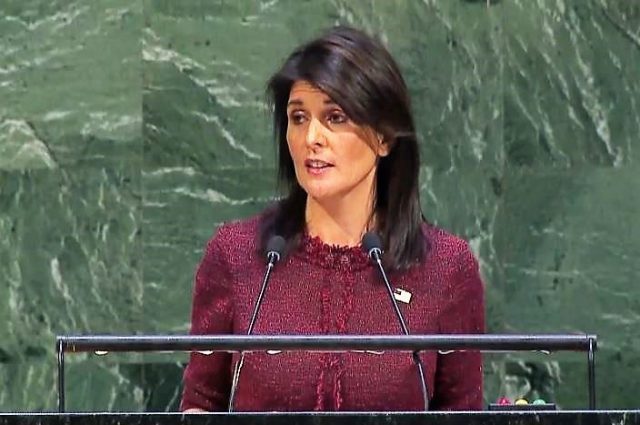
The UN General Assembly is meeting this morning on a resolution that, without mentioning the U.S. by name, condemns Donald Trump's recognition of Jerusalem as Israel's capital and plan to relocate the US Embassy from Tel Aviv to Jerusalem at some future point. The resolution also demands a return to the so-called 1967 lines (which actually are the 1949 Armistice lines), which would put the main Jewish holy sites and the Jewish Quarter in the hands of Palestinians. General Assembly Resolutions are not binding under UN Rules and do not create international law. U.S. Ambassador Nikki Haley, backed up by Donald Trump, has promised that the U.S. and Trump take this vote personally, and will be "taking names," as detailed in our prior post, Nikki Haley: “US will be taking names” during General Assembly vote on Jerusalem Embassy move.

The reaction to Donald Trump's announcement that the U.S. recognizes Jerusalem as the capital of Israel and plans to move the Embassy has not generated nearly the heat and fury as predicted. There have been protests and rock throwing, but the numbers of people involved have been surprisingly small in Jerusalem and the West Bank. The most serious incidence was the stabbing of a bus terminal security guard by a Palestinian.

Donald Trump is set to give a speech later today recognizing that Jerusalem is the capital of Israel, which of course it is. According to reports based on news pool briefings by the White House, Trump will not declare Jerusalem the "united and undivided" capital of Israel, which is how Israelis refer to it. Rather, Trump will leave open that the parties could, as part of a final peace settlement, provide for some part of Jerusalem to serve as the capital of a Palestinian state or political entity.

During the campaign and transition, Donald Trump was clear in his promise to move the U.S. Embassy to Jerusalem, Israel's capital. As with prior administrations, there was walk-back in reality, and the Embassy still is in Tel Aviv. In the past week there has been much speculation that an announcement about moving the Embassy was near, but that speculation was denied by the administration.

If history proves one thing, it's that giving in to Palestinian threats only leads to intransigence and more threats. Unfortunately, for the second time the Trump administration has walked back an announced policy in just such a circumstance. The first walk back had to do with moving the U.S. Embassy from Tel Aviv to Jerusalem, which is Israel's capital. That was a core Trump campaign promise, reiterated during the transition. As Prof. Miriam Elman explained in a prior post, locating the Embassy in Jerusalem would have a profoundly positive impact on the prospects for peace, since it would signal that Arab and Muslim threats of violence against the Jewish presence in Jerusalem would be futile, Move U.S. Embassy to Jerusalem, for peace sake:

The Trump administration is planning multi-year peace effort, Michael Wilner at the Jerusalem Post reports:
Deadlines are not a part of President Donald Trump's peace effort, led by Jared Kushner, the president's son-in-law and senior adviser, and Jason Greenblatt, the US special representative for international negotiations. These two refuse to bind themselves in timetables as they prepare what they describe as an "architecture" for their upcoming initiative.
While details are not known, there appears to be a lot of jockeying going on to set the proper conditions to overcome historical Palestinian intransigence.

In dozens of posts we’ve highlighted how the anti-Zionist, non-Jewish group "Jewish Voice for Peace" (JVP) enables, legitimizes and mainstreams antisemitism by providing a seemingly Jewish cover for the Boycott, Divestment and Sanctions (BDS) and similar movements. But JVP isn't merely an enabler of antisemitism. JVP also itself is a producer of anti-Jewish animus.

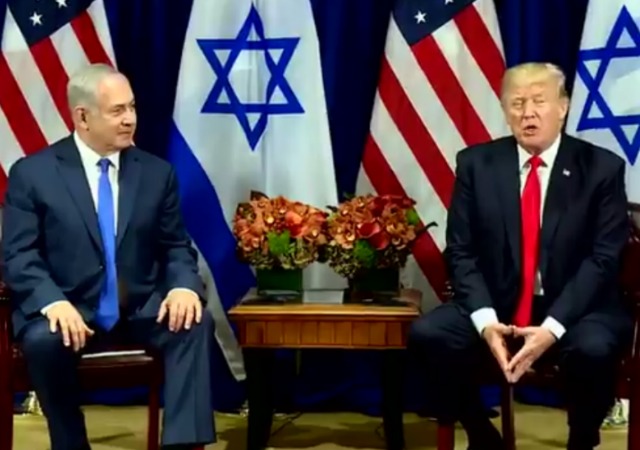
President Donald Trump finished his trip to Israel by meeting with Palestinian Authority President Mahmoud Abbas and a visit to the Yad Vashem Holocaust Memorial Museum in Jerusalem and the Israel Museum. During his first day, Trump "pledged to work toward Israeli-Palestinain peace," but admitted it's the "toughest deal of all." However, he assured Netanyahu "that the U.S. wants Israel to have peace."