
Image 01 Image 03

Trump Foreign Policy Tag

The United States and Argentina are to work together to cut off Lebanese terrorist outfit Hezbollah’s funding networks in Latin America. U.S. Secretary of State Rex Tillerson and Argentinian Foreign Minister Jorge Faurie declared their intention to cooperate in this regard during a press conference in Buenos Aires on Sunday. Argentina is home to a large Lebanese expatriate population and U.S. authorities believe that the Iranian-backed terrorist group has been raising funds for it activities through organised crime in the region, including drug trade.

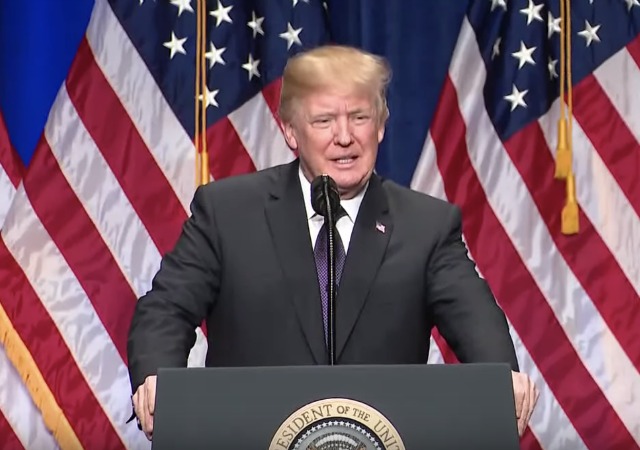
President Donald Trump and his administration continues to crack down on Iran, but this time it took aim at terrorist group Hezbollah, which relies on Iran. The sanctions will also try to dim Iran's influence across the Middle East. From the Treasury Department:
“Hizballah is a terrorist organization responsible for the death of hundreds of Americans. It is also Iran’s primary proxy used to undermine legitimate Arab governments across the Middle East. The Administration is determined to expose and disrupt Hizballah’s networks, including those across the Middle East and West Africa, used to fund their illicit operations,” said Secretary of the Treasury Steven T. Mnuchin. “The Treasury Department will continue to sever Hizballah from the international financial system, and we will be relentless in identifying, exposing, and dismantling Hizballah’s financial support networks globally.”

Politico has reported that President Donald Trump has decided to extend the Iran nuclear deal. He stated, though, this will be his last waiver "unless the deal is strengthened by Congress and European allies." Politico continued:
Trump faced a Friday deadline to decide whether to reimpose economic sanctions on Iran the U.S suspended as part of a 2015 nuclear agreement negotiated with Tehran by the Obama administration and five other nations.

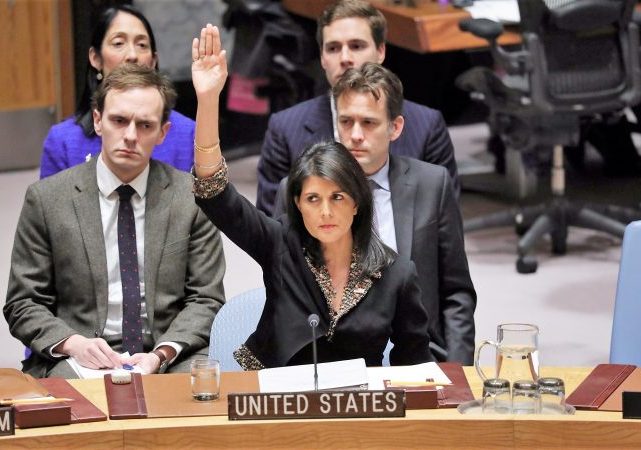
Last Thursday, the United Nations (UN) voted to condemn America's recognition of Jerusalem as Israel's capital and decision to move its embassy to the city. Professor Jacobson pointed out in a follow up post that the vote gave President Donald Trump to turn that loss into a win with money. The UN loves to crap on America, even though we host the UN and contribute a ton of money into the organization that has basically become useless. That is exactly what Trump has done: $285 million budget cut to the UN. There may be more cuts to come, too.

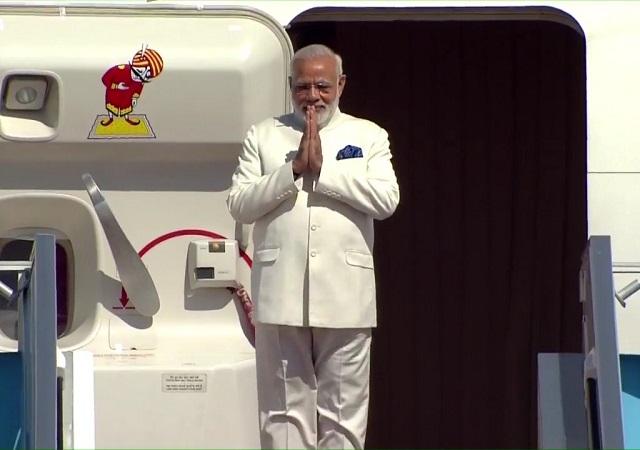
It was hailed as the reunion of friends when Indian Prime Minister Narendra Modi came calling on a historic visit to Israel in July—the first ever by a sitting Indian head of government. Media pundits in both Israel and India talked of genuine bond of friendship between Israeli Prime Minister Benjamin Netanyahu and his visiting Indian counterpart. The visit was heralded as the beginning of a new era of trust and friendship between the two counties. But the reality check came earlier this week, when the Indian government threw Israel under the bus at the United Nations by voting in favor of a resolution condemning the US decision to formally recognize Jerusalem as the capital of the Jewish State.

The UN General Assembly voted by a margin of 128-9-35 to condemn Donald Trump's decision to recognize Jerusalem as Israel's capital and eventually to relocate the US Embassy to Jerusalem. The vote is non-binding, but is being cheered in many quarters. American liberals are loving it, because it is viewed as a loss for Trump. And any loss for Trump, even if it's an anti-US loss, is okay with the media Resistance.

The White House has unveiled President Donald Trump's national security strategy. It has four main points: Protect America, promote our prosperity, preserve peace through strength, and advance our influence. But one of the biggest points is the return of using "jihadist" and "Sharia," language President Barack Obama's administration tried to avoid.

Former President Jimmy Carter sat down for an interview with Maureen Dowd for the New York Times and dropped some pretty interesting bombs.  Dowd focused her write-up on his answer to her question about acting as a go-between for the Trump White House and North Korea.  He said that he would go if asked, and that's certainly both important and within his wheelhouse.  In the interview, however, Carter also defends President Trump and offers surprising assessments of former-president Obama, failed presidential candidate Hillary, and the media. His comments in defense of Trump might be seen as an attempt to ingratiate himself in order to be called upon to assist with North Korea.  Maybe.  But that doesn't explain his apparent candor in unflattering critiques of Obama, Hillary, and the media.

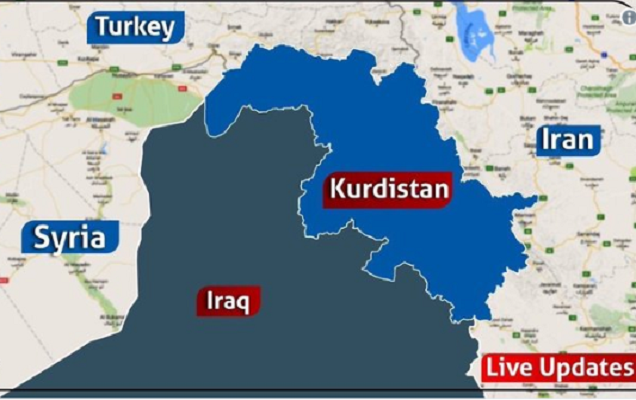
Kirkuk, Iraq has become a centerpiece in the Iraqi government's rejection of the overwhelmingly successful Kurdish Independence Referendum. Monday, Iraq took control of Kirkuk, which has been under Kurdish control since they took it from ISIS in 2014 as Iraqi forces fled.  It is surprising that the Kurds did not stand and fight for the hard-won Kirkuk, but it's not yet clear this was the case as there have been reports of gunfire and "clashes" in the city.  The resistance by Kurdish forces appears to have been somewhat minimal. The BBC reports:
The Iraqi military moved into Kirkuk three weeks after the Kurdistan Region held a controversial independence referendum.

Not just former US President Obama, Chancellor Merkel of Germany, too, regards the nuclear deal with Iran as her greatest diplomatic accomplishment. The prominent German newspaper Süddeutsche Zeitung summed up the central role played by the Merkel government, writing, "Among all the parties working to bring about a negotiated deal, Germans enjoyed [Iranian regime's] special trust." Corporate Germany loved the deal too. The Bavaria Chamber of Commerce, the leading trade body in the country, told its clients ahead of the deal that the "German media landscape across the board agrees that lucrative deals worth billions are waiting to be made in Iran. As soon as the sanction are lifted, the run on the markets begins."

Will President Donald Trump certify the Iran nuclear deal made under former President Barack Obama? That may not happen now since U.S. Ambassador to the UN Nikki Haley has accused Russia of protecting Iran from nuclear inspections that are crucial to the deal. From Fox News:
U.S. Ambassador to the U.N. Nikki Haley indicated Thursday that Russia was shielding Iran by blocking the International Atomic Energy Agency (IAEA) from verifying part of the deal. The IAEA initially revealed the news to a reporter in a Q&A. Meanwhile, under a requirement from Congress, Trump must choose whether to certify the deal by October 15.

It was a busy day in New York concerning North Korea. We learned that China's central bank told banks to stop working with North Korea. President Donald Trump met with South Korean President Moon Jae-in and Japanese Prime Minister Shinzo Abe to discuss the North Korean nuclear crisis. Trump also announced new sanctions against North Korea. From The Hill:
Speaking at the United Nations before a working lunch with Japanese Prime Minister Shinzo Abe and South Korean President Moon Jae-in, two key allies in the region, Trump said the order would significantly expand the U.S.’s ability to crack down on individuals and companies that do business with North Korea. The president said he had empowered the Treasury Department to “target any individual or entity that conducts trade in goods, services or technology” with North Korea.

US United Nations Ambassador Nikki Haley told the Security Council that North Korea dictator Kim Jong-un "is begging for war" after the latest nuclear test in the hermit kingdom. "Despite our efforts, the North Korea nuclear program is more advanced and more dangerous than ever," she explained. "War is never something the United States wants. We don't want it now. But our country's patience is not unlimited."

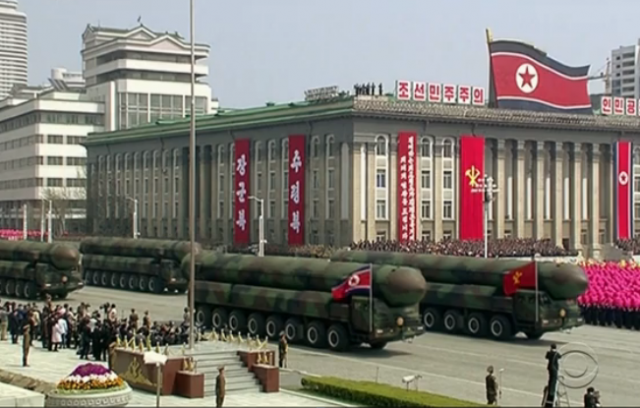
North Korea has successfully tested a nuke and may have triggered an earthquake.  World leaders are reacting this morning. Fox News reports:

North Korea said on Sunday it detonated a hydrogen bomb, possibly triggering an artificial earthquake and prompting immediate condemnation from its neighbors -- despite the rogue regime calling the test a "perfect success."