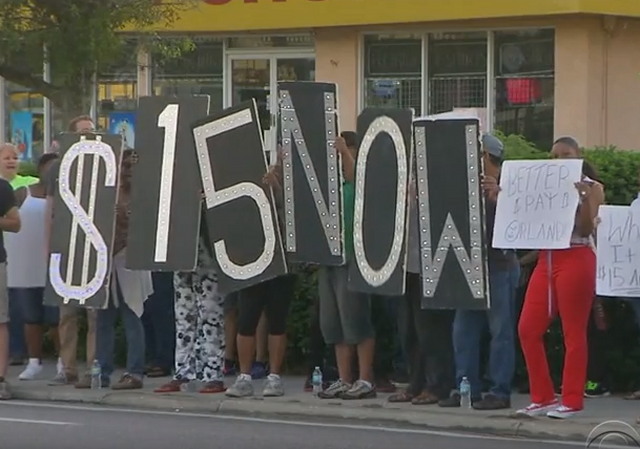
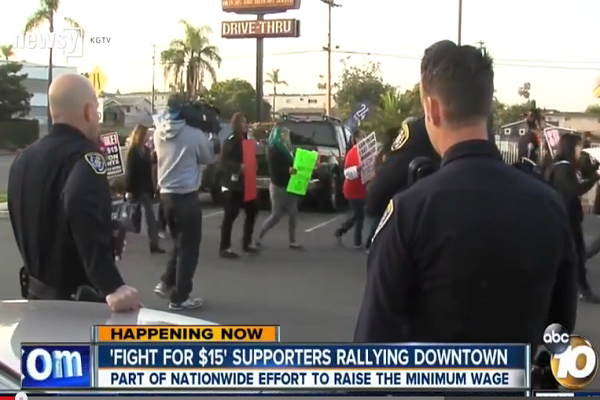
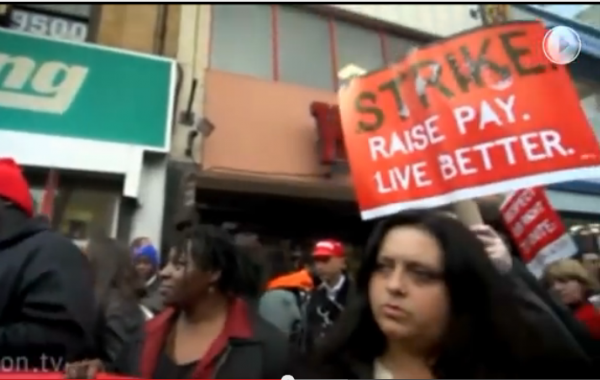
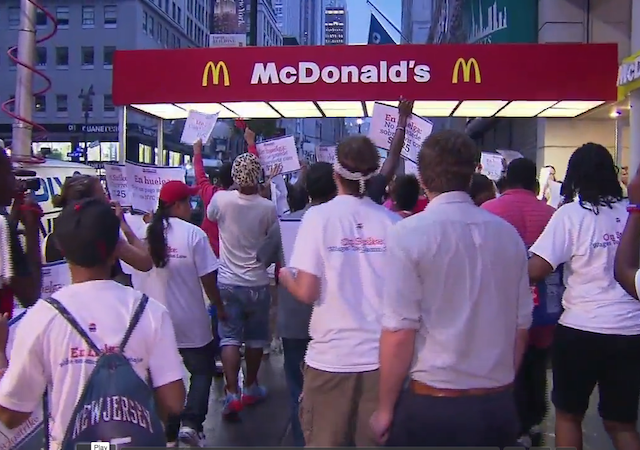
Fast food workers are planning to take their protests to a new level Thursday as they take to the streets for the largest mass strike to date.
According to the
New York Times, these protests will be different from previous protests in two ways. First, organizers are expanding their demonstrations' locations, and participants. This time, protesters from both the fast food and health service industries will go on strike in 100 cities, and hold sit ins in over a dozen. Second, organizers plan to engage in and encourage civil disobedience as a way of getting the message out:
At a convention that was held outside Chicago in July, 1,300 fast-food workers unanimously approved a resolution calling for civil disobedience as a way to step up pressure on the fast-food chains.
“They’re going to use nonviolent civil disobedience as a way to call attention to what they’re facing,” said Mary Kay Henry, president of the Service Employees International Union, which has spent millions of dollars helping to underwrite the campaign. “They’re invoking civil rights history to make the case that these jobs ought to be paid $15 and the companies ought to recognize a union.”
The SEIU is encouraging members of its health service union members to join protests in 6 of the 100 cities, hoping that diversifying participation will draw greater attention to the strikes.
These strikes are the result of a
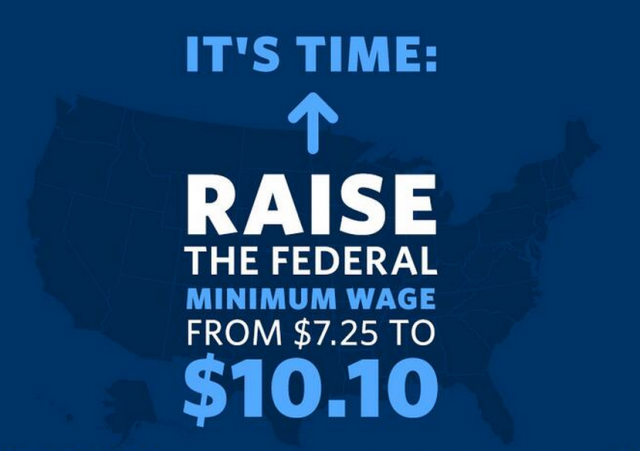
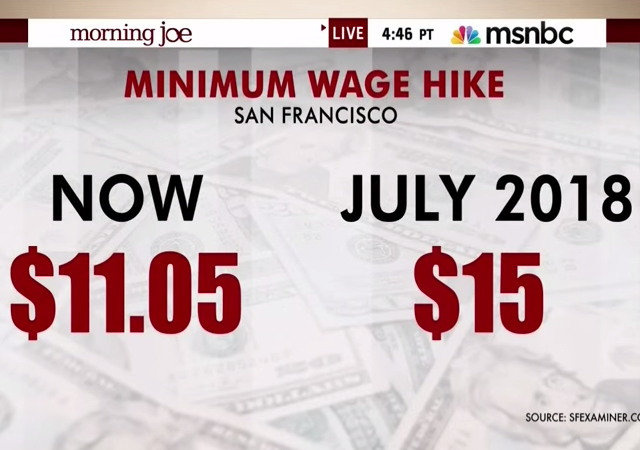
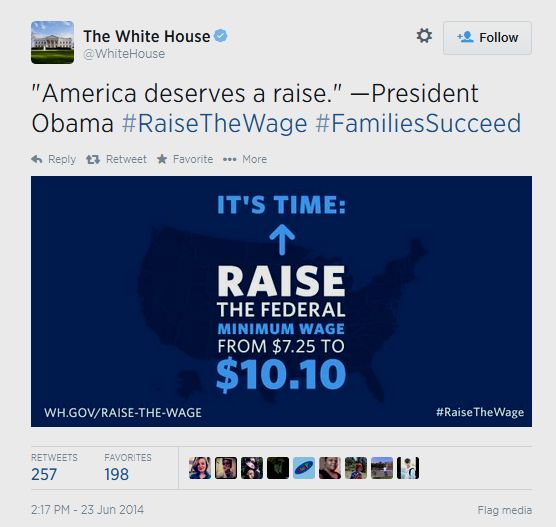
two year effort to force fast food chains to raise their minimum wage to $15 per hour, and to allow their employees to unionize. Earlier this summer the
NLRB ruled to break through McDonald's corporate-franchisee relationship in an attempt to conduct mass unionizations of entire chains all at once, as opposed to working through a company franchise by franchise. If that ruling is upheld by the courts, McDonald's could be held liable for labor law violations at its thousands of locations.
CNN Money reports data suggesting that fast-food CEOs currently make 1,000 times more than the average worker in the industry, and that around 33% of fast food workers have spent at least some time in college. Additionally, 70% of fast food workers are over the age of 20, making it easy for organizers to quickly debunk arguments that "fast food jobs are for teenagers." Whether or not that data holds true in the long run, union representatives are ready to emphasize the disparity between individual employee salaries and overall corporate profits as a way to whip up support.