


Image 01 Image 03

Israel Tag

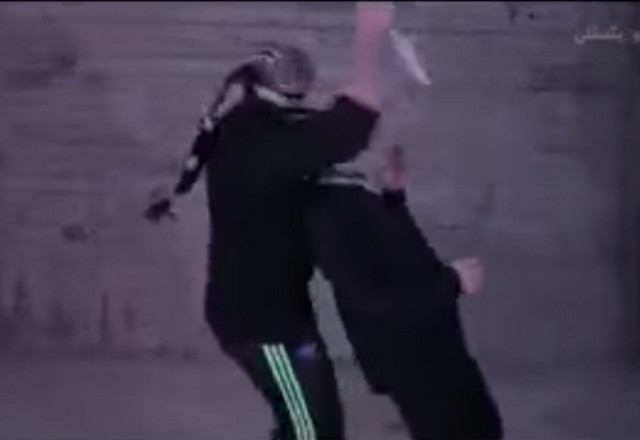
We are seeing a growing volume of knife attacks on Jews in Israel as the new Palestinian terror tactic. The murder of four Jews praying in a synagogue in Jerusalem with knives and machetes received a lot of attention, but there are almost daily knife attacks on Jews, primarily but not exclusively in Jerusalem. That terror tactic is necessitated, in part, by Israel's security barrier, checkpoints and raids which make it much more difficult to infiltrate weapons and explosives into Israel for use in terror attacks. But knives are more readily available, and knife attacks seem to be promoted as a tactic. Hamas-affliated Palestinian students at Al Quds University produced a video celebrating the murder of the four Jews in Synagogue: Hamas even produced a video on how to stab a Jew:
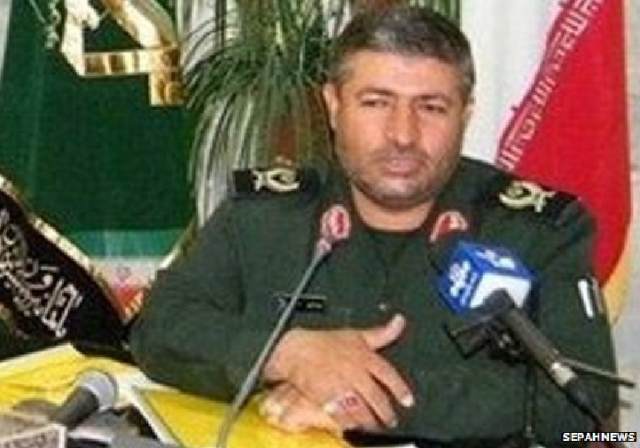
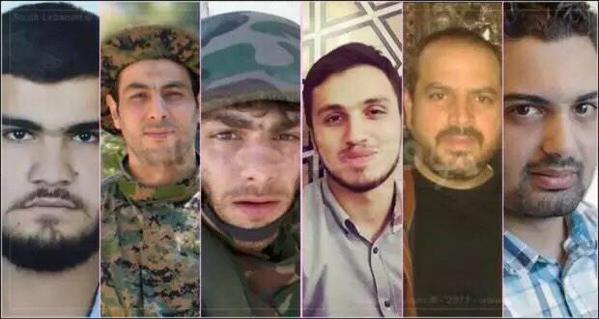
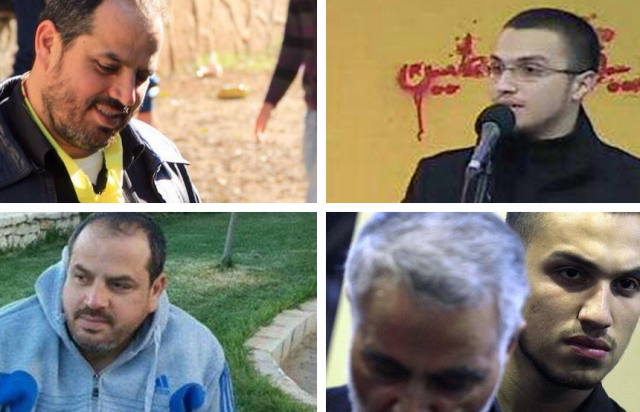
Yesterday we reported how an Israeli helicopter strike just over the Syrian Golan border killed several senior Hezbollah terrorist leaders, including Jihad Mughniyeh, the son of legendary and assassiated Hezbollah terror coordinatior Imad Mughniyeh. The elder Mughniyeh was responsible, among other things, for the Marine barracks bombing in Beirut that killed hundreds of Americans. A total of six senior Hezbollah military leaders were killed: https://twitter.com/One4Zion/status/556998160284139520/photo/1 A Hezbollah leader even more important than Jihad Mughniyeh also was killed in the attack:
Jihad does not appear to have been a key Hezbollah figure in the attack, however. One of the more central Hezbollah figures killed is Mohammad Ahmad Issa, who Raja News identified as an intelligence official, though other news agencies reported he was a top commander for Iraq and Syria.
In Beirut, Hezbollah is mourning its dead.

The news reports at first were vague, an Israeli helicopter strike on one or more vehicles on the Syrian side of the Golan Heights, in an area in which Syrian troops, Hezbollah, and Syrian rebels operated. Reportedly it was on a group getting ready to fire rockets into Israel. More details are leaking out. The usual caution that early reports can be wrong apply. The latest reports are that several senior Hezbollah operatives, including Jihad Mughniyeh, the son of Imad Mughniyeh, were killed. Imad Mughniyeh, considered the top Hezbollah military operative at the time and the mastermind of numerous attacks on Israel and Israelis, was assassinated in Damascus when the headrest of his car blew up. Israel has never admitted the assassination, but just about everyone presumes it to be so. Hezbollah planned several revenge attacks that were thwarted, likely because the Israeli Mossad infiltrated Hezbollah's highest ranks including Hezbollah Chief Hassan Nasrallah's security detail. The Lebanese Daily Star reports Israel strike in Syria kills Mughniyeh's son, 9 others:

When the Palestinian Authority submitted papers to the International Criminal Court for the purpose of seeking war crimes prosecutions of Israel, we reviewed many thoughtful and cogent analyses that based on the rules governing the court and precedent, the case may not even get off the ground. Not being an expert in the ICC, but knowing how so many supposedly neutral and objective international organizations have been corrupted by political animosity to Israel, I was skeptical:
>>>>>> Major caveat — these analyses assume that the ICC treats Israel the way it would treat any other nation, but anything that related to Israel always seems to skew international organizations, so I have my doubts. <<<<<<
And sure enough, right from the get-go, the ICC prosecutor has invented standards specifically for Israel. Law Professor and international law expert Eugene Kontorovich describes at Volokh Conspiracy what has happened, ICC’s undermines its own independence with Palestine inquiry:
The ICC’s Prosecutor announced today the opening of a “preliminary examination” into “the Situation in Palestine.” This means she will consider, on jurisdictional, evidentiary and policy grounds whether to open an investigation into crimes that may have been committed during this summer’s Gaza conflict. Opening such an investigation is a fairly standard step after receiving a declaration of acceptance of jurisdiction under Article 12(3) of the Rome Statute, and would not normally warrant much notice (other preliminary investigations also involve alleged crimes by the U.S. in Afghanistan and the U.K. in Iraq, though precious few Americans or British are aware of this). But this decision of the prosecutor is quite different, and extremely significant. The decision to open the inquiry involved the prosecutor determining that the Palestinian Authority is in fact a “state,” a necessary precondition to jurisdiction under the Rome Statute, the Court’s constitutive treaty.

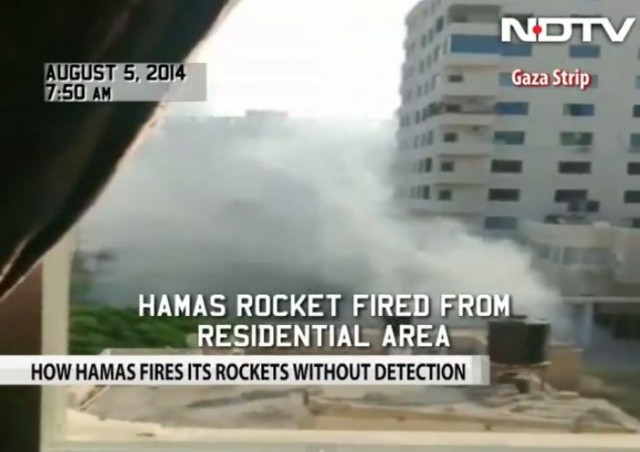
Ronald Reagan's "A Time for Choosing" speech set forth the stark choice facing free societies in the fight against Communism: After the attacks in France and throughout Europe on Jews, often motivated and perpetrated in the name of anti-Zionism, it's no longer possible to sit on the sidelines. It's another time for choosing. Whatever Israel's problems with regard to balancing the fight against terror with preservation of freedom, such problems pale in comparison to what goes on in the rest of the region and most of the world, where balance is not even attempted. We saw it in the intimidation and threats against "journalists" in Gaza during the 2014 summer conflict, where Hamas bullying resulted in refusals to report key facts such as Hamas using schools, hospitals and other civilian infrastructure as rocket firing locations. Some evidence, however, slipped out, particularly after "journalists" left Gaza. That is true also in areas controlled by the Palestinian Authority, where there is no independent journalism except directed at Israel. Israel and Israel alone is under a microscope from hundreds of journalists and Non-Governmental Organizations whose primary job is to wake up every morning and find something wrong that then can be broadcast through Western and Arab media.

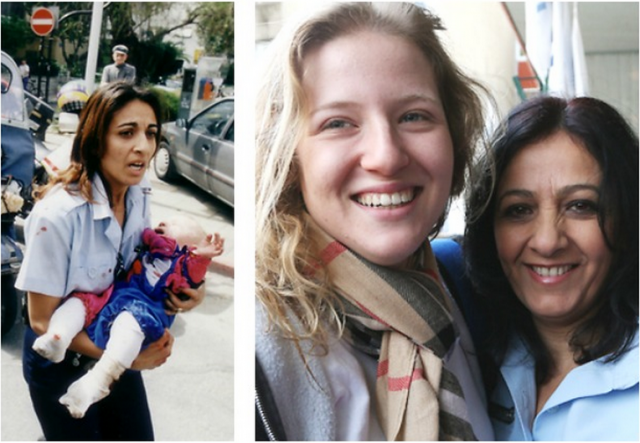
On March 21, 1997, a Hamas suicide bomber detonated his bomb at the Café Apropo on Ben Gurion Boulevard in Tel Aviv. CNN reported at the time:
A suicide bomber blew himself up in a crowded Tel Aviv outdoor cafe Friday, killing at least three other people and injuring more than 40 others. Many patrons were dressed in costumes to celebrate the Jewish holiday of Purim. The militant Islamic group Hamas claimed responsibility for the attack. Israel immediately sealed the West Bank and Gaza Strip, barring all Palestinians from entering Israel. The death toll rose to four after an injured woman died at Tel Aviv's Ichilov hospital, a hospital spokeswoman said. Two other Israeli women died at the scene.... The bomb was studded with nails for more deadliness.... "The peace process is threatened not by the periodic disagreements, but by the mentality that says that if we have a disagreement we can go and blow them up," [Israeli Prime Minister Benjamin] Netanyahu said. "It is threatened by the idea that violence is sanctioned despite negotiations, that you can kill women and kids in a cafe. All the attempts to explain this away, they are a threat to the peace process," he said. "So I would advise the international community to do the right thing, and that is for them to understand nothing justifies terrorism." ...

The attack by radical Islamists at the Paris Hyper Cacher kosher supermarket left four hostages dead, plus one of the gunmen. The Hyper Cacher supermarket attack appears to have been coordinated with the two men who killed 12 at Charlie Hebdo. The specter of widespread anti-Semitism on the streets of Paris is nothing new. It has been fueled not only by centuries-old hatreds, but by the more modern Islamist, "anti-Zionist" and BDS movements whose hatred of Israel is obsessive and dehumanizing. Below are a couple of videos from the assaults on Jewish sections of Paris and a Synagogue during "pro-Palestinian" riots last summer over the Gaza conflict. See also several of my posts (some of the videos in the posts have gone bad):

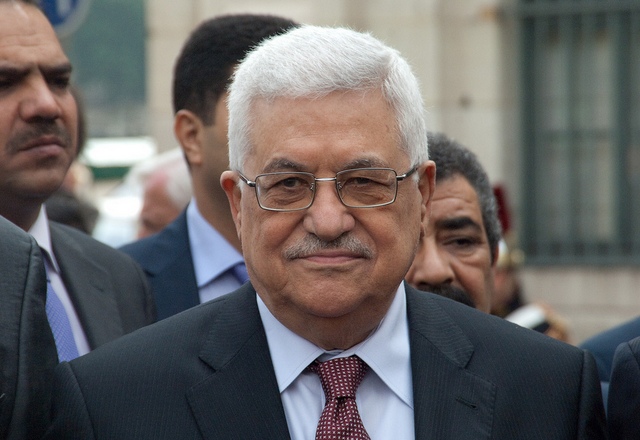
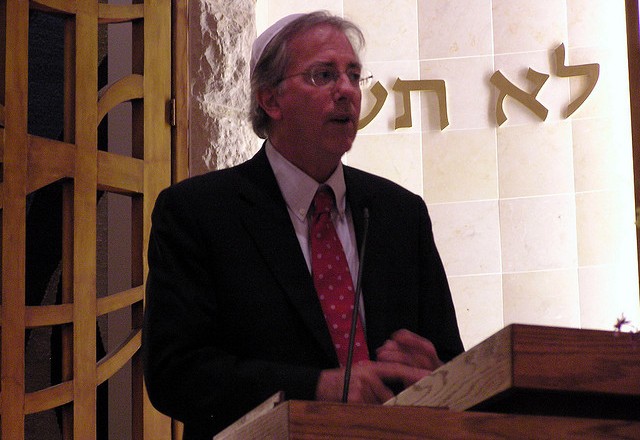
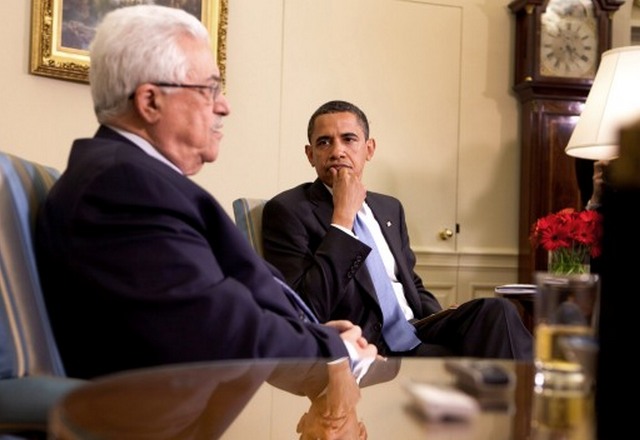
In The Dream Palace of the Arab, an excellent column about Palestinians' inability to place their fantasies about the destruction of Israel over the reality of Israel, Bret Stephens focuses on Palestinian Authority President Mahmoud Abbas' latest attempts to avoid negotiating with Israel. Stephens observes: "Mr. Abbas consistently refuses a Palestinian state because such a state is infinitely more trivial than a Palestinian struggle." For the past ten years Abbas has been indispensable. Portrayed as a moderate alternative and successor to unrepentant terrorist Yasser Arafat, Abbas was hailed as a moderate who could make peace with Israel. But like his predecessor who rejected an offer of peace in 2000, Abbas rejected peace proposals in 2008 and again in 2014 (as Dennis Ross recently observed.) Because he's viewed as essential, he can get away with anything. He's fabulously corrupt; he hasn't bothered standing for re-election, having just started the 11th year of a 4 year term; he allows little freedom; and he keeps saying "no" to peace. But since everyone believes that the alternatives are worse, he's tolerated if not celebrated. Stephen has a great observation:
Over a beachfront lunch yesterday in Tel Aviv, an astute Israeli friend had the following counter-fantasy: What if Western leaders refused to take Mahmoud Abbas’s calls? What if they pointed out that, in the broad spectrum of global interests, from Eastern Europe to the South China Sea, the question of Palestinian statehood ranked very low—on a par with, say, the prospect of independence for the Walloons? What if these leaders observed that, in the scale of human tragedy, the supposed plight of the Palestinians is of small account next to the human suffering in Syria or South Sudan? In that event, the Palestinian dream palace might shrink to its proper size, and bring the attractions of practical statecraft into sharper focus. Genuine peace might become possible.

In an op-ed published in The New York Times on Monday, former American peace negotiator Dennis Ross wrote that it's time to hold the Palestinians responsible for turning down peace.
Since 2000, there have been three serious negotiations that culminated in offers to resolve the Israeli-Palestinian conflict: Bill Clinton's parameters in 2000, former Israeli Prime Minister Ehud Olmert's offer in 2008, and Secretary of State John Kerry's efforts last year. In each case, a proposal on all the core issues was made to Palestinian leaders and the answer was either "no" or no response. They determined that the cost of saying "yes," or even of making a counteroffer that required concessions, was too high. Palestinian political culture is rooted in a narrative of injustice; its anticolonialist bent and its deep sense of grievance treats concessions to Israel as illegitimate. Compromise is portrayed as betrayal, and negotiations -- which are by definition about mutual concessions -- will inevitably force any Palestinian leader to challenge his people by making a politically costly decision. But going to the United Nations does no such thing. It puts pressure on Israel and requires nothing of the Palestinians. Resolutions are typically about what Israel must do and what Palestinians should get. If saying yes is costly and doing nothing isn't, why should we expect the Palestinians to change course?
Abbas, as Ross noted, torpedoed the American-sponsored peace process last year (just as former Israeli negotiator Tzipi Livni recently recounted) only to see political pressure brought to bear on Israel. Ross ends by asking, "But isn't it time to demand the equivalent from the Palestinians on two states for two peoples, and on Israeli security? Isn't it time to ask the Palestinians to respond to proposals and accept resolutions that address Israeli needs and not just their own?"

Today the New York Times, predictably, blamed Israel for Palestinian Authority President Mahmoud Abbas' efforts to internationalize the Palestinians conflict with Israel. According to the Times, it is Israel's fault that Abbas attempted to get the United Nations Security Council to impose an agreement on Israel and, failing that, to apply to join the International Criminal Court (ICC). In an editorial today, The Palestinians' Desperation Move, the Times argues:
Mr. Abbas began this week by insisting that the Security Council approve a resolution to set a deadline for establishing a Palestinian state, including the phased withdrawal of Israeli forces from the West Bank by the end of 2017. After heavy lobbying by the United States and Israel, the resolution received only eight of the nine votes needed to pass in the 15-member council. The fact is, the United States, which voted against the measure, supports a Palestinian state. And France, which broke with the Americans and voted in favor, acknowledged reservations about some of the details. Following this defeat, Mr. Abbas moved swiftly on Wednesday to take an even more provocative step in joining the International Criminal Court, through which the Palestinians could bring charges against Israeli officials for cases against their settlement activities and military operations. While he was under strong pressure from his constituents to do this, he knew well the cost might be great. “There is aggression practiced against our land and our country, and the Security Council has let us down — where shall we go?” Mr. Abbas said at his headquarters in the West Bank city of Ramallah.
Note that the Times describes these moves not as wrong, but as counterproductive.

The problem with the "peace negotiations" that failed numerous times over the years is that the Palestinians cling to the hope that international organizations -- primarily the United Nations and its branches -- will force Israel into concessions that harm Israel's security, and will pave the way not for a lasting peace, but more war with Israel's position being weakened. Getting more by threats than negotiations is the tactic the Palestinians just can't seem to give up. This rejectionism, reinforced by those who think boycotting Israel will also force Israel to hang itself, has achieved nothing for the Palestinians. The State offered the Arabs of the British Mandate of Palestine in 1947 was rejected. Golda Meir's offer after the 1967 War was rejected. Offers at Camp David and later by Prime Minister Olmert were rejected. Always the threats. The threat of terrorism and more Intifadas. The threat of the Security Council forcing Israel back to the 1949 Armistice lines. The threat to join the International Criminal Court and put Israeli leaders on trial for war crimes. Always the threats, never the hard compromises. The threat of Security Council action failed yesterday, though it's likely to be tried again.. Today, Mahmoud Abbas and other Palestinian leaders announced that "Palestine" would join the ICC, via the Times of Israel:
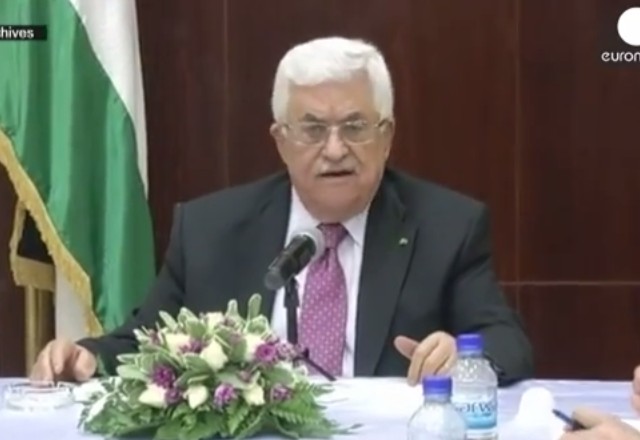
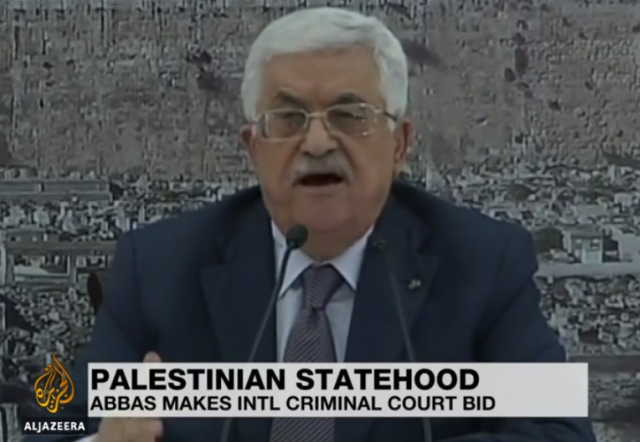
Palestinian Authority President Mahmoud Abbas signed a request Wednesday to join the International Criminal Court, a move that would establish a new avenue for action against Israel after the UN Security Council rejected a resolution which aimed to establish a timetable for a full Israeli pullout from the West Bank and East Jerusalem In a live broadcast from the West Bank city of Ramallah, Abbas signed 20 international treaties, including the Rome Statute, the ICC’s founding document.... The Palestinians planned to submit the paperwork for joining the ICC to U.N. Secretary-General Ban Ki-moon on Wednesday afternoon, but postponed it, probably until Friday. Handing over the documents is the last formal step for Palestine to become a member of the ICC, which would happen in about 60 days.... Prime Minister Benjamin Netanyahu said in response to the announcement that it was the Palestinian Authority, not Israel, that had to worry about the ICC’s judgments because of its partners, Hamas, from whose Gaza territory over 4,500 rockets and other projectiles were fired at Israel during a 50-day war this summer. Abbas’s Fatah and the Islamist terror group Hamas are the joint backers of the current Palestinian “unity” government.

The United Nations Security Council just voted against a controversial Palestinian Authority proposal, introduced by Jordan, requiring Israel to pull back to the 1967 lines (the 1949 Armistice line), including designating all of East Jerusalem (which includes the ancient Jewish Quarter of the Old City). The vote failed to get sufficient votes to force a U.S. veto. Aljazeera reports:
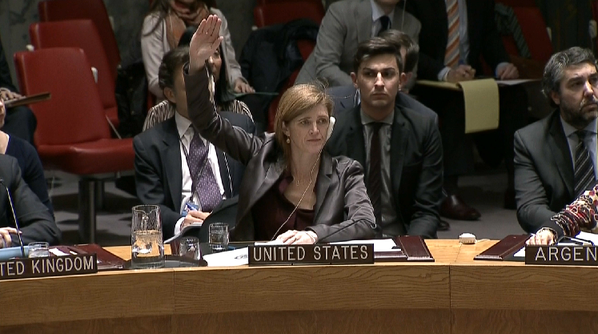
The UN Security Council has rejected a Palestinian resolution calling for peace with Israel within a year and an end to Israel's occupation by 2017. The resolution failed to muster the minimum nine "yes" votes required in the council for adoption. It received eight "yes" votes, two "no" votes from the United States and Australia, and five abstentions, from the UK, Lithuania, Nigeria, South Korea and Rwanda. The US, Israel's closest ally, had reiterated its opposition to the draft resolution earlier on Tuesday. Washington said it could not support the draft because it was not constructive and failed to address Israel's security needs.
Samantha Power US votes No Palestinian Statehood The Times of Israel adds that the result surprised the Palestinians:

In a recent essay, Jonathan Spyer identified the likely approach the anti-Netanyahu coalition - specifically Isaac Herzog of Labor and Tzipi Livni of Hatnua - will take in preparation for the Israeli elections on March 17. Spyer writes, "The belief underlying the Israeli center-left’s campaign is evidently that if Israel is 'boxed in' it is because of its own 'extremists' and that the solution to this is greater accommodation to the U.S. administration." There's a problem with this approach, though: it may not resonate well with Israeli voters.
But if this is indeed to be the thrust of the center-left’s campaign in the elections, success is likely to continue to elude it. Israelis are deeply aware both of the threats that surround them, and of the cold attitude of the current U.S. administration toward their country. A campaign which seeks to blur or obscure these or to claim that they are largely of Israel’s own making is likely to win its proponents a further term in the opposition.
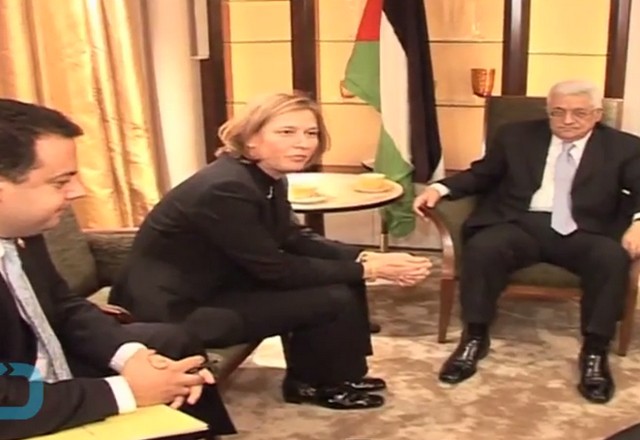
We only have to go back to last week, when Roger Cohen of the The New York Times published an interview with former Israeli peace negotiator Tzipi Livni, to see how true Spyer's assessment is. Livni, in the column, identifies Palestinian Authority President Mahmoud  Abbas as the one who torpedoed the American-sponsored peace process by failing to accept an American framework agreement, attempting to bolster a unilateral bid for statehood by signing international treaties and finally by agreeing to a unity government with Hamas. Yet even as Livni recounted Abbas refusal to negotiate in the middle of the op-ed, at the beginning and end of the article she asserts that only she and those aligned with her are moderates seeking peace. The problem is the disconnect between her accounting of Abbas' intransigence and her insistence that Likud is what's preventing peace is rather obvious. She can't convincingly claim that Prime Minister Benjamin Netanyahu is the major obstacle to peace when she herself has documented how Abbas scuttled the American peace efforts.

A new Hamas "How To" video is going viral in Palestinian social media circles. It isn't how to rebuild buildings. Or how to make peace with Israel. It's how to stab Jews. How do it properly and inflict maximum damage on the victim and increase the likelihood of killing him or her. The Jewish Press reports:
The “resisters of occupation in the occupied West Bank and Jerusalem” are spreading on Arab social media a frightening video demonstrating tactics on how to stab a Jew to death quickly and efficiently. The 1-minute and 13-second video, as seen below, shows the “teacher” calmly walking up to a “victim,” stabbing him, and walking away. One of the tactics appears to imitate the Islamic State of Iraq and Syria (ISIS) method of beheading. The guide to killing Jews teaches that after stabbing the victim, the knife should be twisted to maximize wounds and cause death.

Prof. Jaccobson blogged yesterday about the tribulations of Israeli Member of Knesset Haneen Zoabi, who is privileged and free to serve in the legislature of the country that she reviles. But there's another Zoabi, in fact a distant cousin, who also has been in the news. Mohammad Zoabi. He's a teenager who describes himself as a "A Proud Israeli Arab Muslim Zionist." Mohammad first came to my attention when he released the video below, a plea to return Eyal Yifrach, Gil-ad Shaar and Naftali Fraenkel, in English, Hebrew and Arabic.

Haneen Zoabi hates Israel. She encourages its enemies. She spews anti-Israel propaganda with reckless abandon. The kidnappers and murderers of three Israeli teens last spring were not terrorists, according to her. Haneen Zoabi also is a member of the Israeli parliament, the Knesset, as part of Arab nationalist party Balad. There have been moves to ban Zoabi from the Knesset, and her disruptive behavior within the Knesset has resulted in a temporary ban. But she's still there, and running again in the upcoming March 2015 elections. There is no such thing as a Haneen Zoabi in reverse in most countries, and certainly in Arab countries, where Zoabi would be in jail or worse. In the U.S., a Zoabi-equivalent probably wouldn't make it into Congress because of our dual-party system. No, in the U.S. a Zoabi would have to settle for an endowed professorship at Columbia, or presidency of the American Studies Association. Danny Danon, a popular "right wing" Israeli politician, knows the public doesn't like Zoabi, and is running an animated campaign ad mocking her for supporting Israeli's enemies in order to boost his own election prospects. Sorry, don't have version with English subtitles, but you probably can figure it out: Now Zoabi is suing. Seriously.