Image 01 Image 03

Free Speech Tag

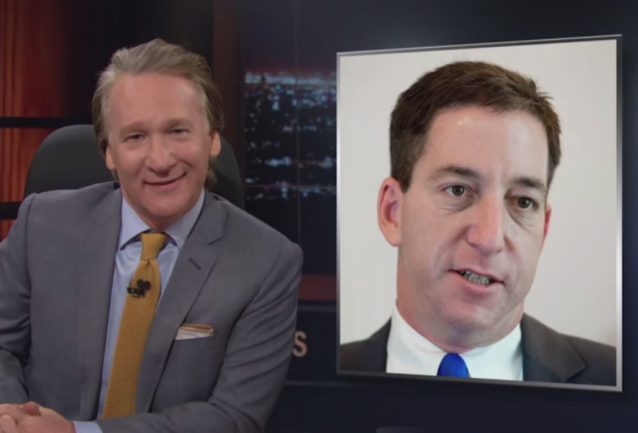
We wrote previously about UC Berkeley students' attempt to block comedian Bill Maher from speaking at the university's commencement ceremonies. Students circulated a petition citing "hateful" statements like the one contained in the tweet below as reasons why Maher should not be allowed to speak at the ceremony. Unfortunately for Berkeley's future community organizers, Berkeley Chancellor Nicholas B. Dirks disagrees with the premise of their petition, and has overturned a student vote blocking Maher from speaking at graduation. Via Inside Higher Ed:
"The UC Berkeley administration cannot and will not accept this decision, which appears to have been based solely on Mr. Maher’s opinions and beliefs, which he conveyed through constitutionally protected speech," said a statement from the university. "For that reason Chancellor Dirks has decided that the invitation will stand, and he looks forward to welcoming Mr. Maher to the Berkeley campus. It should be noted that this decision does not constitute an endorsement of any of Mr. Maher’s prior statements: indeed, the administration’s position on Mr. Maher’s opinions and perspectives is irrelevant in this context, since we fully respect and support his right to express them. More broadly, this university has not in the past and will not in the future shy away from hosting speakers who some deem provocative."

Back in September, Prof. Jacobson asked How long before Bill Maher is banned on campus? It turns out the answer is... about a month. Greg Piper of the College Fix reported yesterday:
UC-Berkeley students try to derail Bill Maher from speaking at graduation Comedian, pundit and HBO host Bill Maher is scheduled to speak at the University of California-Berkeley’s December graduation, and students are already lining up to get him disinvited, citing his controversial remarks on Islam, the Daily Californian reports:
The Change.org petition was authored by ASUC Senator Marium Navid, who is backed by the Middle Eastern, Muslim and South Asian Coalition, or MEMSA, and Khwaja Ahmed, an active MEMSA member. The petition, which urges students to boycott the decision and asks the campus to stop him from speaking, has already gathered more than 1,400 signatures as of Sunday. … “It’s not an issue of freedom of speech, it’s a matter of campus climate,” Navid said. “The First Amendment gives him the right to speak his mind, but it doesn’t give him the right to speak at such an elevated platform as the commencement. That’s a privilege his racist and bigoted remarks don’t give him.” … “(Jon) Stewart and (Stephen) Colbert are critical of religion, too, but Bill Maher has, on several occasions, said to rise up against religious people and religious institutions and take action,” Ahmed said.
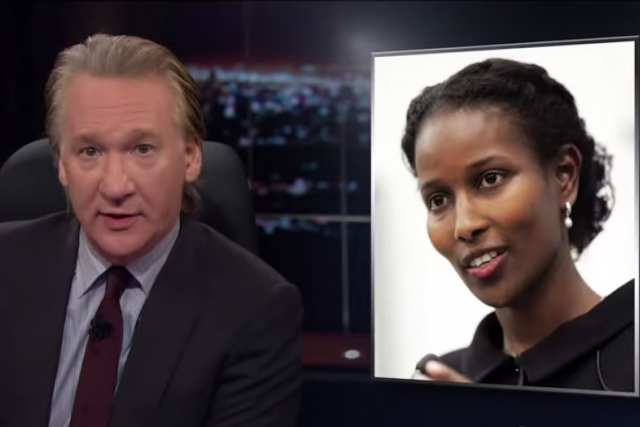
Here's an example of what's gotten Maher into trouble with Berkeley students. (language warning – NSFW) If you watched the video, you may have noticed that Maher mentioned Ayaan Hirsi Ali.

This is just another case of Democrats doing something they would be outraged about if Republicans tried it. In this instance, they want to use the power of government to silence opposition. Paul Bedard of the Washington Examiner reports:
Dems on FEC move to regulate Internet campaigns, blogs, Drudge In a surprise move late Friday, a key Democrat on the Federal Election Commission called for burdensome new rules on Internet-based campaigning, prompting the Republican chairman to warn that Democrats want to regulate online political sites and even news media like the Drudge Report. Democratic FEC Vice Chair Ann M. Ravel announced plans to begin the process to win regulations on Internet-based campaigns and videos, currently free from most of the FEC’s rules. “A reexamination of the commission’s approach to the internet and other emerging technologies is long over due,” she said. The power play followed a deadlocked 3-3 vote on whether an Ohio anti-President Obama Internet campaign featuring two videos violated FEC rules when it did not report its finances or offer a disclosure on the ads. The ads were placed for free on YouTube and were not paid advertising.
This is all about the accumulation and retention of power. As John Hinderaker of Powerline recently noted, that's just how the left rolls:

Houston's summer was marred by a battle over religious liberties and overreaching government. Sparring over a city ordinance that would force businesses, among other things, to allow transgendered clientele the use of opposite sex restrooms or risk discrimination suits, Bayou City area clergy and the government aren't exactly on the best of terms. Rather than placing the measure on the ballot, City Council enacted the reform via city ordinance. Rallying together, clergy and concerned citizens submitted over more than twice as many required to repeal the ordinance. Then the validity of the signatures was called to question by the city attorney. And that's where this story picks up. The Houston City government made a bad situation worse when it subpoenaed five local area pastors. The subpoena requests any and all communication, electronic and otherwise that remotely mentions the above mentioned city ordinance battle. But it doesn't stop there:
All speeches, presentations, or sermons related to HERO, the Petition, Mayor Annise Parker, homosexuality, or gender identity prepared by, delivered by, revised by, or approved by you or in your possession.
Churches qualify for 501(c)(3) tax exempt status and can lose that status by engaging in electioneering or elicit candidate endorsement, just the same as any other 501(c)(3) organization; but none of the subpoenaed material falls within that category.

Turns out Twitter is also fed up with this administration's war on transparency. Last month, Twitter released a report detailing how they'd been banned from reporting the extent of government surveillance on the platform. In that report Twitter explained:
"...if the government will not allow us to publish the actual number of requests, we want the freedom to provide that information in much smaller ranges that will be more meaningful to Twitter’s users, and more in line with the relatively small number of non-national security information requests we receive. We also pressed for the ability to be specific about different kinds of national security requests and to be able to indicate “zero requests” if that applies to any particular category of request. Unfortunately, we were not able to make any progress at this meeting, and we were not satisfied with the restrictions set forth by the DOJ.
Today Twitter announced they're taking the transparency fight to court:
Our ability to speak has been restricted by laws that prohibit and even criminalize a service provider like us from disclosing the exact number of national security letters (“NSLs”) and Foreign Intelligence Surveillance Act (“FISA”) court orders received — even if that number is zero. It’s our belief that we are entitled under the First Amendment to respond to our users’ concerns and to the statements of U.S. government officials by providing information about the scope of U.S. government surveillance – including what types of legal process have not been received. We should be free to do this in a meaningful way, rather than in broad, inexact ranges. So, today, we have filed a lawsuit in federal court seeking to publish our full Transparency Report, and asking the court to declare these restrictions on our ability to speak about government surveillance as unconstitutional under the First Amendment. The Ninth Circuit Court of Appeals is already considering the constitutionality of the non-disclosure provisions of the NSL law later this week.
You can read the filing in its entirety beneath:

Senate Republicans have crushed Majority Leader Harry Reid's efforts to advance a Constitutional amendment that would greatly restrict free speech and association in America. Reid needed 60 votes to end the measure, but the votes fell 54-42 across the party line. Via the Hill:
Earlier this week, more than 20 Republicans voted with Democrats in a 79-18 vote to advance the amendment in order to force Democrats to spend the week debating the merits of the measure. ... The amendment was certain to fail at some point. It would have needed to win two-thirds support to pass the Senate, and then would still have needed to move through the House and be ratified by two-thirds of the states.
Preceeding the vote, Minority Leader Mitch McConnell (R-KY) took Democrats to task for wasting the chamber's time, and prioritizing Democrats' own destructive agenda over the needs of the American people:

Yesterday was another heated day on the floor of the Senate, as Republicans took to the podium to lambaste SJR 19, Democrats' latest effort to control the content and flow of political speech in America. As we discussed Monday, SJR 19 proposes a Constitutional amendment that would give Congress the right to set limits on how much money can be raised for and spent in federal political campaigns, and would drastically limit the First Amendment rights to both free speech and free association. Senate Majority Leader Harry Reid (D-NV), and Senate Majority Whip Dick Durbin (D-IL), have spent the past two days defending the resolution as our last chance to preserve the integrity of the vote---and proposing some dangerous policy in the process. Tuesday brought both junior and senior Senators to the floor in opposition to the proposed amendment, putting Democrats on defense and causing waves on social media. One of the main concerns raised in Tuesday's floor speeches was the potential for government control over political speech to spiral, and cut off the flow of information entirely. Senator Ted Cruz (R-TX) got creative with his presentation, targeting Senator Al Franken (D-MN) and others who embrace parody and humor as part of their political commentary:

Congress is back in Washington, and Senate Democrats have wasted no time in bringing forward their proposal for a constitutional amendment that would give Congress the right to set limits on how much money can be raised for and spent in federal political campaigns. Senate Joint Resolution 19 is sponsored by Tom Udall (D-NM) and has gained the vocal support of powerful Democrats like Elizabeth Warren, Patrick Leahy, Majority Whip Dick Durbin, and Majority Leader Harry Reid. Its three sections would drastically affect both freedom of speech and freedom of association in America:
Section 1. To advance democratic self-government and political equality, and to protect the integrity of government and the electoral process, Congress and the States may regulate and set reasonable limits on the raising and spending of money by candidates and others to influence elections. Section 2. Congress and the States shall have power to implement and enforce this article by appropriate legislation, and may distinguish between natural persons and corporations or other artificial entities created by law, including by prohibiting such entities from spending money to influence elections. Section 3. Nothing in this article shall be construed to grant Congress or the States the power to abridge the freedom of the press.
In his first floor speech following the August recess, Majority Leader Reid made it clear that he's willing to once again prevent Republicans from having a voice in the Senate---ironic considering he's advocating the muzzling of voters via Congressional fiat:

As Hot Air's Ed Morrissey once put it, "there is no jackass exception to the First Amendment." Many bloggers toe the line between defamation and free expression, and enjoy their constitutional protections to the fullest; every once in a while, though, what started as an internet flame war ends up in the courts. On Friday, the Texas Supreme Court ruled that Google does not have to release the identity of the anonymous blogger "Trooper" who used the internet to criticize Reynolds & Reynolds. The Ohio-based software company is attempting to discover Trooper's identity "in anticipation of a suit." Via the ABA Journal:
The petition was brought by Reynolds & Reynolds, the Austin American-Statesman reports. The company argued that a disgruntled employee, writing under the pseudonym “Trooper,” posted confidential and defamatory statements about it on a blog site hosted by Google. “Trooper” submitted a sworn affidavit to the court that stated he did not live in Texas. The decision overturns a trial court order that held Google must disclose the author’s identity. Reynolds & Reynolds ["Reynolds"] is seeking the information so it can sue the author for defamation and business disparagement, according to the article.
The problem with Reynolds & Reynolds' petition was that they could not provide evidence to show that a court in Texas could exercise jurisdiction over "Trooper." Rule 202 of the Texas Rules of Civil Procedure allows a "proper court" to authorize a deposition to investigate a potential claim before a suit is filed. Reynolds, which has offices in Texas, is attempting to execute a Rule 202 petition under the jurisdiction of a district court in Harris County, Texas; their goal is to force Google during a deposition to disclose the true identity of Trooper so that they can prove that a Texas court can exercise personal jurisdiction. Trooper, however, asserted though counsel during a special appearance that his only contact with Texas occurs when people in Texas read his blog. He argued that he does not have the minimum contacts required with Texas sufficient for a Texas court to exercise personal jurisdiction over him.

Prior to a few minutes ago, the University of Illinois at Urbana-Champaign had not commented publicly about the reasoning behind the decision not to complete the hiring process for Professor Steven Salaita. There was a lot of protest, including a petition and academic boycotts, meant to pressure the university into changing its mind.  That does not appear to be happening, from the latest news report. That, of course, does not preclude some sort of financial settlement, which might take into account that Salaita resigned his prior tenured position at Virginia Tech before learning his contingent offer from UI-UC would not be approved. The Urbana-Champaign News-Gazette now reports that Chancellor Phyllis Wise has sent a campus-wide email:
In her first public statement about Professor Steven Salaita, University of Illinois Chancellor Phyllis Wise said her decision to not forward his appointment to trustees for formal approval was not influenced by his criticism of Israel. The university, she said, cannot tolerate “personal and disrespectful words or actions that demean and abuse either viewpoints themselves or those who express them.” “We have a particular duty to our students to ensure that they live in a community of scholarship that challenges their assumptions about the world but that also respects their rights as individuals. A Jewish student, a Palestinian student, or any student of any faith or background must feel confident that personal views can be expressed and that philosophical disagreements with a faculty member can be debated in a civil, thoughtful and mutually respectful manner. Most important, every student must know that every instructor recognizes and values that student as a human being. If we have lost that, we have lost much more than our standing as a world-class institution of higher education,” Wise sent in a mass e-mail to the campus community Friday afternoon.
(Update) In addition, later in the afternoon, the Board of Trustees, the Chancellors of the Chicago and Springfield campuses, numerous university senior officials, and the President of the Faculty Senates, issues a statement supporting the decision. The full Chancellor email, as reprinted by the News-Gazette, is as follows (added -- original email here):

A long legal battle ended Tuesday as federal jury awarded former Minnesota Governor Jesse Ventura over a million dollars in damages in his defamation lawsuit against the widow of "American Sniper" Chris Kyle. Ventura sued widow Tara Kyle over her husband Chris Kyle's depiction of Ventura's participation in a 2006 bar fight. From the AP:
A federal jury sided with Ventura in his lawsuit against "American Sniper" author Chris Kyle, who was killed last year in Texas. Though Ventura honed a tough-guy reputation as a pro wrestler and action movie actor, he maintained the legal battle was about clearing his name among his beloved fellow Navy SEALs, not about losing a supposed fight. Kyle — reputed to be the deadliest sniper in U.S. military history — said in his memoir that he punched Ventura in California in 2006 after Ventura said the SEALs "deserved to lose a few" in Iraq. Ventura disputed that the confrontation, including the punch, ever happened.
An 8-2 jury awarded Ventura $500,000 for defamation and $1.3 million under the theory of unjust enrichment, saying that a portion of Kyle's profits from his book were gained at the expense of Ventura's reputation. After threats of a hung jury plagued the courtroom, lawyers on both sides agreed to accept a verdict if 8 of the jurors agreed as to the result. Although it's likely that the unjust enrichment portion of the damages will be paid by publisher HarperCollins' insurance policy, Ventura's attorneys are expected to go one step further by demanding HarperCollins remove the disputed section from Kyle's book.

It is axiomatic that the freedom of speech provisions of the 1st Amendment of the US Constitution are specifically intended to protect unpopular and/or offensive speech. After all, speech that is neither unpopular nor offensive is, obviously, not in need of any particular protections.  It is equally indisputable that of all the various forms of speech possible, it is political and religious speech that lies at the heart of 1st Amendment protections.

Meet Todd Kincannon, that &$(#*&%! Lawyer from South Carolina

In the context of the Conservative polito-sphere one of the greatest founts of offensive conservative political and religious speech is South Carolina lawyer (and former head of the SC Republican Party) Todd Kincannon, particularly through the vehicle of his Twitter account, @Todd__Kincannon (note that there are two underscores). Despite Todd’s in-your-face, abrasive political and religious speech—or, as seems more likely, precisely because of it—the @Todd__Kincannon Twitter account has acquired in excess of 50,000 followers. To put this figure in some context, this very highly successful and well-respected legal blog on which I am writing this post has just over 14,000 followers of its @LegInsurrection Twitter account. My own @LawSelfDefense Twitter account has only about 4,000 followers.

Kincannon Reports SC Officials Are Threatening His Law License Over Speech

Todd is now reporting that the South Carolina governmental authorities responsible for governing the professional conduct and ethics of attorneys have decided that Todd’s conservative political and religious advocacy on Twitter, and elsewhere, is too offensive to be permitted, and needs to be gagged. Specifically, Todd has written that the South Carolina Commission on Lawyer Conduct and the South Carolina Office of Disciplinary Counsel have informed him that his political and religious commentary is “unethical” to a degree sufficient to warrant legal sanction to the point of disbarment. (The South Carolina Judicial Department definitions of lawyer misconduct can be found here: Rule 8.4: Misconduct.) More specifically, Todd writes that these governmental agencies have threatened him with disbarment should he proceed with his planned publication of a book advocating conservative political and religious beliefs. This past June they also informed Todd that following a two-year investigation based on a small number of complaints—none alleging anything other than offensive political and religious speech—they were electing to continue rather than cease the investigation because of comments Todd had made on his @Todd__Kincannon Twitter account regarding a left-wing political activist. As a result, Todd felt compelled to cease his Twitter communications effective June 22, and he has been silent in that forum since then. In short, these South Carolina government officials are purportedly seeking to strip Todd of his professional license to practice law based solely upon his Constitutionally protected exercise of his right to freedom of political and religious speech.

Kincannon Breaks Silence With Email to Purchasers of His Book

Todd revealed this current state of affairs in an email released to persons who had pre-ordered copies of his book, in explanation for why they would not be receiving their ordered books in as timely a manner as they had expected.

On its face, Monday’s unanimous decision by the U.S. Supreme Court in SBA List v. Driehaus is about when a claim of future injury is sufficiently well-grounded to allow someone to file a lawsuit to stop it. But, the decision is really about the regulation of political speech. In their incisive and hilarious friend of the court brief, the Cato Institute and P. J. O’Rourke noted, “The campaign promise (and its subsequent violation), as well as disparaging statements about one’s opponent (whether true, mostly true, mostly not true, or entirely fantastic) are cornerstones of American democracy.” Ohio (and others, including some in Congress) thinks that’s a problem. In the 2010 congressional cycle, the Susan B. Anthony List (SBA List) wanted to put up a billboard stating, “Shame on Steve Driehaus! Driehaus voted FOR taxpayer-funded abortion.” That billboard didn’t go up because its target, then-U.S. Representative Steve Driehaus threatened legal action. Driehaus also filed a complaint with the Ohio Elections Commission asserting that SBA List’s billboard violated Ohio law because it was “false.” The Commission found probable cause to think Driehaus was right and scheduled a hearing. That probable cause determination turned Driehaus loose to pursue discovery, which he did intrusively, noticing depositions of SBA List employees and others and asking for not just evidence supporting SBA List’s interpretation of the Affordable Care act but also for its “communications with allied organizations, political party committees, and Members of Congress and their staffs.” SBA List filed suit to challenge the constitutionality of Ohio’s false statement laws. The election intervened, however, and Driehaus dismissed his complaint after he was defeated. The district court then dismissed SBA List’s lawsuit because it was no longer ripe, and the Sixth Circuit affirmed that ruling. The Supreme Court unanimously reversed the Sixth Circuit, allowing SBA List and others to challenge the restrictions on their political speech.