

Image 01 Image 03

Ebola Tag

Americans' fears about the spread of Ebola are growing, and the constant debunking of the Obama Administrations' claims regarding the severity of the situation haven't done much to gain the confidence of the public. Dan Nather of Politico doesn't seem to have a firm grasp on the reality of the current situation:
GOP 2016ers on Ebola: Panic For once, President Barack Obama and Texas Gov. Rick Perry are on the same page. At separate briefings on the Ebola crisis, Obama administration officials and Perry have delivered the same message: Don’t panic — the health authorities know what they’re doing. But for other Republicans — and conservative media outlets — it’s time for panic. The likely 2016 Republican presidential candidates — except for Perry — are practically lining up to warn that the Obama administration isn’t doing enough to keep Ebola out of the United States, now that Dallas is dealing with the nation’s first confirmed case.

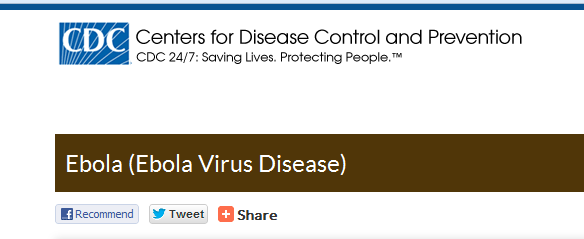
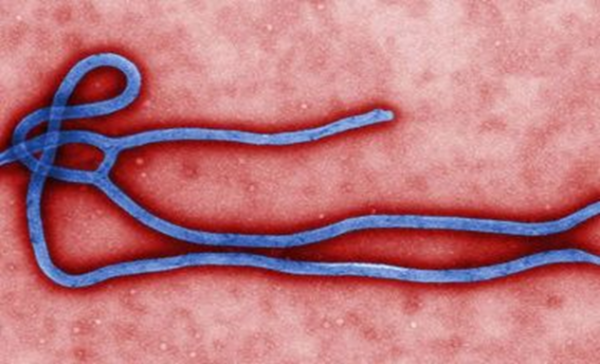
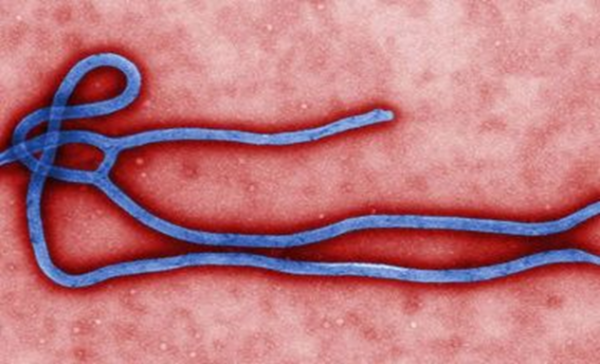
One of the most troubling tendencies of the Obama Administration and their minions in the media is to relabel a problem, giving the appearance that solutions are on their way. Exhibit 1: An act of terror becomes a "man-caused disaster". Exhibit 2: The prohibition on the term "illegal alien". Now, the illness associated with a terrible pathogen is now being reclassified from "Ebola Virus Hemorrhagic Fever" to "Ebola Virus Disease". LI #08 Ebola VD This seems to be an attempt to lull people into a false sense of security, lumping it with other "Virus Diseases" like the flu and the common cold. I have taught bloodborne pathoghen safety from the early 1990's, when healthcare, security, and first-aid providers were worried about contracting AIDS. Ebola is rated as a class 4 pathogen because of its fatality rates in humans and the fact that there is no cure or treatment. It is, and remains, a "hemorrhagic fever". It did not stop being a Class 4 pathogen once it hit the Dallas hospital. The mechanism of attack, which includes destruction of the endothelial cells that weaken the blood vessels and cause excessive bleeding, has not changed. Once the blood vessels are weakened, a suite of devastating symptoms occurs, as noted in a Business Insider article published in July of this year.

As Americans become increasingly concerned about the spread of Ebola in the United States, there is a growing call to cut off flights to and from Liberia. Senator Ted Cruz has even contacted the FAA. Niels Lesniewski of Roll Call reported:
Ted Cruz Asks FAA About Ebola Flight Ban Sen. Ted Cruz is asking the Federal Aviation Administration what it’s doing to prevent the spread of Ebola after the first U.S. diagnosis, which came in his home state. “Given the severity of this virus and the fact that its spread to Texas has been associated with travel, it is imperative that the FAA take every available precaution in preventing additional cases from arriving in the United States. As you may be aware, several African nations have already restricted or banned air travel to countries with confirmed cases of the Ebola virus,” the Texas Republican wrote in a letter to FAA chief Michael P. Huerta. “British Airways, Emirates Airlines and Kenya Airways have also suspended flights due to the rising death toll and deteriorating public health situation in Ebola-stricken countries.”
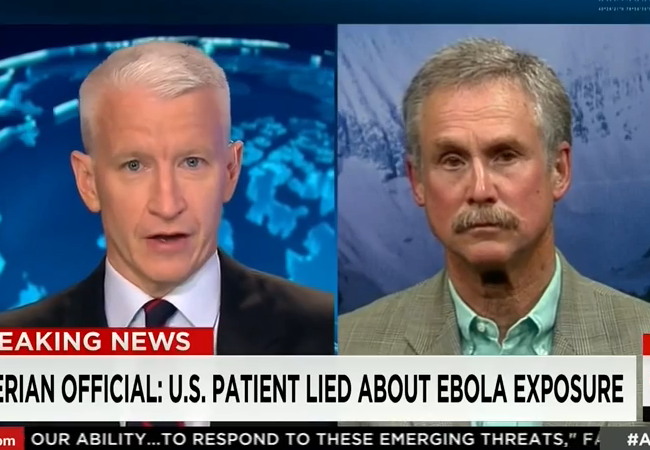
One recent voice on CNN, an author named David Quammen believes doing such a thing would be wrong because of slavery. I kid you not. Brendan Bordelon of National Review has the story:
CNN Guest: ‘How Dare We’ Cut Off Liberia Flights When ‘American Slavery’ Created That Country An author on Anderson Cooper’s CNN program Thursday said the United States is uniquely obligated to maintain air links with the Ebola-ridden nation of Liberia, claiming it would be immoral to quarantine a nation created through “American slavery.”

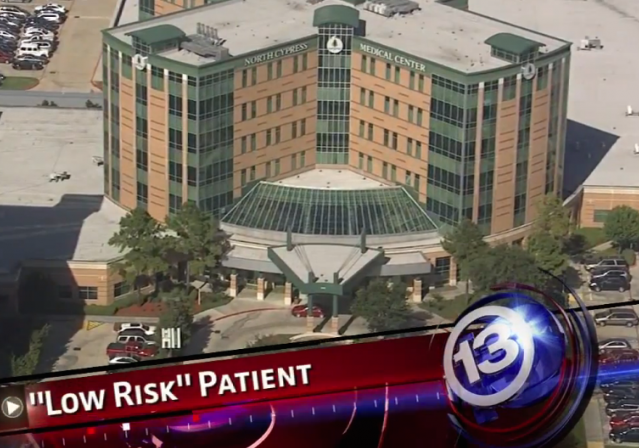
US Ebola patient zero, Thomas Eric Duncan, recent arrival from Liberia, had to go to Texas Health Presbyterian Hospital twice to get admitted. On his first go-round, the hospital sent him home with antibiotics even though a nurse had obtained information that he'd been in Liberia, and despite the fact that his symptoms were consistent with the early signs of Ebola. If Duncan had been admitted on that initial visit his diagnosis would still have been a big story and a distressing one, but nothing as awful as the situation we're currently in. That being said, it's been difficult to obtain much information about how the mistake happened. Here's the relevant section of the initial press conference with hospital official, Dr. Mark Lester:
(INAUDIBLE QUESTION) LESTER: A checklist was in place for Ebola in this hospital for several weeks. And Dr. Ed Goodman (ph), to my right, had led the implementation of that. That checklist was utilized by the nurse who did ask that question. That nurse was part of a care team. And it was a complex care team taking care of him in the emergency department. Regretfully, that information was not fully communicated throughout the full team. And as a result, the full import of that information wasn't factored into the clinical decision-making. The overall clinical presentation was not yet typical for Ebola; so as the team assessed him, they felt clinically it was a low-grade common viral disease. That was the presentation. (INAUDIBLE QUESTION) LESTER: He volunteered that he had traveled from Africa in response to the nurse operating the checklist and asking that question. (INAUDIBLE QUESTION) LESTER: I can't answer that question because that's one piece of information that would be factored into the entire clinical picture. The clinicians did not factor it in. So it was not part of their decision-making. (INAUDIBLE QUESTION) LESTER: I -- that's a question that's really not in my domain.

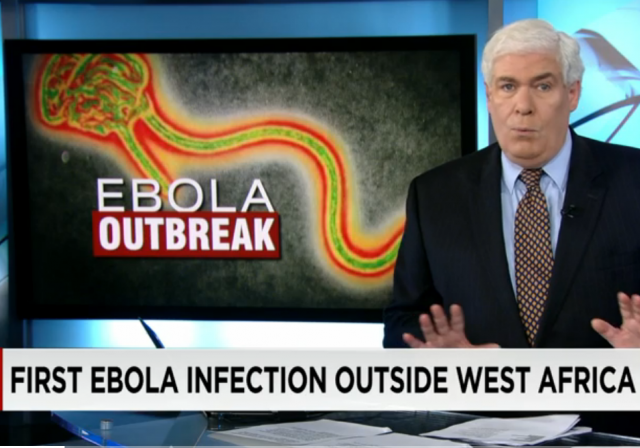
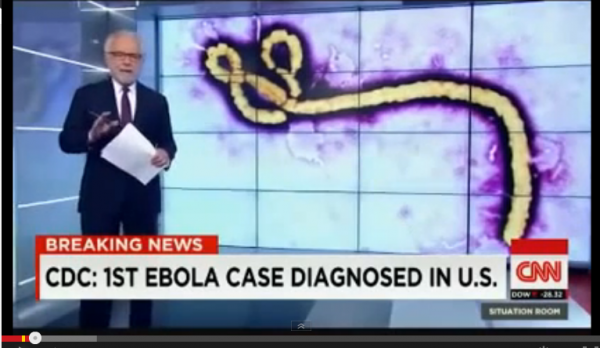
A man traveling from Liberia in West Africa to Dallas, Texas has been diagnosed with Ebola, becoming the first patient to present with the disease on US soil. CDC and local Texas health officials emphasized in a news conference today that they anticipate that the disease will be readily contained.
The first Ebola case has been diagnosed in the United States, but a top health official said today there is "no doubt... we will stop it here." Dr. Tom Frieden, the director of the Centers for Disease Control and Prevention, said the patient left Liberia on Sept 10 and arrived in the U.S. on Sept. 20. The patient sought medical help on Sept. 27 and was put in isolation on Sept. 28, Frieden said. Tests confirming the Ebola diagnosis came back today. The White House said President Obama was briefed about the patient by Frieden. Frieden stressed that the patient was not sick on departure from Liberia or upon arrival in the U.S. and the disease can only be contracted by someone exhibiting symptoms of the disease. Frieden said he was confident there would not be an Ebola outbreak in the U.S. "There is no doubt in my mind we will stop it here," he said.

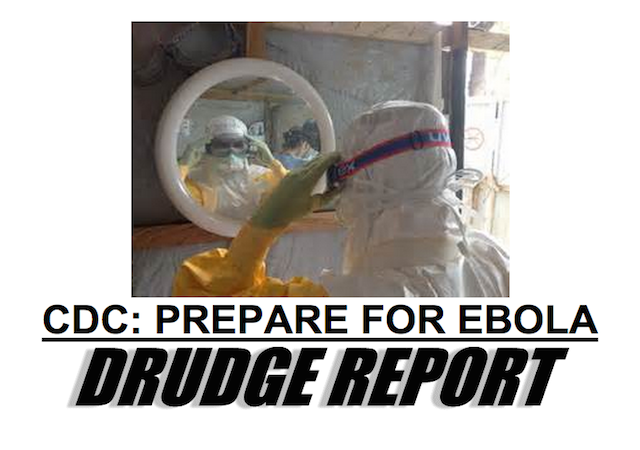
The Centers for Disease Control and Prevention (CDC) has released a new "ebola checklist" detailing the best practices for hospitals and health care professionals who are tasked with treating patients infected with the Ebola Virus Disease (EVD.) From the checklist:
In order to enhance our collective preparedness and response efforts, this checklist highlights key areas for hospital staff -- especially hospital emergency management officers, infection control practitioners, and clinical practitioners -- to review in preparation for a person with EVD arriving at a hospital for medical care. The checklist provides practical and specific suggestions to ensure your hospital is able to detect possible EVD cases, protect your employees, and respond appropriately. While we are not aware of any domestic EVD cases (other than two American citizens who were medically evacuated to the United States), now is the time to prepare, as it is possible that individuals with EVD in West Africa may travel to the United States, exhibit signs and symptoms of EVD, and present to facilities.
The checklist's provisions appear to have the goal of holding hospitals accountable for following protocol, training their employees in EVD detection, and being prepared to isolate patients and protect staff. It also provides a "quick resources list" that administrators and providers can use to educate staff about the disease, help answer questions from the community, and follow the status of outbreaks.

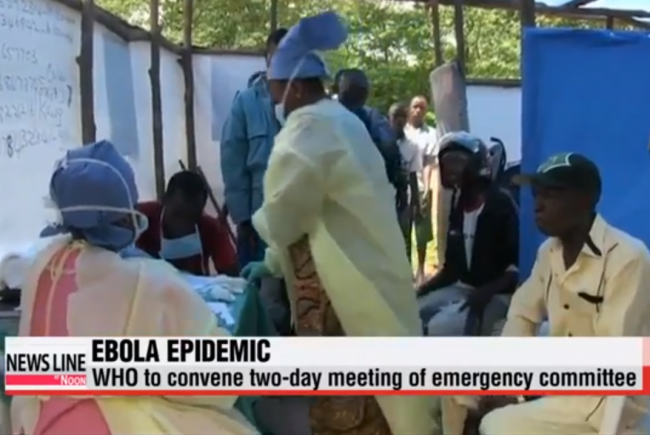
With all the crises we report on daily, it is easy to lose track of one....so, I thought it would be wise to review the situation related to Ebola, which was the American press panic flavor-of-the-month in August. It looks like another American is heading toward the Emory University medical facilities for treatment:
A fourth American who contracted Ebola in West Africa was expected to arrive in the U.S. for care Tuesday and will be treated at an Atlanta hospital where two other aid workers successfully recovered from the disease, the hospital said Monday.
The other three patients appear to be recovering from their infections at this point. I suspect the quality of medical care here is still higher than in in West Africa (even in the wake of Obamacare). Koby Sebastian Spio-Garbrah, Global Managing Director at DaMina Advisors, indicates that the doctor-patient ratios may be key in predicting the spread of the disease:
An analysis of a basic global healthcare metric - doctor-patient-ratios - may be the key in helping identify the next most vulnerable West African states to the ongoing Ebola outbreak. Unsurprisingly, Liberia and Sierra Leone, which have remained the epicenters of the pandemic, have the worst doctor-patient ratios in West Africa, at over 86,000 patients-per-1-doctor in Liberia, and 45,000 patients-per-1-doctor in Sierra Leone. Nigeria, which has lately received a lot of media attention ironically has the best doctor-patient ration of any West African state and is probably the least vulnerable during this outbreak. Due to climatic factors connected to the epidemiology of Ebola, the northern arid West African states of Mali, Burkina Faso, Chad or Mauritania are unlikely to see any major outbreaks. However the tropical coastal states, whose porous land borders adjoin Liberia and Sierra Leone, remain very vulnerable.
A good video review of the situation comes from Paper News TV:

While many Legal Insurrection fans may disagree with my assessment of the limited risk that the two American Ebola patients are to our country, my basic point is sound:  The uncontrolled entry of people infected with much easier to transmit and more common pathogens should be the main focus of concern. As my compatriot Bruce Carroll brilliantly noted, the "CDC’s selective information dumps mirrors how the rest of the Obama Administration has been less than transparent." Furthermore, the only consistent policy approach of the White House is: ""You never let a serious crisis go to waste." With this in mind, what better way to create fear in order to hide policy disasters and to distract people from the news of worldwide chaos then to focus on a devastating disease that is nearly 100% fatal? Cue Tom Frieden, the head of the US Centers for Disease Control and Prevention.
Ebola's spread to the United States is "inevitable" due to the nature of global airline travel, but any outbreak is not likely to be large, US health authorities said Thursday. Already one man with dual US-Liberian citizenship has died from Ebola, after becoming sick on a plane from Monrovia to Lagos and exposing as many as seven other people in Nigeria.

As an environmental health and safety professional who has written a book about "bloodborne pathogens," such as the Ebola virus, I read with both interest and alarm Bruce Carrol's post, No concerns here: Ebola patients headed to Georgia. Shortly after writing that book, I was hired by the Centers for Disease Control (CDC) in Atlanta to present a safety training program. While I was there, I was privileged to tour their containment facilities, which were highly impressive. The personnel in charge of running those facilities were also (and remain), highly trained, very professional, and have well placed pride in their innovative and protective measures. I would like to give you an idea of what goes into a BioSafety Level 4 Containment Facility, to which the Ebola-infected Americans are being sent:
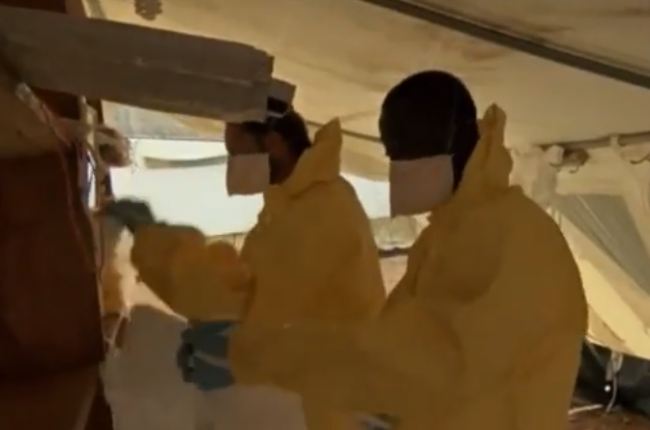
  • The use of a positive pressure personnel suit, with a segregated air supply, is mandated.
  • Entrances and exits  contain multiple showers, a vacuum room, an ultraviolet light room, and other safety precautions designed to destroy all traces of the biohazard.
  • Multiple airlocks are employed and are electronically secured to prevent both doors from opening at the same time.
  • Members of the laboratory staff have extremely thorough training in handling extremely hazardous infectious agents, and have already had much experience in handling lower hazard biological agents.
  • The containment facility is either in a separate building or in a controlled area within a building, which is completely isolated from all other areas of the building.
For the very interested Legal Insurrection fan, more information is given here. In other words, if I were an American infected with Ebola, this is where I would want to be sent. The most knowledgeable medical experts on exotic infectious diseases are there and this facility is best equipped to stop the spread of the pathogen to anyone else.

The international volunteer medical organization Doctors Without Borders has issued a chilling warning -- that the deadly Ebola virus is "totally out of control." The Ebola virus spreads through direct contact with infected people and causes internal bleeding and organ failure. There is no cure or vaccine so infected patients must be quarantined to stop the rapid spread of the virus. According to the World Health Organization, an Ebola outbreak can result in over 90% fatality rates. Bart Janssens, director of operations for Doctors Without Borders, said Friday that the international community must send in more resources to stop the current Ebola epidemic.
"The reality is clear that the epidemic is now in a second wave," Janssens said. "And, for me, it is totally out of control." The outbreak has caused more deaths than any other of the disease, said another official with the medical charity. Ebola has been linked to more than 330 deaths in Guinea, Sierra Leone and Liberia, according to the World Health Organization. The current outbreak, which began in Guinea either late last year or early this year, had appeared to slow before picking up pace again in recent weeks, including spreading to the Liberian capital for the first time.