The opinion of capitalism as the greatest evil known to man is not only the dominant view at Cornell and other college campuses, it is the irrefutable dogma of the mindless droves of the overwhelming majority of faculty and students.
They look at the injustices in the world, at the inequities, and to the ill-fated, and assume capitalism is to blame.
It’s an assumption of guilt before innocence in order to make capitalism—a simple system of private property, free enterprise, and free exchange—into a scapegoat for them to explain away their own insecurities, self-loathing, and inability to accept the world as it is.
Anti-capitalists on campus can roughly be divided into two groups: the activists and the academics.
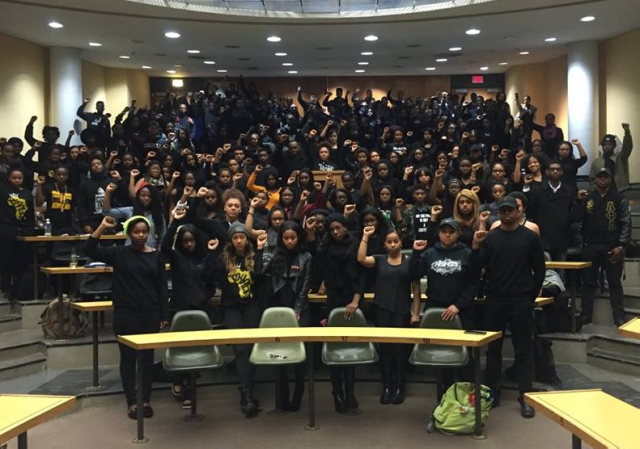
The screaming and hollering activists feel sorry for themselves because capitalism does not reward their invaluable skill-set of marching, poster-making, and spoken-word poetry. Instead of obtaining the education and skills that markets demand, they attempt to use force, intimidation, and sheer numbers to get what they want. They are motivated by a deep-seated, unrelenting sense of entitlement.
The academics closet themselves from reality with a vain pursuit of theoretical perfection. To them, every little imperfection in a capitalist economy is a call to arms (and another paper on the road to tenure). They, along with the activists, forget that capitalism is exclusively to credit for bringing man out of mud and caves to interstellar capsules, from sticks and rocks to 3D-printing devices, and from scavenging for grass and weeds to a world of leisure and entertainment at one’s fingertips.
It is the student activists, though, that are particularly egregious in their hypocrisy. (At least the academics try to justify their anathema towards capitalism with their research and writing.)
Dressed in designer clothes and shoes and clutching their smart phones and espressos, they snarl at the detestable 1% and lament the pernicious flow and concentration of capital.
As copies of
Das Kapital jostles alongside iPads in their name-brand backpacks, their conversations alternate between what fraternities are throwing parties that night to the dastardly deeds of the bespectacled robber barons of Wall Street. In class, they ignore lecture and shop online, and intermittently make posts on Facebook and Twitter about how much they loathe mindless consumerism. Their online audience, however, is too engrossed in their own online shopping and gaming to take notice.