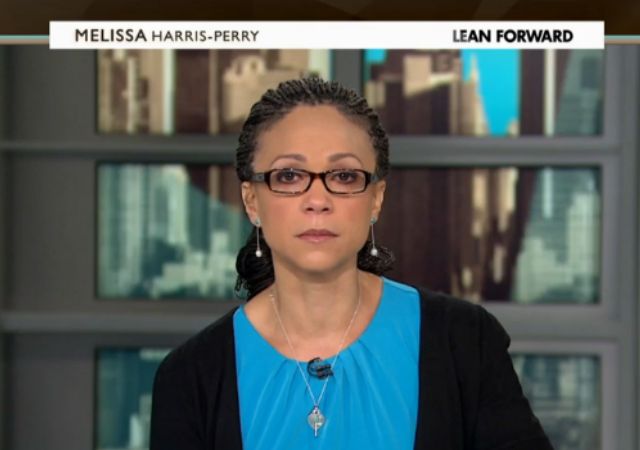
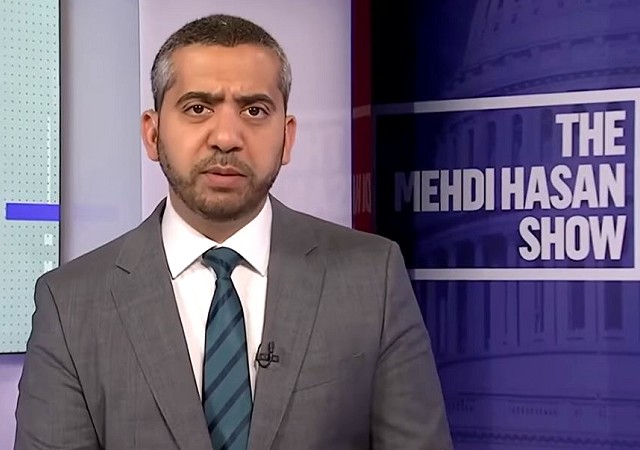
It's been a long week for Melissa Harris-Perry.
The MSNBC host took a lot of heat for
this segment on her show last weekend in which she moderated a panel of comedians in offering a caption to a Romney family photo that featured Governor Romney holding his adopted grandson, Kieran, who is black.
The segment devolved into senseless mocking - as Professor Jacobson previously noted, "To the race-obsessed minds at MSNBC, the fact that Mitt Romney’s son and daughter-in-law adopted a black child is something to mock."

Backlash ensued and Melissa Harris-Perry later apologized online in a
series of tweets.
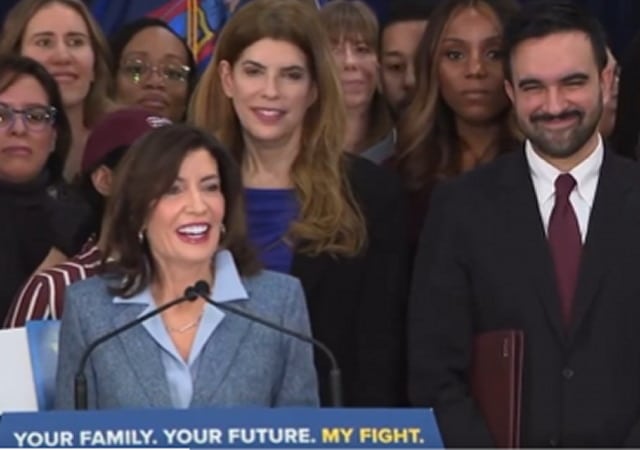
On her program today, Harris-Perry again made an apology for that segment, while fighting back tears. Below is an excerpt from that apology. Video is after the jump.
Now given my own family history, I identify with that picture and I intended to say positive and celebratory things about it, but whatever the intent was, the reality is that the segment proceeded in a way that was offensive. And showing the photo in that context, that segment, was poor judgment.
So without reservation or qualification, I apologize to the Romney family. Adults who enter into public life implicitly consent to having less privacy. But their families, and especially their children, should not be treated callously or thoughtlessly. My intention was not malicious, but I broke the ground rule that families are off-limits, and for that I am sorry.
Also, allow me to apologize to other families formed through transracial adoption, because I am deeply sorry that we suggested that interracial families are in any way funny or deserving of ridicule. On this program we are dedicated to advocating for a wide diversity of families. It is one of our core principles, and I am reminded that when we are doing so, it must always be with the utmost respect.
(h/t to
Newsbusters for the transcript; and to
TheRightScoop for staying on the story)