Image 01 Image 03

Unions Tag

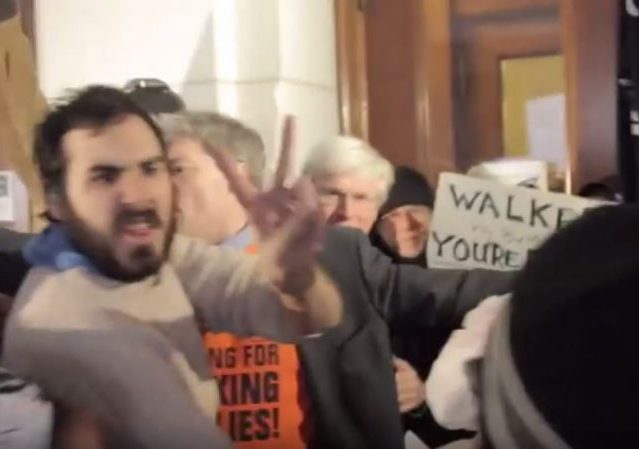
In our report earlier, we noted that the "Resistance" to Donald Trump is unlike anything seen in the opposition to Obama, The “Resistance” Moves Towards Violence and Intimidation as Key Tactic. The opposition to Trump is becoming increasingly violent, and explicitly seeks to drive political intimidation into personal spaces by confronting Republicans everywhere they walk, talk and eat. This total war on Trump's administration and supporters by the media, Democrats, and a vast array of well-funded leftist groups might seem like a reaction to ... Trump. That would be a myopic view. The tactics you are seeing play out nationally had a dry run.

The price to be paid by conservatives on campus is a topic I have been covering frequently. I discussed recently the issues at Cornell in For conservatives at Cornell University, high price for free speech, and more generally the atmosphere on many campuses in The new Cultural Revolution on Campuses On May 1, 2017, I was a guest on the Lars Larson show, talking about the lessons of the smear attack on distinguished Cornell Chemistry Professor David B. Collum through a letter to the editor in The Cornell Sun signed by seven graduate students.

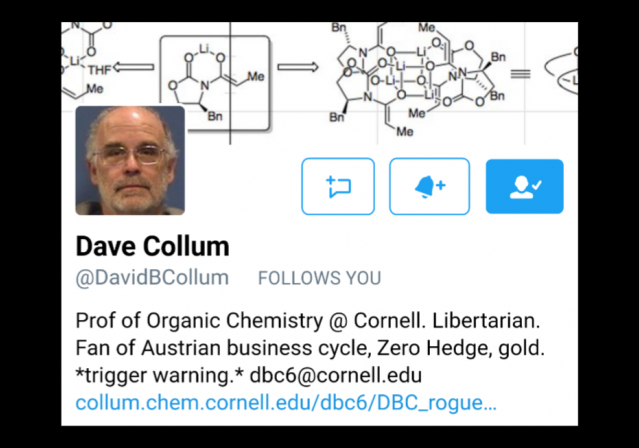
David B. Collum is a world-renowned Chemistry Professor at Cornell University, where I teach at the law school. He has been at Cornell since 1980, and is Department Chair through the end of this academic year. I don't know Dave well, but we have met before. He is something of a Renaissance man, able to converse not only in his specialty, but also in the fields of economics and politics. He's an iconoclast, and self-identifies in his Twitter bio as "Libertarian. Fan of Austrian business cycle."

When Californian's went to the polls this November to approve the legalization of marijuana for personal use, little did they realize it would morph into a battle between unions and business. The state is now slated to begin distributing licenses to marijuana businesses on Jan 1, 2018. Therefore, the Golden State's legislature is attempting to iron out discrepancies between the already existing medical marijuana rules and the approved ballot measure. The crux of the disagreement between the Teamsters union and business groups is deciding who is in charge of pot distribution.

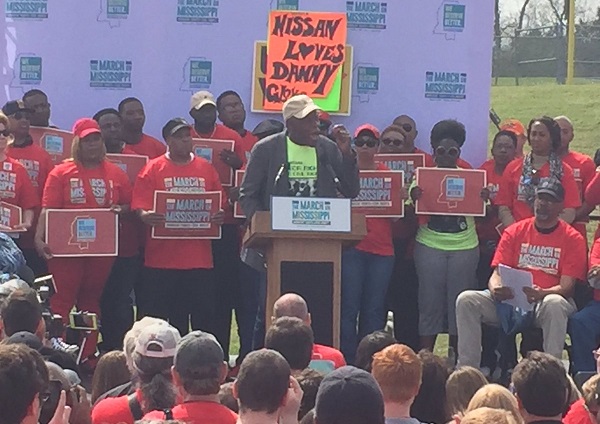
Having worked their destructive magic in Detroit, the United Auto Workers union (UAW) has set its greedy sights on the South.  Roundly rejected by Tennessee workers at a Volkswagen auto plant in 2014, the UAW picked itself up, dusted itself off, and redoubled its thirteen-year efforts at a Nissan plant in Canton, Mississippi. The South has long rejected unions, including the International Association of Machinists and Aerospace Workers union who tried and failed to unionize Boeing workers in South Carolina last month.  But the UAW is undeterred, even dragging avowed socialist and failed presidential candidate for the 2016 Democratic nomination down from Vermont to try to convince Mississippians that he—and the UAW—knows what is in their best interests.

On Friday, New York's Governor Andrew Cuomo signed into law NY State Senate bill S6340, making it illegal in the state of New York to advertise "for the use of dwelling units in a class A multiple dwelling."  This law is aimed at Airbnb, a San Francisco-based homestay network that coordinates the rental of private properties by the homeowners. Not unlike Uber, a transportation network, Airbnb eliminates the often union-driven marketplace for a given service; with Uber it's taxis and with Airbnb, it's hotels.  And as with Uber, unions are not happy with the explosion of Airbnb and lobbied in New York state for the passage of this law that establishes a minimum of at least 30 days for peer-to-peer rental of private property and provides for fines up to $7,500 for those in violation. The Hill reports:

New York Governor Andrew Cuomo banned short-term rentals on Airbnb after he signed a bill on Friday making it illegal to list unoccupied apartments on the service for stays under 30 stays.

Because I have been traveling, I'm late to this important development. In early April we reported how a State court judge throws out Wisconsin Right to Work Law in an absurd decision:
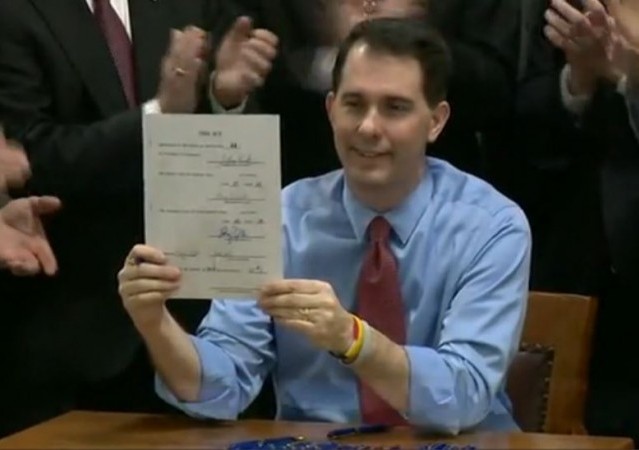
When conservative Justice Rebecca Bradley won the Wisconsin Supreme Court election last Tuesday, we pointed out how important that court has been in upholding union reforms. That may be tested again as Dane County Judge William Foust in Madison just threw out the state’s Right to Work law signed by Governor Walker a year ago. The decision was under the “takings” clause of the Wisconsin Constitution. As in an eminent domain case, the court found that the union’s interest in compulsory dues payments was property, that the property was taken by the right to work law for a public purpose, but without just compensation....

When conservative Justice Rebecca Bradley won the Wisconsin Supreme Court election last Tuesday, we pointed out how important that court has been in upholding union reforms. That may be tested again as Dane County Judge William Foust in Madison just threw out the state's Right to Work law signed by Governor Walker a year ago. The decision was under the "takings" clause of the Wisconsin Constitution. As in an eminent domain case, the court found that the union's interest in compulsory dues payments was property, that the property was taken by the right to work law for a public purpose, but without just compensation. The decision was announced by Attorney General Brad D. Schimel on the Vicki McKenna Show. The Decision is embedded at the bottom of this post.

On Tuesday, the Supreme Court of the United States, stuck in a 4-4 deadlock, affirmed the lower court's decision in Friedrichs v. California Teachers Association, a labor union dues case. The one sentence decision offered no explanation and simply stated, "The judgment is affirmed by an equally divided Court."

Should public employee unions be able to impose mandatory dues?

At issue in the case was a challenge to the power of public employee unions to impose mandatory dues, an issue that has been bitterly fought by both sides of the labor union debate. Tuesday's ruling allows the unions to continue to collect dues for collective bargaining costs, pursuant to a prior case from 1977 that allowed these mandatory dues, so long as the employees were not forced to pay for political or ideological activities.

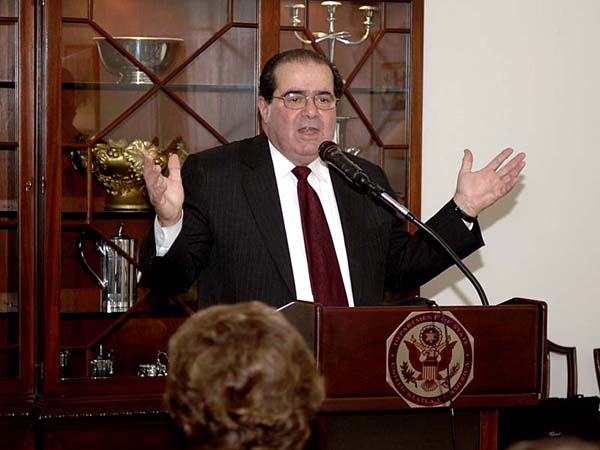
Two Supreme Court cases with significant public policy implications previously discussed on Legal Insurrection face very different futures in the wake of Supreme Court Justice Antonin Scalia's death on Saturday. Oral arguments in Fisher v. University of Texas and even more more so Friedrichs v. California Teachers’ Association suggested the Court would decide for the conservative position in both. Now those cases are thrown into turmoil.  The traditional response when a Justice dies after oral arguments but before a written decision has been to either affirm the lower court without setting precedent, or to order.  Either option is at least a temporary setback for conservatives.

Fisher revisited

I previewed the challenge to the University of Texas's affirmative action scheme in Fisher, here, and discussed the oral arguments, here.   In Fisher, the Court is reviewing UT's admission system that considers race as one factor among many for admitting applicants who did not otherwise qualify for admission for having graduated in the top-10 percent of their Texas high school class. As noted in the case preview:

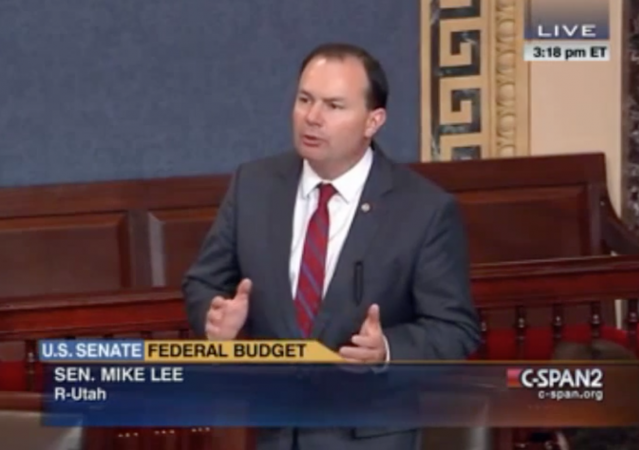
"In this present crisis, government is not the solution to our problem; government is the problem."  That was Ronald Reagan in his first inaugural address, January 20, 1981, and in the years since it has become a rallying cry for small government conservatives. Last week Senator Mike Lee (R. Utah) struck the same notes in an op-ed in Forbes.  Lee writes: